You start the truck cold in the morning, drop it into drive, and… nothing. A second or two of neutral, then a soft thud as it finally catches. Back into reverse and it does the same thing — a delay, maybe a slip, before it grabs. Drive it a few miles and the problem all but disappears. That is 4L60E "morning sickness": a cold delayed engagement into drive and/or reverse that improves once the transmission warms up. It shows up on the 4L60E, 4L65E, and 4L70E behind millions of Silverados, Sierras, Tahoes, Suburbans, Yukons, Escalades, Camaros, and full-size vans.
The name is folklore, but the mechanism is not. Morning sickness is almost always a pressure problem: cold, thin-to-thick fluid finds every worn clearance in the pump and valve body, and the transmission can't build apply pressure fast enough to engage a clutch. Warm it up, the fluid thickens the leak paths, and the delay hides. This is how the failure actually works, and how to find the real cause before you drop the pan or pull the unit.
The short version: Cold delayed engagement on a 4L60E is a pressure loss, not a "the fluid is old" problem. The three usual culprits are a worn pressure regulator (PR) valve bore in the pump, a tired pump (worn rotor/slide or cavitation), and a cracked or worn plastic forward accumulator piston that bleeds off forward apply. Confirm which one with a line pressure gauge before you spend money. New fluid alone rarely fixes true morning sickness.
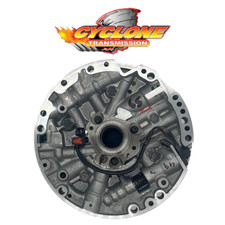
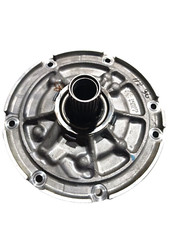
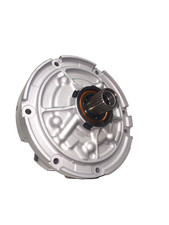
Why Cold Makes It Worse
Engagement into any gear depends on the pump building line pressure and holding it long enough to stroke a clutch or band. When components are worn, fluid leaks past them internally. Cold fluid behaves differently than hot fluid through those leak paths and past the check balls and accumulators, so at startup the pump is fighting both the wear and the temperature. The circuit can't reach apply pressure quickly, and you get a hang before the clutch takes hold. As everything warms, clearances and fluid behavior change, the leakage stabilizes, and the delay shrinks or vanishes — which is exactly why owners describe it as a morning-only problem.
That "it goes away when warm" clue is the tell. A cracked drum or a burnt clutch pack does not heal itself after a few miles. A pressure circuit that only leaks badly when cold does. So morning sickness points you at pressure generation and pressure regulation first.
The Three Real Root Causes
When a 4L60E comes in with a cold engagement delay, the cause is usually one of three wear points. They overlap in symptoms, so you test to tell them apart rather than guess.
1. Worn pressure regulator valve bore in the pump
This is the classic one. The PR valve rides in an aluminum bore in the pump cover, and the double spool constantly oscillates as it regulates. Over years and miles that bore wears, most commonly on either side of the decrease circuit where the valve reciprocates. Per Sonnax, once those areas are worn there is leakage of line pressure in boost conditions and leakage of decrease pressure during non-boost conditions. The result is unstable or low line pressure — and a slow, weak apply when cold. Sonnax notes a worn OE PR valve shows up as low line pressure during boost (roughly 50–100 psi under spec in Reverse) or as clutch slippage and reverse chatter. TransGo describes the same bore wear: unstable pressure that yields harsh shifts, soft shifts, burnt frictions, and overheating depending on where the wear sits. The fix is to ream the bore and install an oversized PR valve, restoring the pump cover to spec — not necessarily a full rebuild.
Get the ream right, though, because a bad one does more damage than the wear did. ATSG’s Wayne Colonna, writing in Transmission Digest, documents that reaming with a dull reamer, without enough lubricant, or at the wrong speed compromises the bore: a PR valve left stuck in the fully stroked position produces low line pressure that burns clutches, while a valve that cannot stroke completely can build enough pressure to crack pistons — he shows three pistons cracked in a single unit from that one mistake. His bench check takes seconds: with the valve assembly installed, stroke the valve with a pick from the retainer end. If it strokes fully and then sticks, spring tension disappears and you will see a gap between the retainer and the valve’s end cap sleeve.
2. A tired pump: worn rotor/slide or cavitation
The pump itself generates the pressure, and a worn variable-displacement pump can't keep up cold. Wayne Colonna of POWERTRAIN PRO documents 4L60E no-engagement conditions tied to the pump: the converter drive hub coming out of the pump rotor under a hard-throttle maneuver, rotor failure under sustained high line pressure, and pump cavitation — detectable as excessive air bubbles on the dipstick, caused by low fluid, a damaged filter neck seal, or distorted pump faces. Any of these starves the circuit of clean, solid pressure and shows up first as a cold hang before engagement. This is why line pressure that stays low even after ruling out the PR valve points at the pump.
3. Cracked or worn forward accumulator piston
The forward accumulator cushions the forward clutch apply. On the 4L60E series the OE accumulator piston is plastic, and Sonnax reports it is common for that piston to wear or crack. When it does, fluid is lost through the piston pin bore or the crack, and that lost fluid causes delayed engagement, forward slip, and eventually burnt clutches and bands. Because this leak is specific to the forward circuit, it tends to show as a delay into drive more than reverse. A drop-in pinless piston with dual seals stops the leak without splitting the case. Sonnax packages that same pinless forward accumulator piston with a line pressure booster kit in its HP-4L60E-01 performance pack, and its 4L60-E build guide splits the booster by build: 4L60E-LB1 for early-style units and 4L60E-LB2 for late-style. Both heavy duty remanufactured valve bodies, GM053-HD and GM054-HD, ship with that booster kit plus the spacer and spring for the pump, so a marginal-pressure unit gets corrected at the pump and the accumulator in one pass.
4L60E Master Transmission Rebuild Kit (1994-Up)
When morning sickness traces back to pump and pressure wear, the durable fix is a full freshen-up: new frictions, steels, seals, gaskets, and the sealing rings that hold apply pressure. This master kit covers the 4L60E/4L65E from 1994 up and gives you everything to correct the leak paths that cause cold delayed engagement in one shot.
Shop the 4L60E Master Rebuild Kit →Diagnose Before You Condemn Anything
Morning sickness is one of the few 4L60E complaints you can nail down with a gauge before you take anything apart. Work it in order — the price swings from a valve-and-ream job to a pump to a full rebuild:
- Check fluid level and condition first. Low fluid or a damaged filter neck seal causes cavitation and mimics wear. Air bubbles on the dipstick are a red flag. The 4L60E uses Dexron VI. Dark, burnt fluid with debris means clutches are already cooking — the leak has been there a while.
- Put a gauge on the line pressure test port. Read pressure cold at idle in Park/Neutral/Overdrive and in Reverse, then again warm. A cold reading that comes up slow, or a Reverse pressure well under spec, confirms a pressure loss rather than a mechanical clutch failure.
- Separate PR valve from pump. If line pressure is low and unstable, the worn PR valve bore is the prime suspect. If pressure stays low even with a fresh oversized PR valve, or the dipstick shows cavitation, the pump body or rotor is the problem.
- Watch for a drive-only delay. A delay into drive that is worse than reverse, with otherwise reasonable line pressure, points toward the forward accumulator piston leaking off forward apply.
- Vacuum test the valve body. Bore wear at the PR valve and other circuits is detectable with a vacuum tester on the bench — the way to confirm exactly where pressure is escaping before you commit to parts.
Follow that order and morning sickness stops being a mystery. A large share of these cases are a worn PR valve bore or a cracked forward accumulator piston — targeted, affordable fixes — while the units with a genuinely worn-out pump reveal themselves clearly once the cheaper causes are ruled out. What you should not do is dump in a bottle of "fix" additive and call it solved; that masks a pressure leak that is already wearing frictions.
Doing the job? Our line pressure testing walkthrough covers the gauge procedure that applies directly here, and the full 4L60E service guide covers the rest of the unit.
Sources
- Sonnax — Oversized Pressure Regulator Valve 77917-07, on 4L60-E/65-E/70-E pressure regulator valve bore wear (leakage on either side of the decrease circuit), low line pressure in boost (50–100 psi under spec in Reverse), clutch slippage and reverse chatter, and reaming to restore the pump cover. sonnax.com/parts/2493-oversized-pressure-regulator-valve
- Sonnax — Pinless Forward Accumulator Piston Kit 77987-01K, on the plastic Forward accumulator piston wearing or cracking, loss of fluid through the pin bore or cracks, and the resulting delayed engagement, forward slip, and burnt clutches/bands. sonnax.com/parts/2518-pinless-forward-accumulator-piston-kit
- Sonnax — Line Pressure Booster Kit 4L60E-LB1, on boosting apply pressure in early-style 4L60-E/65-E/70-E pumps to address slippage and delayed engagement. sonnax.com/parts/2168-line-pressure-booster-kit
- TransGo — 4L60E-PR Drop-In Pressure Regulator Valve, on how PR valve bore wear from 1993–2015 produces unstable line pressure with symptoms from harsh and soft shifts to burnt frictions and overheating. transgo.com/product-details/4l60e-pressure-regulator-valve
- Wayne Colonna, POWERTRAIN PRO — GM 4L60E Transmission No Engagement, on pump-related no/low-engagement: converter drive hub backing out of the pump rotor, rotor failure under high line pressure, and pump cavitation seen as air bubbles on the dipstick. vehicleservicepros.com/…/gm-4l60e-transmission-no-engagement
- Wayne Colonna (ATSG), Transmission Digest — "Breaking parts: Pressure regulator valve and bore blues," April 6, 2023. Backs the damage a severely worn pressure regulator valve and bore can do through uncontrolled pressure spikes; the ream itself being compromised by a dull reamer, insufficient lubricant or the wrong speed; a valve stuck fully stroked producing low line pressure that burns clutches; a valve unable to stroke completely building pressure high enough to crack pistons; and the post-ream check of stroking the valve with a pick from the retainer end, where a stuck valve leaves no spring tension and a gap between the retainer and the end cap sleeve. transmissiondigest.com
- Sonnax — "GM 4L60-E Performance & Heavy Duty Transmission Build Guide." Backs the line pressure booster kit split by build style (4L60E-LB1 early-style, 4L60E-LB2 late-style), the pinless forward accumulator piston being included in the HP-4L60E-01 performance pack, and the GM053-HD and GM054-HD heavy duty remanufactured valve bodies including the line pressure booster kit plus the spacer and spring for the pump. sonnax.com