Every few months someone brings us a 4L65E that started slipping or flaring a day or two after a "transmission flush" at a quick-lube shop. The shop swears the fluid was due. The owner swears it was fine until the flush. Both can be true at the same time, and GM has actually put its position on this in writing, more than once. It is not a maybe. It says do not run an external machine through the transmission.
The short version: GM Service Bulletin 04-06-01-029K states plainly that external transmission fluid exchange or flush machines are not recommended for GM automatic transmissions, and that fluid should only be replaced by draining and refilling per Service Information. A drop-the-pan drain-and-fill only replaces about 5 of the roughly 11.2 quarts in a 4L65E, so it is not a complete fluid change either, but it does not force fluid through the valve body and clutches under outside pressure. On a 4L65E with unknown service history, that difference matters more than people think.

Flush, Fluid Exchange, and Drain-and-Fill: What Each One Actually Does
The terms get used loosely, so start with what each service physically does to a 4L65E:
- Drain-and-fill (pan drop): Drain whatever runs out of the pan, drop the pan, replace the filter and gasket, refill through the dipstick tube. Nothing is forced through the unit under added pressure. You replace whatever fluid was sitting in the pan and filter, which is a fraction of the total system volume.
- Fluid exchange machine: The machine connects in line with the transmission cooler lines. With the engine running, the transmission's own pump pushes old fluid out through the cooler line into the machine while the machine pushes new fluid back in, aiming to replace close to all of the fluid in one visit, including what is in the converter, cooler, and valve body. The internal filter is not touched.
- "Flush": Marketing shorthand that can mean either of the above, or in the worst case a machine that uses external pump or air pressure to force fluid through at a higher flow rate than the transmission would ever see in normal operation.
The pitch for the machine is obvious: it gets more old fluid out in one visit. The problem is what "more fluid moving, faster, through circuits that were never designed to be flushed" can stir loose on a transmission that has gone 100,000-plus miles without a service.
GM's Bulletin: Do Not Use External Flush or Exchange Machines
This is not a forum opinion. General Motors Service Bulletin 04-06-01-029K ("Unscheduled Supplemental Services"), current as of October 2024 and covering 2025-and-prior GM passenger cars and trucks, states it directly:
"The use of external transmission fluid exchange or flush machines is not recommended for the automatic or manual transmission. Use of external machines to replace the fluid may affect the operation or durability of the transmission. Transmission fluid should only be replaced by draining and refilling following procedures in Service Information (SI)."
That exact wording also appears in the predecessor Canadian bulletin, 12-06-01-008B (March 2015), which GM had already been circulating to dealers for close to a decade before the 2024 revision. Two bulletins, a decade apart, saying the same thing: drain-and-refill per SI, not an external machine.
There is one narrow exception. The 2015 bulletin names the J-45096 Automatic Transmission Oil Cooler Flow Check and Flush tool as GM-approved equipment, but it is scoped to the external cooler circuit, checking flow and clearing the cooler and lines, not the internal valve body and clutches. That is a different job from an aftermarket exchange machine running fluid through the whole transmission.
GM's bulletin also makes the warranty implication explicit for the related practice of engine crankcase flushing: damage from aftermarket flushing "is not covered" under the New Vehicle Warranty. The bulletin does not spell out the identical sentence for transmission flushing, but the logic lines up with the same section of the same document, and it is consistent with what independent shops see on returned parts.
Why a High-Flow Exchange Can Hurt an Older 4L65E
The 4L65E's pump, pressure regulator (PR) valve, torque converter, cooler, and lube circuits work as one connected system. Sonnax's technical breakdown of that circuit lays it out: the PR valve holds regulated line pressure in the 50-250 psi range and prioritizes line pressure over flow to the converter charge and cooler circuits whenever pressure drops. Change the flow or pressure anywhere in that chain, and the rest of the chain reacts.
Now picture what has been sitting at the bottom of the pan and smeared across the valve body of a 4L65E that has never had a service in 120,000 towing miles: fine clutch material, varnish, and metal fines, mostly out of suspension in fluid that has gone dark and lost its detergency. A drain-and-fill barely disturbs any of that; most of it stays where it is, and whatever does move goes out with the pan fluid. A fluid exchange machine, by design, moves a much higher volume of fluid through the cooler lines, the valve body, and the clutch packs in one sitting. That same debris does not have anywhere else to go but through the narrow oil passages, solenoid screens, and the pressure regulator valve itself. Clog a solenoid screen or get the PR valve to stick slightly out of position, and you get exactly the slipping, flaring, or delayed-engagement complaint that shows up right after the service.
None of that is the fault of the new fluid. It is the volume and force of the exchange disturbing material that had been doing no harm sitting still.
What a Drain-and-Fill Replaces (and What It Does Not)
Be honest about the tradeoff. A drain-and-fill is the safer service, but it is not a complete fluid change either. Per the Chevrolet Performance Supermatic transmission spec sheet for the 4L65E family, total dry fill with a 300 mm converter is 10.6 L (11.2 qt), while GM's Chevrolet Silverado owner's manual lists about 4.7 L (5.0 qt) for pan removal and filter replacement on this shared 4L60-E/4L65-E/4L70-E case and pan. That means a single pan drop replaces well under half the total fluid. The rest stays in the torque converter, the cooler and lines, and the valve body.
| Service | Approx. fluid replaced | Forces fluid through valve body/clutches? |
|---|---|---|
| Single drain-and-fill (pan drop) | ~5.0 qt of ~11.2 qt total (under 50%) | No |
| Two back-to-back drain-and-fills | ~70-80% of total, over two services | No |
| External fluid exchange / flush machine | Close to 90-100% in one visit | Yes |
That table is the whole decision in one place. The exchange machine wins on how much old fluid comes out. The drain-and-fill wins on not forcing anything through parts that may already be marginal. For a 4L65E with full, known service history, the risk of an exchange is lower because there is less loose debris to begin with. For a 4L65E you just bought, towed hard for years without a fluid change, or that already shows any shift hesitation, the drain-and-fill is the one GM's own bulletin backs, and it is the one we recommend on the bench.
How to Do the Drain-and-Fill Right
1. Warm it up, then drain the pan
Run the truck long enough to get the fluid moving, then drain or loosen the pan and let it tip down and drain before pulling it the rest of the way.
2. Read what is on the magnet before you clean it
This is the step an exchange machine skips entirely, and it is the main reason we still recommend a pan drop even on a unit with no symptoms. A light gray paste is normal wear. Black clutch material, steel chunks, or brass flakes mean there is already a problem a fluid change will not fix, and you want to know that before you put the pan back on, not after.
3. Replace the filter and confirm the old seal came out
The filter neck seals into a bore in the case, and that seal often stays behind when the old filter comes off. Check the bore before seating the new filter; two seals stacked in there will keep the new one from sealing, which drops line pressure on the same pump-PR-cooler chain described above.
4. New gasket, torque it evenly
Use a new pan gasket every time. Per the Supermatic spec sheet, pan-to-case bolts torque to 18 ft-lb (24 N-m), and a drain plug, where the pan has one, torques to 25 ft-lb (34 N-m). Tighten in a crosshatch pattern; overtorquing a stamped pan warps the flange and causes the leak you were trying to prevent.
5. Refill and check it hot, not cold
Start with about 5 qt of DEXRON-VI, then follow GM's checking procedure from the Chevrolet Silverado owner's manual (same 4L60-E/4L65-E family): bring the fluid to 180-200°F (GM says about 15 miles of driving above 50°F outside), park on level ground with the engine running, cycle the shifter through each range with your foot on the brake, return to Park, let it idle at least three minutes, then check the dipstick. A cold check is a reference only. GM notes it typically takes less than a pint to go from low to full once you are close, so add fluid slowly and recheck.
6. Consider a second drain-and-fill down the road
If the pan and magnet looked clean and you want more of the old fluid out, do a second pan drop a few hundred miles later. Two drain-and-fills get you most of the way to a full fluid change without ever forcing anything through the valve body under outside pressure.
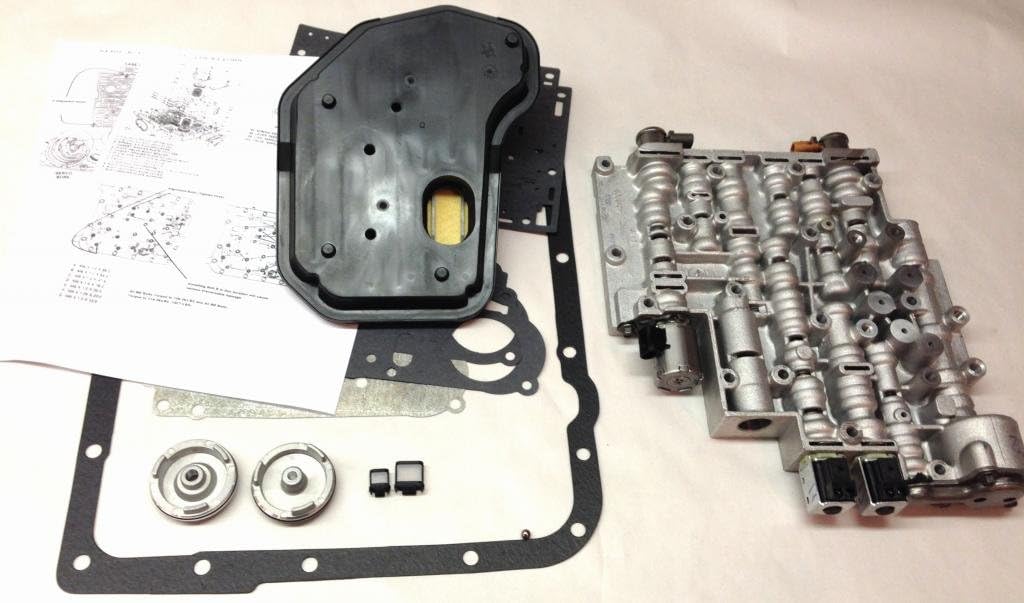
4L65E Transmission Oil Pan Kit with Filter
Pan, filter, and gasket in one kit, sized for the 4L65E, so the drain-and-fill in this guide is a one-box job.
Shop the 4L65E pan and filter kit →Need a different part? Browse the full 4L65E parts collection.
If It Already Slips, a Fluid Service Will Not Fix It
One more honest point, since it is the other half of most "the flush ruined it" stories. Fluid does not wear out clutches; heat and slipping do. If a high-mileage 4L65E already flares between gears, hunts for a shift, or smells burnt before any service is done, the wear is already there, and no fluid, drained or exchanged, brings a clutch pack back. In that case a fluid service is just the moment the existing problem becomes visible. If the unit shifts cleanly and the fluid is simply old and dark, that is the one you want a careful drain-and-fill on, not a machine.
Keep the numbers at the bench. Our free transmission fluid spec chart lists the correct ATF, capacity, and pan torque for the 4L65E and dozens of other units.
FAQ
Does GM recommend a transmission flush for the 4L65E?
No. GM Service Bulletin 04-06-01-029K says the use of external transmission fluid exchange or flush machines is not recommended for the automatic or manual transmission, and that fluid should only be replaced by draining and refilling per the procedure in Service Information. That guidance covers every GM automatic, the 4L65E included.
Is a fluid exchange machine the same thing as a flush?
They are different names for close to the same process. Both connect to the transmission cooler lines and use pump pressure, either the transmission's own pump or the machine's, to push a high percentage of old fluid out while new fluid goes in. GM's bulletin does not carve out an exception for the term used; it applies to external machines in general, not just ones marketed as a flush.
Why does a flush sometimes cause problems on a high-mileage 4L65E?
On a unit that has never had the fluid serviced, worn clutch material and varnish settle out of suspension over time. A high-volume exchange re-suspends that material and pushes it through the same narrow valve body passages and solenoid screens the pump, pressure regulator valve, and cooler circuit all share. A drain-and-fill with a pan drop removes far less material at once and lets you inspect what came out before deciding on a next step.
Does a drain-and-fill actually get the fluid clean on a 4L65E?
Not in one pass. A pan-drop service replaces about 5 quarts out of the roughly 11.2-quart total system volume, since fluid also sits in the torque converter, cooler, lines, and valve body. One drain-and-fill leaves most of the old fluid blended with the new. A second drain-and-fill a few hundred miles later replaces most of what is left without forcing fluid through under outside pressure.
Is there any GM-approved flushing equipment for this transmission?
Yes, but it is limited. GM Bulletin 12-06-01-008B names the J-45096 Automatic Transmission Oil Cooler Flow Check and Flush tool as approved, and it is specifically for checking and flushing the external cooler circuit, not the internal transmission. That is a different job from running fluid through the valve body and clutches with an aftermarket exchange machine.
Sources
- General Motors — Service Bulletin 04-06-01-029K, "Unscheduled Supplemental Services (Including Flushing Services and Additives)," October 2024, covering 2025 and prior GM passenger cars and trucks. Backs: "The use of external transmission fluid exchange or flush machines is not recommended for the automatic or manual transmission... Transmission fluid should only be replaced by draining and refilling following procedures in Service Information (SI)." GM Bulletin 04-06-01-029K (PDF, via NHTSA)
- General Motors of Canada — Service Bulletin 12-06-01-008B, "Unscheduled Supplemental Services," March 2015. Backs: the same external flush/exchange machine warning in an earlier bulletin, and the J-45096 Automatic Transmission Oil Cooler Flow Check and Flush tool as GM-approved equipment limited to the external cooler circuit. GM Bulletin 12-06-01-008B (PDF, via NHTSA)
- General Motors / Chevrolet Performance — Supermatic Transmission Specifications (covers 4L65-E 19260380). Backs: 10.6 L (11.2 qt) dry fill with 300 mm converter, 18 ft-lb pan bolt torque, 25 ft-lb drain plug torque. Chevrolet Performance Supermatic spec sheet (PDF)
- General Motors — Chevrolet Silverado Owner Manual (2012 edition), Automatic Transmission Fluid (4-Speed) and Capacities. Backs: the 180-200°F hot-check procedure (about 15 miles of driving above 50°F), cold check as reference only, the typical less-than-a-pint (0.5 L) top-off, and 4.7 L (5.0 qt) for pan removal and filter replacement on the 4L60-E case shared with the 4L65-E. GM Silverado owner manual (PDF)
- Sonnax — Gregg Nader, "Anatomy of a Transmission: Oil Flow in the Pump-PR-Converter-Cooler Lube Circuits." Backs: the pump, pressure regulator valve, converter, cooler and lube circuits operating as one connected system, with regulated line pressure in the 50-250 psi range and converter/cooler flow cut back when line pressure drops. sonnax.com/tech_resources/131