A 4L80E that's still shifting fine at 150,000 or 200,000 miles isn't lucky, it's maintained. This unit went into GM 2500/3500 trucks, Suburbans, Yukon XLs and full-size vans from 1991 through the mid-2000s, and the ones that are still on the road at those mileages almost always have a service history behind them instead of a "it's never been touched" story. The ones that get towed in on a hook almost always have one thing in common: whatever killed them was visible or testable long before it took the unit out. This is the checklist I actually run on a high-mileage 4L80E, in the order I run it, with the wear points that are easy to miss because they don't show up as a transmission code first.

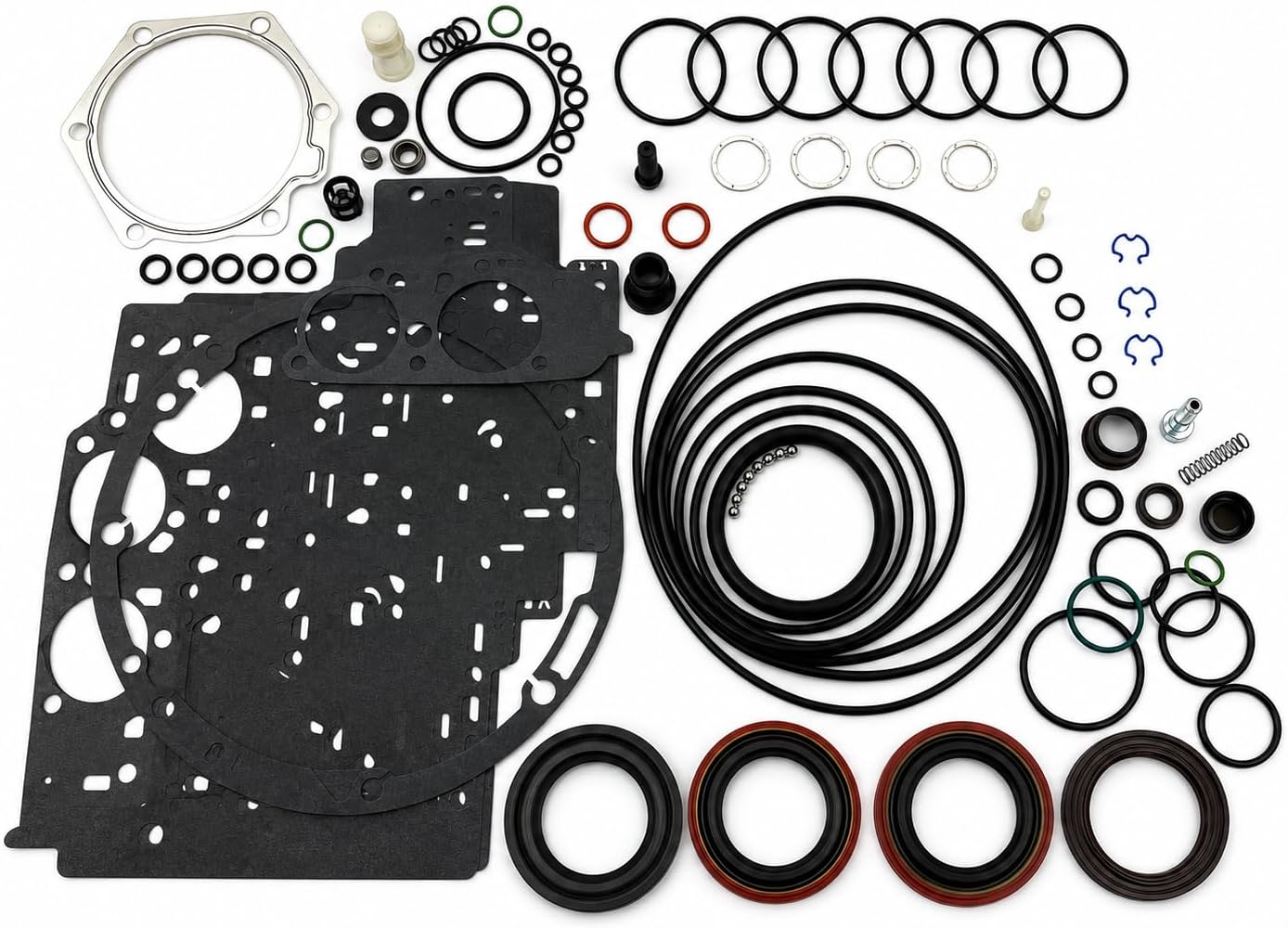

1. Fluid: pull a sample before you decide anything
The 4L80-E left the factory on DEXRON-III. GM's own warranty bulletin covering automatic transmission oil cooler flush and flow testing specifies DEXRON-VI as the fluid used to perform that service, and DEXRON-VI is sold as GM's current, backward-compatible replacement for DEXRON-III and DEXRON-II(E) across its automatic transmissions. Practically: DEXRON-VI is the correct service fill today. What it is not a substitute for is actually looking at what's in the pan before you decide the fluid is "fine." Pull a sample, check the color against a fresh quart, smell it for a burnt, varnish-like odor, and run a magnet through what's on the bottom of the pan. Fine metallic fuzz is normal wear. Anything you can feel as grit, or friction material clinging to the magnet, means you're not doing a fluid service anymore, you're doing a diagnosis.
Pan and filter, not just a drain
A drain-and-fill through the pan plug only gets a fraction of the fluid; the rest sits in the torque converter and the valve body. On a truck with unknown service history, drop the pan and change the filter rather than relying on a partial drain. Reuse the factory steel pan gasket only if it's not nicked, and torque the pan bolts evenly in a crosshatch pattern to whatever figure your service information lists for your casting and pan style — published figures for this bolt vary noticeably between sources, which is exactly why it's worth confirming against the number for your specific pan rather than a number you saw on a forum. Overtightening a 4L80E pan is a more common leak cause than running it a touch loose and snugging it again after a short test drive.
2. Cooler and lines: know when a flush actually helps
GM dropped its mandatory transmission oil cooler flush and flow test requirement for most internal transmission repairs and torque converter replacements effective December 1, 2018, after GM's own studies found the flush had limited benefit on many current repairs. That's a warranty-labor policy change, not a blanket statement that flushing never matters. The same policy keeps the DT-45096 TransFlow machine in place as a GM Essential Tool specifically for diagnosing an overheating condition or a failure traced to insufficient lubrication — which is precisely the situation on a high-mileage truck with a plugged auxiliary cooler, a history of running hot, or a prior internal failure where debris could be sitting in the lines. On a 4L80E high-mileage service: if the truck has no overheating history and the fluid looks clean, you don't need to flush the cooler as a matter of routine. If there's any overheating history, a prior failure, or you're already pulling the pan for other work, flow-test it before you put it back together.
3. The AFL valve bore: the wear point that gets blamed on solenoids
This is the one I see missed most often on a high-mileage unit that's already had its solenoids replaced once and is acting up again. The actuator feed limit (AFL) valve regulates the oil that feeds the shift solenoids and the EPC circuit, and it has a large reaction area that makes it unusually sensitive to side loading. Sonnax documents that the EPC solenoid's constant oscillation of the torque signal and AFL oil increases valve action and accelerates wear in that bore over time. As the bore opens up, pressure delivered to the shift solenoids drops, and the published symptom list reads like a routine high-mileage complaint: wrong gear starts, 2nd gear starts, clutch and band failure, and solenoid or ratio codes. A new solenoid cannot move a valve it isn't being fed enough pressure to move, so if a solenoid replacement didn't fix the complaint, vacuum-test the AFL bore before buying a second set of solenoids.
4. The TCC regulator bore: shudder that keeps coming back
If a high-mileage 4L80E has a torque converter clutch that shudders, releases late, or sets intermittent TCC-related codes after a fresh fluid service, check the TCC regulator bore before condemning the converter. Sonnax's own valve body documentation for this unit identifies chronic wear in the TCC regulator, AFL, and accumulator control valve bores as a recurring high-mileage pattern, corrected by refurbishing the bore and installing an oversized valve. The giveaway is a shudder or apply/release complaint that returns after a fluid change instead of clearing up — fresh fluid masks regulator bore wear for a little while because it restores viscosity, but it doesn't restore the bore's sealing diameter.
5. The 3rd and Reverse checkball sleeve: watch for the pattern, not just one symptom
On 1995-and-later 4L80-E and 4L85-E units, Sonnax documents excess wear in the 3rd and Reverse checkball sleeves located in the 3-4 shift valve bore. Normal checkball movement wears the sleeve over time until the checkball's sealing function is compromised, and the circuit loses apply pressure to the direct clutches. This rarely shows up as one clean symptom — the published pattern is 3rd slip, 4th slip, gear ratio codes, a burned direct clutch, and Reverse slip, often together rather than one at a time. If a high-mileage truck comes in with a weak Reverse and a direct clutch that doesn't look right in the history, that's one worn bore producing several complaints, not three separate failures to diagnose from scratch.
6. The overdrive roller clutch: a towing and plowing problem, not a daily-driver one
This is a real high-mileage failure mode, but it's worth being honest about who it actually hits. Sonnax's technical writeup on this failure is framed specifically around hardworking trucks — the example cited is a wave of blown overdrive roller clutches in Chevy/GMC plow trucks and salt spreaders during a harsh winter. In OD range, the roller clutch has to hold the load by itself because the overrun clutch only applies in the manual ranges (D, 2, and 1). When the roller clutch fails, the damage spreads: its inner race is part of the overrun clutch drum, and its outer race sits in the OD planetary, so Sonnax notes the fix typically requires replacing the drum, the planetary assembly, and the mating components together, not just the clutch. For a light-duty daily driver at high mileage, this is a lower-priority item. For a tow rig or plow truck at high mileage, it's worth asking about the Smart-Tech overrun clutch valve kit, which keeps the overrun clutch applied in every gear except 4th to share the load the roller clutch would otherwise be carrying alone.
Put it in order
On a high-mileage 4L80E with an unknown or thin service history, I run this in order: pull a fluid sample and check it before anything else, drop the pan and replace the filter rather than a partial drain, flow-test the cooler only if there's an overheating history or the pan is already off for other work, vacuum-test the AFL bore if there have been repeat solenoid or ratio codes, check the TCC regulator bore if shudder or apply/release complaints survive a fresh fluid change, and treat the 3rd/Reverse checkball sleeve as one possible cause behind a cluster of slip and ratio symptoms rather than diagnosing each one separately. The overdrive roller clutch only moves up that list if the truck tows or plows for a living. Most of what kills a 4L80E at high mileage is testable before it's expensive — the trick is checking the right bore before you start replacing the parts bolted to it.
FAQ
How often should a high-mileage 4L80E get a fluid and filter change?
There is no single GM mileage number published for the 4L80E specifically, so go by condition and duty cycle: a truck used for towing or plowing runs hotter and ages the fluid faster than a light-duty daily driver. Pull the pan, look at the fluid color and smell it for burnt friction material, and inspect the filter for metal before deciding the interval was fine. A dark, burnt-smelling fluid at any mileage is a sign the service is overdue, not a sign to just top it off.
What transmission fluid does a 4L80E use?
The 4L80E was factory filled with DEXRON-III. GM's own warranty bulletin for flushing and flow testing automatic transmission oil coolers specifies DEXRON-VI as the fluid used in that service, and DEXRON-VI is GM's current backward-compatible replacement for DEXRON-III and DEXRON-II(E) across its automatic transmissions. Don't mix in a CVT or DCT-specific fluid, and don't guess on a non-GM-licensed bargain fluid for a unit this expensive to rebuild.
Does a high-mileage 4L80E need a transmission cooler flush?
GM no longer requires a mandatory cooler flush and flow test on every transmission or torque converter repair as of December 1, 2018 — that requirement was dropped because GM's own studies showed limited benefit on many current repairs. But GM still recommends the flush-and-flow-test tool specifically when diagnosing an overheating condition or a failure traced to lack of lubrication, which is exactly the situation on a high-mileage truck with a history of hot running or a previous transmission failure.
What's the wear point that gets missed on a high-mileage 4L80E during a routine service?
The actuator feed limit (AFL) valve bore. Sonnax documents that the AFL valve has a large reaction area that is heavily affected by side loading, and the EPC solenoid's constant oscillation of the torque signal and AFL oil accelerates wear in that bore over time. As the bore opens up, pressure feeding the shift and EPC solenoids drops, producing wrong-gear starts, 2nd-gear starts, solenoid codes, and gear-ratio codes that look like a solenoid problem but are actually a valve body problem.
Should I worry about the overdrive roller clutch on a high-mileage 4L80E that isn't used for towing?
Less so. Sonnax's own technical writeup on this failure pattern is framed around hardworking trucks — plow trucks and salt spreaders during a hard winter are the specific example cited — because the overdrive roller clutch has to hold the load by itself in OD range, with no backup from the overrun clutch. A light-duty daily driver puts far less sustained load through that clutch. If the truck tows or plows regularly at high mileage, it's worth asking about the Smart-Tech overrun clutch valve kit before the roller clutch fails and takes the OD planetary with it.