The complaint that brings most 4L80E units across the bench a second time is not a bang or a whine. It is soft, sliding shifts, a set of forward, intermediate and direct clutches that came out black, and an owner who wants to know why the rebuild you sold him lasted eight months. Nine times out of ten that unit did not fail because somebody stacked the clutch pack wrong. It failed because line pressure never got where it needed to be, and nobody put a gauge on it before the pan went back up.
The 4L80E controls line pressure electronically, which means a pressure problem can live in three completely different places: the pressure control solenoid and its circuit, the pump's pressure regulator and boost valve, or the engine-side input the computer uses to decide how much pressure to command. That last one is the one that eats rebuilds, and on 6.5L diesel trucks it has nothing to do with the transmission at all.
How the 4L80E Decides on Line Pressure
There is no throttle valve cable and no vacuum modulator on this unit. The PCM reads engine load, decides on a target line pressure, and drives the pressure control solenoid (PCS, also called the EPC solenoid or force motor) to a specific current. The PCS bleeds torque signal oil, torque signal oil positions the pressure regulator valve, and the pressure regulator valve sets line pressure. In Reverse, a boost valve stacks reverse oil onto the regulator to roughly double the pressure, because Reverse applies a lot of clutch at once and needs the holding capacity.
Everything downstream of that is plumbing. If the computer commands the wrong number, or the solenoid does not deliver the current it was told to, or the regulator and boost valve are worn enough to leak, the clutches pay for it. So diagnosis has an order: verify what the computer is commanding, verify what the solenoid is doing, then verify what the pump actually produced. Skip a step and you end up replacing a solenoid that was fine.
Know Which Pressure Control Solenoid Is In Front of You
This is the single most common parts-counter mistake on the 4L80E, and ATRA documented it back in Technical Bulletin #266. There are two entirely different pressure control solenoids, and they are not interchangeable in both directions.
Through the 1993 model year, the 4L80E used a Bosch-built PCS, GM part number 8677314, identifiable by its silver exterior. Starting with 1994 production, GM went to a Holley-built unit, GM part number 8684216, with a black exterior. Internally they are not close relatives: the Holley solenoid has a larger spool valve and an added spring that eliminated the need for the old ten-second cleaning pulse.
The part that bites people is the oil channeling change that came with it. Per ATRA, the 1994 change removes the balance oil from the end of the solenoid. That means a Bosch solenoid must not be used to replace a Holley solenoid, because without that balance oil the regulator sits in the wrong place and you get high line pressure. If a customer's truck came in with cracked cases, broken drums or hammering shifts right after somebody just put a solenoid in it, pull the solenoid and look at the color before you look at anything else.
Two more specifics worth writing on the tag: the Holley PCS reads roughly 3 to 8 ohms, slightly higher than the Bosch unit, and its duty cycle on a scan tool normally sits around 50 to 70 percent at idle and falls as load increases. Amperage and pressure values stay the same as the Bosch units despite the higher duty-cycle reading, so do not chase a high duty cycle number on a Holley unit that is behaving correctly.
4L80E EPC Pressure Control Solenoid, OEM 24220158 (1990-2003)
If the solenoid tests out of range, or you inherited a mismatched Bosch/Holley swap, this is the OE-number replacement for 1990-2003 units. Get the right one in the first time instead of dropping the pan twice.
View the EPC solenoid at CoreTransmissionParts →Shift Solenoid Generations
While you have the pan down, identify the shift solenoids too. ATRA lists three designs, sorted by color: first design was blue for solenoid A and red for solenoid B, second design was gray and green, and the third design introduced in November 1993 is purple for A and tan for B. The third-design parts, GM 24201004 (A) and 24201005 (B), were released to improve solenoid reliability and can be used on any model year 4L80E. There is no reason to put an early-design solenoid back into a unit you want to keep.
The Electrical Checks, In Order
Back-probe at the case connector rather than unplugging solenoids one at a time, and know which cavity you are in. ATRA's published cavity assignments for the updated connector run as follows. Confirm against the service manual for the specific model year before you put a probe anywhere, because the connector itself changed during this production run.
| Cavity | Circuit |
|---|---|
| A | 1-2 shift solenoid control |
| B | 2-3 shift solenoid control |
| C | Pressure control solenoid (high) |
| D | Pressure control solenoid (low) |
| F | Ignition B+ feed: both shift solenoids and TCC |
| L | Transmission fluid temperature signal |
| M | Transmission fluid temperature sensor ground |
| N | Range signal A |
| P | Range signal C |
| R | Range signal B |
| S | TCC PWM solenoid control |
Two stored codes on the OBD-I era units change how you read a pressure complaint, and both come out of the same ATRA bulletin. Code 72, VSS signal loss, makes the PCM command second gear only and line pressure to maximum. A truck that shows up stuck in second with brutal engagements is not necessarily a hydraulic problem at all. And code 79 sets when fluid temperature stays above 146 degrees C, 295 degrees F, for more than 30 minutes, with no default action taken by the PCM. Code 79 in history on a unit with burned clutches tells you the cooling side deserves attention before you close it up.
The 6.5L Diesel Trap: When the Injection Pump Burns the Clutches
This is the failure that will make you replace the same transmission twice, and it is the reason to check the engine before you warranty a 4L80E behind a 1994-or-newer 6.5L diesel.
When GM put the electronic injection pump on the 6.5L in 1994, the truck went drive-by-wire. There is no throttle cable. An accelerator pedal position (APP) sensor is the main input for how much fuel the engine gets and how much line pressure the transmission gets. Sonnax TASC Force member Gregg Nader laid out the consequence in Transmission Digest: these pumps can develop an internal leak that lets the engine receive more fuel than the computer requested.
Follow the chain. Normally a driver pushes the pedal 50 to 100 percent pulling away from a stop, and the PCM commands line pressure to match. A truck getting extra fuel from a worn pump will accelerate from that same stop on 2 to 10 percent throttle. The computer sees a nearly closed pedal, commands almost no EPC pressure rise, and the clutches slip under a load the transmission was never told about. Soft sliding shifts, then burned forward, intermediate and direct clutches. The transmission did exactly what it was asked to do.
How to Catch It in Ten Minutes
- Engine hot, transmission in Park or Neutral. Slowly bring engine speed up and try to hold it at 2,000 rpm. A healthy pump holds it there. If engine speed keeps climbing while your foot is steady, suspect the pump. That can be the only symptom, on a truck that starts, idles and drives fine.
- To confirm, remove the plenum runner between the turbocharger and the intake manifold and the crankcase ventilation tube between the valve cover and the air cleaner duct, then watch fuel rate on a scan tool with the engine running.
- Normal fuel rate is 10 to 13 mm at idle and should rise with engine speed. Try to hold 2,000 rpm again. If rpm climbs while fuel rate drops, the computer is cutting fuel trying to control an engine the pump is overfueling. The published example shows 3,456 rpm at 1 percent throttle opening.
- A fuel rate below 6 mm at idle is another indicator of the same condition.
A leaking pump has to be rebuilt or replaced, and the fuel lines and tank should be flushed, since contamination from a failed lift pump or bad fuel is usually what scored it in the first place. Worth telling the customer: GM extended warranty coverage on these pumps from five years/100,000 miles to 11 years/120,000 miles under a special policy, GM bulletin #00064A.
Check the APP Sensor Itself Too
The APP pod holds three potentiometers, and a fault in any of them moves the load signal the transmission depends on. ATRA's published values: APP #1 reads about 0.5 volts at idle, climbing to roughly 4.0 to 4.25 volts at wide open throttle; APP #2 starts near 4.5 volts at idle and falls to about 1.25 volts or less at WOT; APP #3 sits near 4 volts at idle and drops to about 2.25 to 2.0 volts. The correlation thresholds are tight, more than a 6 percent difference against one partner sensor and 10 percent against the other, so a lazy sensor usually shows up as a correlation fault before it ever goes out of range.
The Hydraulic Side: Boost Valve and Pressure Regulator Wear
If the electrical side checks out and the engine is honest, the pump is next. The 4L80E and 4L85E have a well-documented wear pattern at the boost valve, and it produces the opposite complaint from everything above.
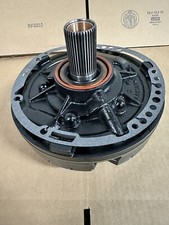
Per Sonnax, worn 4L80E and 4L85E pumps produce uncontrollable line rise upward of 500 to 600 psi, high line pressure in Reverse, a buzzing noise, and broken direct clutch drums or broken cases. The mechanism is a wear-created cross leak at the sleeve that lets reverse boost oil into the torque signal circuit, so the regulator acts on a boost command nobody sent. The buzz and the high line also come from oil leaking past the aluminum balance plug. Sonnax kit 34200-01K addresses both with a hardened steel boost valve whose spools are over 20 percent wider, annular grooves to cut the side loading that caused the wear in the first place, and a steel sleeve with external O-rings that seals against a worn pump cover bore. It retrofits back to 1989 units.
There is a second, quieter pump problem worth knowing on later units. Sonnax notes that the OE pressure regulator valve design prevents adequate cooler flow at low rpm under high pressure and high demand, which is a straight line to overheating, and that on 1999-and-later vehicles GM set factory EPC pressure high at idle, producing an engine surge complaint. Their lube-regulated regulator valve 34200-14K uses an encapsulated check valve to keep regulated flow going to the converter charge and lube circuit at idle, which also prevents converter and pump drainback and improves TCC release pressure. If your complaint list reads engine surge at idle, low cooler flow and low converter release pressure, that is the bore to look at, not the solenoid.
The matching Sonnax boost valve kit is stocked here: 4L80E Sonnax Boost Valve Kit 34200-01K.
If You Are Going to Raise Pressure, Raise It On Purpose
Plenty of 4L80E builds get a pressure bump, and it is the right call on a truck that tows. Just understand which lever you are pulling. Sonnax puts it plainly: a stronger pressure regulator spring has a linear effect, adding the same pressure at the bottom of the range as at the top, while a larger ratio boost valve has a progressive effect, changing the rate at which pressure climbs.
That distinction is the whole argument against throwing in the stiffest spring in the drawer. An increase that firms up a heavy-load upshift nicely is the same increase that slams the truck into Reverse in the customer's garage, adds load to the pump at idle, and can drag the TCC because cooler flow drops. Sonnax builds their 4L80E-LB1 line pressure booster kit around exactly that tradeoff, pairing a spring roughly 10 percent stronger than OE with a large ratio boost assembly so the low end stays civil while the high end still comes up.
The Short Version for the Bench
- Put a gauge on it before you take anything apart. Pressure complaints get diagnosed with pressure, not with feel.
- Identify the PCS by color and part number. Silver Bosch 8677314 for 1991-93, black Holley 8684216 for 1994-up. Never put a Bosch into a Holley-era unit.
- Read the Holley PCS at 3 to 8 ohms, and expect 50 to 70 percent duty cycle at idle, falling under load.
- Check history for code 72, which commands maximum line pressure, and code 79, which means it ran above 295 degrees F for half an hour.
- On any 1994-up 6.5L diesel, hold 2,000 rpm in Park and watch fuel rate. Below 6 mm at idle, or rpm climbing while fuel rate falls, means the injection pump burned your clutches.
- Put third-design shift solenoids 24201004 and 24201005 in regardless of what came out.
- Inspect the boost valve sleeve and balance plug on anything with high line, a buzz, a broken drum or a cracked case.
- On 1999-and-later units with surge at idle or a history of overheating, address the pressure regulator valve, not just the cooler.
The 4L80E is a durable unit. Most of the ones that come back did not get beaten, they got starved or overfed by a control system nobody verified. Fifteen minutes with a gauge and a scan tool ahead of the teardown is the cheapest warranty policy on the bench.
Sources
- ATRA — Technical Bulletin #266, "4L80E Updates," Chevrolet, 1995. Backs the 1994 pressure control solenoid change (Bosch GM 8677314, silver, 1991-93 versus Holley GM 8684216, black, 1994-95), the larger spool valve and added spring that removed the ten-second cleaning pulse, the oil channeling change that removes balance oil from the end of the solenoid and the resulting warning that a Bosch unit must not replace a Holley or high line pressure will result, the 3 to 8 ohm resistance and 50 to 70 percent idle duty cycle, the three shift solenoid designs by color and third-design GM part numbers 24201004 and 24201005, the updated connector cavity-to-circuit assignments, code 72 (VSS signal loss, commands second gear only and maximum line pressure), code 79 (fluid above 146 degrees C / 295 degrees F for more than 30 minutes), and the three APP sensor voltage sweeps plus the 6 percent and 10 percent correlation thresholds. atracom (PDF)
- Transmission Digest — "Low Line Pressure in 4L80-E in Diesel-Powered Trucks," Gregg Nader, Sonnax TASC Force, March 1, 2002. Backs the 1994 GM electronic diesel injection pump and drive-by-wire APP sensor as the main input for both fuel and commanded line pressure, the internal pump leak that delivers more fuel than commanded, the 50 to 100 percent normal launch throttle versus 2 to 10 percent on an overfueling truck, the resulting soft sliding shifts and burned forward, intermediate and direct clutches, the 2,000 rpm hold test in Park or Neutral, the plenum runner and crankcase ventilation tube removal for the confirmation test, the 10 to 13 mm normal idle fuel rate, the below-6 mm idle indicator, the 3,456 rpm at 1 percent throttle example, the fuel line and tank flush recommendation, and the GM special policy warranty extension from 5 years/100,000 miles to 11 years/120,000 miles under GM bulletin #00064A. transmissiondigest.com
- Sonnax — Boost Valve Kit 34200-01K product and instruction page (GM 4L80-E, 4L85-E pump). Backs the uncontrollable line rise upward of 500 to 600 psi, high line pressure in Reverse, buzzing noise and broken direct clutch drums or broken cases; the cause statement that reverse boost oil enters the torque signal circuit through a wear-created cross leak at the sleeve and that high line and buzz come from leakage past the aluminum balance plug; the hardened steel boost valve with over 20 percent wider spools and annular grooves; the steel sleeve with external O-rings compensating for pump cover bore wear; and the retrofit back to 1989 units. sonnax.com
- Sonnax — Lube Regulated Pressure Regulator Valve 34200-14K product page (GM 4L80-E, 4L85-E pump). Backs the symptom set of engine surge at idle, low cooler flow and low TCC release pressure; the statement that the OE pressure regulator valve design prevents adequate cooler flow at low rpm and high pressure/demand conditions, creating overheating; the 1999-and-later factory EPC pressure set high at idle producing engine surge; and the encapsulated check valve that allows regulated flow to the converter charge and lube circuit at idle while preventing converter or pump drainback. sonnax.com
- Sonnax — "The Prescription for Optimum Pressure," September 24, 2010. Backs the linear effect of stronger pressure regulator springs versus the progressive effect of larger ratio boost valves, and the practical limits of spring-only pressure increases: a rise that tightens heavy-load upshifts can be too much on a Reverse engagement, it adds load to the pump at idle, and it can cause TCC drag from reduced cooler flow. sonnax.com
- Sonnax — Line Pressure Booster Kit 4L80E-LB1 product page. Backs the kit contents (pressure regulator spring, two O-rings, large ratio boost assembly) and the design target of a spring approximately 10 percent stronger than OE paired with a large ratio boost valve to deliver a modest low-end increase with a higher progressive high end, without overloading the pump at idle. sonnax.com