Slipping is not a diagnosis on a 4L80E. It is what a clutch pack or band does when it is not getting the apply pressure it was built around, and on this unit that pressure goes missing in a small number of specific places. The 4L80E also tells on itself: the direct clutch is applied in 3rd, 4th and Reverse, so the combination of ranges the customer complains about names the circuit before you drop the pan.
Work it in this order: read the slip by gear, test pressure against the chart, vacuum test the bores that feed the clutch you suspect, then open it.
Read the slip by gear first
Sonnax technical specialist Randall Schroeder makes the point from the no-Reverse side, and it works just as well for a slip complaint: Reverse on a 4L80E shares the direct clutch with 3rd and 4th gear, and shares the low/reverse band with manual 1st. Two shared elements, and the overlap is the diagnosis.
- Slips in 3rd and 4th, and Reverse is weak or gone. One circuit, one clutch pack. Direct clutch apply oil is leaking somewhere between the valve body and the drum. This is the most common 4L80E slip pattern and it is usually not the clutches themselves — not originally.
- Slips in Reverse and manual 1st, but 3rd and 4th hold. Low/reverse band, servo or band anchor, not the direct clutch.
- Slips from the first engagement, in every range. Fluid level, pump, or line pressure. Stop thinking about clutches until pressure is proven.
- Flares or freewheels in 1st through 3rd after heavy work. Overdrive roller clutch. See below — this one is a plow and tow truck failure with its own mechanism.
Cause 1: the checkball sleeve in the 3-4 shift valve bore
This is the one that catches rebuilders, because the part that fails is in the valve body and the part that burns is in the case.
Per Sonnax, on 1995-and-later 4L80-E and 4L85-E units the Reverse checkball sleeve located in the 3-4 shift valve bore wears from the normal movement of the checkball inside it. As the wear progresses the checkball can no longer seal, and the circuit loses apply pressure to the direct clutches. The documented consequences are exactly the complaint list above: slipping or no 3rd and 4th gear, burnt direct clutches, and ratio codes.
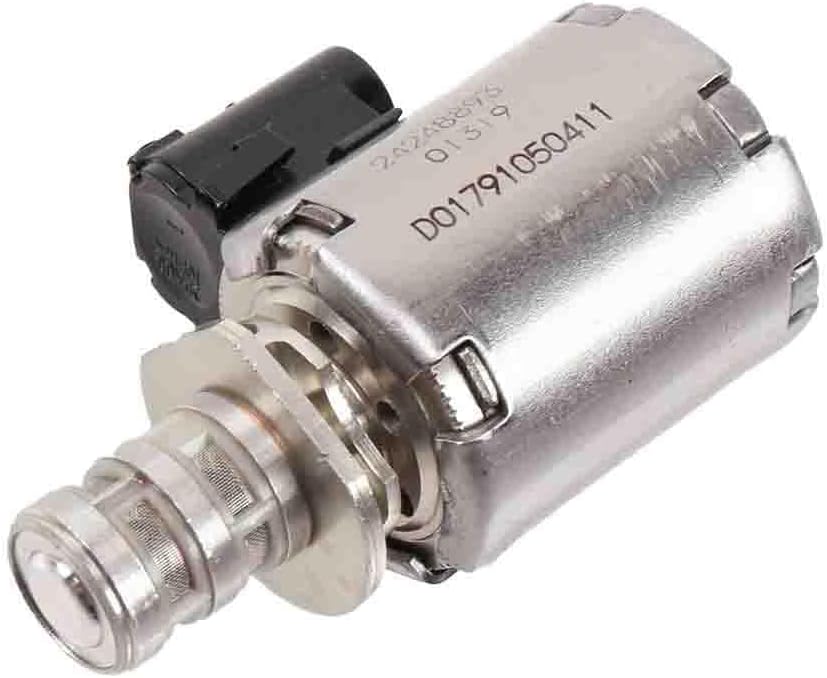
The tell is a unit that burns a fresh set of direct clutches inside a few months. If you rebuilt it, set the clearances right, and it came back burnt, the valve body kept the hydraulic defect that killed the first set. Sonnax kit 34200-47K (3rd and Reverse checkball sleeve) and 34200-38 (Reverse checkball sleeve, outboard) are the drop-in repairs, made from wear-resistant aluminum. Both are checkball locations, so test them the way the Sonnax vacuum guide specifies — valve body vertical, ball seated. Testing them flat gives a false pass.
Cause 2: direct clutch drum bore wear at the center support
Same circuit, further downstream. Sonnax documents that wear at the direct clutch drum bore in TH400, 4L80-E and 4L85-E units lets 3rd and Reverse apply oil exhaust past the center support sealing rings. The result is direct clutch failure, delayed or no 3rd and Reverse, slips in 3rd, no 4th gear, and slip codes. When the bore is worn past what new seal rings can recover, the drum gets sleeved — that is what Sonnax kit 34838-01K exists for.
You can prove this one on the bench. GEARS describes vacuum testing the direct clutch circuit by plugging the support hole and testing at the steel support between the rings, which exposes a leak in that circuit including debris trapped between the support and the gasket.
Why the bore wears in the first place
Endplay. GEARS documents that the direct clutch housing floats between two thrust surfaces — the thrust washer behind the forward clutch hub and the splines where the drum meets the sun gear shaft — with typical housing endplay of 0.020" to 0.025". Float becomes wobble, wobble becomes radial runout, and runout is what damages the sealing ring bore in the drum and peens the seal ring grooves on the center support. What pushes the stack rearward is not trivial: on a TH400 it works out to about 199 pounds combined, roughly 47 from converter charge plus 152 from input shaft lube pressure. The 4L80E runs a higher converter charge pressure than a TH400 under high load, around 100 psi against roughly 60, so the thrust here is worse, not better.
Cause 3: line pressure that does not match the chart
If it slips everywhere, test pressure before you test theories. Maximum line pressure on a 4L80E is about 180 psi. Schroeder's procedure is to test line pressure in Reverse, 3rd, 4th and manual 1st, and to verify that both the low side and the high side at each shift fall inside the pressure test chart spec. One reading in Park at idle proves almost nothing.
The pump end has a well-documented wear pattern. Sonnax boost valve kit 34200-01K addresses a worn boost valve sleeve that lets Reverse oil leak into the torque signal circuit plus a worn end plug that unbalances the pressure regulator valve. Left alone, that drives line rise upward of 500-600 psi, which does not slip clutches — it breaks clutch pistons and drums. The same sleeve wear bleeding the other way robs the torque signal the clutches depend on for pressure rise under load, and then it does slip.
Two more valve body bores belong on this list because they change what the clutches ever see:
- Accumulator control valve — wear shows up as soft shifts, low accumulator pressure, high line pressure in Drive and low line rise in Reverse. Sonnax 34994-22K.
- Actuator feed limit valve — wear shows up as wrong-gear starts, 2nd gear starts, solenoid codes, no 4th gear and clutch and band failures. Sonnax 34200-16K.
- Manual valve — bent valves give low line rise and delayed engagement.
Cause 4: endplay the frictions end up paying for
Excess front endplay is a quiet cause of a burnt forward clutch, and it gets worse after the pump has been resurfaced or the shaft splines have worn. Sonnax lists excess front endplay, forward clutch failure and sealing ring failure together for that reason, and sells the fix as a selective: forward clutch hub washer (rear) 34301-078, steel, 0.078" thick, 1.780" OD, 1.405" ID, with 34301-094 running 0.030" thicker. It also stabilizes the direct drum — the same drum from Cause 2.
Cause 5: the overdrive roller clutch, if it plows or tows
Jim Dial of the Sonnax TASC Force laid out the mechanism in Transmission Digest: on the 4L80-E, the overdrive one-way roller clutch holds in 1st through 3rd and freewheels in 4th, and in the overdrive range that roller clutch is holding by itself. The overrun clutch that would share the load only comes on in the manual ranges. Under overheat, the plastic cage of the overdrive roller clutch can melt, and the failure does not stay contained: it takes the overrun clutch drum that serves as the inner race, the OD planetary that serves as the outer race, the planet gears the roller debris chips, and the ring gear, which is part of the forward drum.
Two real fixes. Tell plow and tow drivers to run the manual ranges under load so the overrun clutch backs up the roller clutch, and to watch the temp gauge. On 1997-and-later units, Sonnax Smart-Tech overrun clutch valve kit 34200-40K applies the overrun clutch in every range except 4th, and bolts to the valve body externally.
Diagnose it in this order
- Fluid level hot, and fluid condition. Check it at operating temperature, not cold. Dark and burnt means material is already gone; you are deciding how far in, not whether.
- Line pressure in Reverse, 3rd, 4th and manual 1st. Low side and high side at each shift, against the chart. This is the test that separates a pressure problem from a clutch problem.
- Scan data: commanded gear versus calculated ratio. A gear that is commanded and not achieved is a slip by definition, and it is what sets the ratio codes.
- Unplug the transmission connector. That forces the failsafe pattern and takes the electronics out of the argument. Note the interlock while you are at it: the unit will not engage Reverse above 8 mph.
- Lock the low/reverse band mechanically. Schroeder's method is a servo cover with a nut welded to it, used to hold the band applied. It separates a band or servo problem from a direct clutch problem.
- Vacuum test the valve body and pump. The Sonnax 4L80-E guide maps every critical bore, tested on a 0 to 30 in-Hg gauge with the valves in rest position unless noted. A low reading is wear.
What the vacuum test points at when the complaint is slipping
Straight from the Sonnax 4L80-E guide, filtered down to the bores that produce a slip:
- 3rd and Reverse checkball sleeve (34200-47K) — 3rd and 4th slip, ratio codes, direct clutch burned, Reverse slip
- Reverse checkball sleeve, outboard (34200-38) — Reverse slip, ratio codes, 3rd and 4th slip, direct clutch burned, no Reverse
- Accumulator control valve (34994-22K) — soft shifts, low accumulator pressure, high line in Drive, low line rise in Reverse
- Actuator feed limit valve (34200-16K) — wrong gear starts, 2nd gear starts, solenoid codes, no 4th, clutch and band failures
- Boost valve assembly, pump (34200-01K) — uncontrollable line rise, high line pressure, broken parts, broken clutch piston
- Pressure regulator valve end plug, pump (34200-05K) — harsh or soft shifts, burnt clutches
- Manual valve — bent valves, low line rise, delayed engagement
Three notes from the same guide that people skip and then get bad readings: test the checkball sleeves with the valve body vertical and the ball seated, tilt the valve body for the shift valve bores, and plug the casting valley with foam or putty where the guide marks it.
What the repair actually is
If you caught it at the valve body and the clutches are still usable, the unit stays in the truck: checkball sleeves, actuator feed limit valve, accumulator control valve, pressure retest. That is a pan-off job.
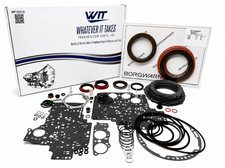
If the direct clutches are burnt, it comes out, and the rebuild has to include the cause or you are doing it twice. Friction and steel module. Direct drum bore inspected at the center support ring lands, sleeved if it is past what new rings can seal. Center support ring grooves checked for peening. Endplay set with selective washers rather than whatever came out. If the pump is suspect, the boost valve and the pressure regulator end plug get handled while it is apart, not later.
Preventing the next one
Heat is the common thread through every failure above. It melts the roller clutch cage, cooks the frictions, and accelerates the bore wear that starts the chain. An honest cooler, a temperature gauge the driver actually looks at, manual ranges under heavy load, and clean fluid on a real interval do more for a 4L80E than any single hard part. The unit was released on DEXRON-III; DEXRON-VI is the current service fill.
FAQ
Why does my 4L80E slip in 3rd and 4th but Reverse is weak too?
Because those three ranges share one clutch pack. The direct clutch is applied in 3rd gear, 4th gear and Reverse, so a single leak in the direct clutch apply circuit shows up as all three complaints at once. That pattern points at the Reverse checkball sleeve in the 3-4 shift valve bore or at a worn direct clutch drum bore letting apply oil exhaust past the center support rings, not at three separate failures.
Can a 4L80E slip from low fluid alone?
Yes, and it is the first thing to rule out because it costs nothing. Low fluid lets the pump pick up air, and aerated fluid will not hold pressure at any clutch. Check the level hot, not cold. But if the fluid is dark and smells burnt, low fluid is no longer the whole story - material has already come off the frictions.
Will a shift kit fix 4L80E slipping?
Only if the slip came from a hydraulic defect a shift kit happens to address. A shift kit raises and firms pressure; it does not restore a checkball sleeve that no longer seals or a drum bore that leaks past its rings. Vacuum test the valve body and pump first, and replace whatever reads low.
What causes burnt direct clutches in a 4L80E right after a rebuild?
Most often a hydraulic defect that was left in the valve body or the drum. Sonnax documents that the Reverse checkball sleeve in the 3-4 shift valve bore wears on 1995-and-later units and loses apply pressure to the direct clutches, producing slipping or no 3rd and 4th and burnt direct clutches. Drum bore wear at the center support does the same thing by letting 3rd and Reverse apply oil exhaust. Fresh clutches into either condition burn again.
Is 4L80E slipping in 4th only an overdrive roller clutch problem?
Not usually. The overdrive roller clutch freewheels in 4th and holds in 1st through 3rd, so its failure shows up as a flare or freewheel in the lower gears, not in 4th. A 4th gear complaint on its own points at the 4th clutch circuit. The roller clutch is the suspect on plow and tow trucks that lose drive in the lower gears after running hot, because the plastic roller cage can melt under overheat.