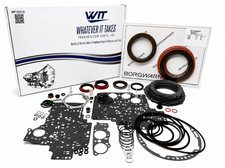
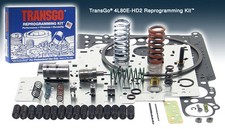
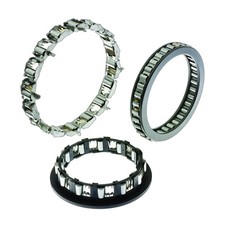
Most 4L80E transmissions still on the road are the center-lube units GM built from 1997 on, behind 2500 and 3500 Silverado and Sierra pickups, Suburban 2500s and Express and Savana vans. If yours has started slipping into fourth, taking a beat too long to engage, or leaking from more than one place, this new master rebuild kit is listed for the 1997-2011 range and renews the frictions, steels, seals and gaskets in a single overhaul. The listing shows the brand as OEM and includes a 1-year warranty.
What this kit does in a center-lube 4L80E
In 1997 GM moved the cooler return line from the pump to the center support so cooled fluid lubricates the middle of the geartrain, and Transmission Digest notes that many internal hard parts were redesigned to suit it. The clutch packs and seals that wear out are the same family of parts across this period, and a master kit replaces all of them so every clutch applies with full clamping force and every circuit holds pressure again. What the kit does not do is tell you which hard parts sit around it, and in this year range that matters more than usual: there are two center-lube designs, 1997-98 and 1999-and-later.
Symptoms on a 1997-and-later unit
- Slipping or loss of fourth gear, or a freewheel feel on decel, after heavy towing or plowing
- Forward or direct clutch wear, the classic heavy-use failure
- Delayed engagement into Drive or Reverse when cold
- Burnt fluid with friction debris and melted plastic in the pan
- Soft shifts from worn bushings bleeding off pressure
- Leaks from the pump, output or case connector seals
That loss of fourth deserves attention. Transmission Digest explains that the overdrive roller clutch holds alone in first through third and freewheels in fourth, and that overheating can melt its plastic cage. A plow or tow truck that lost fourth needs that roller clutch inspected along with the plates.
How to confirm before you buy
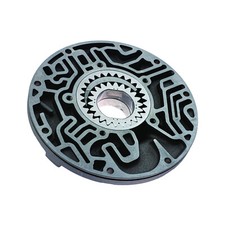
Rule out solenoids, wiring and pressure control first, then run a line pressure test. If pressure is good but the unit still slips, or the pan is full of burnt material, the packs are done. Our Sierra 2500 4L80E problems guide and Express van 4L80E problems guide walk through the failures specific to those trucks. Sonnax publishes a 4L80-E vacuum test guide that maps the pump and valve body wear points, which helps you decide if those need replacement too.
Fitment
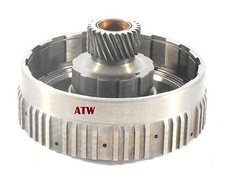
This kit is listed for 4L80E units from 1997 through 2011. Our own model data shows the 4L80E in GM trucks and vans through about 2009, so a later date on your paperwork is a reason to read the transmission ID tag before ordering. Within the range, know which center-lube design you have. Transmission Digest describes 1999-and-later front and rear carrier pinions growing from about 0.710 to 0.785 inch thick, a raised sun gear, and three different sun gear shafts, with the second design used only in 1997-98 units. The 1997-98 and 1999-up center supports also differ in height by about 0.050 inch. Match the hard parts to your year, and send us the year and VIN if in doubt. A 1996 or earlier pump-lube unit needs the 1996 master kit or an earlier kit, and the full lineup is on our 4L80E parts page.
Install notes
Before the new soft parts go in, inspect every bushing, and replace any that are worn or out of round. The 4L80E bushing driver kit lets you remove and install them without scoring the bores. When reassembling, check that the sun gear shaft bushing journal stands about 0.050 inch above its bushing; too much or too little means mixed 1997-98 and 1999-up parts. The fourth clutch piston has lip seals that are easy to cut on the way in, and the 4th clutch piston lip seal installer protects them. Soak frictions in ATF, lube every seal, set clutch clearances to spec, and fill with Dexron VI.