Three shops quote a 4L80E rebuild and the numbers come back a couple thousand dollars apart. The customer assumes somebody is padding. Usually nobody is. The spread is real, and it comes from the fact that "rebuild a 4L80E" describes at least four different jobs that happen to share a name.
The soft parts are the predictable half of the bill. Frictions, steels, bushings, gaskets, seals, a filter and fluid land in a fairly tight range no matter who buys them. What moves a quote by thousands is what the teardown finds: whether the pump survived, whether the case survived, what the converter did on its way out, and whether the thing that killed the transmission is even inside the transmission. Here are those cost drivers with the failure mechanism behind each one, so you can read a quote instead of guessing at it.
Related reading: our 4L80E common problems writeup and the low line pressure diagnosis guide, which covers the condition behind most burned-clutch rebuilds.
What is actually in the bill
Before arguing about the total, it helps to know which line items are fixed and which are variable. A 4L80E rebuild breaks down roughly like this:
| Line item | Variable? | What changes it |
|---|---|---|
| Master kit: frictions, steels, bushings, gaskets, seals, filter | Low | Stock vs high-energy friction material |
| R&R labor, teardown, assembly | Low | 4WD, crossmember and exhaust access, rust |
| Fluid (DEXRON VI) | Low | Deep pan, auxiliary cooler, flush vs pan drop |
| Torque converter | High | Rebuild or replace, stall and duty cycle |
| Pump and pressure regulator circuit | High | Bore wear, boost valve and sleeve condition |
| Valve body | High | How many bores vacuum test bad |
| Hard parts: drums, shafts, sprags, planets, case | Very high | Whether the unit broke or just burned |
| The root cause outside the transmission | Very high | Cooling, fueling, wiring, driver behavior |
Everything below the fluid line is why quotes diverge. Here is what drives each one.
Cost driver 1: burned versus broken
A 4L80E that slipped itself to death on marginal line pressure is the cheap version of this job. The frictions are cooked, the steels are blued, the fluid is black, and the geartrain is fine. Master kit, clean the case, converter handled, done.
A 4L80E that lost pressure control in the other direction is the expensive version. Sonnax documents this failure path directly on its 4L80-E and 4L85-E boost valve kit: a wear-created cross leak at the boost valve sleeve lets reverse boost oil into the torque signal circuit, and oil leaking past the aluminum balance plug unbalances the pressure regulator valve. The result they list is uncontrollable line rise upward of 500 to 600 psi, high line pressure in Reverse, a buzz you can hear, and then broken direct clutch drums, broken clutch pistons and broken cases.
That is the whole ballgame on cost. A burned unit needs soft parts. A unit that ran at 600 psi needs a direct drum, possibly a case, and every piece of debris those made chased out of the cooler and lines. Same complaint from the driver's seat, wildly different invoice.
Cost driver 2: the pump and the boost valve
The pump is where most of the hidden money lives, because pump bore wear is not visible without testing and is easy to reuse by accident.
Sonnax's vacuum test guide for the 4L80-E and 4L85-E maps the critical wear areas in the pump: the pressure regulator valve, where a low reading shows up as engine surge at idle, low TCC release pressure and low cooler flow; the pressure regulator valve end plug, which produces harsh or soft shifts and burnt clutches; the boost valve assembly; and the TCC valve and TCC enable valve end plugs, which cause no converter apply and burnt converter lining. Each location has a replacement part called out against it, and the guide's rule is simple: a low vacuum reading at a test location means that bore is worn.
The detail that decides whether you buy a pump or repair one: Sonnax notes that if there is leakage between the boost valve sleeve and the pump bore, the kit with the O-ringed sleeve compensates for pump bore wear and prevents pump scrappage. That is a repair-versus-replace fork worth a few hundred dollars, and it only gets found if somebody actually vacuum tests the pump instead of eyeballing the bores.
Cost driver 3: how many valve body bores test bad
The valve body is the other place where "rebuild" quietly becomes two different jobs. The same Sonnax vacuum test guide lists the wear locations and what each one causes when it leaks:
- Actuator feed limit valve — wrong gear starts, second gear starts, solenoid codes, clutch and band failures, no fourth gear (Sonnax 34200-16K).
- Accumulator control valve — soft shifts, low accumulator pressure, high line pressure in Drive, low line rise in Reverse (34994-22K).
- TCC regulator valve — converter shudder, burnt converter, TCC apply and release concerns, TCC codes (34994-01K standard, 34994-18K oversized).
- Reverse checkball sleeve — reverse slip, no reverse, third and fourth slip, burned direct clutch, gear ratio codes (34200-38).
- Third and reverse checkball sleeve — the same family of complaints (34200-47K).
- Low/reverse checkball — no engine braking in manual low, reverse complaints, burnt rear band (34200-52).
- AFL solenoid filter and end plug — broken AFL filters and second gear starts (34994-17K).
Note how many of those produce burned clutches. A shop that installs a master kit behind a valve body with a worn AFL bore has just sold the customer a rebuild that will fail the same way it failed the first time. The correct order is vacuum test first, then decide between bore repair kits, a corrected valve body, or a remanufactured unit. Each step up costs more and each one is sometimes the right call.
Cost driver 4: the converter
The converter is the single most common place a cheap quote hides. Transmission Digest's converter coverage of the 4L80-E, written by Sonnax technical specialist Ed Lee, is blunt about the history: the 4L80-E arrived in 1991 with few converter problems, but TCC pistons were cracking right from the start, with the cracks developing just inside the bond surface.
Then it got worse. When the second-generation 4L80-E arrived in model year 2000, the impeller-side stator cap was eliminated and a much lighter-duty bearing was used, identifiable by two flats on the inside diameter of the outer race. That bearing had piloting problems and cracked races, and when a race broke it usually destroyed the stator and impeller. On some units the roller clutch inner race wore its way clear through the stator housing and into the impeller hub. GM eventually got it under control with a bearing 0.015 inch thicker through its cross section and the flats removed, with the outer and inner diameters unchanged.
Practical translation: on a second-generation unit the converter is not a reuse item. A failed stator bearing also puts metal through the cooler circuit, so the cooler and lines get flushed or replaced too. Leaving that off a quote is how a fresh rebuild gets contaminated in its first week.
Cost driver 5: which side of the year splits the unit falls on
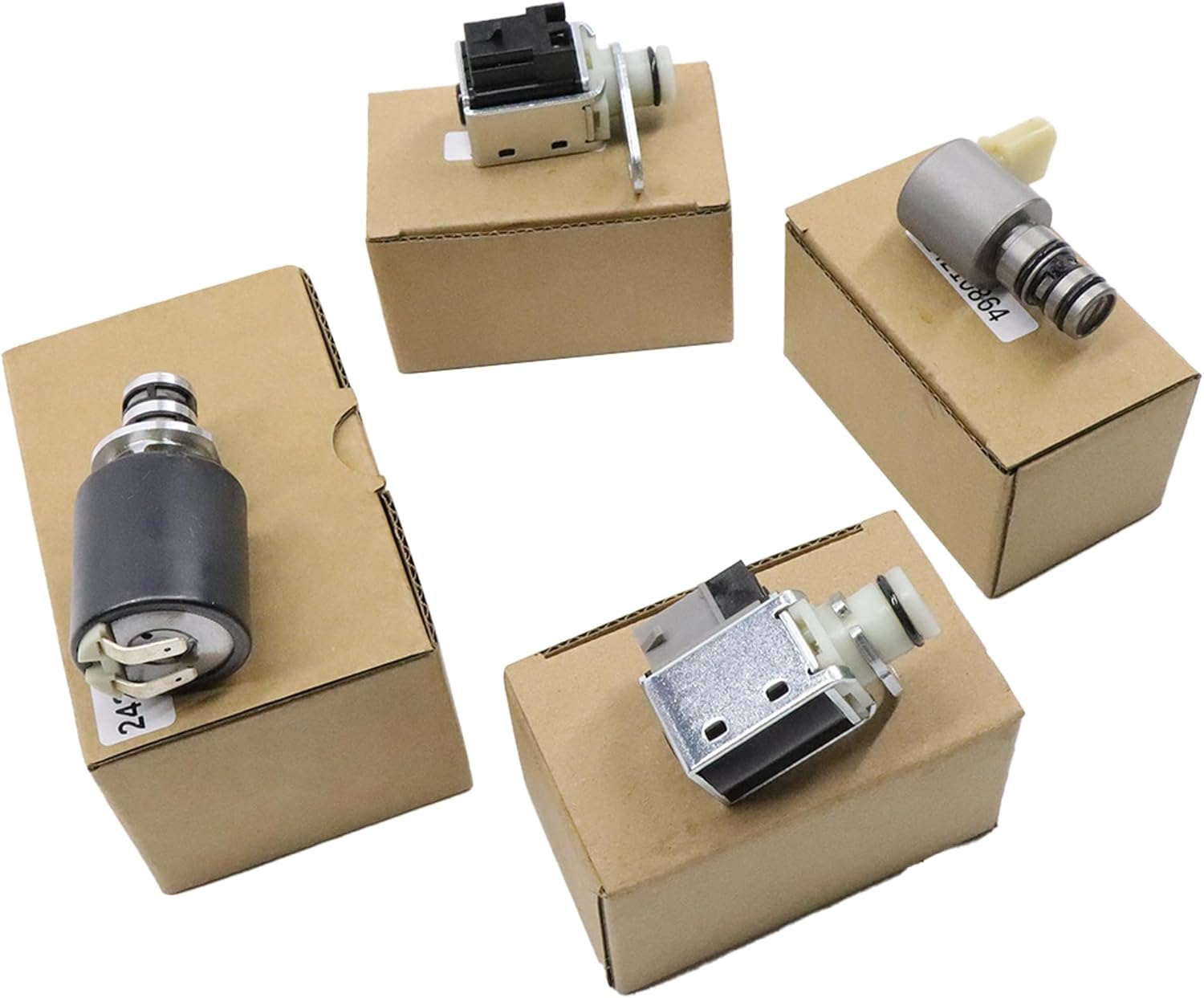
4L80E hard parts are not one catalog, they are several. Suppliers split the unit at roughly 1991-1996, 1997-2002 and 2003-up, and the valve body castings and solenoid packages differ across those splits. Our own catalog carries three distinct remanufactured valve bodies for exactly that reason, including the 1997-2002 casting 24204267 group.
Early units can be harder to source specific hard parts for, and a shop that quotes from the wrong side of a split has to re-quote once it reads the tag. Get the RPO code and the casting number to the shop before the quote, not after.
Cost driver 6: the overdrive roller clutch and how the truck gets driven
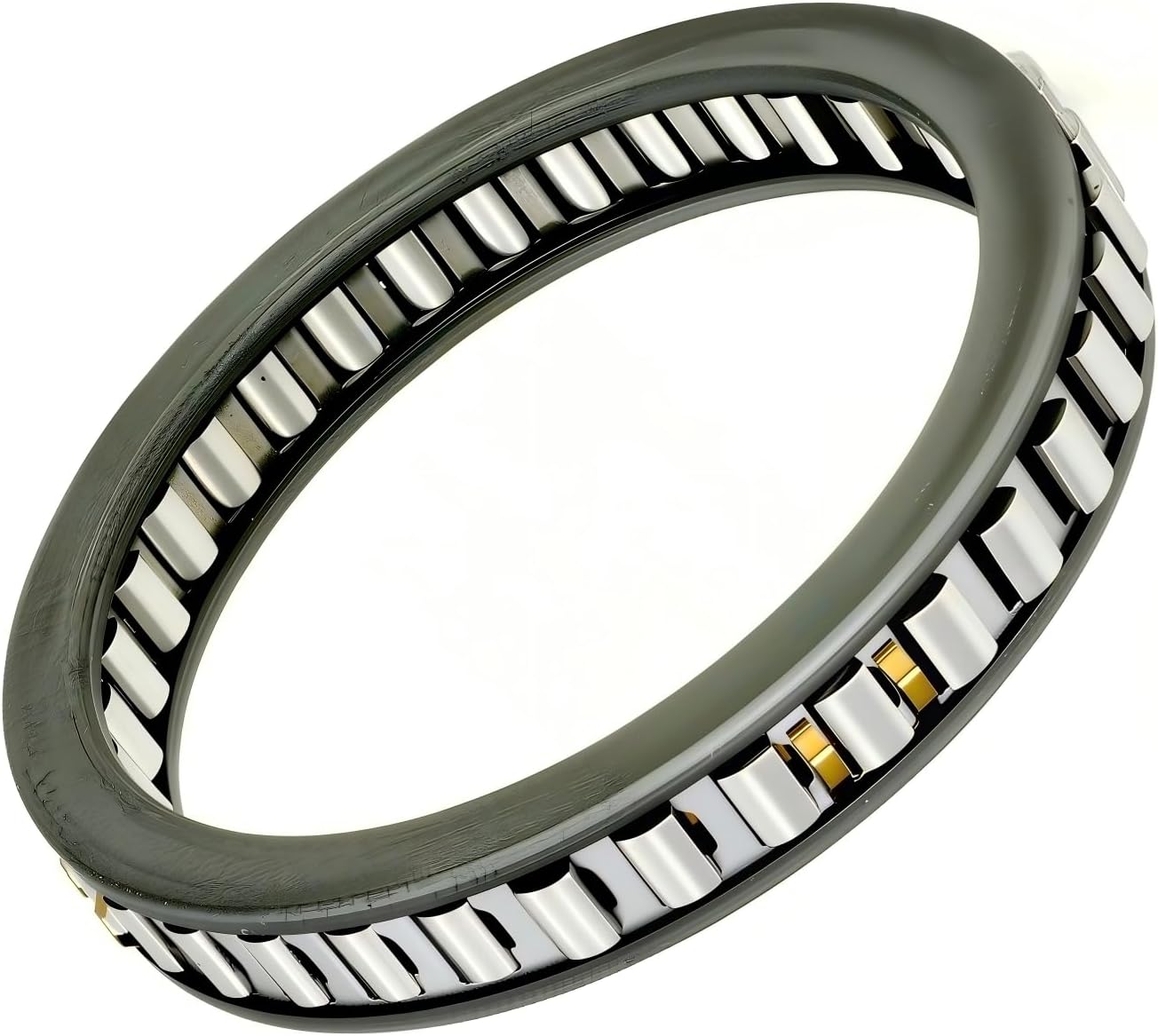
Sonnax TASC Force writer Jim Dial laid out a failure path in Transmission Digest that costs plow and tow owners real money. In the 4L80-E, the overdrive one-way roller clutch lives inside the overrun/coast clutch drum, holds in first through third, and freewheels in fourth. Here is the catch he points out: in the overdrive range the OD roller clutch is holding by itself, because the overrun clutch only applies in the manual ranges.
So a driver pushing snow or pulling a heavy load in overdrive has the roller clutch carrying the whole job with no backup. Add heat and the failure gets quick: Dial notes that during an overheat the plastic cage of the overdrive roller clutch can melt, which takes the roller clutch out immediately. The advice he gives is the cheapest repair in this entire article, which is to drive in the manual ranges under load so the overrun clutch backs up the roller clutch, and to actually watch the transmission temperature gauge.
For quoting purposes: a plow or tow unit is more likely to need an overrun drum, a roller clutch and a planet than a grocery-getter with the same mileage, and it should get cooling addressed as part of the job rather than as an upsell.
Cost driver 7: the failure that is not in the transmission
This one is why some rebuilds get paid for twice. Sonnax TASC Force writer Gregg Nader documented it for 1994-and-later GM 6.5L diesel trucks with electronic injection pumps. Those trucks are drive-by-wire, and the accelerator pedal position sensor is the main input for both how much fuel the engine gets and how much line pressure the transmission gets.
When the injection pump develops an internal leak, the engine receives more fuel than the computer requested. The truck then pulls away from a stop on 2 to 10 percent throttle instead of the normal 50 to 100 percent, so the computer never commands enough EPC line pressure rise. The result, in Nader's words, is soft sliding shifts and burned forward, intermediate and direct clutches. GM extended injection pump coverage from five years/100,000 miles to 11 years/120,000 miles under bulletin #00064A because these pumps were a known problem.
His test costs nothing: with the engine hot and the transmission in Park or Neutral, slowly bring engine speed up and try to hold it at 2,000 rpm. If the speed keeps climbing while you hold the throttle steady, suspect the pump. A scan tool confirms it, with normal fuel rate around 10-13mm at idle and falling fuel rate while engine speed rises. Rebuild that transmission without fixing the pump and the clutches burn again on the shop's dime.
So what should the number be
With all of that on the table, here is how the quotes tend to sort out. These are market ranges from shop quoting, not published figures, and they move with region and labor rate:
- Soft parts rebuild, unit out and back in, converter handled. The unit burned clutches, the geartrain and case are good, the valve body vacuum tests clean. This is the baseline job and the cheapest honest quote you will get.
- Rebuild plus valve body and pump correction. Add bore repair kits or a corrected or remanufactured valve body, plus a pump repair. Typically several hundred dollars over baseline and very often the right call.
- Rebuild with hard parts. Direct drum, overrun drum, roller clutch, sprag, planet, shafts. This is where the number jumps by four figures, and it is the tier the 500-600 psi failures land in.
- Heavy-duty or performance build. Upgraded frictions and clutch capacity, corrected valve body, pressure and boost valve upgrades, matched converter. Sonnax packages much of this as the HP-4L80E-01 performance pack, which GEARS describes as covering recalibrated shift accumulation with tunability, improved pump components to maintain pressure and lube under demanding use, and a way to eliminate TCC PWM function without over-pressurizing the converter.
A shop that gives you one number before teardown is guessing, and the guess protects them, not you. The right quote is a baseline plus a written list of what would add to it and roughly what each item costs. Ask for that. A shop that can produce it is a shop that tests.
How to keep the number down honestly
- Fix cooling as part of the job. Heat sits upstream of the roller clutch failure, the burned frictions and the cooked converter. An auxiliary cooler is cheap compared to any of them.
- Insist on a vacuum test of the pump and valve body. That is the difference between a repair kit and a comeback.
- Do not reuse the converter on a 2000-and-later unit, and flush or replace the cooler and lines any time there was metal in the pan.
- Find the external cause first. Fueling, wiring, the cooler circuit and driver habits all show up as transmission failures.
- Use DEXRON VI. The 4L80E was factory filled on DEXRON III, which GM superseded; a licensed DEXRON VI is the current service fill for these legacy Hydra-Matic units.
The kit this job starts with
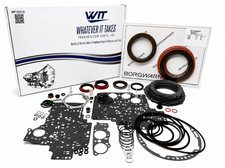
Every one of those tiers starts from the same master kit, then adds hard parts based on what the teardown shows. CoreTransmissionParts stocks the 4L80E master rebuild kit along with the frictions, steels, sprags, drums, pumps and valve body parts that get added on top of it, plus the full 4L80E catalog.
4L80E Master Transmission Rebuild Kit 1991-2009 →FAQ
Why do 4L80E rebuild quotes vary so much between shops?
Because the soft parts are the small half of the bill and everybody prices those about the same. What separates a cheap quote from an expensive one is hard parts and the converter, and neither can be priced honestly until the unit is apart. A unit that burned clutches on a weak pressure signal needs frictions, steels and a pump. A unit that lost control of the pressure regulator boost valve can arrive with a broken direct clutch drum and a cracked case, which Sonnax lists as the end result of uncontrollable line rise. Those are two different repairs wearing the same name.
Is it worth rebuilding a 4L80E or should I buy a reman unit?
If the case and the geartrain are good, rebuilding is usually the cheaper path and you keep control over which parts go in. If the case is cracked, the pump bore is worn past the point where an O-ringed boost valve sleeve can save it, or the unit is a second-generation model with a stator that machined its way into the impeller hub, a reman unit starts looking reasonable. The deciding factor is what the teardown shows, not the badge on the box.
Does the torque converter have to be replaced with a 4L80E rebuild?
Replace or properly rebuild it, yes. Transmission Digest documented that 4L80E TCC pistons were cracking just inside the bond surface from the start, and that the second-generation converter introduced for model year 2000 dropped the impeller-side stator cap and used a lighter-duty bearing known for cracked races. Reusing the converter that just filled the unit with debris is one of the most common reasons a rebuild comes back.
What makes a heavy-duty 4L80E build cost more than a stock rebuild?
Added parts and added labor, not markup. A heavy-duty build typically adds upgraded frictions and extra clutch capacity, a corrected valve body, a pressure regulator and boost valve upgrade, and a converter matched to the engine. Sonnax packages much of that as the HP-4L80E-01 performance pack, which GEARS describes as covering recalibrated shift accumulation, improved pump components, and a way to remove TCC PWM function without over-pressurizing the converter. Expect a heavy-duty build to run meaningfully above a stock rebuild.
Can a bad 6.5L diesel injection pump cause a 4L80E to need a rebuild?
Yes, and it is a documented failure path. Sonnax TASC Force writer Gregg Nader described how a leaking 1994-and-later electronic injection pump lets the truck pull away on 2 to 10 percent throttle instead of the normal 50 to 100 percent. The computer sets line pressure from throttle position, so it never commands enough pressure rise, and the result is soft sliding shifts and burned forward, intermediate and direct clutches. Rebuild that transmission without fixing the pump and you will burn the same clutches again.