Both of these are GM four-speed automatic overdrive transmissions, both are electronically controlled, and both bolt behind the same small- and big-block engines with the right flexplate and converter. That is where the similarity ends. The 4L60E is a light-duty car and half-ton unit. The 4L80E is a heavy-duty truck unit built on entirely different internals. They share almost nothing in service parts, and picking the wrong one for a build, or misidentifying the one already under your truck, costs real money. Here is how they actually differ, where each one breaks, and how to tell which is bolted to your engine in about two minutes.
Origins and Lineage
The naming tells you most of the story. In GM shorthand, both are 4-speed, Longitudinal (rear-wheel-drive) units with Electronic control. The middle number is the rough GVW class they were designed for: the 60 in 4L60E targets a roughly 6,000-lb vehicle, and the 80 in 4L80E targets an 8,000-lb-plus vehicle. That single digit is the whole argument in miniature.
The 4L60E is the electronic evolution of the 700R4, the overdrive automatic GM introduced in 1982 and used across the Chevrolet and GMC lineup. The 700R4 was renamed 4L60 in 1990 and picked up full electronic shift control to become the 4L60E in the early 1990s. The 4L80E comes from a completely different family: it is the overdrive, electronically controlled descendant of the legendary Turbo-Hydramatic 400 (TH400) three-speed, the transmission that lived behind big-blocks and in drag cars for decades. GM introduced the 4L80E for the 1991 model year, largely in three-quarter- and one-ton trucks and vans. So when people say the 4L80E is "stronger," what they really mean is that it inherited TH400 architecture, and the TH400 was built to take a beating.
Physical Size and Weight
The 4L80E is a physically bigger, heavier transmission, and you can feel it the moment you try to lift one. Chevrolet Performance publishes the weights for the crate versions of both families: the 4L75, the 4L60-E family unit, is 156 lb dry and 176 lb wet, while the 4L85-E is 230 lb dry and 255 lb wet. That is roughly 75 lb of difference once both are filled and carrying a converter. It is longer, too: measured from the bellhousing face to the end of the tailhousing, the 4L60E runs about 30.75 in and the 4L80E about 32.69 in.
That extra two inches of length and roughly 75 lb of mass is exactly why a 4L60E-to-4L80E swap is never a straight bolt-in. The 4L80E needs a different crossmember, often a shortened driveshaft, its own dedicated wiring and controller, and more transmission tunnel clearance. It also holds a lot more fluid, which is part of why it survives heat that cooks a 4L60E. None of that is a reason to avoid the swap; it is just a reason to plan it.
Torque Capacity and Strength
This is the headline number for most people. In stock form the 4L60E is generally rated to handle somewhere around 350 to 360 lb-ft of torque, while the 4L80E is rated closer to 440 to 450 lb-ft. Ratings alone undersell what is actually different, though. GEARS, ATRA's technical magazine, puts numbers on it in "Improve Your 400 and 4L80 Rebuilds": a 4L80-E at high load runs converter charge pressure around 100 psi against a maximum line pressure of 180 psi, and that 100 psi generates roughly 89 pounds of rearward thrust carried by the overdrive planetary gear set, the forward clutch housing and the mainshaft. That is the scale of load this case and gear train were designed around, and it is why the 80E tolerates sustained work the 60E does not.
Those are factory ratings, not hard walls, but they map well to reality. A stock 4L60E behind a mild V8 in a light car lives a long life. Put it behind a torquey big-block, add boost, or ask it to tow, and the light-duty internals start giving up. The 4L80E, with its larger clutch packs, heavier planetaries, and TH400 bones, shrugs off the same abuse. For any build making real torque or doing real work, the 4L80E is the durable answer, and that durability is the single biggest reason people swap.
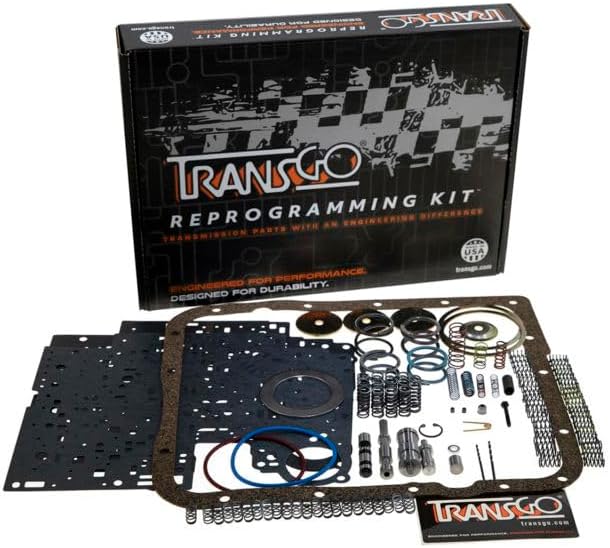
TransGo SK 4L60E Shift Kit (1993-On)
If you are keeping a 4L60E and want it to survive more load, the valve body is where you start. This kit firms up the lazy, slipping shifts a stock 4L60E is known for and cures the mushy TCC apply before it burns the converter clutch. Cheap insurance against the exact failure mode that pushes people toward an 80E swap.
View at Gearbox Insider Store →Gear Ratios and Overdrive
Both are four-speeds with a locking overdrive top gear, but the ratio spreads are different, and it matters more than the spec sheet suggests.
- 4L60E: 1st 3.059, 2nd 1.625, 3rd 1.00, 4th (OD) 0.696, Reverse 2.294 (GM lists 3.06 / 1.62 / 1.00 / 0.70 for the 4L75 crate version of this family)
- 4L80E: 1st 2.482, 2nd 1.482, 3rd 1.00, 4th (OD) 0.750, Reverse 2.077 (per the Chevrolet Performance 4L85-E specification sheet)
The 4L60E has a much deeper first gear (3.059 versus 2.482) and a taller overdrive (0.696 versus 0.750). That deep first is great for getting a lighter vehicle moving and gives a livelier feel off the line, and the deeper overdrive drops cruise RPM for better highway economy. The 4L80E's shallower first and shallower overdrive are the truck compromise: it is geared to move weight without shock-loading the driveline and to keep the engine in a usable band while towing. If you swap an 80E behind an engine and axle ratio that were happy with a 60E, expect the truck to feel slightly less eager off idle and to turn a few more RPM at highway speed. Many swappers offset that with a numerically lower rear axle ratio.
How to Tell Which One You Have
You do not need to drop the transmission to identify it. Work down this list and you will know in a couple of minutes.
1. Look at the pan (fastest tell)
Slide under and look at the transmission oil pan. The 4L60E uses a roughly rectangular pan held by 16 bolts. The 4L80E uses an oval-shaped pan with 17 bolts. Rectangular equals 60E, oval equals 80E. This one glance settles it most of the time.
2. Check the size and the vehicle
The 4L80E is visibly longer and beefier, and it was factory equipment in heavier trucks. If you are under a 2500 or 3500 HD truck or van, the odds heavily favor a 4L80E. Under a half-ton, a car, an SUV, or a van built on the lighter platform, it is almost certainly a 4L60E.
3. Look at the case and wiring
The 4L80E carries more fluid and typically runs a larger, deeper case with its own external electrical connector. It also uses separate input and output speed sensors, where the 4L60E relies on a single vehicle speed sensor at the tailshaft. Note the 1994 change documented in ATRA Technical Bulletin #266: GM dropped the transmission output speed sensor and its toothed wheel from 4WD 4L80E units that year, so a four-wheel-drive unit may carry only the input sensor. A second speed sensor on the case is a strong 80E indicator.
4. Read the tag or RPO code
The transmission's ID tag and the vehicle's RPO (regular production option) code list in the glovebox or door jamb will spell it out. Common 4L60E codes include M30 and MN8; common 4L80E codes include MT1 and MN8-family truck options. When the tag is legible, it is the final word.
4L80E Transmission Filter and Gasket Kit (Deep Pan, 1999-2006)
Once you have confirmed a 4L80E under a GM 2500 or 3500, this is the filter and pan gasket to do a proper fluid and filter service, matched to the factory deep pan. A clean filter and a correct fluid level are the two cheapest things you can do to keep an 80E alive under load.
View at Gearbox Insider Store →Common Failure Points
Where the 4L60E breaks
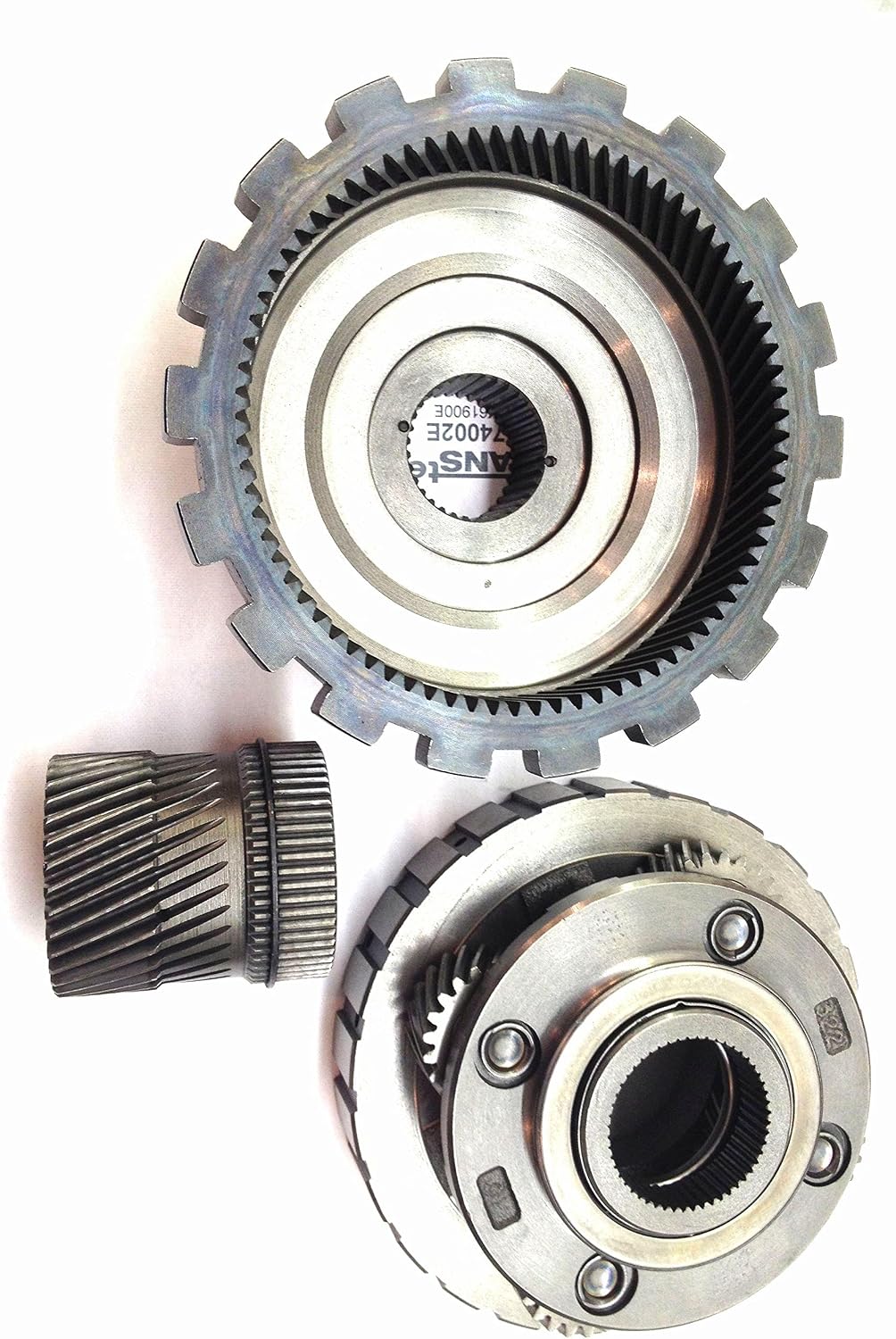
The 4L60E is reliable within its rating and predictable when pushed past it. The classic weak spots are the 3-4 clutch pack, which burns first when the unit sees more torque or heat than it was built for; the reaction sun shell (the "input sun gear shell"), which strips its splines or breaks at the hub and takes reverse, second and fourth with it, since the 2-4 band holds that shell and the shell drives the reaction sun gear in reverse. Sonnax breaks that shell failure into three modes, spline stripping, hub breakage and rear planetary bearing failure from excessive thrust load, and their SmartShell kit 77749-02K reroutes thrust through the carrier to bypass the bearing rather than just adding thickness; and valve body and TCC wear, which shows up as a lazy or shudder-prone lockup and mushy shifts. Bore wear and worn pump rings drop line pressure and accelerate everything else. Most of these are load-and-heat failures, which is exactly why a shift kit, a good cooler, and disciplined fluid changes extend a 60E's life so dramatically.
Where the 4L80E breaks
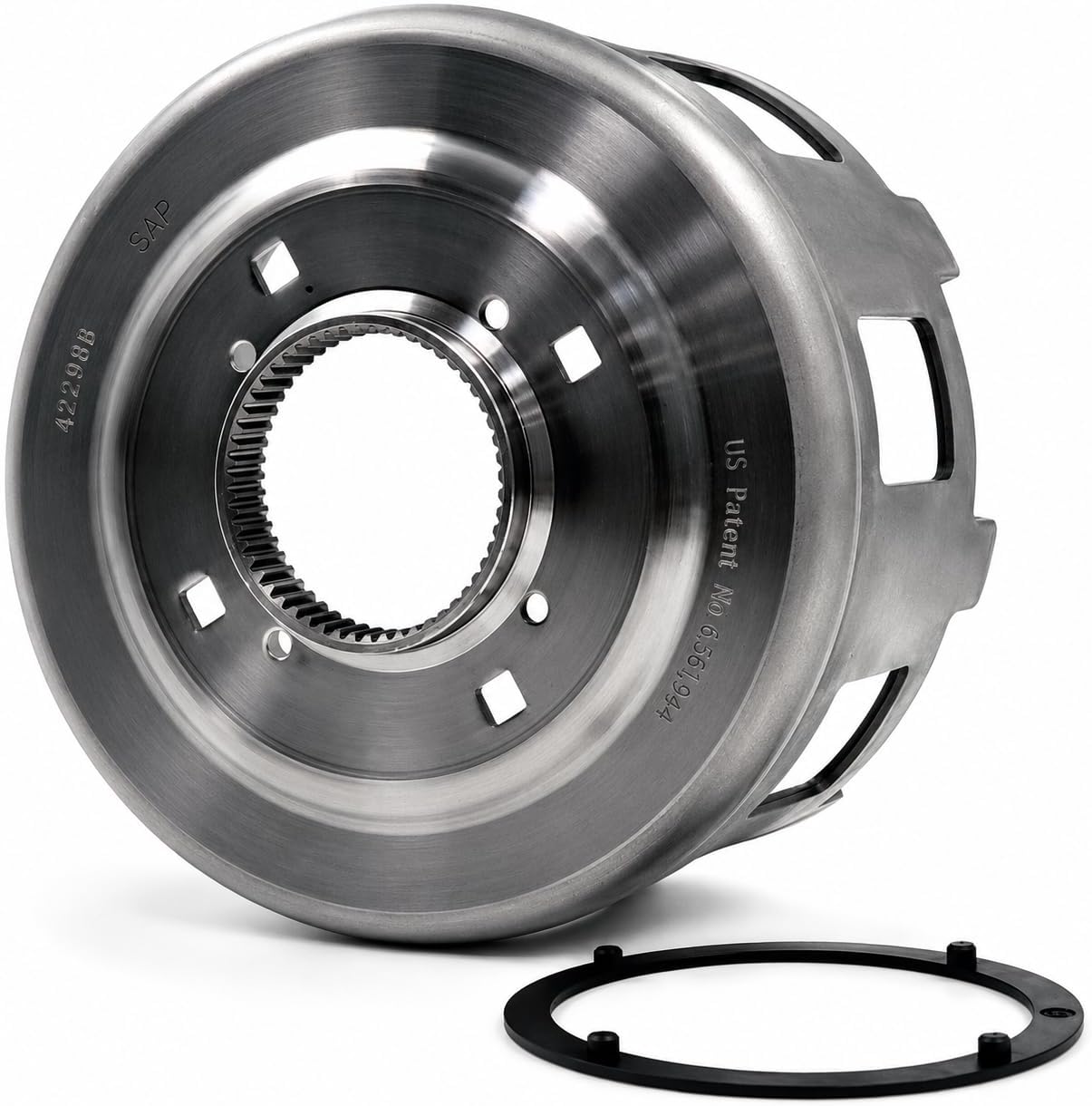
The 4L80E is the durability champ of the pair, but it is not immortal. Its typical trouble spots are the pump, the forward and direct clutch packs under sustained heavy load, and the electronics, including the pressure control and shift solenoids that any high-mileage electronic unit eventually needs. Because the 80E is asked to move weight and tow, heat management is its real enemy: keep it cool with an adequate auxiliary cooler and it will outlast the truck around it. The one mechanical failure worth knowing by name is the overdrive roller clutch. Transmission Digest documented it on plow trucks: on the 4L80-E that one-way clutch holds in first through third and freewheels in fourth, and in the overdrive range it is holding by itself because the overrun clutch only comes on in the manual ranges. Sonnax names insufficient holding power in that roller clutch as the underlying cause of chronic failure in hard working 4L80-E and 4L85-E units, alongside low/reverse servo piston breakage and forward clutch hub wear. When an 80E does fail, it is usually because it was run low on fluid, run hot, or run well past its service intervals.
4L60E Master Solenoid Kit, 7-Piece (1993-2008)
When a 4L60E throws shift codes or drops lockup, the solenoids are the usual suspects, and replacing one at a time is how you end up back under the vehicle a month later. This kit covers the shift solenoids, the EPC pressure control, the TCC PWM lockup, and the 3-2 downshift so you refresh the whole electrical package in one job.
View at Gearbox Insider Store →Which One Should You Pick?
Match the transmission to the job, not to the hype.
Pick the 4L60E when the vehicle is light, the power is moderate, and cost and packaging matter. It is lighter, more compact, cheaper to rebuild, has a deeper first gear for a livelier launch, and a taller overdrive for better highway economy. For a street car, a mild V8, or a daily driver that never tows, a healthy 4L60E, ideally backed by a shift kit and a proper cooler, is the right and cheaper answer. There is no reason to haul around 56 extra pounds of transmission you will never load.
Pick the 4L80E the moment towing, hauling, or serious power enter the picture. It was designed for exactly that duty, handles roughly 100 lb-ft more torque in stock trim, and its TH400-derived internals take abuse that ends a 60E early. For a tow rig, a heavy truck, a boosted or big-block build, or anything that will spend time under sustained load, the 4L80E is worth the swap complexity every time. If you are sourcing an 80E core, a converter, hard parts, or the swap pieces to convert a 60E chassis, Gearbox Insider stocks GM cores and drivetrain parts direct.
Whichever you land on, the failures that kill both units are the same three things: heat, low or worn-out fluid, and neglected electronics. Identify what you have, service it correctly for the load it actually sees, and neither one will surprise you. If you are not certain which fluid your unit takes, check our transmission fluid spec chart before you fill.
Need parts for this job?
4L60E and 4L80E rebuild kits, hard parts, solenoids, filters and the tools to install them, with secure on-site checkout and USA shipping.
Shop 4L60E parts →Sources
- GEARS Magazine (ATRA), "Improve Your 400 and 4L80 Rebuilds" — typical 4L80-E converter charge pressure of about 100 psi at high load against a maximum line pressure of 180 psi, the resulting 89 pounds of rearward thrust on the overdrive planetary gear set, forward clutch housing and mainshaft, and the note that unlike the TH400 lube pressure does not add to that thrust. gearsmagazine.com
- Transmission Digest, "Understanding 4L80-E Overdrive Clutch Failure" (February 2017) — the overdrive one-way roller clutch holding in first through third and freewheeling in fourth, the fact that it holds by itself in the overdrive range because the overrun clutch is on only in the manual ranges, and the plow-truck duty cycle that exposes it. www.transmissiondigest.com
- Sonnax, "4L80-E Performance & Heavy Duty Transmission Build Guides" — insufficient holding power in the overdrive roller clutch as the underlying cause of chronic OD roller clutch failure in hard working 4L80-E and 4L85-E units, plus low/reverse servo piston breakage, forward clutch hub wear and heavy duty forward clutch hub 34322-01. www.sonnax.com
- Sonnax, SmartShell Heavy Duty Reaction Shell Kit 77749-02K — the three 4L60-E family reaction shell failure modes of spline stripping, hub breakage and rear planetary bearing failure from excessive thrust loads, and the kit rerouting thrust load through the carrier to bypass the bearing. www.sonnax.com
- Sonnax, "Building the Killer 4L60E: Top Tips for Optimizing Your Transmission Upgrades" — the OE input housing limiting 3-4 clutch pack size and forcing thinner plates with less steel mass for heat, the 2-4 servo travel window of .075 in. to .125 in. set with a dial indicator, and the 2.84 ratio input carrier kit 77284-K that drops first gear from 3.06 to 2.84. www.sonnax.com
- Transmission Digest, "4L60-E Series Input Shaft, Stator and Pump Cover Compatibility" (July 2024) — a misaligned or incorrect stator causing no-movement, converter charge concerns, input shaft failure and converter damage on 4L60-E, 4L65-E and 4L70-E units, and the three checks that identify early versus late pump and stator styles by converter feed hole position. www.transmissiondigest.com
- Chevrolet Performance (General Motors), Supermatic 4L85-E Transmission Specifications, part no. 19300175 — the 4L80/4L85 gear ratios (2.482, 1.482, 1.000, 0.750, reverse 2.077) and the 230 lb dry / 255 lb wet transmission weights used in the size comparison. chevrolet.com
- Chevrolet Performance (General Motors), Supermatic 4L75 / 4L75HT Transmission Specifications, part no. 24283283 — the 4L60-E family gear ratios as GM publishes them (3.06, 1.62, 1.00, 0.70) and the 156 lb dry / 176 lb wet weights that set the weight difference between the two families. chevrolet.com
- ATRA Technical Bulletin #266, "4L80E Updates" — the 1994 deletion of the transmission output speed sensor and its toothed wheel on 4WD 4L80E units, with output speed pickup moved to the transfer case, and the warning not to interchange output planetary carriers between output-VSS and non-output-VSS units. atracom.blob.core.windows.net