A 4L80E behind a loaded trailer does not fail because the torque was too high. Chevrolet Performance rates the 4L80 family at 650 lb-ft of maximum engine torque, and almost nobody towing with a 6.0L or an 8.1L is anywhere near that. It fails because the fluid got hot, stayed hot, and cooked the clutch material and the converter. Heat is the failure mode. Everything below is about where that heat comes from and what actually removes it.
The frustrating part is that most of the money people spend on towing upgrades goes to the wrong end of the problem. A deep pan and a firmer shift kit are both worth having, but neither one rejects much heat. Meanwhile the two things that matter most on this transmission, converter clutch behavior and cooler flow, are free to check and cheap to fix.
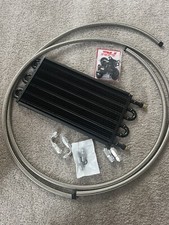


Where the heat actually comes from
Nearly all of it comes out of the torque converter, and specifically out of converter clutch slip. Slip multiplied by torque is heat, and there is no third variable. A converter clutch that is 95 percent applied is not 95 percent fine, it is a clutch disc being ground at highway torque.
You can measure this without a temperature gun. Pull up TCC Slip RPM on the scan tool, which most tools compute as engine RPM minus turbine (input) speed. GM's own 2005 4L80E transmission diagnostic parameter table gives you the reference values. GM treats the clutch as applied when slip sits between roughly minus 15 and plus 15 RPM, which is the window it uses to detect a clutch stuck on (P0742). It sets P0741 at 125 RPM or more of slip with the clutch commanded on. That 125 RPM figure is the code threshold, not the damage threshold. A truck holding 60 to 100 RPM of slip up a grade will never set a code and will still make more heat than the cooling system can shed.
Two more PIDs from the same GM document belong on screen while you tow. Trans Fluid Temp (TFT) is the sensor the module uses for line pressure and TCC decisions, and it lives in the internal wiring harness on almost every unit you will touch. GM's fault logic treats the sensor as suspect if it fails to move more than 2.25 degrees C over a long drive cycle, or if it jumps more than 20 degrees C between reads. A TFT that reads plausibly but never moves is worse than one that reads nothing, because the module will keep making pressure decisions on a lie.
It is also worth knowing that GM's TCC diagnostics only run inside a fluid temperature window of about 20 C to 150 C. Outside that window the module stops evaluating the clutch. So a badly overheated transmission can be slipping the converter clutch hard and quietly, with the very diagnostic that would have caught it switched off. That is the mechanism behind a lot of "it never threw a code, it just died on the way home from the lake" stories.
The 1997-up lube trap: your cooler line is a lube line
This is the single most important thing to understand before you touch the cooler circuit on this transmission, and it is the one most people get wrong.
On 1991 to 1996 units, cooler return oil comes back to the bottom fitting at the front of the case, lubricates the front unit, and then travels rearward through a long tube. Starting in 1997, GM changed it. Per TransGo bulletin 06-45, the 1997-and-later 4L80E feeds cooler return oil into a fitting that screws into the case at the center support. On those units the converter feed circuit lubricates the overdrive planet and roller clutch, and the entire rest of the transmission, including all other planets, receives lube through the center support. That oil arrives from the cooler.
Read that again before you plumb anything. On a 97-up 4L80E, the cooler circuit is a lubrication circuit. Loop the cooler out to test something, restrict it with an undersized thermostatic bypass, or leave it plugged with debris after a converter failure, and you have not merely made the transmission run hot. You have shut off lube to the center and rear gear train. TransGo's language on mismatched lube-system parts is equally direct: swapping 1st and 2nd design components can cause total planet failure.
Practical consequences for a tow rig:
- Flush the cooler and lines any time the converter or the clutches come apart. Chevrolet Performance's own install sheet says to flush the cooler and lines on every install, new transmission or not. On a 97-up unit that debris is sitting directly upstream of your gear train lube.
- If you fit a thermal bypass, fit one that flows. A bypass that redirects cold fluid to the return line is fine, because the fluid still reaches the case. One that dead-heads flow is not.
- Do not swap a 1st-design pump body or center support into a 2nd-design case. The 2nd design support has the cooler return fitting hole and a metal-clad seal; the 1st design has neither, and the two are not interchangeable.
Cooler flow at low RPM, and the pressure regulator valve nobody checks
Here is the second mechanism, and it is the one that catches trucks specifically when towing. Cooler and lube flow on this transmission is whatever the pressure regulator valve lets past after it has satisfied line pressure. Sonnax's TASC Force material on line-to-lube balance describes the failure plainly: when the PR valve sits too far into its bore, converter and lube flow gets restricted or cut off, and under towing, heavy load or hill climbing that condition can persist long enough to blue the converter and overheat the transmission.
The conditions that push the valve there are exactly tow conditions: low RPM, high EPC pressure, high demand. Sonnax notes that on 1999-and-later 4L80E and 4L85E applications, factory EPC pressure was set high at idle, which both causes an engine surge complaint and starves cooler flow. Their fix is the lube regulated pressure regulator valve, part 34200-14K, which carries an encapsulated check valve that keeps feeding the converter charge and lube circuit even when the valve is parked in a cut-off position. It is a drop-in Zip Valve, no reaming and no special tools.
If you are already inside the pump on a tow-duty rebuild, this is the cheapest heat fix on the unit. If you are not opening it, at least know that the symptom set of "runs hot only when loaded, cools off fine empty, cooler lines barely warm at idle" points here and not at the cooler.
Choosing and plumbing the auxiliary cooler
The TASC Force cooler article in Transmission Digest is still the most useful writing on cooler selection, and it kills several popular assumptions:
- The GVW rating printed on a cooler box is the rating when it is used in addition to the OE cooler, not as a replacement for it. If you removed the in-radiator cooler, your cooler is smaller than you think it is.
- Stacked-plate coolers are the better choice for stand-alone or heavy-duty use. The many parallel paths slow flow across the plates and give the fluid more time to give up heat. Plain fin-and-tube without a good internal turbulator is the weakest design, and Transmission Digest notes that cheap and good turbulator designs look identical from the outside.
- Efficiency is not proportional to size. Per Long Manufacturing figures cited in that article, OE-series coolers run about one-third more efficient than a same-size True Cool series unit, and doubling cooler thickness does not double cooling.
- Line size matters more than people expect. Manufacturers moved from 5/16 in. to 3/8 in. cooler lines, and that small change improves flow by more than 30 percent.
- Where you mount it has a cost. Air that has already picked up heat from your transmission cooler reduces the effective cooling at the A/C condenser and the radiator behind it. On a truck that already runs warm coolant, that trade is real.
- Wind chill is not a factor. Cold air will not drive fluid or air temperature below ambient, so the overcooling worry is mostly misplaced. The real cold-weather problem is different: ATF gels around minus 32 F, and on a 0 to 10 F start the lube system is effectively dry until fluid moves. That is what a thermal wax bypass is for, and Transmission Digest recommends fitting one on anything that operates below 0 F.
- Pan-type coolers are not cooling. Finned and tubed pans add volume and very little heat rejection, and Transmission Digest does not consider them an option for stand-alone cooling.
Plumb the auxiliary cooler in series after the radiator cooler, so the in-tank unit still brings the fluid up to temperature in winter and the air cooler handles the peak. And while you are there, check the rest of the cooling system, because on these trucks an inoperative fan clutch, a condenser packed with bugs, or a coolant mix too heavy on antifreeze will show up as a transmission temperature complaint. Water moves heat better than antifreeze does.
Deep pans: buy them for volume, not for cooling
A deep pan is worth fitting on a tow truck, as long as you know what you bought. Mag-Hytec's installation sheet for their 4L80E pan states it holds about 4.5 quarts over the stock big pan. That extra volume is thermal mass. It does not remove heat, but it raises the amount of energy required to move the fluid temperature, which flattens the spikes on a long grade and gives the cooler time to work.
Two rules come with it. First, a deep pan requires the deep-pan filter. Mag-Hytec calls out GM part 24210956 and says it must be used at every change with their pan. A standard filter in a deep pan leaves the pickup sitting high in the sump, and under load with fluid moving around you will aerate it. Second, use the pan maker's torque spec on the pan maker's hardware. That pan uses 8 mm allen cap screws at 12 to 16 lb-ft, not the GM pan-to-case figure.
Fluid, fill and the torque specs for the job
Straight from the Chevrolet Performance specification sheet for the 4L80-family unit:
| Item | Specification |
|---|---|
| Fluid type | Dexron VI |
| Capacity, bottom pan removal | 7.3 L (7.7 quarts) |
| Capacity, dry | 12.5 L (13.2 quarts) |
| Cooler pipe connector nut to case | 38 N-m (28 lb-ft) |
| Oil pan to case | 24 N-m (18 lb-ft) |
| Oil drain plug | 34 N-m (25 lb-ft) |
| Maximum engine torque rating | 650 lb-ft |
Add capacity for a deep pan and for the volume of any auxiliary cooler and lines you just added, and set the final level on the dipstick at operating temperature, not cold. One more item from that same GM sheet that bites people building tow rigs: the return cooler line fitting is unique to the 4L80 family, and converting to standard inverted flare takes GM 8637742 for the transmission-to-cooler line and 24205178 for the cooler-to-transmission line. GM's warning is that installing the wrong fittings into the transmission could ruin it.
Calibration: firmer shifts are a heat fix, within reason
The last lever is clutch apply. A soft, long shift under a tow load means the clutch pack spends more time slipping, and slipping clutches are the same heat equation as a slipping converter clutch. A reprogramming kit such as the TransGo SK 4L80E raises apply pressure and shortens shift overlap, which reduces the energy dumped into the frictions on every upshift.
The honest caveat: firmer apply transfers that shock to the rest of the driveline, and raising line pressure raises pump load and makes some heat of its own. This is a calibration change, not a cooling part. It belongs on a truck that tows, not on a daily driver that never sees a trailer.
A tow-day checklist that actually finds things
- Log TCC Slip RPM and TFT together on a loaded run. Slip should sit within about 15 RPM of zero once locked. Rising temperature that tracks rising slip is a converter clutch problem, not a cooler problem.
- Feel both cooler lines at idle at operating temperature. Both warm means flow. One warm and one cool means you have a restriction to find, and on a 97-up unit that restriction is starving gear train lube.
- Check the cooler circuit for debris if the unit has ever had a converter or clutch failure. Flush and back-flush until the fluid runs clean.
- Verify the fan clutch and the condenser before condemning the transmission cooler. The transmission sits downstream of the whole cooling system.
- Confirm the fluid is Dexron VI and the level is right at temperature. Low fluid aerates, and aerated fluid neither lubricates nor carries heat.
Need parts for this job?
Coolers, deep pans and filters, reprogramming kits, EPC and TCC solenoids, valve bodies and rebuild kits for the 4L80E and 4L85E, shipped from the USA on our own checkout.
Shop 4L80E parts →FAQ
What transmission temperature is too hot for a 4L80E?
Treat anything sustained over 200 degrees F as a problem to chase rather than a number to live with. Transmission Digest's TASC Force guidance on cooler selection puts the target under 200 degrees F and points out how hard that is when engine coolant is sitting at 210 or more, which is the argument for an oil-to-air cooler after the radiator rather than relying on the in-tank cooler alone. Short spikes while pulling a grade with the converter unlocked are normal; a truck that will not come back down to the 180s on level ground after the grade is telling you the cooling system is out of capacity.
Can I bypass or loop the factory radiator cooler on a 4L80E?
Not on a 1997 or later unit. TransGo bulletin 06-45 documents that 1997-up 4L80Es feed cooler return oil into the center of the case instead of the front fitting, and that return oil is what lubricates the center support and everything behind it. Loop the cooler out and you have removed the gear train's lube supply, not just its cooling. On those units the cooler circuit is a lubrication circuit that happens to reject heat on the way through.
Does a deep pan actually cool a 4L80E?
It adds fluid volume and a little surface area, not meaningful heat rejection. Mag-Hytec's own installation sheet says its 4L80E pan holds about 4.5 quarts over the stock big pan, which is real thermal mass and slows how fast the fluid climbs. The TASC Force cooler article is blunt that pan-type coolers contribute little to cooling a transmission and are not a stand-alone answer. Run a deep pan for capacity and the magnet, and run an auxiliary cooler for the heat.
Do I need the deep filter with a deep pan?
Yes. Mag-Hytec specifies GM part 24210956, the deep-pan filter, and states it must be used at every change with their pan. A standard-depth filter sitting in a deep pan leaves the pickup high in the sump, and under a tow load with the fluid moving around the pan it will pull air. Also use the pan maker's torque figure for their hardware, which on that pan is 12 to 16 lb-ft rather than GM's 18 lb-ft pan-to-case spec.
How do I know if the torque converter clutch is making my heat?
Watch TCC Slip RPM on the scan tool while the truck is loaded. GM's own 4L80E diagnostic parameter table sets the P0741 threshold at 125 RPM or more of slip with the clutch commanded on, and treats the clutch as applied when slip sits between roughly minus 15 and plus 15 RPM. Slip multiplied by torque is heat, so 100 RPM of slip at highway load is a furnace even though it has not set a code yet.
Sources
- General Motors — 2005 4L80E Transmission Diagnostic Parameters (GM Service Information, GSI). Backs the scan-tool thresholds used in this article: the P0741 TCC-stuck-off threshold of 125 RPM or more of slip, the P0742 TCC-stuck-on window of minus 15 to plus 15 RPM of slip, the Trans Fluid Temp rationality limits (stuck if it has not changed more than 2.25 degrees C, unrealistic if it changes more than 20 degrees C), and the fluid temperature enable window of roughly 20 C to 150 C for the TCC diagnostics. gsi.ext.gm.com (PDF)
- TransGo — Bulletin 06-45, "4L80E 97 and Later Models: Lube Failure Prevention, Parts Change Reference." Backs the 1997 lube system change: cooler return oil feeds the center of the case through a fitting at the center support instead of the front fitting, the converter feed circuit lubes only the overdrive planet and roller clutch on 2nd-design units while the rest of the transmission is lubed through the center support, the 1st and 2nd design case, pump body and center support non-interchange, and the warning that mismatched lube-system parts can cause total planet failure. transgo.org (PDF)
- Sonnax — "Line to Lube, Converter: A Balancing Act. PR Valve Position Is Key" (TASC Force technical article). Backs the pressure regulator valve mechanism: when the PR valve is mispositioned in its bore, converter and lube flow is restricted or cut off, and under towing, heavy load or hill climbing that condition can persist long enough to blue the converter and overheat the transmission. sonnax.com
- Sonnax — Lube Regulated Pressure Regulator Valve 34200-14K product data. Backs the specific 4L80E and 4L85E fix discussed here: the encapsulated check valve that allows regulated flow to the converter charge and lube circuit at idle, the increase in cooler flow under low-RPM and high-pressure conditions, the high factory EPC pressure at idle on 1999-and-later applications, and the drop-in Zip Valve installation with no reaming required. sonnax.com
- Transmission Digest — "Transmission Coolers, Part 2," TASC Force Tips by Wayne Russell, November 2003. Backs the cooler selection guidance: cooler GVW ratings apply when used in addition to the OE cooler, stacked-plate designs suit stand-alone and heavy-duty use, OE-series coolers are about one-third more efficient than same-size True Cool units per Long Manufacturing, doubling thickness does not double cooling, the 5/16 to 3/8 in. line change improving flow more than 30 percent, the under-200-degree-F fluid target against 210-plus engine coolant, the effect of cooler placement on the condenser and radiator, ATF gelling around minus 32 F and dry lube on cold starts, thermal wax bypass operation, why wind chill is not a factor, and that pan-type coolers contribute little to cooling. transmissiondigest.com
- Chevrolet Performance (General Motors) — Supermatic Transmission (19300175) Specifications, instruction sheet 19211852. Backs the fluid and fastener specs: Dexron VI fluid requirement, 7.3 L (7.7 quarts) bottom pan removal and 12.5 L (13.2 quarts) dry capacity, cooler pipe connector nut to case at 38 N-m (28 lb-ft), oil pan to case at 24 N-m (18 lb-ft), drain plug at 34 N-m (25 lb-ft), the 650 lb-ft maximum engine torque rating, the instruction to flush the cooler and lines on every install, and the unique 4L80-family return cooler line fitting with conversion parts 8637742 and 24205178. chevrolet.com (PDF)
- Mag-Hytec — GM 4L80E Transmission Pan Installation Recommendations, 05/11/17. Backs the deep pan figures: approximately 4.5 quarts of additional capacity over the stock big pan, the requirement to use the deep-pan filter GM part 24210956 at every change, and the 12 to 16 lb-ft torque spec for the pan maker's own 8 mm allen cap screws. mag-hytec.com (PDF)
4L80E 6AN PTFE cooler line kit → or browse all 4L80E parts →