A 4L80E that shifts 1-2 and 2-3 cleanly and then refuses to go anywhere else is not a vague complaint. Fourth gear on this unit is a commanded event with one specific solenoid state and one specific clutch behind it, which narrows the job to a question you can answer from the driver's seat: is the controller commanding 4th and not getting it, or is it never commanding 4th at all? Those two answers send you to completely different parts of the truck. Get the order wrong and you will sell a customer a valve body to fix a brake light switch.
What actually makes 4th gear happen
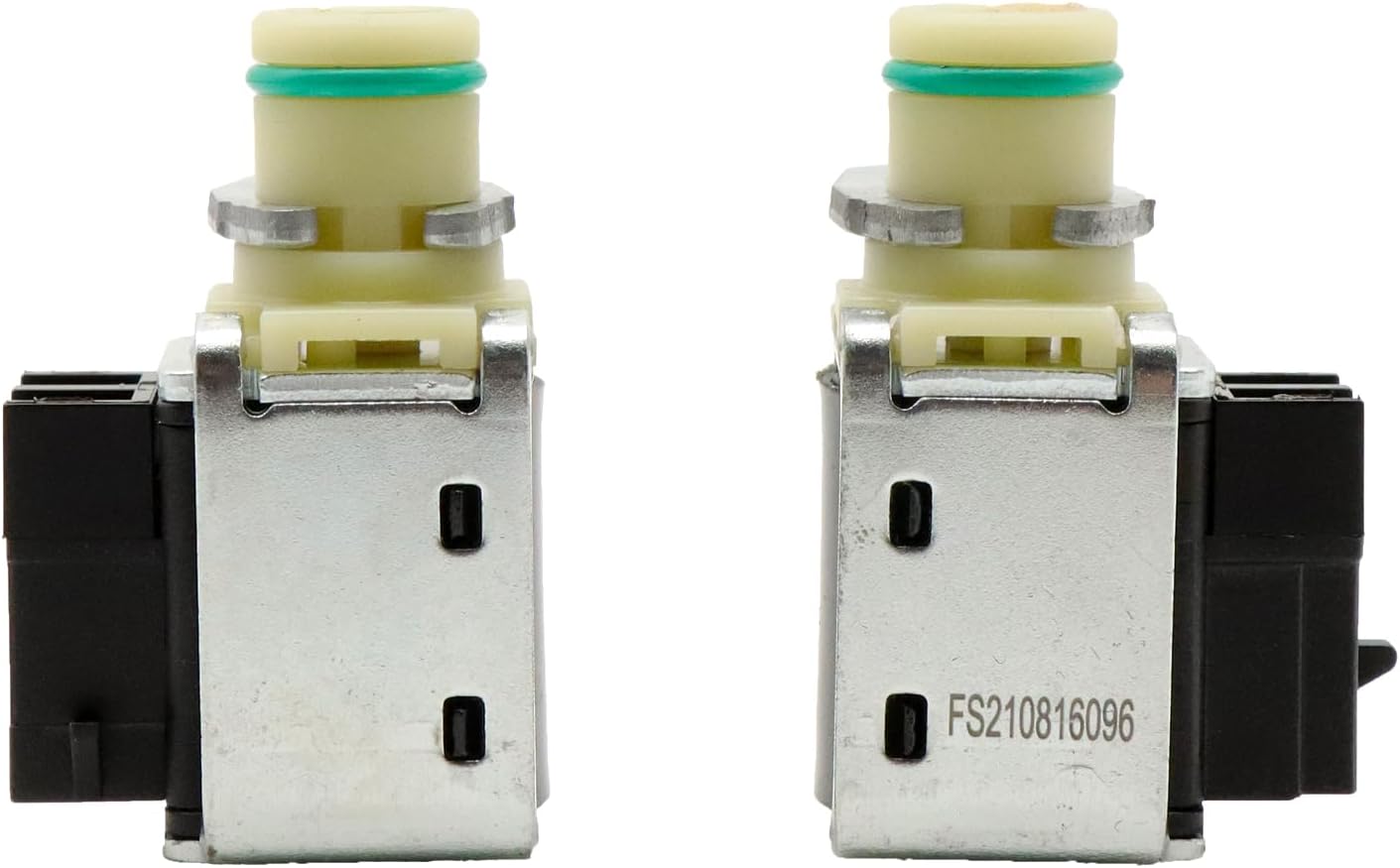
The 4L80-E is a four-speed with 4th as overdrive, and the shift pattern is controlled by two solenoids the controller turns on by grounding them. The published shift solenoid chart:
- 1st — 1-2 shift solenoid (A) ON, 2-3 shift solenoid (B) OFF
- 2nd — A OFF, B OFF
- 3rd — A OFF, B ON
- 4th — A ON, B ON
Read that last line again, because it is the whole reason overdrive goes missing first. Fourth is the only gear in which both solenoids are energized at the same time. Anything that weakens the oil feeding the solenoid circuit, or leaves one solenoid electrically dead, takes 4th away before it takes anything else.
Mechanically, the clutch application chart shows the fourth clutch applied in 4th while the overdrive roller clutch is overrunning. Jim Dial of the Sonnax TASC Force puts it plainly in Transmission Digest: the overdrive one-way roller clutch holds in 1st through 3rd gears and freewheels in 4th gear. That one sentence eliminates a suspect most people waste a weekend on.
Step 1: find out whether 4th is even being commanded
Before the scan tool, check the fluid level hot — at a normal operating temperature of 180 to 200°F, reached after roughly 15 miles of driving. A cold reading is worthless, and overfilling aerates the fluid and causes the exact shift problems you are chasing.
Then road test with two parameters side by side: commanded gear, and the gear the transmission is actually in, which you get from the trans input speed and trans output speed PIDs (both displayed 0 to 8,191 rpm). In an overdrive range the input shaft turns slower than the output shaft. Watch it at the point the 3-4 shift should occur.
Commanded gear reaches 4th and the ratio never changes (or the engine flares)? The command went out and the transmission did not answer — go to Step 2. Commanded gear never reaches 4th? The transmission is being obedient, something in the input set has the controller withholding overdrive, and the unit may be perfectly healthy.
The inputs that withhold 4th gear on purpose
This is the part that gets skipped, and it is spelled out in the 4L80-E malfunction code and defaults table:
- Throttle position high or low — default action includes inhibit 4th gear in HOT mode, plus maximum line pressure and a 35% TP substitute value.
- Transmission range (TR) fault — A and C range inputs both at 0 volts for two seconds gives the D4 shift pattern continued, no TCC, and no 4th gear in HOT mode.
- Brake switch ON and brake switch OFF faults — both default to no 4th gear in HOT mode. The brake-off version also kills TCC.
- TCC stuck off — set when converter slip exceeds 65 rpm with the clutch commanded on in D3 or D4. Default: no 4th gear in HOT mode.
Four inputs, none of them inside the transmission, every one capable of producing a no-overdrive complaint. The brake switch pair is worth a second look because of how it sets: the controller wants a repeating speed pattern — under 5 mph, then 5 to 20 mph, then over 20 mph, each held longer than six seconds — seven times over before it decides the switch is lying. That fault takes a week of driving to mature and then takes overdrive away all at once, which is exactly how the customer describes it. Check the brake lamp switch, the TP signal sweep and the range switch before you condemn anything with fluid in it.
Step 2: the solenoids themselves
Ignition voltage is supplied directly to each shift solenoid, and the controller operates it by providing the ground path. A circuit fault sets when the controller commands the solenoid on and voltage stays high, or off and voltage stays low, with the condition present for two seconds. The default action tells you what the truck will feel like: maximum line pressure, no TCC, and 2nd or 3rd gear only — a no-overdrive complaint with harsh shifts riding along with it.
- Command each solenoid on and off three times and listen at the bottom of the pan, stethoscope if the shop is loud. A solenoid that clicks is doing its electrical job.
- Resistance at the case connector — the published spec across the solenoid circuit at the transmission connector is 18 to 24 ohms. Open or shorted there, replace the solenoid; correct at the solenoid but not at the case connector, replace the internal harness.
- Power feed — an open in the ignition feed circuit can set multiple codes at once. Both solenoid codes present means suspect the shared feed, the ground or the controller before you believe two solenoids failed the same week.
Note what this does not prove: a solenoid can click on the bench and still fail to move a valve, because clicking only needs a working coil. Moving the valve needs oil pressure behind it.
Step 3: the pressure that feeds the solenoids
This is the cause behind most of the "I already replaced the solenoids" calls. Sonnax documents that on 4L80-E and 4L85-E units, actuator feed limit bore wear results in low pressure at the shift and EPC solenoids. The AFL valve has a large reaction area and is heavily affected by side loading, and the EPC solenoid's constant oscillation of the torque signal and AFL oil increases valve action and accelerates that wear. As the bore opens up, the oil pressure reaching the shift solenoids drops.
The symptom list Sonnax publishes for that bore reads like a no-overdrive work order: wrong gear starts, 2nd gear starts, No 4th, 2-3 neutral, clutch failure, band failure, and solenoid or ratio codes. The repair is a hard-coat anodized valve with annular grooves to limit side loading, plus a wear-resistant sleeve that adds 54% more support to the bore. Vacuum test that bore before you order clutches — a worn AFL bore is a pan-off repair, and a burnt 4th clutch is not.
Step 4: the 1-2 shift valve has to stay stroked in 4th
Here is the piece of 4L80E hydraulics that explains the strangest version of this complaint: the truck that goes to neutral when it tries to reach overdrive.
In 4th gear, per Sonnax, signal A oil force must overpower the 1-2 shift valve spring and the opposing signal B pressure. Signal A has a larger reaction area than signal B, which leaves the spring as the critical factor controlling where that valve sits. When signal A pressure drops below about 58 psi, the valve stalls or floats, and the complaint becomes 3rd gear neutral even though 4th is being commanded. If the 1-2 shift valve does not remain fully stroked, drive oil to second and direct is cut off or sent to exhaust.
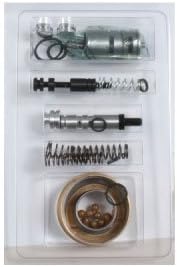
Sonnax lists the symptoms for the 1-2 and 2-3 shift valve spring kit as repeated solenoid B codes, 2nd gear starts, no 4th gear, 3-4 neutral, and no 3rd gear. Know the limits before you buy springs: they will not remedy leaking solenoids or seal failures, and the two have to be replaced together. Fix the leak first, then restore the spring rate.
Step 5: the 3-4 shift valve bore
On 1995-and-later 4L80-E and 4L85-E units, Sonnax documents excess wear in the 3rd and Reverse checkball sleeves that live in the 3-4 shift valve bore. Normal movement of the checkball inside the sleeve wears it, the checkball's sealing function is compromised, and the circuit loses apply pressure to the direct clutches. The published consequences are 3rd slip, 4th slip, gear ratio codes, burned direct clutch, and Reverse slip.
That pattern rarely shows up alone, which makes it useful. If the no-overdrive complaint arrives with a weak Reverse and burnt direct clutches in the history, you are looking at one bore, not three failures. Test the checkball sleeves with the valve body vertical and the ball seated — tested flat, they give a false pass.
Step 6: line pressure, and the 4th clutch
If the electrical side is clean and the valve body bores test good, get a gauge on it. The published line pressure test for the 4L80-E calls for a gauge with 325 to 350 psi capacity:
- Park, Neutral and both Drive ranges: minimum 35 psi at idle, rising to a maximum of about 171 psi at greater throttle openings.
- Reverse: minimum 67 psi at idle, rising to a maximum of about 324 psi as throttle opening increases.
Low in every range points at the pump — worn or damaged gears, a blown-out cup plug, cross leakage, a worn bushing. High points at the pressure control solenoid, the reverse/boost or pressure regulator valves, a bad controller ground or a bad solenoid connection.
The pressure control solenoid gets a better test, because it is a sweep rather than a single reading: command current up in steps and watch pressure come down. The published table runs from 157 to 177 psi at 0.0-0.02 amps down to 35 to 55 psi at 0.98-1.1 amps, every step specified in between; let the gauge stabilize three to five seconds after each change. Pressure that will not fall as current rises is a solenoid, wiring or controller problem.
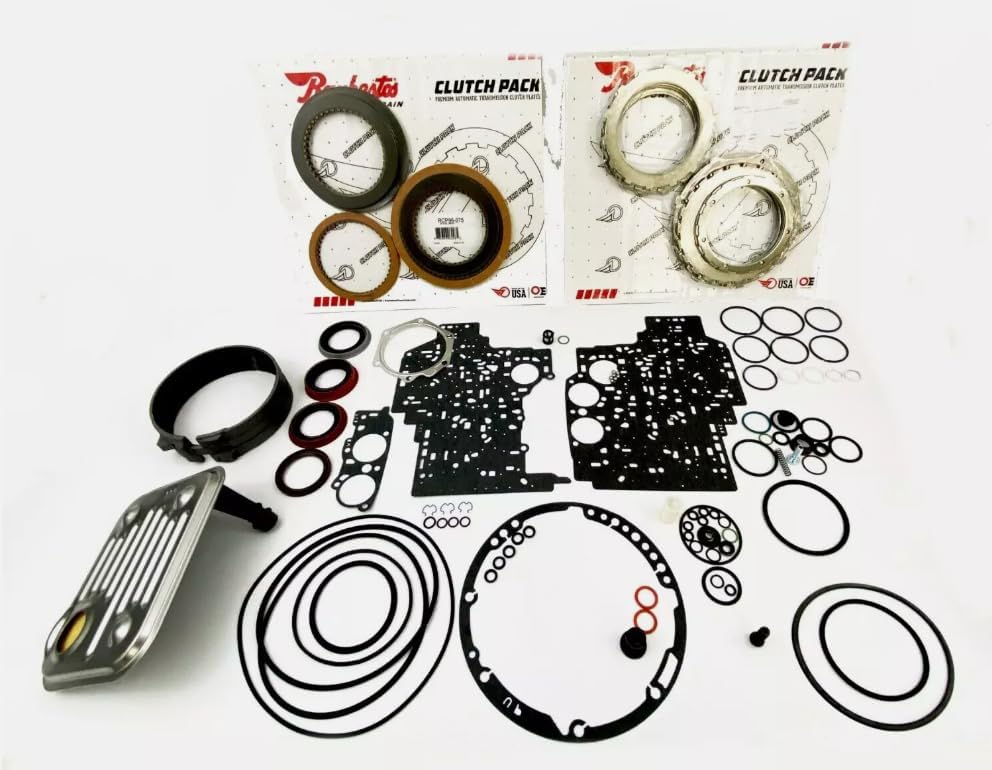
Only then does the 4th clutch pack become the answer. If 4th is commanded, both solenoids are proven, the bores pass a vacuum test and line pressure is in spec, the clutch that applies in 4th is not holding, and the unit comes out.
The overdrive roller clutch is not your no-4th cause
Plow trucks and tow rigs bring in a lot of 4L80Es with a damaged overdrive roller clutch, and it gets blamed for missing overdrive constantly. It does not cause it. Dial's explanation is the clearest one published: the overdrive one-way roller clutch holds in 1st through 3rd and freewheels in 4th, and in the overdrive range it is holding by itself, because the overrun clutch only comes on in the manual ranges D, 2 and 1. Under overheat the plastic cage can melt and the clutch fails quickly — but because it freewheels in 4th, that failure shows up as a flare or a freewheel in the lower gears.
The load-sharing gap behind it is real, and worth telling a plow customer about. Sonnax addresses it with a Smart-Tech overrun clutch valve kit that establishes a hydraulic connection to the overrun clutch as soon as the engine is started, so the overrun clutch applies in all manual valve positions including Reverse — on in every gear other than 4th. Short of that part, run the manual ranges under heavy load and watch the temperature gauge, which is what Dial recommends.
Fluid and capacities
The 4L80-E was released on DEXRON-III and DEXRON-VI is the current GM service fill. Published capacities run about 5 quarts on a refill after a filter change and roughly 11.5 quarts dry after an overhaul, with another 1 to 2 quarts in the cooler and lines. Confirm against the figure listed for your truck — pan depth and cooler routing move it.
FAQ
Why does my 4L80E shift 1-2-3 fine but never go into overdrive?
Fourth is the only range where both shift solenoids are energized at once, so it is the first gear you lose when anything upstream of the solenoids goes weak. Check on a scan tool whether the controller is even commanding 4th. Commanded and not delivered means the problem is hydraulic or mechanical; never commanded means the controller is withholding overdrive over an input fault and the unit itself may be fine.
Can a bad brake light switch keep a 4L80E out of 4th gear?
Yes, and it is one of the most missed causes on this unit. The published default table for the 4L80-E lists "No 4th gear in HOT mode" as the controller's action for both the brake-switch-on and brake-switch-off faults, and throttle position and transmission range faults carry the same no-4th default. When the brake input stops making sense, the controller stops granting overdrive.
I replaced both shift solenoids and still have no 4th gear. What now?
Check the pressure feeding those solenoids before you buy anything else. Sonnax documents that actuator feed limit bore wear results in low pressure at the shift and EPC solenoids, and lists "No 4th" along with wrong gear starts, 2nd gear starts and solenoid or ratio codes as the symptoms. A new solenoid cannot shift a valve it is not being fed enough pressure to move.
Is a failed overdrive roller clutch the reason a 4L80E has no 4th gear?
Almost never. The overdrive one-way roller clutch holds in 1st through 3rd and freewheels in 4th, so when it fails the complaint shows up in the lower gears as a flare or freewheel, not as a missing overdrive. A no-4th complaint on its own points at the 4th clutch circuit, the valve body, the solenoids, or the controller strategy.
What line pressure should a 4L80E make if I suspect a pressure problem?
The published test calls for a gauge rated 325 to 350 psi. In Park, Neutral and both Drive ranges expect at least 35 psi at idle rising to about 171 psi maximum; in Reverse, at least 67 psi at idle rising to about 324 psi. Low in every range points at the pump; high points at the pressure control solenoid, the boost or pressure regulator valves, or a bad controller ground.