"The 3-4 clutch is burnt" gets written on more 4L85E repair orders than it should, usually right before someone orders a full rebuild kit. On this transmission, a burnt direct clutch is almost never where the problem actually started. It is where a separate, upstream pressure problem ends up. Find and fix that upstream problem and you stop paying for the same repair twice.
The short version: On '95-and-later GM 4L80-E and 4L85-E transmissions, Sonnax documents two specific mechanical causes behind 3-4/direct clutch slip and burn: a worn reverse checkball sleeve in the 3-4 shift valve bore, and a worn direct clutch drum bore at the center support. Both bleed off apply pressure to the direct clutch until it slips and cooks. A vacuum test on the valve body (minimum 16 in-Hg per Sonnax's own instructions) tells you which one you're dealing with before you commit to a full teardown. Don't confuse any of this with a cracked torque converter clutch on 2000-and-up units, which sets a P1870 code and is a completely different part.
What "3-4 Clutch Failure" Actually Means on This Transmission
The 4L80-E and 4L85-E share the same case, valve body layout, and direct clutch assembly, which is why Sonnax documents both units together in its technical fitment notes. When a shop says "the 3-4 clutch is gone," they usually mean the direct clutch, the pack that applies for 3rd and 4th gear. A burned direct clutch is a real finding on teardown, but it is an end state, not a starting point. Friction material does not spontaneously cook itself; it cooks because it stopped getting full, consistent apply pressure and started slipping under load, generating heat every time the truck pulled away or climbed a grade.
That distinction matters because it changes what you order. Buy a master rebuild kit and drop fresh frictions into the same valve body or the same worn drum bore that caused the first failure, and you are paying to watch it happen again in a few thousand miles.
The Two Documented Mechanical Causes
1. Worn reverse checkball sleeve in the 3-4 shift valve bore
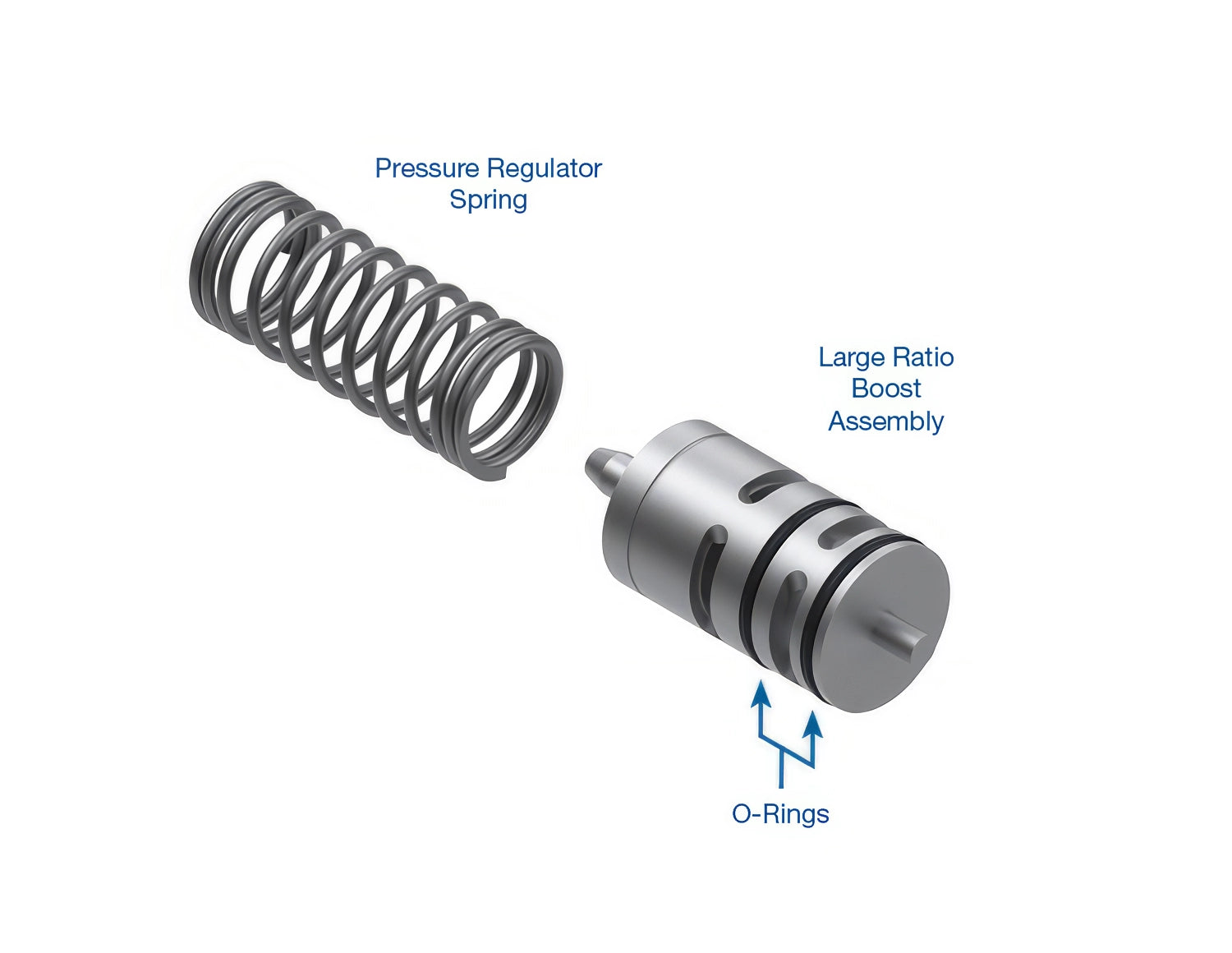
Sonnax's fitment notes for its 3rd and reverse checkball sleeve kit are specific: "Vehicles with '95-later GM 4L80-E and 4L85-E transmissions commonly exhibit wear in the Reverse checkball sleeve located in the 3-4 shift valve bore. This issue is caused by normal movement of the checkball within the sleeve over time." As the sleeve wears, the checkball stops sealing the way it should, and apply pressure to the direct clutch drops off. Sonnax lists the resulting symptoms as 3rd slip, 4th slip, gear ratio codes, a burned direct clutch on teardown, and reverse slip. This is not abuse-driven wear from towing or a hard-shifting shift kit. It happens from the ordinary cycling of the checkball itself, which is exactly why a high-mileage, otherwise well-maintained truck can still develop it.
2. Worn direct clutch drum bore at the center support
The second documented cause is wear at the direct clutch drum bore, where the center support's piston rings seal. Sonnax's direct drum sleeve kit (34838-01K, which fits TH400, 4L80-E, and 4L85-E drums) exists because that bore wears to the point that 3rd and Reverse apply oil escapes past the ring lands. As one authorized reseller's listing for the kit puts it, the bore is "often worn beyond the ability for new seals to restore the hydraulic integrity." Symptoms overlap with the checkball sleeve problem, direct clutch failure and slip codes, but this version can also show up as delayed 3rd gear engagement or a complete loss of 4th, and the fix is different: the drum has to come out, get machined, and accept a repair sleeve. New seals alone will not hold in a bore that has worn oversized.
Both failure points live in the same general area of the transmission and produce overlapping symptoms, which is exactly why they get lumped together as "the 3-4 clutch problem." They are not the same repair, and only one of them requires a teardown.
How to Tell Them Apart Before You Commit to a Teardown
The checkball sleeve problem can be confirmed, and corrected, without splitting the case. Sonnax's own instruction sheet for the sleeve kit calls for a vacuum test on the valve body: the bore should hold a minimum of 16 in-Hg at the specified test ports. If it won't hold that minimum, or if the sleeve shows visible wear on inspection, the sleeve is the fault and the drop-in kit corrects it at the valve body, no drum removal and no case splitting required. If the valve body passes the vacuum test clean and you are still seeing 3rd/4th slip or a burned direct clutch, the problem is downstream at the drum bore, and that means pulling the unit apart. We cover the full pressure and vacuum test sequence, including every port location, in our 4L85E pressure testing guide, which is worth running in full before you order any parts.
Don't Let a Cracked Converter Clutch Masquerade as This
There is a third failure that gets confused with 3-4 clutch problems on these transmissions, and it is not even the same part. Transmission Digest's Ed Lee, a longtime Sonnax technical specialist, documented a converter-clutch cracking problem specific to 2000-and-up 4L80-E units: the clutch material flexes and cracks just inboard of its circle of rivets, at a 90-degree crease formed during the stamping process. Per Lee's writeup, referencing the 2003 ATSG white seminar book that first identified the updated unit, "the code may not occur for 30-40 miles or even longer under light duty. The code will appear as soon as the clutch tries to apply in heavy-duty use such as towing or during operation in hilly terrain."
That failure sets a P1870 code (excessive input/turbine speed variation, generally read as TCC slip), not a gear ratio code, and the internal clutch pack checks out fine. A burned direct clutch from a worn checkball sleeve or drum bore throws ratio codes and shows physical damage inside the unit. A cracked torque converter clutch throws P1870 and the internals can be completely healthy. Pulling a pan and condemning the direct clutch pack on a truck that is actually fighting a cracked TCC wastes a tow, a labor bill, and a comeback.
The Fix, Matched to What You Actually Find
- Vacuum test fails or sleeve shows wear: Install the checkball sleeve kit at the valve body. This is the cheapest, fastest fix and it is a direct correction of a documented wear point, not a workaround.
- Vacuum test passes, slip and burn persist: The direct clutch drum bore is the suspect. Sonnax's 34838-01K documentation describes the mechanism: the center support piston rings wear the drum bore until 3rd and Reverse apply oil exhausts. That means removing the drum, having it machined, and installing a repair sleeve at the center support piston ring locations before reassembly with fresh clutches.
- Clutch pack is already burned on teardown, regardless of cause: Replace the friction and steel pack (or go full master kit if the unit is high-mileage and other wear items are due) once the hydraulic root cause above has actually been corrected. New frictions in an uncorrected bore or sleeve just restart the clock.
4L80E Valve Body with Sonnax-Updated Check Ball Kit
Pre-built, Sonnax-updated 4L80E valve body sharing the same check ball and 3-4 shift valve bore as the 4L85E. A straightforward swap if your own bore is out of spec or you'd rather not machine and sleeve the original.
Shop the 4L80E/4L85E valve body kit →Need the full rebuild instead? Browse the full 4L80E/4L85E parts collection.
Mistakes We See on the Bench
- Ordering a rebuild kit before testing the valve body. If the sleeve is the actual fault, you can fix this transmission for the price of a $199 valve body swap instead of a full teardown. Test first.
- Trusting a part because it "looks fine." Sonnax documented a related case on a late-model 4L80-E that kept burning its reverse band: the shop swapped the band twice and it burned again both times, because the drum surface underneath had worn undersized from an overloaded duty cycle. Pressure testing showed reverse apply pressure was "well over 300 psi at stall," proving the fault was mechanical, not hydraulic, and nobody caught it at first because the worn drum still "looked good, smooth." The lesson carries straight over to a direct clutch drum bore: measure it, don't eyeball it.
- Reusing the OE checkball and spring pin against a new sleeve without checking them. Sonnax's own install procedure has you keep the original checkball and pin for reuse, but a pitted or out-of-round checkball will wear a brand-new sleeve the same way it wore the old one.
- Chasing a P1870 code as a 3-4 clutch problem. On 2000-and-up units, confirm whether the symptom is converter-clutch shudder under load before you pull the pan looking for a burned direct clutch that was never there.
- Machining the direct drum bore undersized or off-angle. The drum sleeve kit only restores hydraulic integrity if the machining is done to the sleeve manufacturer's spec; a rushed machine shop pass defeats the repair before it's installed.
Keep the numbers at the bench. Our free transmission fluid spec chart lists the correct ATF and capacities for the 4L85E and dozens of other units, so a rebuild never goes back together with the wrong fluid.
FAQ
What causes 3-4 clutch failure on a 4L85E?
Two circuit problems account for most of it. The first is a worn reverse checkball sleeve in the 3-4 shift valve bore, which is common on '95-and-later GM 4L80-E and 4L85-E units per Sonnax: normal checkball movement wears the sleeve over time, the seal degrades, and apply pressure to the direct clutch drops. The second is a worn direct clutch drum bore at the center support, where the piston rings ride; wear there lets 3rd and Reverse apply oil escape, and the bore is often worn too far for new seals alone to fix. Either one starves the direct clutch of pressure until it slips and eventually burns.
What are the symptoms of a bad 4L85E direct clutch?
Per Sonnax's fitment notes for this circuit: slipping in 3rd gear, slipping in 4th gear, gear ratio trouble codes, a burned direct clutch found on teardown, and reverse slip or no reverse. Depending on which bore is worn, you may also see delayed 3rd gear engagement or a complete loss of 4th.
How do you confirm a worn checkball sleeve before tearing the transmission down?
Pull the valve body and run a vacuum test on the ports Sonnax specifies for the 3rd and reverse checkball sleeve bore. Sonnax's own instructions for the replacement sleeve kit call for the bore to hold a minimum of 16 in-Hg; if it will not hold that, or if wear is visible at the sleeve, the sleeve is the problem and the kit corrects it without opening the case.
Is 4L85E 3-4 clutch failure the same as a torque converter clutch problem?
No, and mixing them up wastes a diagnosis. Transmission Digest documented a separate issue on 2000-and-up 4L80-E units: the torque converter clutch itself cracks just inboard of its rivet circle from a stamping defect, which sets a P1870 code that can take 30 to 40 miles to appear and shows up hardest under heavy-duty use like towing or hills. A 3-4 clutch problem throws gear ratio codes and shows a burned direct clutch on teardown; a cracked TCC sets P1870 and the transmission itself can check out fine internally.
Can a 4L85E 3-4 clutch problem be fixed without a full rebuild?
If you catch it early and the cause is the checkball sleeve, yes. The sleeve kit is a valve-body-level fix with the transmission still in the truck or on the bench without a teardown. If the direct clutch drum bore is worn, or if the clutch pack has already burned, that requires pulling the drum (and in the bore-wear case, machining it for a repair sleeve) or replacing the clutch pack and steels outright, which is full rebuild territory.
Sources
- Sonnax — 3rd & Reverse Checkball Sleeve Kit, Part No. 34200-47K, product and fitment page. Backs: the reverse checkball sleeve wear mechanism in the 3-4 shift valve bore on '95-later GM 4L80-E and 4L85-E units, the resulting symptom list (3rd slip, 4th slip, gear ratio codes, burned direct clutch, reverse slip), and the minimum 16 in-Hg vacuum test threshold used to confirm the fault. sonnax.com/parts/4400-3rd-reverse-checkball-sleeve-kit
- Sonnax — Reverse Checkball Sleeve, Part No. 34200-38, product and fitment page. Backs: confirmation of 4L80-E/4L85-E fitment ('95-later) and the same checkball sleeve failure mechanism and symptom list from a second Sonnax listing. sonnax.com/parts/3681-reverse-checkball-sleeve
- Transmission Digest — Ed Lee (Sonnax TASC Force), "4L80-E Converter-Clutch Failure in 2000 & Up Vehicles," TASC Force Tips, published May 1, 2003. Backs: the 2000-and-up 4L80-E torque converter clutch cracking defect at the rivet circle, the resulting P1870 code and its delayed, load-dependent onset, and the distinction between this failure and an internal 3-4/direct clutch problem. transmissiondigest.com — 4L80-E Converter-Clutch Failure
- Sonnax — Randall Schroeder, "Reverse Drum Wear: A 4L80-E True Story," Tech Resources. Backs: the diagnostic case study of a worn 4L80-E drum surface that visually "looked good" but was undersized from an overloaded duty cycle, confirmed by pressure testing rather than inspection alone, used here as the diagnostic lesson applied to drum-bore wear generally. sonnax.com/tech_resources/89-reverse-drum-wear-a-4l80-e-true-story
- Sonnax — Direct Drum Sleeve Kit, Part No. 34838-01K, product and fitment page (TH400, 4L80-E, 4L85-E). Backs: wear at the direct clutch drum bore from the center support piston rings letting 3rd and Reverse apply oil exhaust; the resulting direct clutch failure, delayed or no 3rd/Reverse, 3rd slip and no 4th symptoms; fit in early or late 4L80-E drums; and the requirement to machine the drum before the sleeve goes in (recommended tool kit 34838-TL is no longer in production). sonnax.com/parts/2007-direct-drum-sleeve-kit