Every few weeks somebody rolls a GM heavy-duty four-speed onto the bench and asks whether they are looking at a 4L80E or a 4L85E, and whether it matters. The short version: the two are close cousins, they share most of a parts catalog, and to the untrained eye they look identical down to the 17-bolt pan. But the differences are real, they live inside the geartrain, and they decide how much abuse the unit will take before it comes back apart. If you build these, source these, or spec a swap, this is where the line actually falls.
For the broader picture on this family, see our GM 4L80E heavy-duty transmission guide.
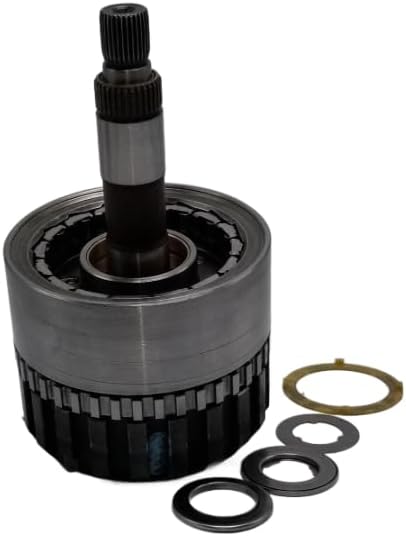
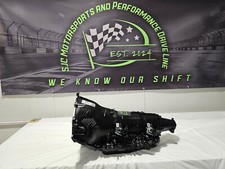
Shared DNA: both are TH400 with an overdrive bolted on
You cannot understand the 4L80E or the 4L85E without starting at the Turbo-Hydramatic 400. The 4L80E arrived in 1991 as the electronic overdrive successor to the TH400, and it is built heavily on that transmission in both parts and strength. GM kept as much of the 400 as it could, stretched the case roughly an inch and a half to make room for an overdrive section, and added electronic control through the powertrain control module along with a lock-up converter. The name spells out the mission: 4-speed, Longitudinal, 8,000-pound vehicle class.
That lineage is why the gear ratios below are shared not just between the 4L80E and 4L85E but with the old three-speed 400 in the first three gears. Sonnax describes both units the same way — TH400 gearing plus a 0.75 fourth-gear overdrive — which is a big part of why they became such popular swaps behind big-block and LS power.
| Gear | Ratio (both units) |
|---|---|
| 1st | 2.482:1 |
| 2nd | 1.482:1 |
| 3rd | 1.000:1 |
| 4th (OD) | 0.750:1 |
| Reverse | 2.077:1 |
Same ratios, same case family, same bellhousing patterns, same valve body layout — Sonnax even publishes one combined valve body reference for the 4L80-E and 4L85-E because the hydraulics are common. So if the ratios and the castings match, what actually separates them?
The real difference: five-pinion planetaries and reinforced internals
The 4L85E showed up in 2002 as GM's heavy-duty upgrade, and the single most important change is in the planetary gearsets. The 4L80E uses four-pinion planetaries; the 4L85E swaps in a five-pinion reaction gearset and a five-pinion output gearset. Adding a fifth pinion to each carrier spreads the same load across more meshing teeth, which lowers the stress on any one tooth and cuts the chance of a spalled or split gear under sustained heavy load. That is the classic durability move on a planetary automatic, and it is the reason the 4L85E carries the "heavy-duty" badge.
The five-pinion carriers do not travel alone. The 4L85E package came with supporting changes to handle the higher rating — sturdier internals through the load path that feeds those gears — which is why GM was comfortable putting it behind the biggest gas and diesel engines in the lineup and rating it for a higher GVWR ceiling than the 4L80E. In practice, a stock 4L85E has more margin in exactly the places a stock 4L80E gives up first.
What that buys you in torque rating
The factory numbers are close on paper and meaningful in the field:
| Spec | 4L80E | 4L85E |
|---|---|---|
| Introduced | 1991 | 2002 |
| RPO code | MT1 | MN8 |
| Reaction / output planetary | Four-pinion | Five-pinion |
| Rated input torque (production) | ~440 lb-ft | ~460 lb-ft |
| Max output torque | ~885 lb-ft | Higher (HD internals) |
| GVWR class | Up to ~8,000 lb | Higher HD ceiling |
Do not read the modest 440-to-460 lb-ft gap as the whole story. Those are conservative production durability ratings, and the 4L85E's real advantage is that its geartrain shrugs off repeated peak loads — towing, grade descents on the converter, hard launches — that slowly beat a 4L80E's four-pinion carriers and overdrive section. For a sense of how far the architecture stretches when it is built rather than left stock, GM's own Chevrolet Performance Supermatic 4L85E crate unit is rated at 650 lb-ft of input torque on the same ratios and DEXRON VI fluid, dry weight about 230 lb.
Year splits that decide which parts fit
Before you order a carrier for either unit, pin down the build year, because GM changed the geartrain twice inside the 4L80E's run and the parts do not freely interchange. Per Wayne Colonna's ATSG writeup in Transmission Digest, the 1997 units moved to center-gearbox lubrication by relocating the cooler return line from the pump to the center support, and then in 1999 the front and rear carrier pinions grew 0.075 in. thicker, from about 0.710 in. to 0.785 in., for durability. Thicker pinions meant the sun gear had to be lifted 0.041 in. to run centered in them, which GM did with a 0.041 in. shim between the thrust bearing and the rear internal ring gear, and the sun gear shaft changed to suit. That leaves three different sun-gear shafts on the shelf, the second design used only for 1997-98.
Mix them and you get symptoms that read like something else entirely. A non-center-lube sun gear shaft in a center-lube unit has a longer bushing journal that restricts the cooler and lube circuit, raises converter pressure and drags the converter clutch, which shows up as the engine stumbling or stalling when the shifter goes into overdrive or reverse. Assembled correctly, that bushing journal should stand about 0.050 in. above the bushing. Sonnax splits this family into '92-'96, '97-'03 and '04-later for parts purposes for the same reason, and flags that early cases without shifter bracket bosses cannot be used in '96-'97 vehicles.
Applications and years
The 4L80E ran the longest and turns up in the widest variety of vehicles: 1991-and-later GM three-quarter- and one-ton pickups, Suburbans, and full-size vans with big-block, diesel, or later LS-based power, the Hummer H1, and even a run of European luxury cars that bought the transmission from GM. If you are pulling a heavy-duty GM four-speed out of a truck built through the late 1990s, it is almost certainly a 4L80E.
The 4L85E is the narrower story. It came in around 2002 for the heaviest-duty gas and diesel applications — think GM's full-size vans behind the Duramax and big-block engines — and served until the six-speed 6L90 took over that role in the mid-to-late 2000s. Because it lived in commercial and diesel van duty more than in pickups, cores are less common and worth confirming by the internals rather than by the tag alone.
Interchange: it bolts in, but mind the electronics
Mechanically, the 4L85E is a bolt-in for the 4L80E. Same case dimensions, same bellhousing bolt pattern to the GM engine family, same mounting, same output, same 310 mm converter footprint, same 17-bolt pan. That is exactly why the 4L85E is the go-to durability upgrade when someone wants more than a stock 4L80E without changing the whole driveline. It is also why the two share master rebuild kits, frictions, steels, and most hard parts on the shelf.
Two things keep it from being a no-thought swap. First, electronic control: the transmission controller has to be calibrated for the unit and the vehicle, and later 4L85E vans saw connector and hydraulic-control revisions that you need to match to your harness and tune. Second, you do not have to swap the whole transmission to get the benefit — because the geartrains interchange, builders routinely fit five-pinion 4L85E planetaries into a 4L80E during a rebuild to gain the heavy-duty carriers without hunting down a complete core. Confirm the reaction and output carriers physically; the tag and pan will not tell you which planetaries are inside.
Shop 4L80E / 4L85E parts →
Common failure points (they share most of them)
Because the units are so closely related, they fail in the same places — the 4L85E just tolerates more before it gets there.
- Overdrive section: the added overdrive is the part of the case the TH400 never had, and it is the classic weak point of the family. Overdrive clutch and roller-clutch (sprag) wear in that section is a leading reason these come apart, especially on units that spend real time in fourth under load.
- Intermediate sprag: the 4L80/85-E intermediate one-way clutch is a known high-stress location under aggressive shifts and high torque; it is a common upgrade target on built units.
- Converter charge and thrust load: ATRA's Gears rebuild guide puts 4L80-E converter charge pressure at roughly 100 psi under high load against about 60 psi in a TH400, with both units capped near 180 psi max line pressure. That extra charge pressure loads the geartrain: the 4L80-E carries about 89 lb of rearward thrust on the overdrive planetary gearset, forward clutch housing and mainshaft. Check direct clutch housing float while you are in there; the typical range is 0.020 to 0.025 in.
- Line pressure and the pump: low or inconsistent line pressure lets clutch packs slip and cook regardless of how fresh the frictions are. Sonnax performance packs for this family exist specifically to raise line pressures and improve shift accumulation while adding heavy-duty parts to prevent repeat damage — a good tell for where the stock units run short.
- TCC / valve body wear: shared valve body bores wear and cross-leak with age, showing up as converter-clutch complaints and soft or erratic shifts.
On a 4L80E that has been pushed past its rating, the four-pinion carriers and the overdrive section tend to be the first casualties. That is precisely the gap the 4L85E's five-pinion sets close. For a full teardown walkthrough on the HD variant, see our 4L85E rebuild wear points guide, and for pressure diagnosis start with 4L80E low line pressure diagnosis.
Fluid: DEXRON VI and capacity
Both transmissions run DEXRON VI. GM moved the whole line from DEXRON III to VI in 2006, and VI is backward compatible with earlier 4L80E units, so there is no reason to chase down the older spec. Get the capacity right the way it actually breaks down at the pan:
- Pan-and-filter service: roughly 6 to 7 quarts. That is what comes out and goes back on a routine drop; the converter holds the rest.
- Full dry fill: about 13 to 13.5 quarts including the torque converter and cooler lines. That is the number for a fresh rebuild or a unit that has been fully drained.
Set the final level off the dipstick or fill plug at operating temperature. Fixed quart counts get you close, but temperature and converter drain-down move the real level, and these units do not like being run low. For the deeper service walkthrough, see 4L80E fluid type and capacity.
Bottom line: which one, and when
If you are keeping a stock or lightly loaded truck alive, a healthy 4L80E is a strong, well-understood transmission and there is no reason to hunt for a 4L85E. If you tow heavy, run a diesel or big-block, or make real power, the 4L85E's five-pinion planetaries and reinforced internals are the durability you want — and because it bolts in and shares a parts catalog, you can either drop in a 4L85E or build a 4L80E with 4L85E carriers and get most of the way there. The name on the tag matters less than what is spinning inside the case; verify the planetaries, get the line pressure right, and fill it with DEXRON VI to level.
Building one of these this week?
Five-pinion planetaries, intermediate and overdrive sprags, master rebuild kits, valve body components, and heavy-duty pressure-control parts for the 4L80E and 4L85E — all in one place, shipped from the USA.
Shop 4L80E parts →Frequently asked questions
Is the 4L85E interchangeable with the 4L80E?
Physically, yes. The 4L85E shares the 4L80E case family, bellhousing pattern, mounting, output, and 17-bolt pan, so it drops into the same tunnel and bolts to the same GM engines. The catch is electronic: the controller has to be calibrated for the transmission, and on later vans there were connector and hydraulic-control differences to account for. As a mechanical swap it is a bolt-in; plan for the calibration and wiring side before you road-test it.
What is the main difference between the 4L80E and 4L85E?
The 4L85E is GM's heavy-duty version of the 4L80E. The headline change is inside the geartrain: the 4L85E uses a five-pinion reaction planetary and a five-pinion output planetary where the 4L80E uses four-pinion sets, spreading load across more teeth. That, plus supporting internal upgrades, is why the 4L85E carries a higher input-torque rating and a higher GVWR ceiling. Both share the same gear ratios, valve body layout, and TH400 architecture.
How much torque can a 4L80E handle before it needs upgrades?
In factory form the 4L80E is rated at about 440 lb-ft of input torque and the production 4L85E at about 460 lb-ft. Those are conservative durability numbers, not a hard cliff, but they mark where the stock overdrive section, sprags, and line-pressure control start living on borrowed time under sustained load. Built units with heavy-duty planetaries, sprags, and pressure control go far past that; GM's own Chevrolet Performance Supermatic 4L85E crate unit is rated at 650 lb-ft.
What fluid does a 4L80E or 4L85E take, and how much?
Both use DEXRON VI automatic transmission fluid; it superseded DEXRON III across the GM line in 2006 and is backward compatible with earlier 4L80E units. A pan-and-filter service takes roughly 6 to 7 quarts, while a full dry fill including the torque converter and cooler lines is about 13 to 13.5 quarts. Always set final level off the dipstick or fill plug at operating temperature rather than trusting a fixed number.
Sources
- Sonnax — "GM 4L80E Performance Upgrades." Backs the 4L80E and 4L85E sharing TH400 gear ratios plus the 0.75 fourth-gear overdrive, the popularity of the family in high-horsepower applications, and the role of performance packs in raising line pressure and shift accumulation while adding heavy-duty parts to prevent repeat wear. sonnax.com
- Sonnax — "GM 4L80-E, 4L85-E Valve Body Layout." Backs the shared valve body layout and hydraulic architecture between the 4L80-E and 4L85-E, documented in a single combined reference. sonnax.com
- Chevrolet Performance — "Supermatic 4L85E Transmission" installation/specification sheet (GM P/N 19300175). Backs the shared gear ratios (2.482 / 1.482 / 1.000 / 0.750 / 2.077 reverse), the 650 lb-ft input torque rating of the crate 4L85E, DEXRON VI fluid specification, and the roughly 230 lb dry / 255 lb wet weight. chevrolet.com
- Transmission Digest — "Which Planet Are You On?" Wayne Colonna, ATSG / Transmission Digest technical editor. Backs the 1997 move to center-gearbox lubrication by relocating the cooler return from the pump to the center support; the 1999 increase in front and rear carrier pinion thickness of 0.075 in., from about 0.710 in. to 0.785 in.; the 0.041 in. of sun gear lift required to center it in the thicker pinions and the 0.041 in. shim added between the thrust bearing and the rear internal ring gear; the resulting three distinct sun-gear-shaft designs (the second used only for 1997-98); the stalling or stumbling into overdrive or reverse caused by fitting a non-center-lube sun gear shaft in a center-lube unit; the correct bushing journal protrusion of about 0.050 in.; and the roughly 0.050 in. height difference between 1997-98 and 1999-later center supports. transmissiondigest.com
- Gears Magazine (ATRA) — "Improve Your 400 and 4L80 Rebuilds." Backs the 4L80-E running roughly 100 psi converter charge pressure under high load against about 60 psi in a TH400, both capped near 180 psi maximum line pressure; the 89 lb of rearward thrust the 4L80-E puts on the overdrive planetary gearset, forward clutch housing and mainshaft; and the typical 0.020 to 0.025 in. of direct clutch housing float between the thrust washer at the rear of the forward clutch hub and the sun gear shaft splines. gearsmagazine.com
- Sonnax — GM 4L80-E unit reference. Backs the three design eras Sonnax splits this family into for parts purposes ('92-'96, '97-'03 and '04-later), the 4L85-E being carried as a related unit sharing the same technical references, and the case caution that early cases without shifter bracket bosses cannot be used in '96-'97 vehicles. sonnax.com