The 4L85E is the heavy-duty build of the 4L80E, and it lives almost entirely in vehicles that get worked: 2500 and 3500 series trucks, 8.1L vans, chassis cabs, plow rigs and salt spreaders. Which means the failures you see on the bench are not random wear. They are the same short list, over and over, driven by load and heat.
The hydraulics are the giveaway. Sonnax publishes one valve body layout covering both units, titled "GM 4L80-E, 4L85-E," and the pump and valve body service parts carry the same 34200- and 34994- numbers for either case. The 4L85E gets you more geartrain and more clutch capacity, not a different valve body, pressure regulator, or overdrive roller clutch arrangement. So the 4L80E failure data is your 4L85E failure data.
Problem 1: The Overdrive Roller Clutch Grenades
This is the failure that pays for shop rent in a snow belt and the one that makes customers cry when they see the invoice. It is not a defect so much as a design compromise, and understanding it is the difference between a rebuild that holds and a comeback.
Look at the application chart Sonnax publishes for this family. In the Overdrive range, 1st through 3rd gears, the OD roller clutch is holding by itself. The overrun clutch is only on in the manual ranges: D, 2 and 1. So the guy pushing a 9-foot blade through a lot at 15 mph, selector parked in Overdrive because that is where it always is, is putting the entire reaction load of the geartrain through one one-way roller clutch with nothing backing it up.
Heat finishes the job. Per Sonnax, during an overheat the plastic cage of the overdrive roller clutch can melt, which causes a quick failure of the roller clutch. Anyone who has pulled a converter off a plow truck knows the smell and the blue tint on the steel.
What it takes out with it
Once the roller clutch starts to go it does not go alone. Sonnax lays out the collateral damage plainly: the overrun clutch drum goes because that drum is the inner race for the roller clutch. The OD planetary is usually wiped out because the outer race is the inner diameter of that planetary. And when pieces of the rollers get ground up in the planet gears, the pinions chip, which means the ring gear, which is part of the forward drum, gets replaced too. That is four major hard parts off one failure.
The fix that actually prevents the repeat
The free half of the fix is customer education. Driving in the manual ranges while pushing snow backs the roller clutch up with the overrun clutch, distributing load onto a friction clutch pack instead of one one-way device. Tell them, and write it on the invoice.
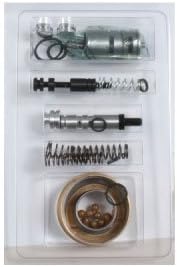
The half you install is Sonnax Smart-Tech overrun clutch valve kit 34200-40K, for '97-later 4L80-E and 4L85-E units. It is a hydraulic answer to a mechanical problem. An external manifold bolts to the valve body and establishes a connection to the overrun clutch as soon as the engine starts, so line pressure can apply that clutch in every manual valve position, Reverse included. Valve position is controlled by 4th clutch pressure: 4th clutch strokes the valve to the right and exhausts the overrun clutch, so in practice the overrun clutch is on in every gear except 4th. Components install onto the valve body with no transmission removal.
Sonnax Smart-Tech Overrun Clutch Valve Kit 34200-40K (4L80E / 4L85E, '97-later)
The exact part Sonnax built for this failure. Applies the overrun clutch in all ranges but 4th so the OD roller clutch is not holding alone under load. Bolts to the valve body, no unit removal.
View the 34200-40K kit at CoreTransmissionParts →Problem 2: Valve Body Bore Wear, Bore by Bore
The second failure family is not one part, it is a set of aluminum bores that wear in a predictable order. The Sonnax valve body layout for the 4L80-E / 4L85-E maps each complaint to the bore that causes it, which is the fastest way to stop guessing on the bench.
Bent manual valve. The OE manual valve in these units is prone to bending because of its length and relatively narrow spools. Once it is bent it wears the bore, and critical oil escapes the circuit it was supposed to be in. The complaints are delayed engagement, low line rise and loss of gear. Sonnax manual valve 34994-16 has lengthened spools so they ride in the non-worn portion of the bore.
#7 Low/Reverse checkball seat. A chronic wear point on '95-later units. Symptoms per Sonnax: burnt reverse band, delayed reverse, no reverse, no engine braking in manual low. Repair is the #7 checkball seat, part 34200-52.
Reverse checkball sleeve in the 3-4 shift valve bore. Another '95-later chronic. This one reads as 3rd slip, 4th slip, gear ratio codes, burned direct clutch and reverse slip. Parts 34200-38 and the 3rd & reverse checkball sleeve kit 34200-47K.
Actuator feed limit valve. The AFL valve is the pressure regulator for every solenoid in the unit, so when its bore wears you get shift complaints and pressure complaints out of one hole. Sonnax lists the symptoms as wrong gear starts, clutch failure, solenoid performance codes, no 4th and band failure, corrected with AFL valve kit 34200-16K. If the AFL filter end plug is leaking instead, you get broken AFL filters, 2nd gear starts, codes 68, 85, 86 and 87, and no upshifts, cured with 34994-17K.
TCC regulator valve. Converter shudder, burnt converter, TCC apply and release concerns and TCC codes. Kits 34994-01K, or oversized 34994-18K when the bore is already gone.
Boost valve. Uncontrollable line rise, high line pressure, broken parts and broken clutch pistons. Sonnax offers 34200-01K in O-ring style, 34200-03K factory style, and 34200-10K with an encapsulated relief valve, so identify what is in the pump before ordering.
Pressure regulator valve. A specific and under-diagnosed one: the lube-regulated PR valve 34200-14K addresses engine surge at idle, low cooler flow and low TCC release pressure. If a customer complains that the engine surges at idle in gear and you have already chased the engine side, look here.
If you are in the valve body anyway and the unit has 200,000 hard miles on it, the Sure Cure kit SC-4L80E bundles these repairs rather than doing them one bore at a time and finding the next one after reassembly.
Problem 3: No Reverse, and the Right Order to Chase It
No reverse on a 4L85E has three possible homes and the only efficient way through it is what Sonnax's Randall Schroeder calls splitting the circuits: separate the hydraulic, electrical and mechanical causes instead of guessing.
Split it hydraulically first. Reverse uses the direct clutch, which is also used in 3rd and 4th gear, and the low/reverse band, which is also used for engine braking in manual 1st. So pressure test in Reverse, 3rd, 4th and manual 1st, and read the clutch and band chart alongside. If 3rd and 4th are present, the direct clutch is capable and good. If 3rd and 4th are missing too, suspect a leaking or missing checkball in the valve body, sealing rings, or the direct clutch drum. If you have engine braking in manual 1st, the low/reverse band is capable of holding.
Then split it electrically. These units have a reverse inhibit: if the control module sees a speed reference greater than 8 mph during the shift into Reverse, it can prevent the shift. Unplug the case connector to force the failsafe pattern and see if Reverse returns. If it does, go chase speed references to the module. One caution Schroeder flags and people forget: unplugged, line pressure goes to an uncontrolled maximum, which can mask a subtle hydraulic leak that max pressure overcomes.
Then split it mechanically. Drop the pan and block the low/reverse band by locking the servo down with a modified servo cover, which separates a band problem from everything else.
Problem 4: Reverse Servo Travel, the Spec Nobody Checks
Related, and worth its own heading because it causes brand new rebuilds to come back. The reverse band adjustment on a TH400 or 4L80-E family unit is critical, and per Transmission Digest it has tripped up even good builders, because servo travel is not easy to check and the OE tools (J38737 / J21370-10) are expensive, hard to find, and the selective pins have been discontinued.
Make the tool. Take a spare late 4L80-E servo cover, cut a window in it so you can see the piston, drill through the top and weld a nut on. A 7/16-20 fine thread is the one you want because it gives .050 in of travel per turn. Thread the bolt down until it just touches the piston, then tighten until the band seats. The piston should travel .125 in, which with that thread is 2.5 turns. Two things actually matter: the band must not drag on the reaction carrier when released, and the band must be gripping the carrier well before the piston bottoms in the bore.
Problem 5: Input Shaft Twist in High-Power Builds
Not a work-truck failure, but a real one in the 4L85E's other life behind big power. Input shaft failure is common in performance 4L80-E and 4L85-E units at extreme horsepower, where both OE and ordinary aftermarket shafts give up with spline twist and outright breakage. Sonnax's extreme duty input shaft (p/n 34670-02) is Aermet steel alloy with a proprietary heat treatment, recommended above 1,000 hp. Have that conversation before the build, not after.
Problem 6: Heat, Which Causes Most of the Above
Almost every failure above accelerates when the fluid gets hot. The plastic roller clutch cage melts, bushings discolor, and converters come out blue.
One cheap item to address during any 4L85E build: the stator support bushing. Sonnax 34016-W is wider than OE and is listed against TCC slip codes, no lockup, overheated fluid and no overdrive. A worn one lets the circuits feeding converter charge and cooler flow leak, so the unit runs hot, the converter does not lock cleanly, and you are back to the melted cage. Many of these trucks have a factory transmission temperature gauge, and telling the customer to watch it is free warranty insurance.
A Build Order That Does Not Come Back
- Inspect the OD planetary, overrun clutch drum and roller clutch before you price the job. If the roller clutch is gone, assume the drum, planetary and possibly the forward drum ring gear are gone too.
- Vacuum test the valve body bores rather than assuming. Repair the manual valve, AFL, TCC regulator, boost and PR bores that fail.
- Replace the #7 low/reverse checkball seat and the reverse checkball sleeve on any '95-later unit that showed a reverse or 3-4 complaint.
- Set reverse servo travel to .125 in with a shop-made tool and confirm the band clears the carrier when released.
- Install the Smart-Tech overrun clutch valve kit on any '97-later unit going into a plow, tow or chassis-cab application.
- New stator support bushing, and verify cooler flow before the truck leaves.
FAQ
Is the 4L85E just a 4L80E?
Mechanically it is the heavy-duty version of the same unit, and for service purposes that is how the industry treats it. Sonnax publishes one valve body layout titled GM 4L80-E, 4L85-E, and the pump and valve body service parts carry the same 34200- and 34994- numbers for either case. The differences are in the geartrain and clutch capacity, not in the hydraulics, so every diagnostic procedure written for a 4L80-E applies to a 4L85E.
Why do 4L85E overdrive roller clutches keep failing in work trucks?
Because in the OD range the overdrive roller clutch holds by itself. Per Sonnax, the overrun clutch only comes on in the manual ranges D, 2 and 1, so a driver who leaves the selector in Overdrive while plowing or towing gives that roller clutch no backup. Heat makes it worse: during an overheat the plastic cage of the roller clutch can melt, which causes a quick failure.
What gets destroyed when the OD roller clutch lets go?
Far more than the roller clutch. Sonnax notes the overrun clutch drum goes with it because that drum is the inner race, and the OD planetary is usually wiped out because the outer race is machined into its inner diameter. Pieces of the rollers get ground through the planet gears, so the pinions chip, and then the ring gear, which is part of the forward drum, needs replacing too.
How do I stop the OD roller clutch from failing again?
Two ways, and the good builds use both. Tell the customer to select a manual range when working the truck hard, which backs the roller clutch up with the overrun clutch. Then install Sonnax Smart-Tech overrun clutch valve kit 34200-40K on '97-later units. It bolts an external manifold to the valve body and applies the overrun clutch in every range except 4th gear, with 4th clutch pressure stroking the valve to exhaust it. No transmission removal required.
What is the reverse servo travel spec on a 4L85E?
The piston should travel .125 in. Per Transmission Digest, you can check it with a shop-made tool: cut a window in a spare late 4L80-E servo cover, drill through the top and weld a 7/16-20 nut to it, which gives a convenient .050 in of travel per turn, so .125 in equals 2.5 turns. The two things that matter are that the band does not drag on the reaction carrier when released and that it grips well before the piston bottoms in the bore.
Sources
- Sonnax — "GM 4L80-E, 4L85-E Valve Body Layout," December 23, 2019. Backs the single shared layout covering both units and the 34200-/34994- part numbering, plus the bore-by-bore symptom mapping used above: #7 Low/Reverse checkball seat 34200-52 ('95-later) for burnt reverse band, delayed reverse, no reverse and no engine braking in manual low; reverse checkball sleeve 34200-38 and 3rd & reverse checkball sleeve kit 34200-47K for 3rd/4th slip, gear ratio codes, burned direct clutch and reverse slip; actuator feed limit valve kit 34200-16K for wrong gear starts, clutch failure, solenoid performance codes, no 4th and band failure; AFL filter end plug kit 34994-17K for broken AFL filters, 2nd gear starts, codes 68/85/86/87 and no upshifts; TCC regulator valve kits 34994-01K and 34994-18K; boost valve kits 34200-01K, 34200-03K and 34200-10K for uncontrollable line rise, high line pressure and broken clutch pistons; lube regulated pressure regulator valve 34200-14K for engine surge at idle, low cooler flow and low TCC release pressure; stator support bushing 34016-W (wider than OE) for TCC slip codes, no lockup, overheated fluid and no overdrive; and the Sure Cure kit SC-4L80E. sonnax.com
- Sonnax — "It's Snow Plowing Season Again! Understanding 4L80-E Overdrive Roller Clutch Failure," Jim Dial (Sonnax TASC Force), March 2, 2017. Backs the application chart showing the OD roller clutch holding alone in the Overdrive range with the overrun clutch on only in the manual ranges D, 2 and 1, the point that driving in the manual ranges while plowing backs the roller clutch up with the overrun clutch, and the melting of the roller clutch plastic cage during an overheat. sonnax.com
- Sonnax — "Outsmarting 4L80-E Overdrive Roller Clutch Failure," Jim Dial (Sonnax TASC Force), June 22, 2017. Backs the collateral damage list (overrun clutch drum as the roller clutch inner race, OD planetary carrying the outer race on its inner diameter, chipped planet pinions, forward drum ring gear), and the Smart-Tech overrun clutch valve kit 34200-40K for '97-later 4L80-E and 4L85-E units: external manifold bolted to the valve body, overrun clutch applied in all manual valve positions including Reverse, 4th clutch pressure stroking the valve to exhaust the overrun clutch, and installation without transmission removal. sonnax.com
- Sonnax — "Diagnosing the Elusive NO REVERSE with the 4L80-E," Randall Schroeder (Sonnax TASC Force), January 22, 2012. Backs the split-the-circuits method, the fact that Reverse uses the direct clutch (also used in 3rd and 4th) and the low/reverse band (also used for engine braking in manual 1st), the requirement to pressure test in Reverse, 3rd, 4th and manual 1st, the interpretation of those results, the greater-than-8mph reverse inhibit and the case-connector unplug test, the warning that unplugged line pressure goes to uncontrolled maximum and can mask a leak, and blocking the low/reverse band with a modified servo cover as the mechanical split. sonnax.com
- Transmission Digest — "Easy TH400, 4L80-E reverse servo setup: Craft your own tool," Caleb Perham (Sonnax TASC Force), January 16, 2024. Backs the criticality of the reverse band adjustment, the OE tools J38737 / J21370-10 being expensive and hard to locate with the selective pins discontinued, the shop-made tool from a late 4L80-E servo cover with a welded 7/16-20 nut giving .050 in of travel per turn, the .125 in piston travel spec equal to 2.5 turns, and the two rules that the band must not drag on the reaction carrier when released and must grip well before the piston bottoms. transmissiondigest.com
- Transmission Digest — "GM 4L80/85-E Extreme Duty Input Shaft," July 14, 2021. Backs the statement that input shaft failure is common in performance 4L80-E and 4L85-E units at extreme horsepower with spline twist and shaft breakage, and the Sonnax extreme duty input shaft p/n 34670-02 made from Aermet steel alloy with proprietary heat treatment, recommended above 1,000 hp. transmissiondigest.com