Lockup shudder is the complaint that has followed the AODE and 4R70W for their whole production run. The truck is cruising at 40-something on light throttle, the converter clutch locks, and the whole cab buzzes like it's running over rumble strips. Tap the brake and it goes away. Step back into it and it comes right back. It shows up on F-150s, Expeditions, Crown Victorias, Grand Marquis, Town Cars, Mustangs and Econolines alike.
A lot of these get sold a torque converter they didn't need. Sometimes it really is the converter. But shudder on this unit has four common roots: tired fluid, a worn bypass clutch control valve, low converter charge pressure, and a damaged converter clutch. A misfire or driveline vibration can pass for any of them. This guide goes through them in the order I'd check them, cheapest first.
The short version: First prove it's the converter clutch. Tap the brake during the shudder, watch Mode 6 misfire counts [4], and check the driveshaft slip yoke. Then do a full MERCON V exchange [5]. If the shudder comes back, gauge the unit. Low pressure during the shudder points at pump or valve body wear [3], most often the bypass clutch control plunger valve and sleeve [1]. Normal pressure with low cooler flow means a restriction. Normal pressure, normal flow, fresh fluid, still shudders: that's the converter.
How the 4R70W Locks the Converter
Most converters you work on are two-path: apply oil on one side of the lockup piston, release oil on the other. Ford's AODE/4R70W bypass converter is different, and you need to understand it to diagnose it. Sonnax describes it as a three-circuit system [2]:
- CI (converter impeller) feeds oil into the rear of the converter all the time.
- CT (converter turbine) is the exit path out to the cooler, and it stays constant.
- CBY (converter bypass) is the control circuit. In release, bypass oil flows between the front cover and the lockup piston and holds the piston off the cover.
To lock up, the PCM drives the TCC solenoid, which moves the bypass clutch control valve and drops CBY pressure. The oil trapped between the cover and piston exhausts, and converter charge pressure behind the piston pushes it onto the cover [2]. That's the key point: the clamping force on this clutch comes from converter charge pressure. Anything that lowers charge pressure lowers apply force. Sonnax puts it plainly: low CT pressure is the same as low TCC apply pressure, and it causes slip. Valve body bore wear at the bypass sleeve and plunger, wear at the converter regulator valve, and low pump volume all lead there [2].
A converter clutch that is slipping instead of fully locked is what you feel as shudder. The lining grabs and releases many times a second. Degraded fluid makes it worse, because the friction modifiers in the ATF are what let the clutch slip smoothly during apply instead of stick-slipping.
Step 1: Prove It's the Converter Clutch
Don't skip this. A good share of "converter shudder" trucks have nothing wrong with the converter.
The brake tap test
Drive into the shudder, then touch the brake pedal just enough to light the brake lamps. The brake switch tells the PCM to release the converter clutch. If the shudder stops the instant the clutch releases and comes back when it re-applies, you're dealing with lockup. If it keeps going with the clutch released, look somewhere else.
Rule out misfire
A light-load misfire at 40 mph in 4th with the converter locked feels almost exactly like TCC shudder. That's because a locked converter stops absorbing the engine's pulses. Gears Magazine's shudder diagnosis article recommends pulling Mode 6 misfire counts per cylinder while you reproduce the complaint. If the counts climb during the event, chase the coil, plug or compression problem first [4]. Sonnax adds a low-tech check: a vacuum gauge on the engine. A steady vacuum reading during the shudder means the shudder is TCC related [3]. On the modular V8s in these trucks, a weak coil-on-plug that only misses under load is the classic impostor.
Rule out the driveline
Worn engine and transmission mounts and a dry, corroded driveshaft slip yoke can both produce a shudder under light load. The Gears article specifically calls out slip spline corrosion as a common Ford truck issue and recommends lightly greasing the splines [4]. Pull the yoke and look before you blame the converter.
Watch the scan data
With a scan tool connected, record engine RPM, turbine speed, TCC command, throttle position, vehicle speed and fluid temperature through the shudder. Converter slip is engine RPM minus turbine speed. Gears Magazine notes that normal slip at lockup is typically under 60 RPM [4]. A 4R70W that is commanded fully on but shows slip swinging back and forth well above that, in time with the shudder, has a converter clutch that isn't holding. Also confirm the TCC command itself is steady. An erratic command points at an input problem (TPS, brake switch, VSS) or a wiring fault, not hydraulics.
Step 2: Fix the Fluid First
The 4R70W runs MERCON V. Ford's Motorcraft ATF quick reference chart lists MERCON V for the 4R70W/4R70E and 4R75W/E [5]. If the unit has been topped off with a generic multi-vehicle fluid, the wrong ATF, or original fluid at 100,000 miles, start here. Shudder from tired fluid is the most common and cheapest case.
A pan drop alone won't do it. Dry fill including the converter is about 13.9 quarts in an F-150 or Crown Victoria, and a pan drop only gets you roughly 5-7 quarts. Most of the old fluid is still in the converter and cooler. Do a full exchange through the cooler line, or drain the converter if yours has a drain plug (many earlier converters do, many later ones don't). Replace the filter while you're in there. Our 4R70W fluid type and capacity guide covers the fill and level check.
About shudder additives: Ford's fluid chart says outright not to use supplemental transmission fluid additives, treatments or cleaning agents, warning they can affect operation and damage internal parts [5]. Products like Lubegard's Instant Shudder Fixx, a concentrated friction modifier in a 2 oz tube sold for converter lockup shudder [6], are common in the aftermarket. But in a Ford unit, use one only as a short-term test on a customer-pay job, never as the repair. The fluid exchange is the real test. If fresh MERCON V kills the shudder and it stays gone, the fluid was the problem. If it quiets down for a few hundred miles and comes back, the fluid was covering for a clutch that is slipping for a hydraulic or mechanical reason. Keep going.
Step 3: Gauge It and Measure Cooler Flow
This is where you separate a valve body problem from a converter problem. Sonnax's lockup troubleshooting guide lays out the method [3]: tee a pressure gauge into the line tap, put a flow meter in the cooler return, and drive the truck into the shudder while you watch both.
| Reading during shudder | What it points to |
|---|---|
| Line pressure low | Problem is outside the converter: pump wear or valve body bore wear lowering apply force [3] |
| Pressure normal, cooler flow low | A flow restriction. Do the cooler loop test to find where [3] |
| Pressure normal, flow normal, fresh fluid | The converter clutch itself: glazed or uneven lining, warped piston |
| Slip follows an erratic TCC command | Electrical or input fault, not hydraulic |
For the loop test, bypass the cooler and lines with a short jumper hose and drive it again. If the shudder goes away, the restriction is in the cooler or lines. That's common after a previous failure sent debris into the cooler. If it stays, the restriction is upstream, at the converter or in the pump and valve body passages [3]. Sonnax also points out that a restricted exhaust path for the oil between the piston and cover keeps the clutch from applying cleanly [3]. On this unit that's the CBY side.
For line pressure specs and gauge setup, see our line pressure testing guide. Compare against the Ford manual for your year.
Step 4: The Bypass Clutch Control Valve
If pressure or charge is low, the first valve to pull is the bypass clutch control plunger valve and sleeve. Sonnax says TCC shudder, delayed lockup, no lockup and converter codes (including code 628 on the older systems) on the AODE, 4R70E, 4R70W, 4R75E and 4R75W can often be traced to wear at this valve and sleeve [1]. A worn sleeve leaks converter charge oil. That lowers the pressure that clamps the clutch, and the valve can't stroke cleanly to the apply position. The result is a clutch that half-applies and chatters.
There are two repair kits, and picking the wrong one causes its own complaint [1]:
- 76948-04K uses a single .030 in. orifice sleeve. It gives a firmer, quicker lockup and is aimed at earlier units, which may need separator plate changes.
- 76948-64K uses four .063 in. orifices that match the OE hydraulic design. It's a drop-in for 1996-and-later units, keeps OE lockup timing, and avoids the engine lugging and harsh TCC apply the single-orifice version can cause on later calibrations.
Both are drop-in valve and sleeve repairs that need no reaming [1]. While the valve body is off, vacuum-test the converter regulator valve too. A stuck converter regulator can go the other way: Sonnax notes that high CT pressure from a stuck regulator can crack the TCC piston and set a slip code [2]. Our 4R70W valve body testing guide goes bore by bore.
Sonnax Bypass Clutch Control Plunger Valve Kit 76948-64 for the 4R70W
The four-orifice drop-in fix for bypass sleeve wear on 1996-and-later units, the valve behind most hydraulic lockup shudder on this family.
View the bypass valve kit →Need something else? Browse all 4R70W parts at Core Transmission Parts.
Step 5: When It Really Is the Converter
If pressure and cooler flow are normal, the fluid is fresh MERCON V, and the unit still shudders with slip swinging well past normal, the converter clutch itself is damaged. A lining that has been slipping for thousands of miles glazes and wears unevenly, and Gears Magazine lists uneven clutch surfaces among the core shudder causes [4]. Sonnax's guide also says to confirm the converter has the right friction material for the application [3]. That matters when a cheap reman converter shows up with the wrong lining.
Two rules when the converter comes out. First, fix the hydraulic cause before the new converter goes in. A new converter on a worn bypass sleeve or a restricted cooler will shudder again, usually faster. Second, flush or replace the cooler and lines, and check the pump. A failed converter clutch sheds lining material into the cooler, and that material can restrict flow and starve lube to the rear of the unit.
Preventing a Repeat
- Service the fluid on a schedule. MERCON V, a full exchange rather than a pan drop, and more often if the truck tows. Friction modifier depletion is the slow road to shudder.
- Fix a mild shudder early. Every mile of slip glazes the lining a little more. A fluid job and a bypass valve kit are cheap next to a converter and a flush.
- Correct the bypass valve on every rebuild. Rebuilding the hard parts and reusing a worn bypass sleeve sends the new converter out with the same low charge pressure that killed the old one.
- Keep the cooler clean. After any internal failure, flush or replace it and confirm flow before you call the job done.
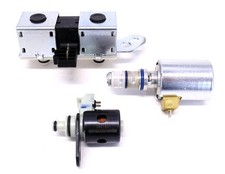
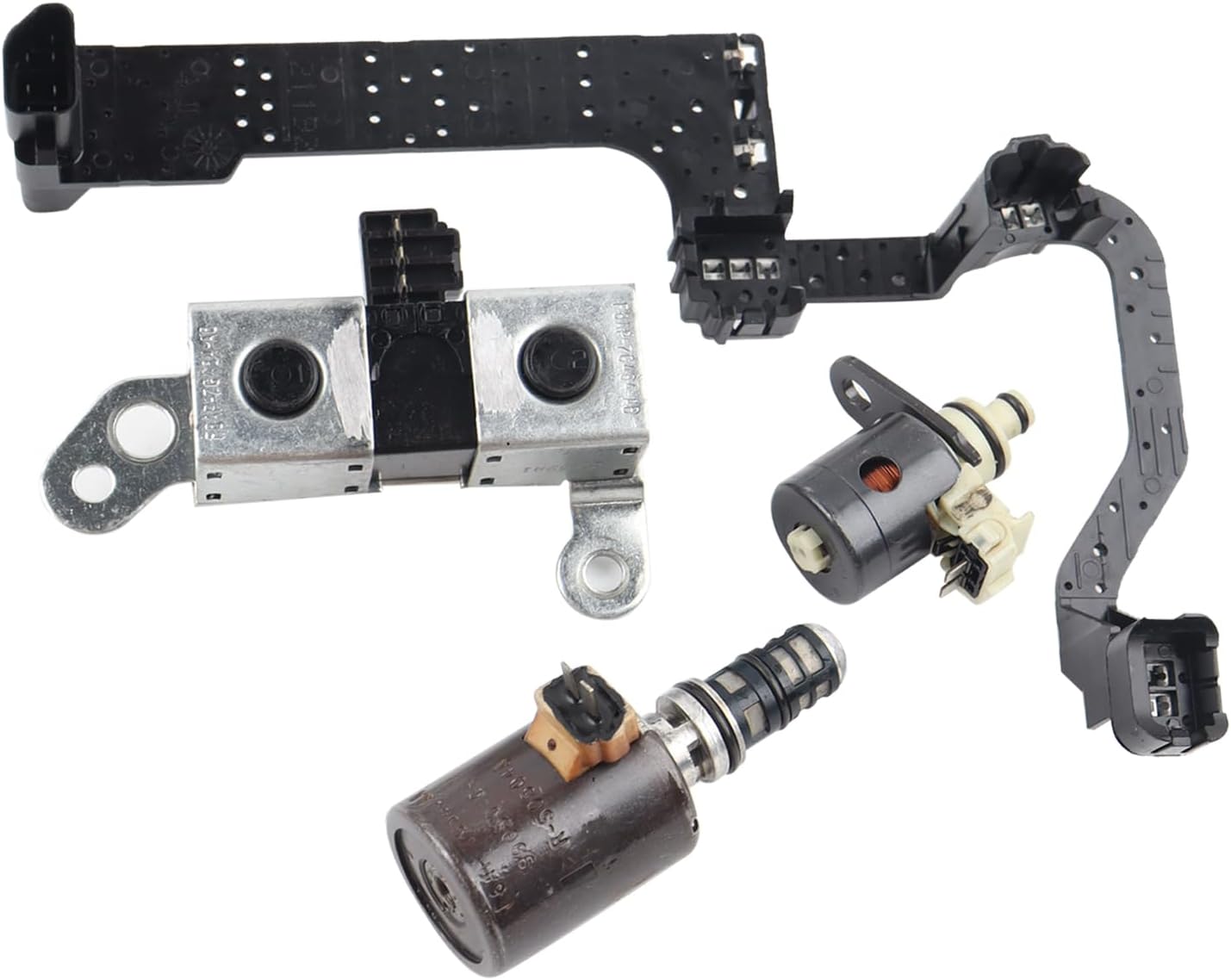
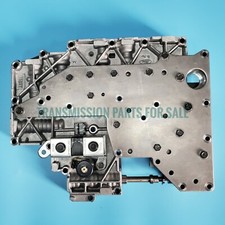
TCC solenoids, solenoid kits, valve bodies, pumps and master rebuild kits for the 4R70W, with checkout on our site.
Shop 4R70W parts →FAQ
What does 4R70W torque converter shudder feel like?
It feels like driving over rumble strips at light throttle, usually between about 35 and 55 mph in 3rd or 4th gear, right as the converter clutch locks up. It gets worse on a slight grade or with a load and usually goes away the moment you tap the brake pedal, because the brake switch tells the PCM to release the converter clutch.
Will a fluid change fix 4R70W converter shudder?
Often, if the shudder is caught early and the cause is worn-out fluid. The friction modifiers in the ATF are what let the converter clutch apply smoothly, and they wear out with miles and heat. A complete exchange with MERCON V, the fluid Ford's Motorcraft chart lists for the 4R70W, is the first fix to try. If the shudder returns within a few hundred miles, the problem is hydraulic or inside the converter.
Does a shudder additive like Lubegard fix the problem?
Not as a repair. Ford's fluid chart cautions against supplemental transmission additives and treatments, and no friction modifier fixes a worn bypass clutch control valve, low converter charge pressure, or a damaged converter clutch. A full MERCON V exchange is the right first step. If the shudder comes back after fresh fluid, the converter clutch is slipping for a hydraulic or mechanical reason, so keep diagnosing.
How do I know if it is the converter or the valve body?
Put a pressure gauge and a cooler flow meter on the unit and drive it into the shudder. Sonnax's lockup troubleshooting guide says low pressure during the shudder points outside the converter, at pump or valve body wear, while normal pressure with low cooler flow points to a flow restriction. If pressure and flow are both normal and the fluid is fresh, the converter clutch itself is the likely problem.
Can a misfire feel like converter shudder on a 4R70W?
Yes. A light-load misfire at lockup speed feels almost identical. Gears Magazine recommends checking Mode 6 misfire counts per cylinder while reproducing the shudder; if the counts climb during the event, fix the ignition or engine problem first. A steady engine vacuum reading during the shudder is another sign the problem is the converter clutch and not the engine.
Sources
- Sonnax — "AODE, 4R70W Series Bypass Clutch Control Valve Repair Options: When to Use 76948-04K vs. 76948-64K," on bypass clutch control plunger valve and sleeve wear causing TCC shudder, delayed or no lockup and converter codes, the .030 in. single-orifice vs. four .063 in. orifice sleeves, and 1996-later drop-in fitment. sonnax.com/tech_resources/1369
- Sonnax — "Ford Bypass Converter Clutch Circuits," on the CI, CT and CBY circuits, how lowering CBY pressure applies the clutch, low CT pressure equaling low apply pressure and slip, and a stuck converter regulator cracking the TCC piston. sonnax.com/tech_resources/203
- Sonnax — "Troubleshooting Lockup Issues," on the vacuum gauge check, reading pressure and cooler flow during the shudder, the cooler loop test, exhaust-path restriction, and confirming correct ATF and friction material. sonnax.com/tech_resources/97
- Gears Magazine (ATRA) — "Shudder Diagnosis" (Aaron Golas), on commanded vs. actual TCC slip, normal lockup slip under about 60 RPM, Mode 6 misfire counts, mounts, and Ford truck driveshaft spline corrosion. gearsmagazine.com
- Ford / Motorcraft — Automatic Transmission Fluid Quick Reference Chart (US), listing MERCON V for the 4R70W/4R70E and 4R75W/E, and its caution against supplemental transmission fluid additives, treatments and cleaning agents. fcsdchemicalsandlubricants.com (ATF quick reference PDF)
- Lubegard — Instant Shudder Fixx product information, a concentrated friction modifier for converter lockup shudder in 2 oz tubes (P/N 19610, 19680, 19689), not for Ford Type F, CVT or DCT units. lubegard.com