A harsh-shifting 4R70W is usually easier to fix than a slipping one, as long as you figure out which kind of harsh you have before you buy parts. A bang into Drive from Park, a hard 1-2 that chirps the tires in an F-150, and a clunky 3-2 coast-down are three different complaints with three different causes. Line pressure that's too high makes every shift firm. A worn accumulator makes only one shift firm. And a harsh shift on a 2001-or-later unit with a burnt direct clutch in the pan points at a leak between two circuits.
This guide covers how the 4R70W controls shift feel, the numbers to check with a gauge and meter, and the known failures behind most harsh-shift complaints on this unit, with the part that fixes each one. The specs and failure descriptions come from Sonnax, Transmission Digest and the Teckpak EPC solenoid service sheet, all listed at the bottom.
How the 4R70W decides how hard to shift
Shift feel on the 4R70W comes down to two things: how much line pressure is in the unit, and how quickly that pressure reaches the clutch being applied.
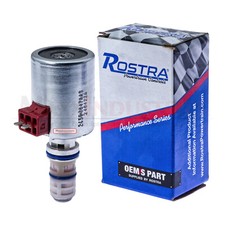
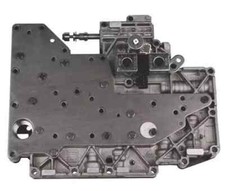
Line pressure is set by the pressure regulator valve in the valve body, and the computer sets the pressure regulator through the electronic pressure control (EPC) solenoid. The PCM decides how much EPC to command from throttle position, engine load and fluid temperature. More EPC pressure pushes on the boost end of the regulator, which raises line pressure, which clamps clutches and bands harder. This is how the PCM gets line rise when you open the throttle.
Ford's EPC works backwards from what most people expect. The PCM sends more current to lower pressure, and cuts current to raise it. With the solenoid unplugged or its circuit open, the unit goes to maximum line pressure. That's a failsafe, and Ford's own AODE service manual, the 4R70W's direct ancestor, spells it out: EPC failed OFF gives "maximum EPC pressure, harsh engagements, harsh shifts," and code 625 (EPC open circuit) carries the same symptom. It also means any open in the EPC circuit, whether a broken wire, a bad connector pin or a failed solenoid, will show up as harsh shifts everywhere. Transmission Digest's EPC article uses the unplugged condition as a reference point for this reason.
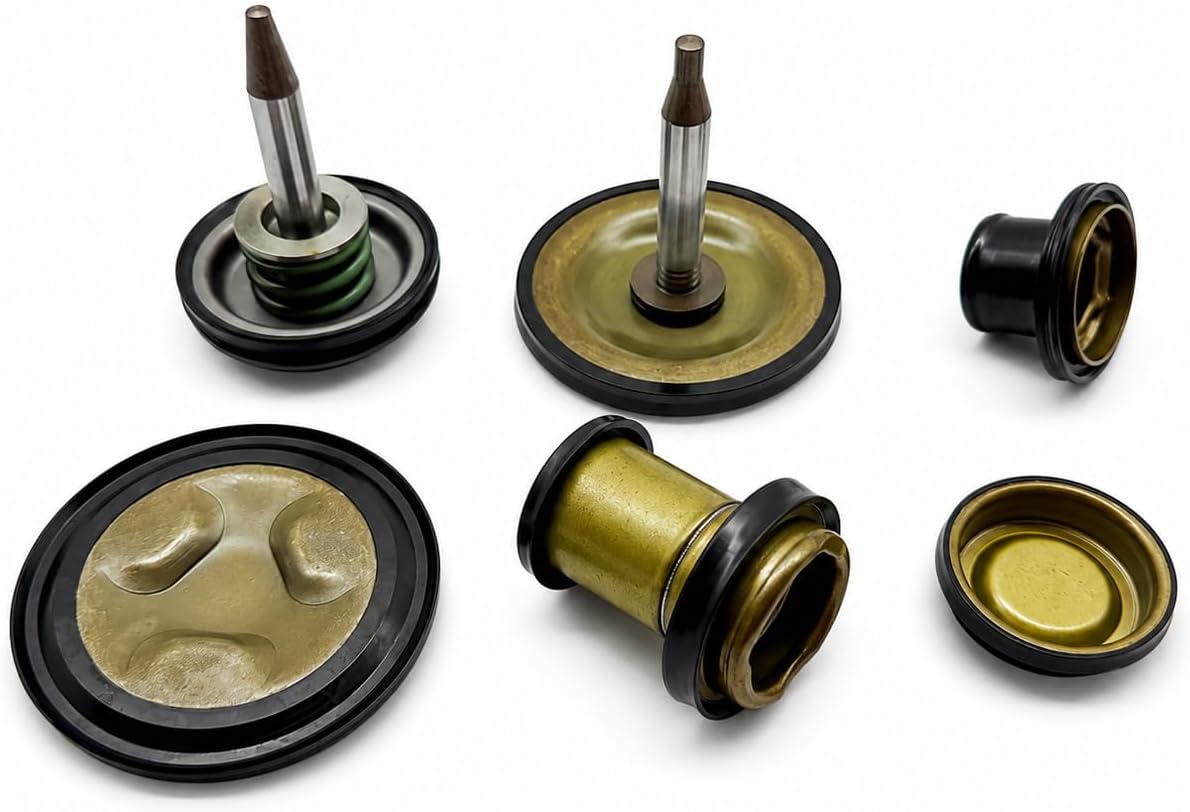
Accumulators handle the second part. The 1-2 and 2-3 accumulators sit in the intermediate and direct clutch apply circuits, and their pistons stroke against a spring to absorb the first rush of oil so the clutch applies over a controlled fraction of a second. If the accumulator can't stroke (seized piston, scored bore, wrong spring) the clutch hits with full line pressure and the shift bangs.
So a useful first question on any harsh complaint is: is every shift harsh, or just one? Every shift, plus engagement into Drive and Reverse, points at line pressure. One shift points at that shift's accumulator or clutch circuit.
Step one: fluid, codes and the basics
Check fluid level hot, engine running, in Park on level ground, and look at the condition. The 4R70W is a MERCON V unit, and fluid that's badly overfilled, aerated or the wrong type can change shift feel. Our 4R70W fluid type and capacity guide has Ford's fill numbers and the check procedure.
Pull codes next. Any stored EPC circuit fault means the PCM may have already defaulted to high pressure, so fix that before you chase anything else. Look at engine codes too. The PCM calculates EPC from throttle position and load, so a skewed throttle position sensor or a bad MAF reading can make it command more pressure than the engine needs, and the transmission shifts as if you had your foot in it.
Rule out a high idle, broken mounts, worn U-joints and driveline slack before you pull the pan. Any of them turns a normal engagement into a clunk.
Step two: measure the EPC circuit and line pressure
This is the step that separates guessing from diagnosis, and it takes about 20 minutes.
EPC solenoid resistance. The Teckpak installation sheet for the AODE/4R70W EPC solenoid lists resistance at 2.48 to 5.66 ohms. Measure through the case connector so you're testing the internal harness too. Open or very high resistance means the PCM can't control the solenoid and the unit will run maximum pressure. A reading in range with harsh shifts still possible means you need the gauge. Ford's Pinpoint Test E adds the functional check: with a line gauge on and the Rotunda tester energizing EPC, line pressure should drop. If it does, the problem is in the PCM or vehicle harness, not the transmission.
Line pressure. Put a 0-300 psi gauge on the line tap. Block the wheels, set the parking brake and hold the service brake. Keep any wide-open-throttle stall pressure check under about five seconds. The Teckpak sheet gives these line pressure figures for the AODE/4R70W:
| Range | Closed throttle (idle) | Open throttle (stall) |
|---|---|---|
| Park, Neutral, Drive | 50-75 psi | 160-210 psi |
| Reverse | 80-120 psi | 220-280 psi |
Confirm against the Ford service manual for the specific year and application, because calibrations vary. The shape of the readings tells you more than any one number:
- High at idle in every range, and little change with throttle: the pressure regulator isn't being controlled. Suspect an open EPC circuit, a failed solenoid, or a solenoid that isn't sealing at its snout (see the next section).
- Normal at idle, but shifts are still harsh: line pressure isn't the problem. Move on to the accumulators.
- Erratic, jumping readings, or a buzz with throttle: suspect a worn pressure regulator valve and bore.
If the scan tool shows the PCM commanding low EPC pressure while the gauge reads high, the problem is in the solenoid or valve body, not the computer.
Cause 1: EPC solenoid failure or a bad install (every shift harsh)
A failed EPC solenoid or an open in its circuit is one of the first things to rule out when everything on a 4R70W is harsh. Because loss of EPC control sends the unit to high pressure, an open coil, a broken wire in the internal harness or a corroded connector pin all produce the same symptom: firm engagement into Drive and Reverse and hard upshifts, often with a stored EPC code.
Two install details catch people after the solenoid is replaced. First, the Teckpak sheet warns that if you have high line pressure in Park after the job, an O-ring on the solenoid snout may have rolled during installation. Grease the snout before it goes into the bore. The same sheet notes that high line pressure problems can also come from using the original bracket with their solenoid. Second, some aftermarket EPC solenoids have an adjuster. On the Teckpak unit it's a 3/8 in. adjuster with a 5/8 in. lock nut; turning it clockwise raises pressure and counterclockwise lowers it, in one-sixth turn steps. If someone before you turned it in to "firm it up," that's your harsh shift. Set it back and verify with a gauge, not by feel.
Harness problems count here too. Transmission Digest documented a 4R70W that set multiple solenoid codes and started in a higher gear after its case connector was replaced, because an aftermarket connector had two terminals pushed back so they didn't contact the hard wire frame. Ford's frame (F8AZ-7G276-BA) and connector (F8AZ-7G276-A) fixed it. Any time the harness has been disturbed, check terminal seating before you condemn the solenoid.
Cause 2: worn pressure regulator valve and bore (harsh or erratic, sometimes soft)
Sonnax documents scoring on the EPC end of the pressure regulator valve on AODE, 4R70W, 4R70E, 4R75W and 4R75E units, with the valve body casting usually wearing along with it. Sonnax lists harsh or soft shifts, erratic line pressure, poor line rise, throttle-sensitive buzz, uncontrolled reverse pressure and clutch or band failure as the symptoms.
A new valve alone won't fix a worn bore. Sonnax recommends a vacuum test to find bore wear you can't see, and lists 76948-09 as the replacement valve for 1996-and-later units (76948-01 for 1995 and earlier) and oversized kits 76948-17K and 76948-16K for worn bores. The oversized kits require reaming the bore.
The same wear can go the other way. Transmission Digest describes AODE/4R70W units where bore wear between the EPC circuit and the pump inlet lets the pump pull EPC pressure away, so EPC stays near zero at any throttle, and the unit slips and slides shifts instead of banging them. That's the same bore wearing further. If you're in the valve body for a harsh-shift complaint, check this bore either way. Our 4R70W valve body testing guide covers the vacuum test.
Cause 3: 1-2 accumulator (harsh 1-2 only)
If the 1-2 is the only harsh shift, the 1-2 accumulator is the first place to look. Sonnax says the 1-2 accumulator bore in AODE and 4R70-family cases gets worn and scored, which causes loss of 2nd clutch pressure, and lists harsh 1-2 and delayed forward engagement as the two symptoms of it. A scored bore lets the piston hang up or leak, so the intermediate clutch either gets hit with full pressure or loses its cushion.
For years a scored accumulator bore meant replacing the case. Sonnax's 76890-01K 1-2 accumulator sleeve kit is a drop-in repair for 4R70W 1996-and-later, AODE 1992-and-later and 4R70E/4R75W/4R75E 2003-and-later cases, with no machining. The 76890-TL tool is optional but helps orient the sleeve.
Also check the accumulator spring and the piston itself. The bonded rubber on the original pistons hardens and cracks with age. A previous "shift kit" install may have put in a heavier spring or restricted the accumulator on purpose, which will give you a firm 1-2 whether or not anything is worn. Ask about the unit's history before you assume a failure.
Cause 4: 2-3 accumulator and the 2001+ cross leak (harsh or flared 2-3)
The 2-3 accumulator cushions direct clutch apply. Sonnax's 76890-21K kit addresses 2-3 accumulator bore wear on AOD, AODE, 4R70W, 4R70E, 4R75W and 4R75E, which leaks forward or direct clutch oil. Symptoms include low line pressure in forward, no forward unless the RPM comes up, piston seal delamination, direct clutch failure and overdrive band distress. The kit uses press-in sleeves and a matched piston, with no machining.
On 2001-and-later units, check the valve body clamping in the same area. Ford dropped the two-bolt stiffener plate that sat under the 2-3 accumulator and eliminated the capacity modulator valve. Sonnax measured the separator plate bowing up to 0.011 in. under normal forward pressure, which lets forward and direct clutch oil cross leak. A direct clutch dragging on the cross leak makes the 2-3 feel wrong and burns the clutch. The tell on teardown is a gasket with heavy imprints everywhere except around the 2-3 accumulator. The Sonnax 76507F-01K retainer plate kit clamps it back down. Put one on every 2001-and-later valve body you touch.
What to replace, in order
- Every shift harsh, idle pressure high: test EPC resistance (2.48 to 5.66 ohms) and wiring, then replace the EPC solenoid. Grease the snout.
- Harsh and erratic, buzz with throttle: vacuum test the pressure regulator bore, and install the correct valve or an oversized kit.
- Harsh 1-2 only: inspect the 1-2 accumulator piston, spring and bore, and sleeve it with 76890-01K if the bore is scored.
- Harsh or odd 2-3, burnt direct clutch: check the 2-3 accumulator bore (76890-21K) and, on 2001-and-later units, install the 76507F-01K retainer plate.
- Valve body with multiple worn bores: a remanufactured valve body is often less labor than repairing each bore.
Sonnax 1-2 accumulator sleeve kit (76890-01K)
If your 4R70W has a harsh 1-2 or delayed forward engagement from a scored 1-2 accumulator bore, this is the drop-in sleeve, piston and cover kit that saves the case. Sold by our sister store, CoreTransmissionParts.
Shop the part for this fix →Need something else? The 4R70W parts collection has EPC solenoids, pressure regulator valve kits, the 2-3 accumulator kit and full rebuild kits.
Need parts for this job?
Our 4R70W parts page carries EPC and solenoid kits, servo and accumulator piston kits, the Sonnax retainer plate kit, valve bodies and master rebuild kits for F-150, Expedition, Crown Victoria, Mustang and Explorer units. Checkout is on site.
FAQ
Why does my 4R70W shift hard in every gear?
When every shift and the engagement into Drive and Reverse are harsh, line pressure is usually too high. Ford's EPC solenoid raises pressure when current drops, so an open EPC circuit, a failed solenoid or a bad connector sends the unit to maximum pressure. Check EPC resistance (2.48 to 5.66 ohms per the Teckpak spec) and put a gauge on the line tap.
What causes a harsh 1-2 shift on a 4R70W?
If only the 1-2 is harsh, look at the 1-2 accumulator. Sonnax documents the 1-2 accumulator bore in the case wearing and scoring, which causes harsh 1-2 shifts and delayed forward engagement. The Sonnax 76890-01K sleeve kit repairs the bore without machining or replacing the case.
What should 4R70W line pressure be?
The Teckpak AODE/4R70W EPC service sheet lists 50-75 psi in Park, Neutral and Drive and 80-120 psi in Reverse at closed throttle, and 160-210 psi and 220-280 psi at open throttle. Confirm against the Ford service manual for your year. High idle pressure with little rise usually means the EPC is not controlling the pressure regulator.
Can a bad EPC solenoid cause harsh shifting?
Yes. It is one of the first things to check when every gear on a 4R70W shifts hard, because loss of EPC control defaults the unit to high line pressure. After replacing it, grease the snout so the O-ring does not roll, since a rolled O-ring can also cause high line pressure in Park.
Why is my 4R70W harsh after a rebuild?
Check whether a shift kit, heavier accumulator spring or adjustable EPC solenoid was set firm during the rebuild. Teckpak's adjustable EPC raises pressure when turned clockwise. Also confirm the EPC snout O-ring did not roll on install and that no engine codes are skewing the throttle or load input.
Related guides
- AODE Harsh Shift Causes and Fix
- 4R70W Valve Body Problems and Testing
- 4R70W Shift Solenoid Symptoms
- Ford 4R70W and 4R75W Transmission Problems
- 4R70W vs 4R75W Differences
Sources
- Teckpak, "Installation Instructions: EPC Solenoid for AODE/4R70W '92-'97, 76923." Backs the 2.48-5.66 ohm EPC resistance, the line pressure figures (50-75/80-120 psi closed throttle, 160-210/220-280 psi open throttle), the rolled snout O-ring and OEM bracket causes of high line pressure, and the adjuster procedure. teckpak-fitzall.com (archive.org)
- Sonnax, "Watch Out for 4R70W Pressure Regulator Valve and Casting Wear." Backs EPC-end pressure regulator valve scoring and bore wear, the erratic buzz, poor shift quality and uncontrolled reverse pressure symptoms, the vacuum test, and part numbers 76948-01, 76948-09, 76948-16K and 76948-17K. sonnax.com
- Sonnax, 1-2 Accumulator Sleeve Kit 76890-01K. Backs the scored 1-2 accumulator bore causing loss of 2nd clutch pressure, the harsh 1-2 and delayed forward symptoms, the applications, and the 76890-TL tool. sonnax.com
- Sonnax, 2-3 Accumulator Piston Kit 76890-21K. Backs 2-3 accumulator bore wear leaking forward or direct clutch oil, and the low forward pressure, seal delamination, direct clutch failure and overdrive band symptoms. sonnax.com
- Sonnax, "4R70W, 4R75W 2001-Later Forward and Direct Clutch Problems: The Easy Valve Body Fix." Backs the removal of the stiffener plate and capacity modulator valve in 2001, separator plate bowing up to 0.011 in., the gasket imprint tell, and the 76507F-01K retainer plate kit. sonnax.com
- Transmission Digest, "I Lost My EPC!" (Wayne Colonna). Backs the AODE/4R70W pressure regulator bore wear that lets the pump pull away EPC pressure, the near-zero EPC reading, the unplugged reference condition and the air test. Transmission Digest, "Ford 4R70W solenoid codes set," backs the pushed-back connector terminals and the F8AZ-7G276-BA / F8AZ-7G276-A fix. transmissiondigest.com (EPC) · transmissiondigest.com (connector)
- Ford Motor Company, 1994 Mustang Workshop Manual, Section 07-01 (AODE), Transmission Electronic Control System and DTC chart. Backs EPC failed OFF causing maximum EPC pressure with harsh engagements and shifts, code 625/P1746 open circuit symptoms, and the Pinpoint Test E functional check (line pressure drops when the tester energizes EPC). SRB71012 · SRB71026