A harsh AODE comes in two flavors. Either every engagement and every shift is hard, or one shift (usually the 1-2 or the 2-3) bangs in while the rest feel normal. Those two complaints have different causes, and Ford's own service information splits them the same way. "All shifts harsh" is a pressure problem, and on this unit that almost always means EPC. "One shift harsh" sends you to that shift's valve, accumulator and clutch.
This guide works from Ford's 1994 Mustang Workshop Manual, Section 07-01 (AODE), plus the accumulator and valve wear Sonnax and Transmission Digest document on the AODE/4R70W family. Everything is listed under Sources.
How the AODE sets shift feel: EPC controls line pressure
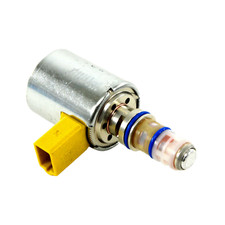
The AODE has no throttle valve cable. Line pressure is set electronically. Ford's component description is short: the EPC solenoid "regulates transmission EPC pressure," and EPC pressure in turn controls line pressure and the 2-3 backout valve. The PCM calculates the EPC command from throttle position, engine rpm, output shaft speed, intake air temperature and transmission oil temperature.
The detail that matters for diagnosis is which way the solenoid fails. Per Ford:
- EPC failed ON: minimum EPC pressure (minimum capacity), and the PCM limits engine torque by cutting cylinders (alternate firing). That is a slip complaint, not a harsh one.
- EPC failed OFF: maximum EPC pressure, "harsh engagements, harsh shifts."
Put simply, no current through the EPC solenoid means full line pressure. That is also why Ford warns in the tester set-up notes that unplugging the transmission connector "defaults transmission to maximum line pressure" and causes firm shifts. An AODE that shifts like a shift kit with the connector off is doing exactly what it was designed to do. An AODE that shifts like that with the connector on has lost EPC control somewhere.
Pull codes first: the harsh-shift codes
Run the self-test and service any non-transmission codes first, as Ford instructs, because several engine sensors feed the EPC calculation directly. From Ford's DTC chart, these are the codes that come with a harsh complaint:
- 625 (P1746 on the 3.8L): EPC open circuit. Ford: open circuit "causes maximum EPC pressure, harsh engagements and shifts." Go to Pinpoint Test E.
- 624 (P1747): EPC circuit shorted or driver fault. This one goes the other way: minimum EPC and torque limiting. If you have a 624 and a harsh complaint, look for a second problem.
- 122-125, 167 (P0122, P0123, P1120): TP sensor. Ford lists harsh engagements, firm shift feel, an abnormal shift schedule and TCC problems. A TP that reads high tells the PCM you are on the throttle, so it raises EPC.
- 112-114 (P0112-P0114): IAT. IAT is used in determining EPC, and Ford's symptom is incorrect EPC pressure, "either high or low," giving harsh or soft shifts.
- MAF codes (157-159, 184, 185): Ford lists symptoms similar to a TP failure.
- Ignition codes (211-243, P0300-P0308, P0320, P0340): the rpm signal feeds WOT shift control, TCC and EPC. Ford lists harsh engagements and shifts.
- 634 (P1709): MLP out of range. Harsh engagements, firm shift feel and no 3-4 shift.
- 637/638: TOT open or grounded. Both are listed as firm shift feel, because the PCM corrects EPC for temperature.
- 639 (P0720): insufficient OSS input. Harsh shifts, abnormal shift schedule, no TCC.
- P1742/P1743: TCC solenoid failed ON. Ford lists harsh shifts. A converter clutch that stays applied through a shift makes every shift feel like it went in with the converter locked.
If the harsh complaint started after a tune, a gear swap or bigger tires, stop and think about calibration before you pull the pan. The PCM builds EPC from what it thinks the engine torque and vehicle speed are.
Pinpoint Test E: prove the EPC circuit
Ford's Pinpoint Test E covers the EPC solenoid electrical system only. The steps and values:
- E1, EPC power. Key on, engine off, transmission connector unplugged. EPC PWR at the harness connector should read more than 10.5 V to ground. If not, there is an open in the harness.
- E2, harness continuity. Breakout box on, PCM disconnected. EPC PWR and EPC signal from the PCM to the transmission connector should each read less than 5 ohms. (5.0L: EPC signal is PCM pin 38. 3.8L: pin 81.)
- E3, shorts. The EPC circuit should read more than 10,000 ohms to the power and ground pins.
- E4, functional test. Line gauge on the line tap, Rotunda tester (007-00085) on the transmission connector, engine running, DRIVE mode, 1st. Press the EPC switch and watch the gauge. Line pressure should drop when the EPC solenoid is energized. If it does, the transmission side is good and the fault is in the PCM or vehicle harness.
- E5, solenoid resistance. VPWR jack to EPC jack on the tester: 2.48 to 5.66 ohms. Ford notes that out of spec can be the internal harness as well as the solenoid, so check the internal leads before you condemn the part.
The E4 step is the one that separates electrical from hydraulic. If the tester energizes the solenoid, the LED goes green, and line pressure still does not drop, the solenoid is not regulating or something in the regulator circuit is holding pressure up.
Gauge it: Ford's AODE pressure charts
Ford's diagnostic routine for "Shift Concerns: Feel, Harsh" (214/314) is direct: check pressures at the line and EPC taps. "If pressures are high or all shifts are harsh, go to Main Controls. If pressures are OK and a specific shift is harsh," go to that shift's routine. The chart values, from Ford's Pressure Reference Chart 401:
| Condition | EPC | Line | Forward clutch |
|---|---|---|---|
| Idle, D or 1 (5.0L) | 0-10 psi | 32-67 psi | 27-65 psi |
| Idle, D or 1 (3.8L) | 15-25 psi | 75-91 psi | 70-89 psi |
| Idle, Reverse (both) | 0-10 psi | 54-96 psi | 0-5 psi |
| WOT stall, 1st or 2nd | 83-93 psi | 160-210 psi | 152-210 psi |
| WOT stall, Reverse | 83-93 psi | 194-254 psi | 0-5 psi |
Source: Ford 1994 Mustang Workshop Manual, Section 07-01, Pressure Reference Charts 401A (3.8L) and 401B (5.0L).
A 5.0L car sitting at 90 psi of line at idle in Drive with a harsh engagement, and EPC reading near its WOT value, is showing you the problem on the gauge. Line that tracks EPC correctly but is still high points at the main regulator side. Pressure in spec with one shift harsh points at that shift.
One caution from the other direction. Transmission Digest documents wear in the AODE/4R70W pressure regulator valve bore that bleeds EPC oil into the boost circuit and back to the pump inlet, leaving EPC near zero and line with no rise. That is a slip and sliding-shift complaint, and it is often misdiagnosed as a bad EPC solenoid. If your gauge shows low EPC, you are in the wrong article. See our AODE slipping guide.
Harsh engagements into Drive or Reverse
Ford has separate routines for harsh garage shifts. Both start with the same electrical checks: self-test, the engagement test and EPC test on the tester, and Pinpoint Tests B (TOT) and E (EPC). Then the hydraulic lists:
- Harsh forward engagement (304): high forward clutch, line or EPC pressure. Main controls: the main regulator valve, the 2-3 backout valve, and the 2-3 accumulator seal or retainer stuck or damaged. Valve body bolts not torqued, damaged gaskets, a stuck EPC solenoid. Pump bolts, porosity and gaskets. In the forward clutch, missing or damaged check balls (replace the cylinder).
- Harsh reverse engagement (303): high line or EPC pressure. Also shift linkage and MLP adjustment, a plugged or damaged filter and seal, and in the main controls the No. 6 shuttle ball, No. 5 check ball, manual valve and main regulator valve. Then the low-reverse band, servo and anchor pin.
The forward clutch check ball is easy to overlook. With no ball seated, the forward clutch applies without its normal cushion, and you get a bump into Drive even with pressures in spec.
One harsh shift: work the shift routine
If pressures are correct and only one upshift is harsh, Ford sends you to the per-shift routines. The parts that matter for feel:
| Shift | Pressure to check | Main controls and hard parts Ford lists |
|---|---|---|
| 1-2 (routine 320) | Intermediate clutch, line | 1-2 shift valve, 1-2 accumulator valve, No. 8 ball not seating, SS1, pump cross leaks, intermediate clutch seals and piston |
| 2-3 (routine 321) | Direct clutch | 2-3 shift valve, check balls No. 1 or No. 3, solenoid pressure regulator valve, 2-3 backout valve, 2-3 modulator valve, orifice control valve, SS2, 2-3 accumulator piston seal and bore, solenoid screen |
| 3-4 (routine 322) | Forward, direct, line | 3-4 shift valve, OD servo regulator, 3-4 capacity modulator valve, 2-3 backout valve, orifice control valve, check balls 1, 2, 4 and 7, OD servo cover, rod, cushion spring and seals |
Source: Ford 1994 Mustang Workshop Manual, Section 07-01, Diagnostic Routines 320-322.
The 1-2 accumulator bore
The harsh 1-2 is the most common single-shift complaint on this family, and the case is often the reason. Sonnax documents that the 1-2 accumulator bore on AODE and 4R70 series cases "can become scored, resulting in the loss of 2nd clutch pressure." The symptoms they list are a harsh 1-2 and delayed forward. Once the bore is scored the accumulator piston cannot cushion the intermediate clutch apply, and the 1-2 goes in on raw line pressure. Their correction is the drop-in 76890-01K sleeve kit, which salvages the case instead of replacing it. Install it with the 76890-TL tool so the sleeve goes in the right way round.
Check the accumulator piston and seals while you are in there. A torn seal on the 1-2 or 2-3 accumulator does the same thing as a scored bore: no cushion, harsh shift.
The 2-3 and the backout valve
The 2-3 is a swap-type shift on the AODE, with the 2-3 backout valve and the 2-3 accumulator timing the direct clutch apply. Remember that the 2-3 backout valve is controlled by EPC, per Ford's EPC description. So an EPC fault can show up as a harsh or tied-up 2-3 before it is obvious anywhere else.
Harsh lockup is not a harsh shift
Customers often describe a hard converter clutch apply as a harsh shift. Sonnax's note on the bypass clutch control valve is worth knowing: their 76948-04K kit uses a single .030 inch orifice and gives a firmer, quicker lockup, and on 1996-later units "engine lugging and harsh TCC apply can occur if the OE calibration is not observed." Their 76948-64K uses four .063 inch orifices to match OE feel. If someone has been in the valve body before you, check which one is in there before chasing EPC.
My diagnostic order on a harsh AODE
- Check fluid level and condition hot, Ford's way.
- Pull codes. Service TP, MAF, IAT and ignition codes first. Note 625, 634, 637/638, 639 and P1742/P1743.
- Road test and decide: every shift and engagement harsh, or one shift.
- Gauge line and EPC at idle and at stall against Ford's chart.
- If pressure is high, run Pinpoint Test E: over 10.5 V EPC PWR, under 5 ohm harness, over 10,000 ohms to power and ground, 2.48-5.66 ohm solenoid, and line pressure dropping when the tester energizes EPC.
- If EPC checks out and line is still high, go to the main regulator valve, valve body bolts and gaskets, and the check balls for that range.
- If pressures are in spec and one shift is harsh, work that shift's routine, starting with the 1-2 accumulator bore and the accumulator seals.
Shop the part for this fix: Sonnax 1-2 accumulator sleeve kit 76890-01K
Drop-in sleeve, piston, O-rings and cover that repair a scored 1-2 accumulator bore in AODE and 4R70-family cases, the case-side cause of a harsh 1-2 and delayed forward. CoreTransmissionParts stocks it.
View the 76890-01K sleeve kit at CoreTransmissionPartsOr browse the full AODE/4R70W parts collection, including EPC solenoids, accumulator pistons and valve body kits.
Need parts for this job?
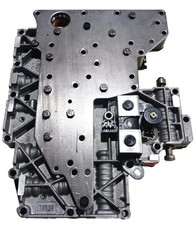
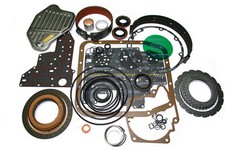
Our AODE parts page has EPC solenoids, valve bodies, internal wiring harnesses and master rebuild kits for 1992-up AODE units, all on our own checkout. Match the part to the test result: an EPC solenoid only when it fails Pinpoint Test E, a valve body when the regulator or accumulator valves are worn.
FAQ
What causes harsh shifts in an AODE transmission?
The most common cause is high EPC pressure. Ford lists an EPC solenoid failed off, or an open EPC circuit (code 625), as causing maximum EPC pressure with harsh engagements and shifts. Bad TP, IAT, MLP, OSS or ignition inputs also skew EPC and shift scheduling. If the electrics are clean, check line and EPC pressure and then the main regulator valve, accumulators and check balls.
What should an AODE EPC solenoid measure?
Ford specifies 2.48 to 5.66 ohms for the EPC solenoid, measured from the VPWR jack to the EPC jack on the transmission tester. Out of spec can be the solenoid or the internal harness. The vehicle harness from the PCM should read under 5 ohms per circuit and more than 10,000 ohms to power and ground.
Why does my AODE shift hard with the transmission connector unplugged?
That is by design. Ford notes that disconnecting the transmission connector defaults the transmission to maximum line pressure, which causes firm shifts. The same thing happens when the EPC circuit is open, because the EPC solenoid is off and EPC pressure goes to maximum.
What causes a harsh 1-2 shift on an AODE?
Ford's 1-2 routine points at intermediate clutch pressure, line pressure, the 1-2 shift valve, the 1-2 accumulator valve and the No. 8 check ball. Sonnax adds that the 1-2 accumulator bore in the case can become scored on AODE and 4R70 cases, which causes a harsh 1-2 and delayed forward. Their 76890-01K sleeve kit repairs the bore without replacing the case.
What are normal AODE line pressures?
Ford's 5.0L chart calls for 32-67 psi line and 0-10 psi EPC at idle in Drive. At wide open throttle stall in 1st and 2nd, line should be 160-210 psi with EPC at 83-93 psi, and 194-254 psi line in Reverse. The 3.8L chart runs higher at idle, 75-91 psi line with 15-25 psi EPC.
Related guides
Sources
- Ford Motor Company, 1994 Mustang Workshop Manual, Section 07-01 (AODE), Transmission Electronic Control System. Backs the EPC solenoid regulating EPC, line pressure and the 2-3 backout valve, EPC failed ON (minimum EPC, torque limiting) versus failed OFF (maximum EPC, harsh engagements and shifts), and the TP, IAT, ignition, TOT and OSS inputs and their harsh-shift symptoms. SRB71012
- Ford Motor Company, 1994 Mustang Workshop Manual, Section 07-01, Pinpoint Tests and DTC chart. Backs codes 624/P1747, 625/P1746, TP, IAT, MAF and ignition codes, 634/P1709, 637/638, 639/P0720 and P1742/P1743, and Pinpoint Test E values (over 10.5 V, under 5 ohms, over 10,000 ohms, 2.48-5.66 ohms, line drop on EPC activation). SRB71026
- Ford Motor Company, 1994 Mustang Workshop Manual, Section 07-01, Diagnostic Routines. Backs harsh reverse (203/303) and harsh forward (204/304) engagement routines, the harsh shift feel routine (214/314), the per-shift routines 320-322, and Pressure Reference Charts 401A and 401B. SRB71019
- Ford Motor Company, 1994 Mustang Workshop Manual, Section 07-01, Rotunda Transmission Tester. Backs the note that disconnecting the transmission connector defaults to maximum line pressure and firm shifts, and the EPC 2.48-5.66 ohm tester spec. SRB71024
- Sonnax, 1-2 Accumulator Sleeve Kit 76890-01K. Backs the scored 1-2 accumulator bore in AODE and 4R70-series cases causing loss of 2nd clutch pressure, harsh 1-2 and delayed forward, and the drop-in sleeve correction and 76890-TL tool. sonnax.com
- Sonnax, "AODE, 4R70W Series Bypass Clutch Control Valve Repair Options: When to Use 76948-04K vs 76948-64K." Backs the .030 inch versus four .063 inch orifice designs and harsh TCC apply on 1996-later units when OE calibration is not observed. sonnax.com
- Sonnax, Oversized Pressure Regulator and Boost Valve Kit 76948-16K. Backs wear at the pressure regulator bore and reverse boost sleeve on 1995-and-earlier AODE and 4R70W units exhausting EPC, line and reverse boost pressure. sonnax.com
- Transmission Digest, "I Lost My EPC!" Backs AODE/4R70W pressure regulator valve bore wear bleeding EPC to the pump inlet, causing near-zero EPC, no line rise and sliding shifts that are misdiagnosed as a bad EPC solenoid. transmissiondigest.com