"It slips" is the least useful thing a customer can say about an AODE, and the most common. A slip can be a flare during a shift, a gear that will not hold under throttle, a delayed engagement that grabs late, or a converter clutch that will not stay locked. Each one has a different cause, and on the AODE you can narrow most of them down before the pan comes off, because Ford published exactly which clutch or band holds each gear and what the pressures should read at every tap.
This guide works from Ford's own 1994 Mustang workshop manual, Section 07-01 for the AODE: the clutch and band application chart, the soft/slipping diagnostic routines, the pressure reference charts, the trouble codes and the EPC pinpoint test. Then it covers the hard-part failures that cause slipping on this unit, from Sonnax and Transmission Digest. Everything is listed under Sources.
Step one: check the fluid the way Ford says to
It sounds too basic, but Ford puts fluid level ahead of everything else in the diagnosis-by-symptom charts, and it is specific about what low fluid does. Per the manual, underfill can result in loss of engagement or slipping, "most evident in cold weather or when the vehicle is parked or being driven on a hill." An AODE that slips on the first cold start or when pulling off a steep driveway, then behaves once warm, is a fluid-level suspect before it is anything else.
Ford's procedure: check at 150-170°F operating temperature (15 to 20 miles of city driving), engine idling in PARK on level ground, after moving the selector through each range. The level should sit in the recessed HOT area of the dipstick. A room-temperature check (70-95°F) reads the COLD area, and Ford warns that topping up to HOT on a cold unit overfills it. Overfill is not harmless either: Ford says it aerates the fluid, and aerated fluid "will cause erratic control pressure." The original fill was MERCON (Motorcraft XT-2-QDX in 1994). Today that means MERCON V, covered in our AODE fluid change guide.
While the dipstick is out, smell and look. Burnt fluid and friction material mean the slipping has already cooked something, and the plan changes from a diagnosis to a rebuild with root-cause work.
Which clutch holds which gear
This chart is the most useful tool for a slipping AODE. It is condensed from Ford's Clutch and Band Application Chart (routine 601) and confirmed by the pressure chart, which shows which clutch taps are pressurized in each gear:
| Gear / range | Applied or holding |
|---|---|
| 1st (D or OD) | Forward clutch, planetary one-way clutch holding |
| 2nd (D or OD) | Forward clutch, intermediate friction clutch, intermediate one-way clutch holding |
| 3rd | Forward clutch, intermediate clutch, direct clutch |
| 4th (overdrive) | Intermediate clutch, direct clutch, overdrive band (forward clutch released) |
| Manual 1 | Forward clutch, reverse band, planetary one-way clutch |
| Manual 2 | Forward clutch, intermediate clutch and one-way clutch, overdrive band |
| Reverse | Reverse clutch, reverse band |
Source: Ford 1994 Mustang Workshop Manual, Section 07-01, routine 601 and Pressure Reference Chart 401B.
Read that chart backwards and a road test tells you where to look:
- Slips in 1st, 2nd and 3rd, fine in 4th. The forward clutch is the one element applied in the first three gears and released in overdrive. Forward clutch, its drum, or the oil feeding it.
- Slips in 2nd only. The intermediate clutch or the intermediate one-way clutch. The intermediate clutch stays applied in 3rd and 4th, but there its one-way clutch overruns and it is no longer the reaction member, so a weak intermediate shows up as a 1-2 flare or a sliding 2nd.
- Slips in 3rd and 4th, fine in 1st and 2nd. The direct clutch, the element those two gears share that 1st and 2nd do not use. On an AODE, also think direct drum and stub shaft (see our common problems guide).
- Slips only in 4th. The overdrive band or its servo.
- Slips in every range, reverse included. That is not one clutch. It is pressure: fluid, pump, EPC, or the pressure regulator circuit.
One caution from the same chart: in OD range, 1st and 2nd are carried by one-way clutches, so there is no engine braking coasting down in those gears. A driver who feels "neutral" on a coast-down in D is not describing a slip.
What the codes can tell you
The AODE runs on EEC-IV, so pull codes before anything else, and write them down before anyone disconnects the battery. Three matter for slipping. Ford's DTC chart defines 628 (P0741 on the 3.8L) as "transmission slippage detected": the PCM "picked up an excessive amount of slippage during normal vehicle operation," and it flashes the transmission control indicator lamp. People read 628 as a converter code, and it often is, but Ford lists the symptom as transmission slippage or erratic or no converter clutch operation and sends you to the diagnosis-by-symptom charts, not to a converter.
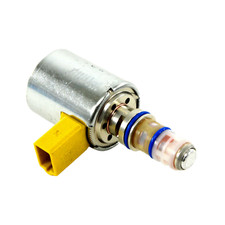
The EPC codes matter more than most techs realize. Ford defines 624 (P1747) as an EPC solenoid circuit failure where a short circuit causes minimum EPC pressure (minimum capacity) and limits engine torque. 625 (P1746), an open circuit, causes maximum EPC pressure with harsh engagements and shifts. On this unit, more current through the EPC solenoid means less line pressure. So a shorted EPC circuit gives you a transmission that slips everywhere, and an unplugged one gives you a transmission that bangs every shift.
Put a gauge on it: Ford's pressure specs
Ford's soft/slipping routine (313) is short and to the point: check pressures at the line and EPC taps. If pressures are low, or all shifts are soft or slipping, go to the main controls. If pressures are OK and one specific shift is soft or slipping, go to that shift's routine. The specs from Pressure Reference Chart 401B for the 5.0L:
| Condition | EPC | Line | Applied clutch taps |
|---|---|---|---|
| Idle, 1st / 2nd / 3rd | 0-10 psi | 32-67 psi | 27-65 psi |
| Idle, Reverse | 0-10 psi | 54-96 psi | n/a |
| WOT stall, 1st / 2nd (manual) | 83-93 psi | 160-210 psi | 152-210 psi |
| WOT stall, Reverse | 83-93 psi | 194-254 psi | n/a |
Source: Ford 1994 Mustang Workshop Manual, Section 07-01, Pressure Reference Chart 401B (5.0L). Unapplied clutch taps read 0-5 psi.
The 3.8L chart (401A) runs higher at idle, 75-91 psi line and 15-25 psi EPC in the forward gears, with the same stall figures. Ford notes that pressures may vary with model, that the vehicle harness must be plugged into the transmission to verify them, and that the transmission tester must not be installed while you do it.
How to read the gauges:
- Line and EPC both low at stall: the pressure is not being commanded. EPC solenoid, EPC circuit or PCM. Go to the EPC test below.
- EPC in spec, line low at stall: the command is there but the regulator circuit is not delivering it. Pump, main regulator valve, or the worn bore described in the next section.
- Line in spec, one clutch tap low: that circuit is leaking between the valve body and the clutch. Seals, a piston, or a leaking servo pin bore on the forward clutch circuit.
Ford's EPC test (Pinpoint Test E)
With the Rotunda transmission tester (007-00085) or equivalent and the engine running, Ford has you fire the EPC solenoid and watch line pressure: it should drop when the EPC is activated. If it does, the solenoid and hydraulics respond and the fault is in the PCM or vehicle harness. If not, measure the solenoid from the VPWR jack to the EPC jack. Ford's spec is 2.48 to 5.66 ohms, with no continuity to ground. Out of spec there can be the internal harness or the solenoid itself, and Ford's next step splits them at the solenoid connector.
The worn regulator bore that eats forward clutches
If the EPC passes and line pressure still will not rise with throttle, Transmission Digest describes the likely cause in "I Lost My EPC!" The complaint is medium- to full-throttle slipping in gear and sliding shifts, with little or no line rise, and it gets worse when hot. EPC pressure stays near zero at any throttle. The cause is wear in the pressure regulator valve bore between the EPC circuit and the boost circuit, which is routed back to pump inlet, so the pump sucks away the EPC signal before it can raise line pressure.
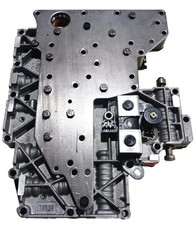
Their test: blow compressed air into the TV pressure port. If air or fluid comes out at the filter, the bore is worn through. The article's fix is a replacement valve body, and it notes that even minimal wear here can cause premature forward clutch wear. That matters on a rebuild. Put fresh frictions behind a worn regulator bore and they will be burnt again within months.
On 1991-95 units, Sonnax sells an elevated-pressure main regulator spring (76948-06) for AODE and 4R70W units that "may suffer delayed engagements and burnt forward clutches due to low line pressure." It raises base line pressure. It does not fix a worn bore, but on a sound valve body it adds margin.
Hard-part causes, by where it slips
Slips in 1st through 3rd: forward drum and servo pin bore
Sonnax documents a common failure on the AODE and 4R70W family: the stamped forward clutch drum cracks at the snap ring groove. The stress is highest when the forward clutch reapplies at higher pressure on a 4-3 kickdown, and the top of the drum splits away at the groove. Depending on how far the crack has gone, Sonnax says the result is "no forward engagement or slipping in 1st, 2nd and 3rd gear." That matches the chart above exactly. Their fix is the one-piece forged Smart-Tech drum, 76654-01K, with a high-capacity 76655-01K version for 20 percent more clutch capacity.
The other forward clutch killer is the overdrive servo pin. Sonnax explains that the oil holding the overdrive servo released is forward clutch oil in 1st, 2nd and 3rd. When the pin wears its case bore and that oil leaks out, the overdrive band drags and the forward clutch overheats. Their 76833E pin kit seals the bore with O-rings. On any AODE with burnt forward clutches, check the servo pin bore before you close the case.
Slips in 2nd: intermediate clutch, one-way clutch and 1-2 circuit
Ford's 1-2 shift routine (320) lists the suspects in removal order: the 1-2 shift valve and 1-2 accumulator valve, valve body bolts not torqued to spec, SS1, a damaged gasket, the No. 8 check ball not seating, pump porosity or cross leaks, intermediate clutch seals, piston or frictions, and the intermediate one-way clutch not holding. Check the intermediate clutch tap against the chart first. A good pressure reading with a slipping 2nd moves you to the clutch pack and the one-way clutch. A low one sends you to the valve body and pump. Ford also lists improper intermediate clutch end clearance in the 2-1 routine, so check the pack clearance on reassembly.
Slips everywhere: main controls
When everything is soft, Ford's routine 313 points at the main controls: the 1-2 accumulator, 2-3 backout valve, main regulator valve, orifice control valve and overdrive servo regulator valve, any of them stuck, damaged or assembled wrong, plus a stuck or contaminated EPC solenoid. A vacuum test of the valve body bores on the bench is the fastest way to separate a worn body from one that just needs cleaning.
My diagnostic order on a slipping AODE
- Fluid level and condition, hot, done Ford's way.
- Pull codes. Note 628, 624 and 625 in particular.
- Road test and write down which gears slip, using the application chart.
- Gauge line and EPC at idle and at stall, and compare against Chart 401.
- Only if line pressure is good, run Ford's stall speed test: five seconds maximum at WOT per range, 1000 rpm in Neutral for about 15 seconds between ranges. Per Ford's stall chart, high stall in D only points to the planetary one-way clutch, in D, 2 and 1 to the forward or intermediate clutch, and in R to the reverse clutch, low/reverse band or servo. Ford warns not to stall test a unit with low line pressure at stall.
- If EPC is low, run Pinpoint Test E (line should drop on command, 2.48-5.66 ohms).
- If EPC is good but line will not rise, air-test the TV port for regulator bore wear.
- If pressures are good and one range slips, that clutch, band or drum is the job. Inspect the forward drum snap ring groove and servo pin bore on any teardown.
Shop the part for this fix: Sonnax elevated pressure main regulator spring 76948-06
For 1991-95 AODE units with a sound valve body that suffer delayed engagement and burnt forward clutches from low base line pressure. CoreTransmissionParts stocks it.
View the 76948-06 spring at CoreTransmissionPartsOr browse the full AODE/4R70W parts collection, including the Smart-Tech forward drum.
Need parts for this job?
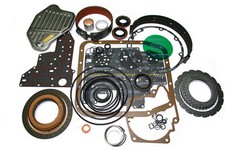
Our AODE parts page has EPC solenoids, valve bodies, pumps, clutch drums, sprags and master rebuild kits for 1992-up AODE units, all on our own checkout. Match the part to the test: an EPC that fails Pinpoint Test E gets a solenoid, a regulator bore that fails the air test gets a valve body, and a pan full of friction material gets a rebuild kit plus the root-cause fix.
FAQ
Why is my AODE slipping?
Start with fluid level, because Ford says underfill causes loss of engagement or slipping, most noticeable in cold weather or on a hill. After that, the gear it slips in points to the cause: slipping in 1st, 2nd and 3rd but not 4th points to the forward clutch or its drum, slipping only in 4th points to the overdrive band, and slipping in every range including reverse points to low line or EPC pressure.
What line pressure should an AODE have?
Ford's 1994 pressure chart for the 5.0L AODE lists 32 to 67 psi line pressure at idle in the forward gears and 160 to 210 psi at wide open throttle stall in 1st and 2nd, with EPC at 83 to 93 psi at stall. Reverse runs 54 to 96 psi at idle and 194 to 254 psi at stall. Ford notes pressures may vary with model, so check the chart for your application.
Can a bad EPC solenoid make an AODE slip?
Yes. On the AODE, Ford lists a shorted EPC circuit (code 624 or P1747) as causing minimum EPC pressure and minimum capacity, which means soft, slipping shifts. An open circuit does the opposite and gives maximum pressure and harsh shifts. The EPC solenoid should measure 2.48 to 5.66 ohms.
What does code 628 mean on an AODE?
Ford defines 628 (P0741 on the 3.8L) as transmission slippage detected: the PCM saw an excessive amount of slip during normal driving and flashes the transmission control indicator lamp. It can be the converter clutch, but Ford sends you to the symptom charts, so check fluid and pressures before blaming the converter.
Why does my AODE slip in every gear except overdrive?
The forward clutch is applied in 1st, 2nd and 3rd and released in 4th, so it is the prime suspect. Sonnax documents the stamped forward drum cracking at the snap ring groove, causing slipping in 1st, 2nd and 3rd or no forward at all. A leaking overdrive servo pin bore can also starve the forward clutch of oil.
Related guides
Sources
- Ford Motor Company, 1994 Mustang Workshop Manual, Section 07-01 (AODE), Diagnosis by Symptom: Diagnostic Routines. Backs soft/slipping routines 213 and 313, the 1-2 and 2-1 routines 320 and 325, the main controls suspect lists, Pressure Reference Charts 401A and 401B (idle and WOT stall EPC, line and clutch pressures) and the Clutch and Band Application Chart 601. SRB71019
- Ford Motor Company, 1994 Mustang Workshop Manual, Section 07-01, Pinpoint Tests and DTC chart. Backs the 628/P0741 slippage definition, 624/P1747 short circuit giving minimum EPC pressure, 625/P1746 open circuit giving maximum pressure, and Pinpoint Test E (line pressure drop on EPC command, 2.48-5.66 ohm EPC solenoid). SRB71026
- Ford Motor Company, 1994 Mustang Workshop Manual, Section 07-01, Transmission Fluid Level Check. Backs the 150-170°F check temperature, the HOT and COLD dipstick areas, MERCON XT-2-QDX, and underfill causing slipping most evident in cold weather or on a hill. SRB71027
- Transmission Digest, "I Lost My EPC!" Backs medium- to full-throttle slipping and sliding shifts from pressure regulator bore wear between the EPC and boost circuits, the TV-port air test, valve body replacement, and premature forward clutch wear. transmissiondigest.com
- Sonnax, Smart-Tech Forward Clutch Drum 76654-01K. Backs forward drum cracking at the snap ring groove on a 4-3 kickdown reapply, causing no forward or slipping in 1st, 2nd and 3rd, and the AODE/4R70W application. sonnax.com
- Sonnax, Overdrive Servo Pin Kit 76833E. Backs servo release oil being forward clutch oil in 1st through 3rd, and a worn pin bore causing overdrive band drag and forward clutch overheating. sonnax.com
- Sonnax, Elevated Pressure Main Pressure Regulator Spring 76948-06. Backs delayed engagement and burnt forward clutches from low line pressure on AODE and 4R70W, and the 1991-95 fitment. sonnax.com
- Ford Motor Company, 1994 Mustang Workshop Manual, Section 07-01 (AODE), Line Pressure Test and Stall Speed Test. Backs running the pressure test before the stall test, the five-second WOT limit, the 1000 rpm Neutral cool-down, and the high/low stall result chart by range. SRB71034