Two Ford overdrive automatics wear nearly the same case and use the same gearset, yet they are controlled in completely different ways. The AOD is a mechanical transmission that shifts on hydraulics and a cable. The AODE is that same architecture handed over to a computer. If you are pulling one out of a Fox-body, a Panther-platform Crown Vic, or an early F-150, knowing which one you have decides your diagnosis, your rebuild plan, and whether a swap is bolt-in or a wiring project. Here is how they actually differ under the bellhousing, what breaks on each, and how the whole family folds into the 4R70W.
The Family Tree: AOD to AODE to 4R70W
The AOD landed in 1980 as the first domestic four-speed automatic overdrive, built to add a 0.67:1 top gear for fuel economy without giving up the durable Ravigneaux compound planetary gearset Ford already trusted. Ford's SAE paper lists the first applications as the 1980 Lincoln Continental and Continental Mark VI, full-size Ford and Mercury, Thunderbird and Cougar XR-7, and it ran into 1993 behind everything from 5.0L Mustangs to Town Cars and light trucks. It is fully hydromechanical: no computer touches the shifts.
In 1991 Ford took the same basic unit and replaced the throttle cable with electronic control, creating the AODE. The PCM now decided when and how firmly it shifted. Then in 1993 Ford renamed the electronic unit under its modern scheme: 4R70W, meaning four speeds, rear-wheel drive, roughly 700 lb-ft input capacity, and a Wide-ratio gearset. Through 1995 the standard-ratio AODE and the wide-ratio 4R70W were built side by side, with the wide-ratio unit going behind the 4.6L modular V8s. From the 1996 model year on, Ford stopped building the standard-ratio AODE and produced only the 4R70W. So the lineage is one continuous line: mechanical AOD, then electronic AODE, then the wide-ratio 4R70W that carried the design for another decade.
Inside the AOD: The Split-Torque Input Shaft
The cleverest thing about the AOD is also the thing that confuses people. Instead of a single input shaft, it uses two concentric shafts: a large hollow main input shaft driven by the converter, and a smaller solid direct-drive shaft that ties straight to the converter cover. That second shaft is a mechanical link that bypasses the fluid coupling.
This is the AOD's split-torque path. In third gear the transmission splits input between the hydraulic converter path and the direct mechanical path. Ford's own 1980 SAE launch paper on the unit (SAE 800004) puts that split at about 40 percent through the converter and 60 percent mechanical, and in fourth (overdrive) engine power bypasses the converter and goes mechanically to the driveshaft. The payoff is torque multiplication through the converter when you need it on throttle tip-in, and no-slip direct drive at cruise. It is Ford's answer to a lockup converter, done with a shaft instead of a clutch. The trade-off is that this arrangement never fully decouples the way a modern lockup clutch does, and it makes the AOD's third and fourth gear behavior unique to diagnose. When the AODE arrived, Ford deleted the split-torque function entirely and went to a conventional torque converter clutch, and the 4R70W finished the job with a true lockup converter.
The TV Cable: The AOD's Achilles Heel
The AOD has no computer, so something has to tell it how hard you are pushing the engine. That job falls to the throttle valve (TV) cable, tied directly to the throttle linkage. Here is the part every AOD owner needs to understand: on this transmission the TV cable does not just control shift points, it directly meters line pressure. As the throttle opens, the cable pulls the TV lever and raises pressure.
Get that adjustment wrong and you damage the transmission. Set the cable too loose and line pressure falls off, shifts go soft and early, and the clutches and bands slip under load until they burn. Too tight and pressure stays jacked up, shifts slam, and you beat the unit from the other direction. There is no adaptive strategy to save you. A misadjusted TV cable, or a worn cable bushing that changes the geometry, is one of the most common reasons an otherwise sound AOD cooks itself. If you install a rebuilt AOD and skip the TV cable setup, you are gambling with the rebuild.
Inside the AODE: The Computer Takes Over
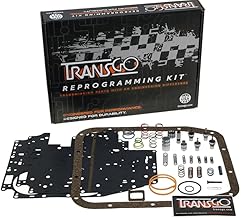
The AODE keeps the same gearset and the same general layout but throws out the cable. The PCM reads throttle position, vehicle speed, and load, then runs the transmission through electronic solenoids. There are two on/off shift solenoids that select the gear, a converter clutch solenoid that manages lockup, and the important one: an EPC (electronic pressure control) solenoid that meters line pressure the way the TV cable used to, only now it is closed-loop and adaptive. Ford also went to a thicker, redesigned valve body for strength when it made the switch.
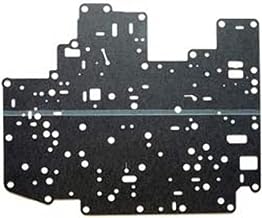
If you are trying to date an electronic valve body on the bench, Sonnax's AODE, 4R70W/75W identification guide gives you the casting tells. The casting number is under the separator plate, and the dowel pins plus the rough forging number bracket the year: 13 mm dowel pins with an F2 forging for 1992, 13 mm with F3 for 1993-1995, and 10 mm with F6 for 1996-2000. From there the solenoid harness separates 1996-1997 (soft wire harness) from 1998-2000 (molded lead frame). One more that bites rebuilders: the valve body stiffener plate in the 2-3 accumulator area was eliminated on 2001-and-later 4R70E, 4R70W, 4R75E and 4R75W units, and without support in that area the separator plate can crack.
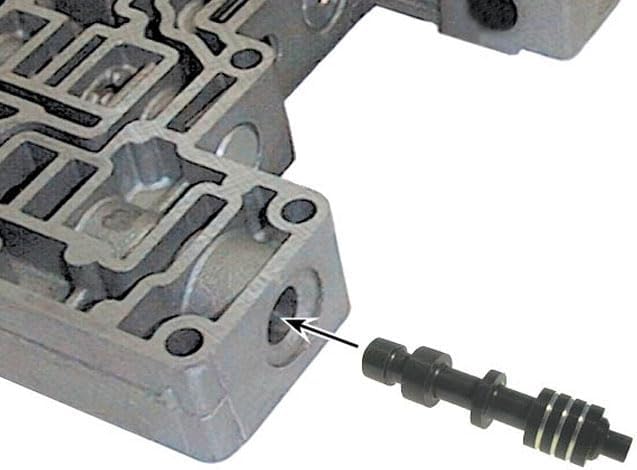
That EPC solenoid is the heart of the AODE, and it is the thing to respect on a rebuild. Per Sonnax, EPC is the most critical pressure for keeping these units working, and the constant oscillation of the modulation valves, the EPC boost valve, and the shift end plugs wears the valve body bores over time. That wear lets EPC pressure bleed off. You can bolt in a fresh EPC solenoid and it may raise pressure enough to get the truck out the door, but if the worn bores are not addressed, the fix does not last. That is why a proper AODE rebuild is as much about restoring the valve body bores as it is about clutches.
Gear Ratios: Standard vs Wide
The ratio question matters because it is exactly what interchanges. Standard-ratio units (the AOD and the standard AODE) use a 2.40:1 first and roughly a 1.47:1 second. Wide-ratio units (the 4R70W and its 4R75 descendants) use a steeper 2.84:1 first and 1.55:1 second for a stronger launch. Sonnax splits its replacement direct clutch drum and shaft kits along exactly that line — 76656-02K covers the 2.40/1.46 AODE, 76656-01K covers the 2.84/1.55 4R70E, 4R70W, 4R75E and 4R75W — which is a useful confirmation that the two ratio families are genuinely different hardware, not a calibration difference.
- AOD: 2.40:1 first, 1.47:1 second, 1.00:1 third, 0.67:1 overdrive.
- AODE (standard ratio): 2.40:1 first, 1.47:1 second, 1.00:1 third, 0.67:1 overdrive.
- 4R70W (wide ratio): 2.84:1 first, 1.55:1 second, 1.00:1 third, 0.70:1 overdrive.
The wide-ratio first gear is the reason builders chase the 4R70W gearset. As Baumann's tech guide notes, dropping in the wide-ratio set is roughly equivalent to multiplying your rear axle ratio by 1.183 for first-gear effect, so you get a meaningfully quicker launch without regearing the axle.
Shop AOD/AODE parts →
What Fails on Each
AOD weak points
Sonnax's AOD teardown data lists the recurring failures, and they line up with what comes across the bench. Direct clutch failure is near the top, because that circuit carries load in the split-torque range and the OE clutch pack has limited capacity. Forward clutch failure shows up as no forward drive unless you raise RPM. The overdrive band overheats and fails, especially behind a TV cable that was letting pressure sag. And the intermediate one-way clutch, whether the roller-clutch or later mechanical diode version, fails and causes 3-4 and 4-3 complaints. Behind a lot of these is the same root cause: low line pressure from a mis-set TV cable, a worn pump, or a tired valve body.
AODE weak points
On the electronic units, the failures shift toward the valve body and solenoids. EPC bore wear that bleeds off pressure is the big one, and it presents as slipping clutches or band servos that never get full apply pressure. Shift solenoids and the converter clutch solenoid fail electrically and set codes rather than producing the vague mechanical symptoms of an AOD. The upside of electronic control is that a missing shift usually points you at a solenoid, sensor, or PCM input you can test, instead of a cable you have to feel out.
The other AODE-family failure worth planning for before the unit goes back together is the direct clutch drum. Sonnax identifies the weak point as the joint where the drum splines strip and the intermediate stub shaft breaks, and notes the OE drum is short on clutch capacity to begin with; its one-piece Smart-Tech drum and shaft replacement is built around eliminating that joint and adding 17% more clutch capacity. If the unit is going behind anything with power or a trailer, inspect those splines carefully rather than reusing the drum on faith.
And if you are replacing electrical hardware during the overhaul, use OE. Transmission Digest documented a 4R70W that came out of an overhaul starting in a high gear with solenoid codes that were not there before; the cause was an aftermarket case connector with two terminals pushed in far enough that they never contacted the hard wire frame, one of them the 12-volt solenoid supply. Ford hard wire frame F8AZ-7G276-BA and connector F8AZ-7G276-A cleared it.
Interchange: What Swaps and What Does Not
This is where builders get tripped up, so be precise about it. The interchangeable parts across AOD, AODE, and 4R70W are geartrain related. You can retrofit the 4R70W wide-ratio gearset into an AOD or an AODE for a stronger launch, because all three share the Ravigneaux planetary design. That is the popular and worthwhile swap.
What does not interchange is the control system and the sheet metal around it. The AOD pan is shaped differently from the AODE/4R70W pan and does not swap. More importantly, you cannot make an AOD shift electronically or an AODE shift on a cable by trading a few parts. Converting a cable-shift car to an AODE, or an AODE to a standalone-controlled unit, means the correct valve body, solenoids, a compatible PCM or an aftermarket controller, and the wiring to feed it. Plan the swap around the control system first, then the hard parts, not the other way around.
Fluid and Capacity
Both families run Mercon automatic transmission fluid. Early AODs were spec'd on Type F, but for any later AOD and every AODE the correct fluid is Mercon; do not put Type F in these. Total capacity with a dry converter runs in the neighborhood of 12 to 13 quarts, but a routine pan-and-filter service only moves about 4 to 5 quarts because the bulk of the fluid stays trapped in the converter and the cooler lines. If you want a real fluid exchange rather than a top-off, drain or flush the converter too, then set final level with the transmission at operating temperature.
Which One Should You Build?
Before you pick a side, confirm which one you actually have. Ford's workshop manual points to two places: the TR code on the Vehicle Certification Label on the driver's door lock post, and the transmission ID tag on the case, which carries the model, service ID level and build date. The build date matters even within the AOD. Per Sonnax, the 3-4 shift accumulator was eliminated from the AOD valve body in 1989 except on 5.8L applications, so a 1988 and a 1990 AOD do not take the same valve body. Our AOD identification guide walks through the tag and the physical tells step by step.
If you are keeping a carbureted or early Fox-body car simple and cable-driven, a well-built AOD with a correctly adjusted TV cable and an upgraded direct clutch pack is a clean, self-contained answer. If you want modern shift control, tunability, and easier diagnosis, the AODE or 4R70W with a standalone controller is the stronger long-term platform, and it opens the door to the wide-ratio gearset and firmer, programmable shifts. Either way, address the valve body and line pressure control, not just the friction parts. On the AOD that means the TV cable and pump; on the AODE it means the EPC circuit and worn bores.
Frequently Asked Questions
Can you swap a 4R70W gearset into an AOD or AODE?
Yes. The geartrain is the interchangeable part. The 4R70W wide-ratio 2.84:1 first and 1.55:1 second gearset can be retrofitted into an AOD or an AODE to sharpen launch, since all three share the Ravigneaux compound planetary layout. What does not interchange is the case and pan, and you cannot make an AOD shift electronically or an AODE shift on a cable just by swapping gears.
What is the main difference between AOD and AODE control?
The AOD is hydromechanical. A throttle valve (TV) cable tied to the throttle linkage sets line pressure and shift timing mechanically. The AODE is electronic. The PCM reads throttle position, speed and load, then commands an EPC (electronic pressure control) solenoid for line pressure plus two on/off shift solenoids and a converter clutch solenoid. There is no TV cable on an AODE.
Why is the AOD TV cable adjustment so critical?
On an AOD the TV cable directly meters line pressure. If it is set too loose, line pressure drops, shifts go soft and early, and the clutches and bands slip and burn. Set too tight, pressure stays high and shifts hit hard. There is no computer to correct it, so a careless cable adjustment can destroy an otherwise healthy AOD.
What fluid and how much does an AOD or AODE take?
Both call for Mercon automatic transmission fluid. Do not run Type F in a later AOD or any AODE. Total capacity with a dry converter runs roughly 12 to 13 quarts; a routine pan-and-filter service only exchanges about 4 to 5 quarts because most of the fluid stays trapped in the converter and cooler.
Building an AOD or AODE this week?
Direct clutch packs, EPC and shift solenoids, valve bodies, TV cables, wide-ratio gearset parts, filters and Mercon-ready kits — all in one place, shipped from the USA.
Shop AOD/AODE parts →Sources
- Sonnax — Ford AOD Transmission (unit parts and symptoms reference). Backs the AOD failure list used here: direct clutch failure, forward clutch failure, overdrive band failure, intermediate roller clutch and mechanical diode failure, and low line pressure in forward as recurring conditions on the unit. sonnax.com/units/464-aod
- Sonnax — Ford AODE Transmission (unit reference and EPC control notes). Backs EPC as the most critical pressure on the electronic units and the valve body bore wear (modulation valves, EPC boost valve, shift end plugs) that bleeds off EPC pressure and shortens rebuild life if not corrected. sonnax.com/units/170-aode
- SAE International — Sam Dabich (Ford Motor Company), "Ford Motor Company Automatic Overdrive Transmission," SAE Technical Paper 800004 (1980). Backs the AOD as a new four-speed automatic overdrive for 1980, the third-gear power split of about 40 percent through the converter and 60 percent through the direct mechanical path, the fully mechanical fourth gear that bypasses the converter, and the 1980 Lincoln Continental, Mark VI, Ford, Mercury, Thunderbird and Cougar XR-7 launch applications. saemobilus.sae.org
- Baumann Electronic Controls — "Performance Guide: AOD, AODE, 4R70W Upgrades." Backs the AODE/4R70W electronic EPC and shift solenoid control versus the mechanical AOD, the thicker redesigned valve body, the wide-ratio gearset retrofit, and the 1.183 axle-ratio-equivalent figure for the wide-ratio first gear. becontrols.com
- OnAllCylinders (Summit Racing) — "Understanding Ford's 4R70W Automatic Transmission." Supplementary: backs the finicky AOD TV cable adjustment as a failure cause, the 1991 TV-cable-to-computer switch, the AOD split-torque-to-lockup evolution, gear ratios, and the 4R70W naming and applications. onallcylinders.com
- Sonnax — AODE, 4R70W/75W Valve Body Identification. Backs the casting-date tells used here: casting number under the separator plate, 13 mm dowel pins with an F2 rough forging number for 1992, 13 mm with F3 for 1993-1995 and 10 mm with F6 for 1996-2000; the soft wire versus molded lead frame solenoid harness split between 1996-1997 and 1998-2000; and the elimination of the 2-3 accumulator stiffener plate on 2001-and-later 4R70E/4R70W/4R75E/4R75W valve bodies with the resulting separator plate cracking. sonnax.com/tech_resources/369
- Sonnax — Stop Chasing AODE, 4R70W Direct Clutch Drum Problems. Backs the direct clutch drum failure mechanism (drum splines stripping and the intermediate stub shaft breaking at the OE joint), the OE drum being short on clutch capacity, the 17% capacity increase of the one-piece Smart-Tech replacement, and the ratio-specific kit split of 76656-02K for the 2.40/1.46 AODE versus 76656-01K for the 2.84/1.55 4R70E/4R70W/4R75E/4R75W. sonnax.com/tech_resources/672
- Transmission Digest — Ford 4R70W Solenoid Codes Set (Wayne Colonna, January 2023). Backs the post-overhaul high-gear start with new solenoid codes caused by an aftermarket case connector whose pushed-in terminals never contacted the hard wire frame, including the 12-volt solenoid supply circuit, and the OE service parts that corrected it: hard wire frame F8AZ-7G276-BA and hard wire frame connector F8AZ-7G276-A. transmissiondigest.com/ford-4r70w-solenoid-codes-set
- Ford Motor Company — 1993 Mustang Workshop Manual, Section 07-01B (AOD), Transmission Identification. Backs identifying the unit from the TR code on the Vehicle Certification Label on the LH door lock post, and the transmission ID tag on the case carrying model, service ID level and build date. fordservicecontent.dealerconnection.com (SPB71B02)
- Sonnax — Ford AOD, FIOD Valve Body Identification. Backs the 1980-1988 versus 1989-1993 AOD valve body split, with the 3-4 shift accumulator eliminated in 1989 except on 5.8L applications. sonnax.com/tech_resources/228