Most AOD parts mistakes happen before anyone picks up a wrench. Someone orders a kit for "a Ford four-speed," and it turns out to be an AODE, or the valve body is for the wrong year, or the truck has a different overdrive servo from the Mustang the parts list was written for. The AOD ran from 1980 into 1993 across Lincolns, Panthers, Fox-body Mustangs, Thunderbirds and E and F Series trucks, and Ford changed plenty of parts along the way. They look alike on the outside and do not always interchange.
This is the order we identify one in: the paperwork first, then the physical tells that separate an AOD from its electronic relatives, then the year and application splits that decide which parts you actually order. Specs and references are listed under Sources.
Step 1: read the paperwork
The door label TR code
Start at the driver's door, not under the car. Ford's 1993 Mustang workshop manual (section 07-01B) says every vehicle carries a Vehicle Certification Label on the left-hand door lock post, and the code in the space marked TR identifies the transmission. That tells you what the car was built with. It does not tell you what is in it now, and on a 30-to-45-year-old vehicle that is a real distinction. Treat the TR code as a starting point and confirm it against the transmission.
The transmission ID tag
The same manual says the model, service ID level and build date are on the transmission ID tag attached to the case. On the AOD it is a small stamped metal tag, and on most units we pull it hangs from one of the lower extension housing bolts on the passenger side. Clean it before you read it. A typical tag carries three pieces of information:
- Model code. The model code is the calibration. Two AODs from the same year can carry different codes because they were built for different engines, axle ratios and vehicles.
- Service ID level. A change level. A newer service level means Ford revised something inside the unit, which is why two units with the same model code can still need different parts.
- Build date. This is the number that settles most year-split questions below, because the transmission build date and the vehicle model year do not always line up.
If the tag is gone, and on swap cars and junkyard units it often is, you are identifying by features. That is what the rest of this guide covers.
Step 2: confirm it is an AOD and not an AODE or 4R70W
The AOD, AODE and 4R70W share a case family and a Ravigneaux gearset, so a quick look under the car is not enough. These are the checks that settle it:
| Check | AOD (1980-93) | AODE / 4R70W (1992-up) |
|---|---|---|
| Throttle input | TV cable from the throttle body to a lever on the driver's side of the case | No TV cable; PCM controls shifts and line pressure |
| Governor | Yes, on the output shaft | None; output shaft speed sensor instead |
| Wiring | Multi-pin linear neutral/backup switch connector on the driver's side | Case connector for the solenoid body plus the range sensor |
| Input shafts | Two: large hollow main shaft plus small solid direct/lockup shaft | Single input shaft |
| Front pump | Cast iron gear pump | Aluminum gerotor pump |
| Oil pan | Stamped pan marked "Automatic Overdrive" and "Metric" with the Blue Oval | Different bolt pattern and a deeper sump |
The TV cable is the fastest tell. If a cable runs from the throttle linkage to the transmission and there is no solenoid body connector on the case, it is an AOD. The table's case, pump, shaft and pan details come from George Reid's CarTech workbench book on the AOD, AODE and 4R70W (SA279), which also covers the cast iron versus aluminum pump split in its teardown chapter.
The input shaft check is useful on a loose unit. Look into the bellhousing. An AOD shows a small solid shaft inside the larger hollow one, because the AOD sends part of the engine's power mechanically to the direct clutch in third gear. Ford's original SAE paper (800004, February 1980) describes third gear as 40 percent hydrodynamic and 60 percent mechanical, with fourth gear bypassing the converter completely. That second shaft is how it does it. B&M's AOD installation instructions warn that some Ford input shafts have different spline lengths at each end and will damage the converter if installed backwards, so if a shaft comes out with the converter, note which way it goes back in.
Also rule out the E4OD. It is a truck unit from 1989 on, built around a C6 with overdrive added, and it is electronic. It is a bigger, heavier truck unit with a solenoid connector on the case and no TV cable, and it shares no hard parts with the AOD.
Step 3: the year splits that change parts
Once you know it is an AOD, the build date and application decide the parts. These are the splits that cause the most wrong orders.
Valve body: 1980-88 versus 1989-93
Sonnax's AOD valve body identification splits the unit in two: 1980-1988 (their F096 reference) and 1989-1993 (F097). The difference is the 3-4 shift accumulator. Per Sonnax, it "was eliminated in 1989, except on vehicles equipped with 5.8L engines." So a 1990 Crown Victoria 5.0 and a 1990 police car with a 5.8 do not have the same valve body.
The inner valve body gasket changes too. TCI's AOD instruction sheet (436000) calls for the double white stripe gasket on 1980-1989 units and the red stripe gasket on 1990-1993, and warns that the wrong one "may reduce throttle pressure boost and cause transmission failure." TCI also notes a small filter screen in a case passage on 1988 and later units. It has to go back in when the valve body is installed. Our AOD valve body symptoms guide covers the valve body wear points and testing.
Overdrive servo: A, B or C
The AOD used three overdrive servo sizes. Baumann Electronic Controls' AOD upgrade guide lays them out: the "C" servo was the smaller early, non-performance piece; the "B" servo applies about 30 percent more force than the C and appears in most post-1985 V8 applications, all 351 applications and the High Output cars; the "A" servo applies about 50 percent more than the C and was used only in 1992-1993 trucks and the supercharged 3.8L Thunderbird Super Coupe. If you are ordering a servo, a band or a shift kit, pull the servo cover and compare the piston against the part before you order. Do not go by the vehicle alone.
Overdrive band width
Most AODs use a narrow overdrive band of about 1.5 inches. The wider 2-inch band and matching drum is the upgrade Reid recommends in the CarTech AOD book for durability, and Ford solved the overdrive durability problem on the electronic units with a wider drum and band. Truck owners report the late 1992-93 E and F Series AODs came with the wide band, but do not order on that alone. Measure the band or the drum's band surface. A wide band will not fit a narrow drum.
Output shaft and tailhousing
Per Baumann, pre-1988 AODs do not have the rear-lube style output shaft, and while the standard AOD output shaft is 15 inches long, some Lincolns and trucks use a 16-inch shaft. Car and truck extension housings differ as well. If you are swapping an AOD into a different chassis, the output shaft length, the tailhousing and the speedometer drive all have to match the new driveshaft and crossmember. Measure before you order a driveshaft.
Step 4: the bellhousing and converter
The AOD case is a one-piece casting with an integrated bellhousing. Reid's CarTech AOD book notes it uses Ford's six-bolt pattern, which fits the small-block V8s and the 240-300 cubic inch inline sixes. That makes a small-block AOD a common swap behind 302 and 351W engines. Check the bolt pattern against the engine before you buy a used unit. Not every AOD bellhousing matches every Ford engine.
The converter is its own check. B&M's instructions say to rotate the converter while pushing it on and to feel for three distinct clicks as it engages the input shaft, the stator support and the pump lugs. Then measure. B&M gives a typical AOD converter depth of 1 inch, plus or minus 0.050 inch, from the bellhousing face to the converter mounting pads. A converter from a different Ford automatic can look right and never fully seat, and the first sign is a cracked pump when the bellhousing bolts pull it in.
Step 5: fluid and service basics once it is identified
Ford's 1993 Mustang workshop manual calls for Synthetic MERCON Multi-Purpose ATF (E6AZ-19582-B, ESR-M2C163-A2) or equivalent. It torques the pan bolts to 71-119 lb-in and adds about 3 quarts after a pan drop, then sets the level with the fluid check procedure. It also says the filter is replaced, never cleaned. There is no drain plug on a stock AOD pan, so plan on dropping it full. For costs and intervals, see our AOD fluid change cost guide.
A quick identification checklist
- Read the TR code on the driver's door lock post label.
- Find and clean the ID tag on the case, and write down the model code, service level and build date.
- Confirm the TV cable and governor and check that there is no solenoid body connector. That makes it an AOD.
- Use the build date to pick the valve body family (1980-88 or 1989-93, with the 5.8L exception) and the inner gasket stripe.
- Pull the overdrive servo cover and identify the A, B or C servo, and measure the band width.
- For swaps, measure output shaft length and check the tailhousing and bellhousing pattern.
- Seat and measure the converter before the bellhousing bolts go in.
Do those seven things and you will order the right parts the first time. Skip them and you will be doing the job twice. If the unit turns out to be the electronic version, our AOD vs AODE differences guide covers what changes on the bench.
Shop the part for this fix: AOD-family parts at CoreTransmissionParts
Sonnax kits, clutch plates and hard parts for the AOD family (AOD, AODE, 4R70W). Much of that line is AODE/4R70W-only, so match it against the ID you just did before you order for a 1980-93 AOD.
Browse AOD-family parts at CoreTransmissionPartsNeed parts for this job?
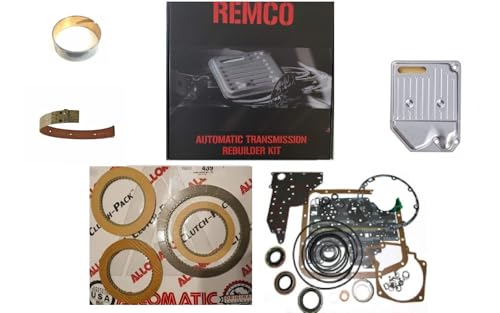
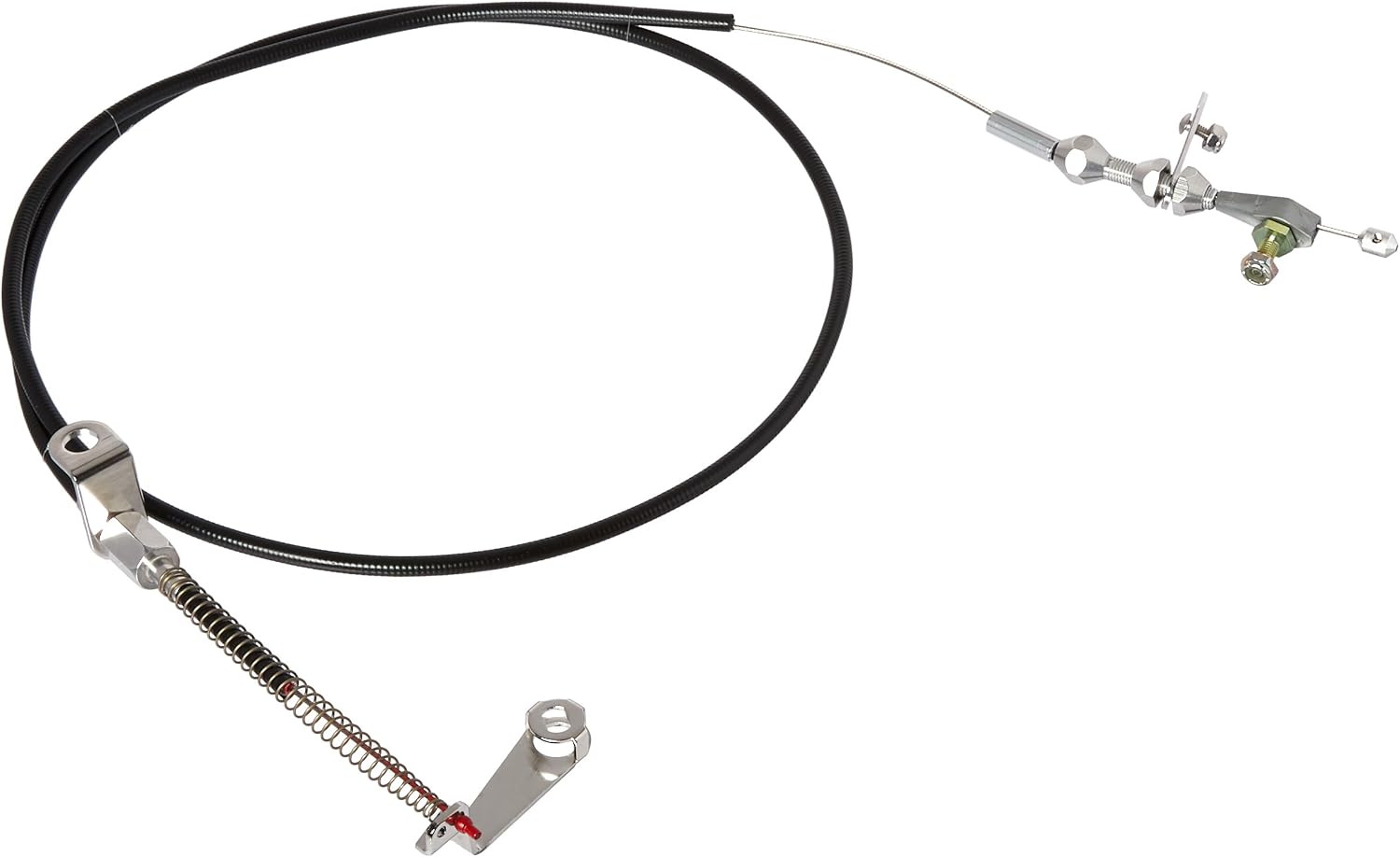
Our AOD parts page has master rebuild kits with clutches and band, complete 1980-93 valve bodies and TV cable kits, all on our own checkout. Identify the unit first using the checklist above, then order once.
FAQ
Where is the ID tag on a Ford AOD transmission?
Ford's workshop manual says the transmission ID tag is attached to the transmission case, and it carries the model, service ID level and build date. On the AOD it is usually held on by one of the extension housing bolts on the passenger side. If the tag is missing, the Vehicle Certification Label on the driver's door lock post has a TR code that identifies the transmission the vehicle was built with.
How can I tell an AOD from an AODE or 4R70W?
Look for the TV cable. A true AOD has a throttle valve cable running from the throttle body to a lever on the driver's side of the case and uses a governor. The AODE and 4R70W have no TV cable and no governor, and use a solenoid body with a case connector instead. The AODE and 4R70W pan also has a different bolt pattern and a deeper sump, and there is a single input shaft instead of the AOD's two.
What years was the Ford AOD made?
The AOD was introduced for the 1980 model year and presented to engineers in SAE paper 800004 that February. It stayed in production into 1993 in cars and E and F Series trucks, while the electronic AODE took over starting with 4.6L applications in 1992.
Which AOD valve body do I need?
Sonnax splits the AOD valve body into two families: 1980-1988 units with a 3-4 shift accumulator, and 1989-1993 units where the 3-4 accumulator was eliminated except on 5.8L applications. Check the build date on the tag, and match the inner valve body gasket too: double white stripe for 1980-89 and red stripe for 1990-93.
Does an AOD have one input shaft or two?
Two. The AOD has a large hollow main input shaft and a smaller solid shaft inside it that drives the direct clutch for the split-torque third gear and lockup fourth gear. When you slide a converter on, you should feel it engage the input shaft, stator support and pump lugs in turn.
Related guides
- AOD vs AODE: Differences
- AODE vs 4R70W Differences
- AOD Valve Body Symptoms and Testing
- AOD Common Problems and Fixes
- AOD Rebuild Cost
- AOD Gear Ratios and Specs
Sources
- Ford Motor Company, 1993 Mustang Workshop Manual, Section 07-01B (AOD), Transmission Identification. Backs the Vehicle Certification Label on the LH door lock post with the TR code, and the transmission ID tag on the case carrying model, service ID level and build date. fordservicecontent.dealerconnection.com (SPB71B02)
- Ford Motor Company, 1993 Mustang Workshop Manual, Section 07-01B (AOD), Transmission Fluid Drain and Refill. Backs Synthetic MERCON Multi-Purpose ATF E6AZ-19582-B (ESR-M2C163-A2), pan bolt torque of 71-119 lb-in, the roughly 3 quart refill after a pan drop, and replace-not-clean for the filter. fordservicecontent.dealerconnection.com (SPB71B18)
- SAE International, Technical Paper 800004, "Ford Motor Company Automatic Overdrive Transmission" (Sam Dabich, February 1980). Backs the 1980 introduction and applications, the 40 percent hydrodynamic / 60 percent mechanical split-torque third gear, and full mechanical drive in overdrive. saemobilus.sae.org
- Sonnax, "Ford AOD, FIOD Valve Body Identification." Backs the 1980-1988 (F096) and 1989-1993 (F097) valve body split and the 3-4 shift accumulator being eliminated in 1989 except on 5.8L applications. sonnax.com/tech_resources/228
- B&M (Holley), Installation Instructions 114501, Ford AOD. Backs the two splined shafts and three-click converter engagement, the typical 1 in. plus or minus 0.050 in. AOD converter depth, the TV control cable system, and the warning about input shafts with different spline lengths at each end. documents.holley.com/114501_instructions.pdf
- TCI Automotive, installation instructions 436000 for Ford AOD 1980-1993. Backs the double white stripe (1980-89) and red stripe (1990-93) inner valve body gaskets with the wrong-gasket warning, and the case filter screen on 1988 and later units. static.summitracing.com (tci-436000.pdf)
- George Reid, Ford AOD Transmissions: Rebuilding and Modifying the AOD, AODE and 4R70W, CarTech S-A Design Workbench SA279 (2014), ISBN 978-1-61325-114-0, history and disassembly chapters. Print source. Backs the AOD pan markings, one-piece case with integrated six-bolt bellhousing for small-block V8s and 240-300 sixes, dual input shafts, driver's-side linear backup switch connector, AODE/4R70W single input shaft, aluminum pump and different pan, the governor on AOD only, and the wider 2-inch band and drum upgrade.
- Baumann Electronic Controls, "Performance Guide: AOD Upgrades." Backs the A, B and C overdrive servo sizes and applications, pre-1988 units lacking the rear-lube output shaft, and 15 in. versus 16 in. output shafts. becontrols.com/aodsupgr.shtml