The AOD showed up in 1980 as the first domestic automatic overdrive transmission, and Ford put it behind small-block V-8s and the 240 and 300 six in Mustangs, Crown Victorias, Grand Marquis, Lincolns, Thunderbirds and F-Series trucks until the electronic AODE took over in the early 1990s. Plenty of them are still on the road, and a lot more are going into hot rods and resto-mods. The good news is that the AOD fails in predictable ways. The bad news is that most of those failures start with something outside the case that nobody adjusted.
This is the list I work through when an AOD comes in: what fails, why it fails, how to tell which one you have before the pan comes off, and what fixes it for good. The facts below come from ATRA's gear ratio chart, Sonnax's AOD valve body and servo references, TCI's copy of the Ford TV pressure procedure, BE Controls' AOD troubleshooting notes and Ford's own SAE launch paper on the AOD. Sources are at the bottom.
How the AOD is built, and why that matters
ATRA lists the AOD at 2.40 first, 1.47 second, 1.00 third, 0.67 overdrive and 2.00 reverse. Those ratios matter for diagnosis: the 0.67 overdrive is steep, so a car cruising in 4th puts a lot of torque through the overdrive band, and the 2.40 first is tall enough that a heavy car leans hard on the forward clutch every time it pulls away.
The unusual part is the input. It uses two shafts: a large hollow main input shaft and a smaller solid shaft that drives the direct clutch. Ford's 1980 launch paper (SAE 800004) puts the 3rd-gear split at about 40 percent through the converter and 60 percent through that direct mechanical path, and in 4th the drive bypasses the converter entirely (SAE 800004). There is no conventional lockup clutch in the converter. That design is why a broken direct shaft looks exactly like a burned direct clutch, and why the AOD has no TCC solenoid to test.
It also has no computer. Shift timing comes from the governor, and line pressure and shift feel come from the throttle valve (TV), which is driven by a rod on early carbureted cars and a cable on later fuel-injected ones. Get the TV adjustment wrong and the transmission burns itself up. In my experience it is the root cause behind most of the problems below.
Problem 1: TV linkage out of adjustment
TV pressure does two jobs. It sets shift timing and it boosts line pressure as throttle goes up. If the linkage is adjusted too loose or has slipped, TV pressure stays low, line pressure never rises under load, and the clutches and bands slide on every shift. The car may drive "fine" for a few hundred miles with early, soft shifts, and then the direct clutch is gone.
The opposite failure is just as common. BE Controls notes that if the TV linkage is disconnected or missing, the valve defaults to full TV pressure, and the unit hangs in first or shifts very late. They also warn that some aftermarket cables on carbureted engines can pull the TV valve past its factory range and leave it stuck on the valve body.
How to check it: do not adjust it by feel. TCI's instruction sheet reproduces the Ford procedure: a 100 psi gauge on the TV port, fluid at 100-150 F, selector in Neutral with the A/C off, and the Ford gauge block (or one fabricated at .390-.404 inch thick) in place. Rod-linkage units should read 28-38 psi with 33 psi as the target, and each turn of the adjusting screw moves it about 1.5 psi. Pull the block and TV pressure should drop below 5 psi. Cable units use a separate gauge tool and a 30-40 psi window.
Watch the throttle geometry too. Sonnax sells a TV cable corrector kit for the AOD and the GM TV-cable units because the cable can pull out of adjustment at wide-open throttle when the throttle lever geometry is off, which is common after an intake, carburetor or throttle body swap. If TV pressure is correct at idle but the unit slips at full throttle, look there.
Problem 2: burned direct clutch or a broken direct shaft
This is the classic AOD failure. BE Controls describes the pattern: it shifts 1-2, holds 2nd longer than normal, then neutrals out where it should go to 3rd, with no 3rd and no 4th. The most likely cause is a burned direct clutch pack. The second is a broken direct input shaft. You will not know which until the unit is apart, and either way it is an overhaul.
The direct clutch rarely fails on its own. Low TV pressure is the usual reason, and Sonnax lists a second one in the valve body: wear in the pressure regulator boost valve sleeve. Their boost valve kit calls out soft slide shifts, delayed Reverse, low line rise and direct clutch failure. If you rebuild the clutches and reuse a leaking boost sleeve, you will be back in it.
Fix: overhaul with new direct frictions and steels, inspect both input shafts, and correct the boost valve bore (Sonnax offers O-ringed and factory-style sleeve kits). Then set TV pressure with a gauge before the car leaves.
Problem 3: overdrive band and servo failure
On the bench, the AOD's main durability problem is the overdrive unit. It was not really solved until the 1993 Lincoln AODE and 4R70W got a wider reverse drum and overdrive band. On a 1980-93 AOD, the stock band is what you have.
Symptoms: 3rd to 4th flares or neutrals out, the engine free-revs on the 3-4 shift, or 4th is simply gone. BE Controls separates two causes. A worn band or a stuck servo with damaged seals gives a slip or neutral with the engine racing. A stuck 3-4 shift valve keeps the car pulling hard in 3rd with no slip at all. That one road test tells you whether you need the band or a valve body cleanup.
Rule out the selector first. Ford's 1993 Mustang owner guide lists two drive positions: Overdrive (the circled D), which upshifts through 4th, and D, which it calls Overdrive Lock Out and which never shifts into overdrive. Worn or misadjusted shift linkage can leave the manual valve in the D detent while the indicator reads Overdrive. Our AOD won't shift into overdrive guide walks through the full no-4th diagnosis in order.
The hidden cause: Sonnax's overdrive servo pin kit (76833) addresses excess clearance between the servo pin and its case bore. That clearance leaks release oil, which drops forward clutch pressure and lets the overdrive band drag in 1st, 2nd and 3rd. The result is a burned band and a burned forward clutch together. The kit replaces the pin with one that has an O-ring to seal the bore, and Sonnax offers a bore sleeve if the case is already worn.
Fix: new band, servo seals and the O-ringed pin on any AOD that has had band or forward clutch trouble.
Problem 4: TV plug and sleeve wear in the valve body
Even with a perfect linkage, the valve body can lose TV pressure. Sonnax explains that the hardened steel TV plug wears the aluminum sleeve it rides in. Once that happens, TV oil leaks past the plug to exhaust. Their listed symptoms for this bore are uncontrollable shift timing, low line rise, overheated clutches, overheated bands and TV pressure imbalance.
The giveaway is a TV pressure reading that looks right at idle but will not track the throttle, or shift points that wander from day to day. Sonnax's kits 76989K (O-ring style) and 76989-03K (factory style) replace the plug and sleeve.
Low TV pressure is also the most common reason an AOD runs hot. Ford's own AOD symptom chart (1993 Mustang workshop manual, "Transmission Overheats") lists improper clutch or band application and the oil pressure control system as a cause, alongside improper fluid level, incorrect engine idle, cooler or line restriction, a seized converter one-way roller clutch and a dirty or sticking valve body. We walk through testing all six in our AOD overheating guide.
Problem 5: erratic shift timing from the governor circuit
The AOD's shift points depend on governor pressure, and the governor circuit end plugs in the valve body can leak. Sonnax lists erratic shift timing and oil leaks for them, with separate kits for mid-1983 and earlier and mid-1983 and later valve bodies, so know which one you have before you order. BE Controls also puts a stuck governor on the list for a unit that never leaves first.
If the car upshifts at different speeds from one day to the next with the TV set correctly, check the governor (clean, free, correct weights) and the end plugs before blaming anything else.
Problem 6: pump bushing wear and front seal leaks
Sonnax lists four symptoms for a worn AOD pump bushing: a leaking front seal, pump noise, excess converter hub-to-bushing clearance and low pump volume. If you replace the front seal and it leaks again, the bushing is letting the converter hub move and wiping out the seal. Low pump volume from the same wear shows up as low pressure when hot and at idle. Measure hub-to-bushing clearance on every rebuild and replace the bushing if it is loose.
Problem 7: stuck shift valves
BE Controls lists stuck valves for several no-shift conditions: a stuck 1-2 shift valve for a unit that stays in 1st, a stuck 2-3 valve for one that shifts 1-2 but holds 2nd without neutraling out, and a stuck 3-4 valve for one that pulls in 3rd but never takes 4th. Their line pressure ceiling is 200 psi at full throttle. They also make a point worth repeating: a shift kit changes how a healthy transmission shifts. It does not repair a broken one.
Fluid and service
Most AOD failures I see were cooked by heat or low pressure long before they quit. Keep the fluid at the correct hot level on the dipstick, use the Ford fluid spec that matches your unit (check our fluid spec chart), and change the fluid and filter on schedule. Dark, burnt-smelling fluid with friction material in the pan means the damage is already done, and a fresh fill will not bring it back.
Quick symptom-to-cause table
| Symptom | Check first | Likely fix |
|---|---|---|
| Soft, early shifts; slips under throttle | TV pressure with a gauge | Adjust TV linkage; boost valve or TV plug kit |
| Stays in 1st or shifts very late | TV linkage connected; governor free | Reconnect or adjust TV; clean governor; free 1-2 valve |
| 1-2 OK, then neutral at the 2-3 shift | Fluid condition | Overhaul: direct clutch or direct shaft |
| 3-4 flare or engine races in 4th | Slip vs no-shift road test | OD band, servo seals, O-ringed servo pin |
| Pulls in 3rd, never takes 4th | 3-4 shift valve | Valve body cleanup or repair |
| Front seal keeps leaking | Converter hub-to-bushing clearance | Pump bushing and seal |
| Shift points change day to day | Governor and end plugs | Governor service; end plug kit |
Shop the part for this fix: AOD-family hard parts at CoreTransmissionParts
Clutch steels, drums, Sonnax valve body kits and converters for the AOD family (AOD, AODE, 4R70W). Check year and fitment on each listing before you order.
Browse AOD-family parts at CoreTransmissionPartsNeed parts for this job?
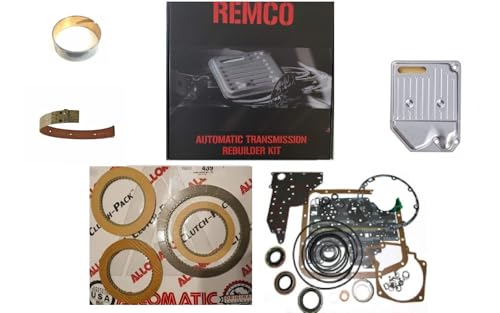
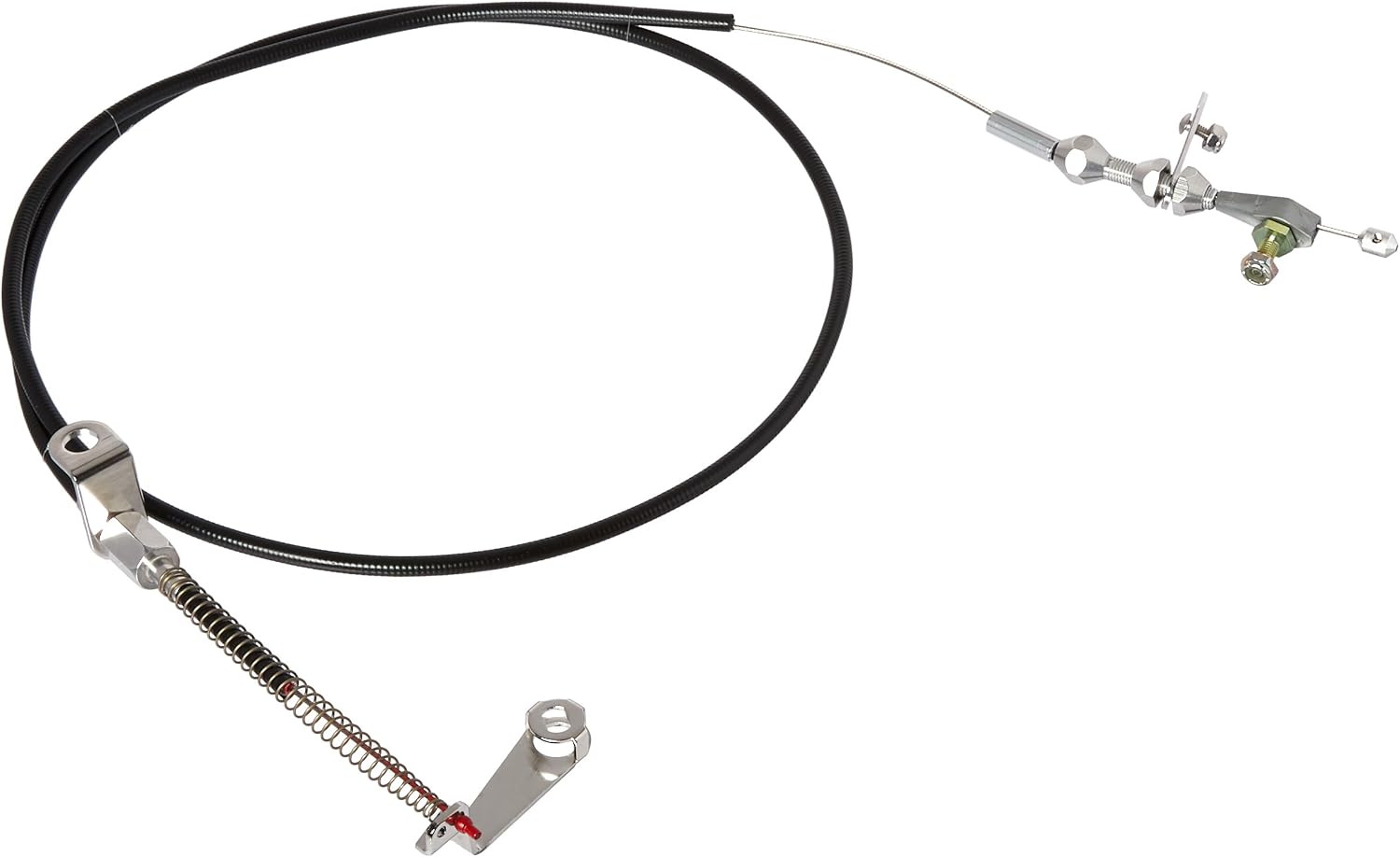
Our AOD parts page has master rebuild kits with clutches and band, complete valve bodies, TV and kickdown cable kits and service tools for 1980-93 AOD units, all on our own checkout. If the direct clutch or band is burned, buy the full kit. A single clutch pack will not fix a unit that ran with low pressure.
FAQ
What is the most common Ford AOD failure?
A burned direct clutch, usually caused by low TV pressure from a misadjusted rod or cable. The unit shifts 1-2, holds 2nd, then neutrals out where 3rd should be. A broken direct input shaft gives the same symptom, so the unit has to come apart to tell them apart.
How do I adjust the TV on an AOD?
Use a 100 psi gauge on the TV port, not feel. Per the Ford procedure TCI reproduces, rod-linkage units should read 28-38 psi (33 psi target) at 100-150 F in Neutral with the gauge block installed, and drop below 5 psi with the block removed. Cable units use a 30-40 psi window.
Why does my AOD not shift into overdrive?
If the engine races or the car neutrals on the 3-4 shift, the overdrive band or servo is slipping. If it pulls hard in 3rd and never shifts, the 3-4 shift valve is likely stuck. A leaking servo pin can also let the band drag and burn in the lower gears.
Why is my AOD stuck in first gear?
A disconnected or missing TV linkage defaults the valve to full TV pressure, which holds the shifts very late. A stuck governor or stuck 1-2 shift valve causes the same thing. Check the linkage first, then the governor.
Is the AOD a good transmission?
It is serviceable and simple, with no computer, but the stock overdrive band is its weak point. Ford did not widen the drum and band until the 1993 Lincoln AODE and 4R70W. Set the TV pressure correctly and fix the known valve body and servo leaks, and an AOD lives much longer.
Related guides
- AOD Delayed Engagement: Causes and Fix
- AOD Overheating: Causes and Prevention
- AOD Valve Body Symptoms and Testing
- AOD Won't Shift Into Overdrive
- AOD Harsh Shift Causes and Fix
- AOD Slipping Under Load: Causes and Fixes
- AOD vs AODE: Differences
- AODE vs 4R70W: Differences
- Ford 4R70W and 4R75W Transmission Problems
- Checking Transmission Line Pressure
- Shift Flare vs Slip: The Difference
Sources
- ATRA, GEARS magazine, "Gear Ratios" reference chart, January/February 2006, pages 58-60. Backs the AOD/AODE ratios of 2.40, 1.47, 1.00, 0.67 and 2.00 reverse. https://atracom.blob.core.windows.net/bulletins/quick/2006-01_58.pdf
- Sonnax, "Ford AOD Valve Body Layout." Backs the TV plug kit (76989K, 76989-03K) symptoms, the boost valve kit (76990K, 76990-03K, 76990-04K) symptoms including direct clutch failure, the governor circuit end plug kits split at mid-1983, and the pump bushing (36002-01) symptoms. https://www.sonnax.com/tech_resources/989-ford-aod-valve-body-layout
- Sonnax, Overdrive Servo Pin Kit 76833 (Ford AOD). Backs the servo pin-to-case bore clearance, the leakage of release oil, the drop in forward clutch pressure, overdrive band drag in 1st through 3rd, and the resulting overdrive band and forward clutch failures. https://www.sonnax.com/parts/1663-overdrive-servo-pin-kit
- TCI Automotive instruction sheet 431000, "Ford AOD Throttle Valve Adjustment." Backs the Ford TV pressure procedure: 100 psi gauge, 100-150 F fluid, Neutral with A/C off, the .390-.404 inch gauge block, 28-38 psi with a 33 psi target on rod linkage, about 1.5 psi per turn, under 5 psi with the block removed, and the 30-40 psi cable window. https://static.summitracing.com/global/images/instructions/tci-431000.pdf
- BE Controls (Baumann Electronic Controls), "Troubleshooting the AOD Transmission." Backs the symptom patterns for direct clutch or direct shaft failure, overdrive band versus 3-4 valve diagnosis, the full-TV default with a disconnected linkage, stuck 1-2, 2-3 and 3-4 shift valves and governor, and the 200 psi full-throttle line pressure ceiling. https://www.becontrols.com/ourfaqs/aodtroubleshoot_1.htm
- SAE International — Sam Dabich (Ford Motor Company), "Ford Motor Company Automatic Overdrive Transmission," SAE Technical Paper 800004 (1980). Backs the AOD as Ford's new four-speed automatic overdrive for 1980, the third-gear power split of about 40 percent through the converter and 60 percent through the direct mechanical path, and the fully mechanical fourth gear that bypasses the converter. saemobilus.sae.org
- Ford Motor Company, 1993 Mustang Owner Guide, automatic transmission selector positions. Backs Overdrive as the normal position with upshifts through fourth, and D as Overdrive Lock Out with no shift into overdrive. https://www.fordservicecontent.dealerconnection.com/pubs/content/~WSPB/~MUS~LEN/20/SPB71B01.HTM
- Ford Motor Company, 1993 Mustang Workshop Manual, Section 07-01B (AOD), Symptom Chart. Backs the six listed "Transmission Overheats" causes, including improper band or clutch application and pressure control. SPB71B03