The AODE gets blamed for a lot of things it did not do. A good share of the units that come across the counter as "the transmission is shot" turn out to be a failing shift solenoid, a range sensor feeding the computer garbage, or a converter clutch that shudders because a valve bore wore out. The other share really is shot, and it usually died in one of three places: the overdrive servo pin bore, the direct clutch drum and stub shaft, or a pressure regulator circuit that stopped raising line pressure.
This is the list I work from when an AODE comes in. It covers each common problem, the symptom it produces, the test that proves it, and the fix, with the part numbers and pressure figures from ATSG, Sonnax and Ford so you can check my work.
First, Confirm It Is Actually an AODE
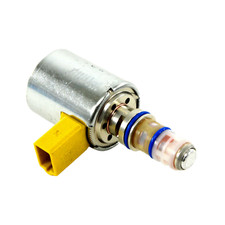
Ford introduced the AOD-E for model year 1992 as the electronic version of the hydraulic AOD. Per the ATSG update handbook for this family, it is a four-speed overdrive with a four-element lockup converter, and shift timing, line pressure and converter clutch apply are all run by the EEC-IV processor through four solenoids: two on/off shift solenoids (SS1 and SS2), one pulse-width-modulated solenoid for converter clutch control, and one electronic pressure control (EPC) solenoid for line pressure.
Two quick identification checks save a lot of wasted diagnosis:
- Count the shafts at the front of the case. The hydraulic AOD has three splined shafts, one removable. The AODE has two, neither removable.
- Check the extension housing for a cast W. ATSG notes the 4R70W has a W cast into the extension housing and the AODE does not. The AODE runs 2.40 first, 1.47 second, 1.00 third, 0.67 fourth and 2.00 reverse. The 4R70W runs 2.84, 1.55, 1.00, 0.70 and 2.32, and the gear train parts will not interchange.
That second point matters for diagnosis. The computer is programmed for the ratios it expects. A unit rebuilt with the wrong gear train, or a 4R70W swapped into an AODE car without a matching calibration, will throw ratio codes and shift wrong no matter how good the hard parts are.
1. Overdrive Servo Pin Wearing the Case Bore
Symptoms: burnt overdrive band, slipping or flaring 3-4 shift, neutral on a 4-2 downshift, forward clutch burned, intermediate roller clutch failure.
This is the AODE failure that takes out parts you would not think were related. Sonnax traces a whole group of AODE failures (intermediate roller clutch, overdrive band and forward clutch) back to one small part: the overdrive servo pin wearing its bore in the case. The circuit that holds the servo released is fed by forward clutch oil in 1st, 2nd and 3rd. When the pin wears the case bore, that release oil leaks through the case. Two things happen at once. The overdrive band drags because the servo is no longer held fully off, and the forward clutch runs short on oil and overheats.
Let it go long enough and the band glazes to the point it will not hold 4th. Sonnax describes the end of that chain: a neutral condition in 4th, followed by excessive roller clutch rpm when the unit re-engages on a 4-2 downshift. That spin-up is what kills the intermediate roller.
The fix: replace the OE pin with the Sonnax 76833E overdrive servo pin kit. The pin carries two O-rings, one sealing against the piston inside diameter and one against the case bore, which closes the leak without machining. It includes an optional washer to preload the servo spring for a firmer 3-4 shift, and a replacement retaining clip, since the original clip is frequently lost. If the bore is worn badly enough that O-rings will not seal, Sonnax lists a servo pin bore sleeve (76890-24K) as a related repair on the same page. On any AODE that comes in with a burnt OD band, treat the servo pin bore as the cause until proven otherwise. Replacing the band alone puts the car back on the same clock.
2. Direct Clutch Drum and Intermediate Stub Shaft
Symptoms: shifts 1-2 fine, holds 2nd longer than normal, then falls into neutral where it should take 3rd. No 3rd and no overdrive. Pan full of friction material and metal.
Baumann Electronic Controls, which builds standalone controllers for this transmission, lays out the split cleanly in its AODE troubleshooting notes. If the unit shifts into 2nd and simply stays there, look electrical first (more on that below). If it holds 2nd long and then neutrals out completely at the point it should upshift, the most likely cause is a damaged direct clutch pack, and another possible cause of the same symptom is a broken stub shaft. Either way, the direct clutch is the last assembly out of the case on teardown, so plan on a full overhaul.
The root weakness is the joint between the drum and the shaft. Sonnax describes the OE direct drum and intermediate stub shaft as having a weak point where the drum splines strip and the shaft breaks. That is why a plain replacement drum often just resets the failure.
The fix: for a stock rebuild, a new direct clutch drum, fresh frictions and steels, and a careful clearance check. For anything that makes power or tows, the Sonnax Smart-Tech direct clutch drum and shaft kit is the permanent answer. It is a one-piece design that removes the spline joint, uses a shaft Sonnax rates at 50 percent thicker and twice as strong as the best 300M shafts, and holds one extra OE-thickness friction for 17 percent more clutch capacity. The kit is ratio specific: 76656-02K is the AODE version for 2.40/1.46 gearsets, while 76656-01K is for 4R70W-ratio units. It includes an extreme-duty forward sun gear; for the AODE that is the 30-tooth gear (sold separately as 76612A-12). Order by ratio, not by what someone wrote on the core tag.
Sonnax 76833E Overdrive Servo Pin Kit
The two-O-ring servo pin that seals the worn case bore behind so many burnt AODE overdrive bands and cooked forward clutches, with the preload washer for a firmer 3-4 and a fresh retaining clip. Cheap insurance on every AODE rebuild.
View the Sonnax 76833E servo pin kit →3. No 3rd or Overdrive With No Neutral: Shift Solenoid and Wiring
Symptoms: shifts 1-2 and stays in 2nd. No slip, no flare, no neutral. Often after recent electrical work.
This is the one to rule out before the transmission comes out. Baumann attributes a unit that goes 1-2 and then never shifts again to a number 2 shift solenoid that is failing to activate or failing to seal when activated, caused by a defective solenoid, a wiring problem, or a bad processor. A sticking valve in the valve body can produce the same result.
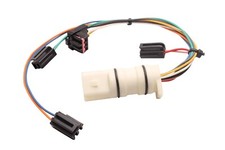
How to prove it: pull codes first. Then check the solenoid circuit resistance at the case connector. Ford's 1994 AODE workshop manual (Pinpoint Test A) calls for 20 to 30 ohms on each shift solenoid measured to VPWR, with no continuity to ground, and under 0.5 ohm through each internal harness wire (SS1 White, SS2 Black, VPWR White/Black). Check for voltage at the harness side with the key on. Per the same manual, the gear pattern names the solenoid: SS2 failed off leaves 1st and 2nd only, SS1 failed off leaves 2nd and 3rd only, and both off leaves the unit in 2nd. Codes 621 and 622 are electrical-only circuit codes, while shift-error codes 617-619 can also be set by stuck valves or worn friction material. Our AODE shift solenoid guide walks through the full test. A solenoid that measures in range but does not seal can still cause the problem, which is why a lot of shops replace the solenoid pack as a set once the pan is down. The AODE internal harness on high-mileage units is worth inspecting at the same time: brittle insulation and chafed conductors at the case pass-through cause intermittent shift complaints that come and go with temperature.
4. Harsh 1-2 Shift
Symptoms: the 1-2 upshift bangs in, everything else normal.
Baumann's first suspect for a harsh shift into 2nd on the AODE and 4R70W is a broken lower 1-2 accumulator spring. If the springs are intact and the shift is still harsh, especially with an overdrive-off light flashing and a 1-2 shift error code, look at intermediate clutch slippage or a shift solenoid problem. The logic behind that code is worth understanding: a 1-2 error generally means the computer did not see engine rpm drop when it expected it to, and a slipping clutch also makes for a harsher shift once it finally grabs. So a harsh 1-2 with a code is often a wear problem, not a calibration one.
5. Converter Clutch Shudder in 3rd
Symptoms: a chatter or shudder at roughly 35 to 45 mph, usually in 3rd with converter clutch applied, often gone in overdrive.
The AODE converter clutch is electronically commanded, which gives you a clean road test. Baumann's method: hold steady throttle while the shudder is happening and lightly touch the brake. The brake switch input makes the computer momentarily release the converter clutch. If the shudder disappears the instant the clutch releases, the converter clutch circuit is the problem.
That does not automatically mean a converter. Sonnax lists wear at the bypass clutch control plunger valve and sleeve as a cause of shudder, no lockup, delayed lockup and TCC apply and release concerns, including code 628 (converter clutch slip). Its 76948-04K plunger valve kit and 76948-31 oversized bypass clutch control valve address exactly that, along with the converter pressure limit valve for low converter pressure and lube failures. Change the fluid, check the valve body, and confirm the TCC solenoid before you condemn the converter.
Ford's own routine for this complaint agrees. In the 1994 AODE manual, Hydraulic/Mechanical Routine 342 (Converter Cycling/Shudder/Chatter) starts with fluid condition, then lists the solenoid pressure regulator valve, No. 7 check ball, bypass clutch control valve and plunger, and converter pressure limit valve, followed by pump cross leaks, input shaft seals and only then converter end clearance. The matching code is 656/P1741, which Ford defines as excessive variation in converter clutch slip, seen as engine rpm oscillation in 3rd gear. Sonnax adds that on early units the 76948-04K kit gives a firmer lockup, while 76948-64K keeps the OE apply feel with its four .063 in. sleeve orifices.
6. Soft Shifts, Slipping and Burnt Clutches: Line Pressure and Valve Body Wear
Symptoms: soft or sliding shifts, slipping at medium to heavy throttle, delayed engagement, repeat clutch or band failures.
A worn valve body will destroy a fresh rebuild, so this is not optional on an AODE with miles on it. The Sonnax vacuum test guide for the AODE through 4R75E family maps wear points to complaints:
- Main pressure regulator valve: poor shift quality, soft shifts, low line rise, premature clutch and band failure. On '95-and-earlier units with the 4-spool valve, Sonnax lists 76948-01. It does not replace 3-spool valves.
- Boost valve and sleeve (76948-02K): low reverse boost, delayed reverse, reverse slip and burnt reverse clutch.
- Manual valve (oversized 76948-46): delayed engagement, low line pressure, burnt bands and clutches.
- Solenoid regulator valve (76948-14K): erratic shifts, a 2-3 neutral, neutral after 4th, no 2nd, and loss of forward under hard acceleration from a stop.
How to prove it: a pressure gauge on the line tap. The ATSG line pressure chart for this family puts line pressure at roughly 50 to 75 psi in the forward ranges at idle and 80 to 120 psi in Reverse, and every tap should climb as throttle opens. A reading that sits in range at idle but will not rise with throttle points at the pressure regulator circuit or the EPC solenoid. Vacuum-test the valve bores on the bench before you reuse the valve body.
7. No Reverse, Everything Else Fine
Baumann is direct about this one: there is nothing electrical about reverse gear in the AODE or 4R70W. A unit that has lost reverse but drives normally has a mechanical failure, a bad low/reverse band or a bad reverse clutch pack. Before you tear it down, gauge reverse pressure. If it is low, the boost valve wear listed above is a candidate cause of the burnt band or clutch, and it needs to be fixed during the rebuild or the new parts will burn the same way.
8. Erratic Shifts, Random Downshifts, No Upshift at All
For an AODE that shifts erratically or drops to a lower gear, sometimes all the way to what feels like neutral, Baumann points first at the transmission range sensor on the driver's side of the case. An improper signal from it makes the computer command the wrong gear. The output shaft speed sensor can cause erratic shifting too, but it rarely fails. Remember that in overdrive range, 1st and 2nd are driven through one-way clutches with no engine braking, so a downshift to 1st or 2nd at road speed can feel like neutral when it is not.
If a rebuilt unit will not upshift at all, check the ring gear. ATSG documents a no-upshift complaint caused by installing an AOD internal ring gear in an AODE. The AOD gear has no holes to trigger the output shaft speed sensor. No holes, no output speed signal, no upshift. It happens when an AOD core gets raided for parts, since the gear ratios are the same.
Fluid Matters More Than People Think
The AODE was specified for MERCON. Ford's Motorcraft MERCON V (XT-5-QMC in the quart bottle) is approved for use in automatic transmissions previously serviced with MERCON, so that is what goes in today. Do not use a DEXRON-type or universal fluid on a unit that is already showing shudder or harsh shifts; the friction characteristics are part of how the converter clutch and shift feel were calibrated.
My Diagnostic Order on an AODE
- Confirm AODE vs 4R70W vs AOD, and whether it has been swapped or rebuilt with mixed parts.
- Pull codes and check fluid level and condition. Burnt smell and friction debris change the whole plan.
- Check the range sensor signal and the solenoid circuits before assuming a hard failure.
- Put a gauge on line pressure: idle, stall-level throttle, and Reverse.
- Road test with the brake-tap check for converter clutch shudder.
- If it comes apart: inspect the overdrive servo pin bore, the direct drum splines and stub shaft, and vacuum test the valve body before any hard parts go back in.
Need parts for this job?
EPC and TCC solenoids, internal harnesses, sun shells, planetaries, clutch drums, sprags and rebuild parts for the 1992-up AODE, matched by year.
Shop AODE transmission parts →Get the AODE servo pin fix →
FAQ
What is the most common AODE transmission problem?
On units that come apart, the most common hard failures are a burnt overdrive band and the direct clutch drum and stub shaft. Sonnax traces many AODE overdrive band, forward clutch and intermediate roller clutch failures to the overdrive servo pin wearing its case bore and leaking servo release oil. The direct drum fails where its splines strip and the stub shaft breaks. Before assuming either, rule out shift solenoid, wiring and range sensor faults, which cause many no-upshift and erratic-shift complaints.
Why does my AODE shift into 2nd and then go to neutral?
If it holds 2nd longer than normal and then falls into neutral where it should take 3rd, the most likely cause is a damaged direct clutch pack or a broken intermediate stub shaft. That requires a full overhaul, because the direct clutch is the last assembly out of the case. If it shifts into 2nd and simply stays there with no neutral, check the number 2 shift solenoid, its wiring and the processor first.
Can a bad solenoid cause no reverse in an AODE?
No. Reverse in the AODE and 4R70W is not electrically controlled, so a loss of reverse with all forward gears working is mechanical: the low/reverse band or the reverse clutch pack. Check reverse line pressure before teardown, because a worn boost valve can cause low reverse pressure that burned the band or clutch in the first place.
What line pressure should an AODE have?
The ATSG line pressure chart for the AODE family shows roughly 50 to 75 psi in the forward ranges at idle and 80 to 120 psi in Reverse, and every pressure tap should rise as throttle is increased. Pressure that is normal at idle but will not climb with throttle points toward the pressure regulator circuit or the EPC solenoid.
What fluid does the AODE use?
The AODE was originally specified for MERCON. Ford's Motorcraft MERCON V, part XT-5-QMC in the quart size, is approved for automatic transmissions previously serviced with MERCON, so MERCON V is the correct service fluid today. Avoid DEXRON-type substitutes, especially on a unit that already shows shudder or harsh shifts.
Sources
- ATSG (Automatic Transmission Service Group) — Update Handbook: AODE, 4R70W, 4R70E, 4R75E (2006). Backs the 1992 AOD-E introduction, EEC-IV control through two shift solenoids plus PWM TCC and EPC solenoids, the two-shaft vs three-shaft identification, the AODE and 4R70W ratio sets, the W-cast 4R70W extension housing, the line pressure chart (forward and Reverse ranges rising with throttle), and the AOD ring gear no-upshift condition. ATSG AODE / 4R70W Update Handbook (PDF)
- Sonnax — Overdrive Servo Pin Kit 76833E. Backs the AODE failure chain from servo pin case bore wear (release oil leak, OD band drag, forward clutch overheating, no 4th, roller overspeed on a 4-2 re-engagement), the two-O-ring pin design, the preload washer and retaining clip, and the related 76890-24K bore sleeve. sonnax.com
- Sonnax — Stop Chasing AODE, 4R70W Direct Clutch Drum Problems. Backs the OE drum spline stripping and stub shaft breakage weak point, the one-piece Smart-Tech kit specs (50 percent thicker shaft, 17 percent more clutch capacity), the AODE 2.40/1.46 kit 76656-02K and the 30-tooth sun gear 76612A-12. sonnax.com
- Sonnax — Ford 4R70E, 4R70W, 4R75E, 4R75W, AODE Vacuum Test Guide. Backs the valve body wear map: main pressure regulator valve 76948-01 ('95-earlier 4-spool), boost valve 76948-02K, oversized manual valve 76948-46, solenoid regulator valve 76948-14K, and bypass clutch control valves 76948-04K and 76948-31 for shudder and code 628. sonnax.com
- Baumann Electronic Controls — Troubleshooting the AODE and 4R70W Transmission. Backs the no-3rd/no-OD split (SS2, wiring or processor vs direct clutch or stub shaft), no reverse being mechanical, the broken lower 1-2 accumulator spring and 1-2 error logic, the brake-tap TCC shudder test, and the range sensor as the top cause of erratic downshifts. becontrols.com
- Ford Customer Service Division — Motorcraft MERCON V (XT-5-QMC) product details. Backs MERCON V as approved for automatic transmissions previously serviced with MERCON, and its exclusions (not for MERCON SP, LV, ULV or Type F applications). fcsdchemicalsandlubricants.com
- Ford Motor Company — 1994 Mustang Workshop Manual, Section 07-01 (AODE), Diagnosis and Testing. Backs the 20-30 ohm shift solenoid spec, the under-0.5-ohm internal harness check and wire colors from Pinpoint Test A, the SS1/SS2 failure-mode gear patterns, the electrical-only (621/622) vs shift-error (617-619) code definitions, and TCC code 656/P1741 (excessive converter clutch slip, rpm oscillation in 3rd). fordservicecontent.dealerconnection.com
- Ford Motor Company — 1994 Mustang Workshop Manual, Section 07-01 (AODE), Diagnosis by Symptom. Backs Routine 242/342 Converter Cycling/Shudder/Chatter: fluid condition first, then the solenoid pressure regulator valve, No. 7 check ball, bypass clutch control valve and plunger, converter pressure limit valve, pump cross leaks, input shaft seals and converter end clearance. fordservicecontent.dealerconnection.com
- Sonnax — AODE, 4R70W Series Bypass Clutch Control Valve Repair Options: When to Use 76948-04K vs. 76948-64K. Backs plunger valve and sleeve wear as a common cause of AODE TCC shudder, delayed or no lockup and converter codes, and the single .030 in. vs four .063 in. sleeve orifice difference in lockup feel. sonnax.com