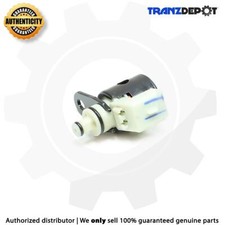
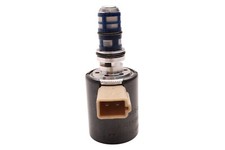
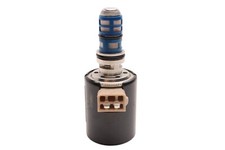
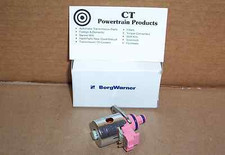
An AODE-equipped Ford that shudders like it is crossing a cattle guard at 45 mph, or one whose tach never drops when it should lock up on the highway, often needs exactly this part: a single new torque converter clutch (TCC) solenoid from Rostra. It is the compact solenoid in the photo with the black can, the two-pin connector marked with blue stripes, an O-ringed nose and a mounting tab for its hold-down bolt. Owners of Crown Victoria, Grand Marquis, Town Car, Mustang and F-150 models built with this Ford four-speed family are the usual buyers, and at this price it is the cheapest first step on a lockup complaint.
What the TCC solenoid does in an AODE
The electronic AODE and the 4R70W that grew out of it lock the torque converter at cruise to stop slip and cut heat. The PCM decides when and grounds the TCC solenoid; the solenoid then sends signal oil to the bypass clutch control valve in the valve body, which strokes and routes pressure to apply the converter clutch. A solenoid that sticks, opens up electrically or leaks past its O-rings cannot hold that valve in the apply position, so the clutch drags instead of locking. The result is the vibration and higher cruise RPM drivers notice first, and enough extra heat over time to cook the fluid.
Symptoms of a failing TCC solenoid
- Shudder or chuggle under light, steady throttle, usually between 40 and 60 mph
- No lockup at highway speed: higher RPM, worse mileage and a hotter transmission
- Lockup that drops in and out on a flat road
- P0741 for converter clutch slip or P0743 for a TCC circuit fault
- Engine stalling as you stop, a sign of a solenoid stuck in the apply position
How to confirm it before you buy
Check fluid level and smell first; varnished, burnt fluid causes shudder on its own and needs changing either way. Then measure the TCC circuit at the case connector. The Sonnax test booklet for this family gives about 10-16 ohms, so an open reading or a dead short sends you to the solenoid or the wiring. ATRA reminds techs that a circuit code covers the wiring, connector and computer, not just the solenoid, so wiggle-test the harness before replacing parts. Our AODE/4R70W solenoid testing guide shows the connector pinout, and the Crown Victoria common problems guide covers lockup complaints on the Panther cars that used this transmission. If the solenoid tests good and lockup still slips, Sonnax identifies wear at the bypass clutch control valve and sleeve as a common cause, which a solenoid cannot fix.
Fitment
The listing names the AODE without a year range. Over its life this family used three solenoid connection styles, which Sonnax groups as 1997 and earlier, 1998-2008 and 2009-later, and the TCC solenoid did not stay the same across all of them. The surest check is to set your old solenoid beside the photo: the body shape, the two-pin connector and the position of the mounting tab should all match. If your transmission is a 1998-2008 unit, we also list a 1998-2008 AODE TCC solenoid sold by that year range. When in doubt, send us your year, model and VIN and we will confirm before it ships. Every other part for the family is on the AODE and 4R70W parts page.
Install notes
- Drain the fluid and drop the pan; the filter may need to come down to reach the solenoid.
- Unplug the connector, remove the single hold-down bolt and pull the old solenoid straight out of its bore.
- Lubricate the new O-rings with Mercon V and press the solenoid in squarely so neither ring rolls; a damaged O-ring bleeds off signal oil and the shudder stays.
- Reinstall the bolt snug only, plug in the connector until it latches, and route the wiring clear of the filter.
- Install a new filter and gasket, refill with Mercon V, clear codes and road test through several lockup cycles.
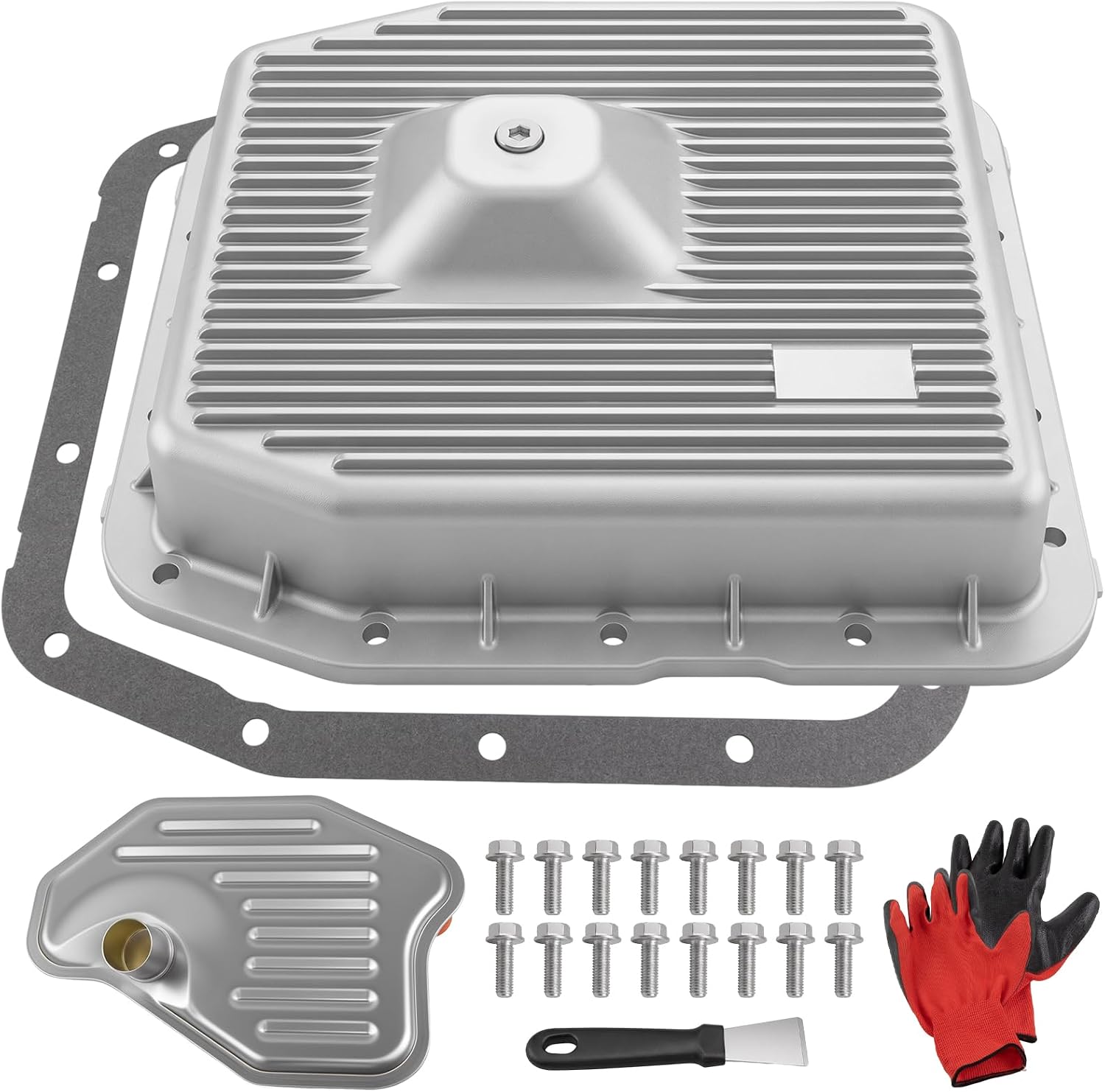
If the pan is badly bent or keeps leaking, the 4R70W aluminum pan kit with filter handles the pan, filter and drain in one piece.