In the second-generation Explorer and its Mercury Mountaineer twin, the 4R70W is the automatic you find behind the 5.0L V8. The V6 trucks got the 4R55E and later the 5R55E, which is a completely different transmission, so the first job on any Explorer that comes in "with a transmission problem" is confirming which unit is actually under it. Check the transmission code on the door tag, or just look: the 4R70W has the 14-bolt pan and the AOD-family case. Get that wrong and every part you order is wrong.
These 5.0L trucks are now 25 to 30 years old. Many have the all-wheel-drive transfer case, and a lot of them have spent their lives towing. What follows is the list of 4R70W problems I actually see in Explorers and Mountaineers, in the order the truck should be diagnosed: electrical first, then hydraulics, then hard parts. Every technical article and spec cited here is linked in the Sources section at the bottom. Truck-only faults are in our F-150 4R70W problems guide.
Quick map: Explorer 4R70W problems by symptom
| Symptom | Most likely cause | Where to look first |
|---|---|---|
| Stops shifting, takes off in a high gear, often no codes | Lost solenoid power feed (shared fuse, chafed harness) | Fuse 13 in the battery junction box and every circuit it feeds |
| Starts in a higher gear right after a rebuild, new solenoid codes | Bad case connector or hard wire frame terminals | Internal hard wire frame and case connector |
| Bind-up feel, burned direct clutch, cracked separator plate | Forward-to-direct cross leak under the 2-3 accumulator | 2001 valve bodies |
| 4-3-neutral, no 4th, burned overdrive band | Worn overdrive servo regulator sleeve | 2001 valve bodies |
| Soft shifts, slips towing, poor line rise | Worn pressure regulator valve and bore | High-mileage units, all years |
| Metal in the pan, grinding, sudden total failure | Rear planetary carrier bushing and needle bearing | Any carrier you plan to reuse |
Electrical faults that look like a dead transmission
The 4R70W is an electronic transmission. If the shift solenoids lose power, the PCM cannot shift it, and it falls back to a single default gear. From the driver's seat that feels exactly like a failed transmission, and it is the number one reason good 4R70Ws get pulled out of Explorers.
Fuse 13 and the shared solenoid power circuit
Transmission Digest published a case study that every Explorer tech should read. A 2000 Explorer Sport came in after three other shops had looked at it. The complaint: the transmission stopped shifting after driving on rough roads. A previous shop had found that fuse 13 in the battery junction box, which feeds the transmission solenoids, blew on rough roads but stayed intact with the solenoid pack unplugged, so they suspected a shorted solenoid pack.
The diagnosing shop found no codes and could not make it fail on two days of road tests. On day three, after about 15 miles, the check engine light came on with P0155, Bank 2 Sensor 1 oxygen sensor heater circuit. The wiring diagram showed that fuse 13 also fed the heated oxygen sensors, the EGR vacuum regulator, the camshaft position sensor, the canister vent solenoid and the transmission. A loose exhaust heat shield had cut through the heater power wire, and it had burn marks where it was also rubbing the front driveshaft. On rough roads the shield shorted the circuit, fuse 13 blew, and the transmission lost solenoid power. A new O2 sensor and removing the heat shield fixed a "transmission problem" that three shops had missed.
One note on that article: the Sport was normally a V6 model, and the article identifies the unit as a 4R70W. Whatever was in that particular truck, the lesson carries straight over to the 5.0L Explorers, because the transmission solenoid feed shares a fuse with engine circuits. When a 4R70W Explorer stops shifting intermittently:
- Check the fuse that feeds the solenoids and look up every other load on that fuse in the wiring diagram for your year. A short anywhere on that fuse takes the transmission with it.
- Look for chafed wiring near the exhaust and the front driveshaft. AWD trucks have a front driveshaft running right next to the exhaust and harness routing on that side.
- Treat an O2 heater code as a possible clue, not an unrelated engine light, if it shows up alongside a no-shift complaint.
Case connector and hard wire frame
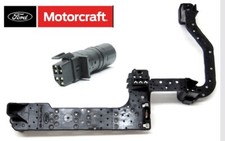
The second electrical trap is inside the pan. Transmission Digest's Tech/Talk column covered a 4R70W overhaul where the hard wire frame and case connector were replaced. On the first road test the transmission took off in a higher gear, the MIL came on, and several solenoid codes set that had not been there before. The aftermarket case connector had two terminals pushed back into the connector so they never contacted the hard wire frame. One of them was the 12-volt solenoid supply, which is why it started in a high gear. Installing the Ford original equipment hard wire frame, F8AZ-7G276-BA, and its connector cleared the codes for good.
On an Explorer that comes back after a rebuild with a high-gear start and fresh solenoid codes, inspect the case connector terminals before you blame the valve body or the new solenoids. Check that every terminal sits flush and locks in, and check the frame for broken insulation where it routes over the valve body.
The 2001 cross leak
The 2001 model year matters on this transmission, and the last year of the 5.0L Explorer falls right in it. Sonnax technical specialist Gregg Nader documented the change. Through 2000, the valve body had a two-bolt stiffener plate under the 2-3 accumulator that clamped the separator plate and lower gasket against the casting. Starting with the 2001 models, Ford deleted that plate along with the capacity modulator valve, and the 2-3 accumulator retainer sits directly on the separator plate.
The forward clutch is fed from the pump at the front, and the direct clutch is fed through the output shaft at the rear. The only place those circuits come close is the casting under the separator plate below the 2-3 accumulator. Without the clamping plate, forward oil pushes the separator plate up. Nader measured it bowing as much as .011 in. under normal forward pressure, which lets forward oil cross-leak into the direct circuit. The direct clutch drags in 1st and 2nd for thousands of miles until it burns. On the bench you find a cracked separator plate near the 2-3 accumulator. The cracks are the symptom, not the cause.
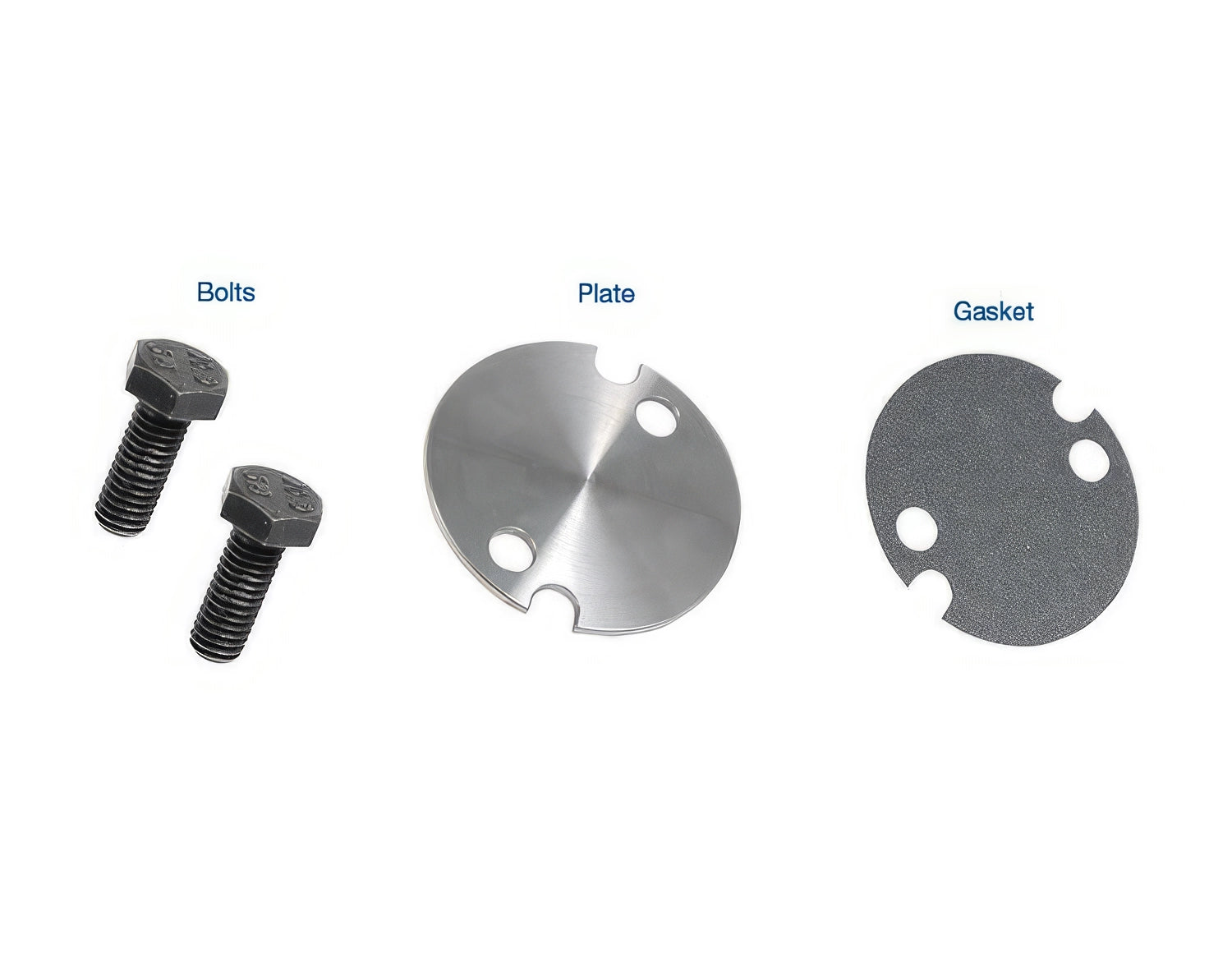
The fix: clamp the separator plate again. Drill and tap for a two-bolt plate from an early core, or install the Sonnax valve body retainer plate kit, 76507F-01K. On a 2001 Explorer or Mountaineer 4R70W that is open for clutch work, put it in every time. If you rebuild a 2001 unit and skip it, the new direct clutch pack is on a timer.
Overdrive problems: 4-3-neutral, no 4th, burned band
An Explorer that tows spends a lot of time cycling in and out of overdrive, and that wears the overdrive servo regulator. Sonnax's overdrive servo regulator kit, 76948-29K, lists the symptoms: a 4-3-neutral shift pattern, loss of 4th gear, and a burned overdrive band. The cause is wear in the bore of the overdrive servo regulator boost valve sleeve. The valve oscillates all the time, wears the sleeve, and the leak lets overdrive servo oil escape, so servo apply is not properly regulated. The kit is listed for 2001 and later valve bodies.
Replacing only the band does not fix it. With the sleeve still leaking, the new band burns like the old one, so a glazed overdrive band means the valve body work is part of the job.
Pressure regulator wear: soft shifts and slipping under load
A high-mileage 5.0L Explorer that shifts soft, slips pulling a trailer and has no codes is often low on line pressure. Sonnax's Brian Wing notes that the pressure regulator valve in the AODE, 4R70W, 4R75W and their E versions commonly wears badly. The scoring shows up on the EPC end of the valve, and the result is low line pressure or poor line rise when the PCM commands more pressure through the EPC solenoid.
A new valve alone usually will not fix it, because a valve that worn has usually worn the bore too. Vacuum test the bore. Sonnax describes a test tool made from an old reverse boost sleeve with a hole drilled through the end. A bore that will not hold vacuum gets reamed and fitted with an oversize valve.
Prove it in the truck first. Tee a gauge into the line pressure tap, and on the scan tool watch EPC commanded pressure next to the gauge reading while you load the engine. If EPC commands a rise and actual line pressure does not follow, you have a regulator circuit problem, and a clutch pack will not cure it.
Hard parts: the rear planetary carrier
The failure that ends with a pan full of metal is the rear planetary carrier. In Transmission Digest, Beau Hansen of ETE Reman explains that the 4R70W's heavy Ravigneaux carrier rides on a bushing at each end. The smaller bushing, in the snout that splines into the direct clutch hub, wears and puts extra load on the carrier's captured needle bearing. Eventually the bearing's outer collar retainer splits or the race cracks, and the pieces go through the pinion gears.
Hansen says these failures cluster in 2004-2008 units, so they are less common in the 1996-2001 Explorers. But these trucks have high miles and a lot of towing history, so check every carrier you plan to reuse: look for a split bearing collar, spin each long and short pinion for drag, and check the bearing pocket. For 1993-2008 carriers caught before the gears are damaged, Hansen points to Sonnax 77747-01 (.199 in.), the bearing from the 1999-and-later 4L60E front planetary, as a close match.
AWD Explorers: rule out the drivetrain
The all-wheel-drive 5.0L trucks add a transfer case behind the 4R70W, and that changes the diagnosis. If the truck has a no-drive or a clunk and you are about to condemn the transmission, get it on a lift first. With the engine running and in gear, see whether the transmission output is turning. If it is and the truck still does not move properly, the problem is downstream in the transfer case, driveshafts or axles. A burned transmission and a failed transfer case can happen at the same time on a truck that has been towing heavy, so check both before you quote the job.
Preventing a repeat failure
Most Explorer 4R70W failures are heat failures that started as one of the problems above. Keep the fluid fresh and full, and use a fluid that is actually approved for Mercon V. Motorcraft's own data says not to use MERCON V where MERCON LV, ULV, SP or Type F is specified, and generic "universal" fluids with no Ford approval are a gamble. If the truck tows, add a large auxiliary cooler and lock out overdrive on long grades so the overdrive band and servo are not cycling all day.
4R70W internal hard wire harness, OEM F8AZ-7G276-BA
The OE-spec hard wire frame Transmission Digest recommends after a cheap aftermarket case connector caused a high-gear start and false solenoid codes. Install it any time the Explorer's solenoid feed or connector is in doubt. Sold by our sister store, CoreTransmissionParts.
Shop the part for this fix →Need a rebuild kit, the retainer plate kit or servo parts? The 4R70W parts collection has the full range.
Need parts for this job?
4R70W master rebuild kits, valve bodies, the Sonnax retainer plate kit, internal wiring harnesses, solenoid kits and filter kits are all on our 4R70W parts page, with checkout on site.
FAQ
Which Ford Explorers have the 4R70W transmission?
The 4R70W was used behind the 5.0L V8 in the second-generation Explorer and the Mercury Mountaineer, in both 2WD and all-wheel-drive versions. The V6 trucks used the 4R55E and later the 5R55E, which are different transmissions. Confirm with the transmission code on the door tag or by the 14-bolt pan before ordering parts.
Why did my Explorer suddenly stop shifting?
The most common reason is that the shift solenoids lost power, so the PCM cannot shift and the transmission stays in one gear. Transmission Digest documented a 2000 Explorer where a loose heat shield shorted an oxygen sensor heater circuit that shares fuse 13 with the transmission solenoids, blowing the fuse on rough roads. Check that fuse and every circuit on it before condemning the transmission.
What fluid does a 4R70W Explorer take?
Mercon V. Ford's Motorcraft data recommends MERCON V for vehicles that call for MERCON V or MERCON, and says not to use it where MERCON LV, ULV, SP or Type F is specified. Use a fluid that carries a real Mercon V approval.
Does a 2001 Explorer 4R70W need the Sonnax retainer plate kit?
Yes, if the transmission is open for clutch work. In 2001 Ford deleted the stiffener plate that clamped the separator plate under the 2-3 accumulator, and Sonnax measured the plate bowing up to .011 in., which lets forward oil leak into the direct clutch circuit. The 76507F-01K retainer plate kit clamps it again so the new direct clutch does not burn up.
Related guides
- Ford 4R70W and 4R75W Problems: Cross-Leaks, Servo Bore Wear and Fixes
- 4R70W Explorer Common Problems and Fixes
- 4R70W No Movement Diagnosis
- 4R70W Shift Solenoid Symptoms
- 4R70W Fluid Type and Capacity
Sources
- Transmission Digest — "Solving the Puzzle of Fuse 13: 2000 Ford Explorer Case Study." Backs the no-shift-on-rough-roads complaint, fuse 13 in the battery junction box feeding the transmission solenoids, the shared HO2S, EGR, CMP and canister vent loads, the P0155 code, and the heat shield shorting against the wiring and front driveshaft. transmissiondigest.com
- Transmission Digest — Tech/Talk, "Ford 4R70W Solenoid Codes Set." Backs the high-gear start and new solenoid codes after an overhaul, the aftermarket case connector terminals pushed back including the 12-volt solenoid supply, and OE hard wire frame F8AZ-7G276-BA. transmissiondigest.com
- Sonnax — Gregg Nader, "4R70W, 4R75W 2001-Later Forward & Direct Clutch Problems: The Easy Valve Body Fix." Backs the deleted two-bolt stiffener plate and capacity modulator valve, the forward and direct feed paths, the .011 in. separator plate bow, the cross leak and dragging direct clutch, and retainer plate kit 76507F-01K. sonnax.com
- Sonnax — Overdrive Servo Regulator Kit 76948-29K technical page, and Brian Wing, "Watch Out for 4R70W Pressure Regulator Valve & Casting Wear." Back the 4-3-neutral, no 4th and burned overdrive band symptoms, the boost valve sleeve wear cause and 2001-later fitment, the EPC-end PR valve scoring, low line rise, and the vacuum test and oversize valve repair. 76948-29K · PR valve wear
- Transmission Digest — Beau Hansen (ETE Reman), "An Inexpensive Fix for the 4R70W." Backs the Ravigneaux carrier bushing wear, the split captured needle bearing failure, the 2004-2008 failure cluster, and Sonnax 77747-01 (.199 in.) for 1993-2008 carriers. transmissiondigest.com
- Ford Customer Service Division (Motorcraft) — MERCON V Automatic Transmission and Power Steering Fluid product details. Backs the MERCON V recommendation for vehicles requiring MERCON V or MERCON, and the warning not to use it where MERCON SP, LV, ULV or Type F is specified. fcsdchemicalsandlubricants.com