The 4R70W is a light-duty four-speed that spent most of its life in trucks people hook trailers to: F-150s, Expeditions, Navigators, Econolines, and the Crown Victoria and Town Car on the car side. It will tow within its rating for a long time if you keep it cool and keep the overdrive circuit tight. Push it past either of those and it fails the same way almost every time: the overdrive band burns, fourth gear goes away, and the fluid comes out dark and smelling of friction material.
Most towing advice for this unit starts with the parts catalog. I start with heat, then the few overdrive-circuit parts that decide whether the band survives a load.
The short version: Tow within the rating Ford published for your exact truck, axle and equipment. Add an auxiliary cooler if the truck doesn't have the factory tow package; Ford's own guide recommends one for trips over 50 miles, hilly terrain or frequent towing [1]. Lock out overdrive when it hunts between 3rd and 4th [1]. Run MERCON V with no additives [2]. Keep fluid near 200°F, because every 20 degrees above that halves the unit's expected life [3]. On a rebuild, fix the overdrive servo regulator [4] and servo pin bore [5] before you think about a shift kit.
Why Towing Hurts This Transmission
Heat in an automatic comes from two places: the torque converter slipping, and clutches or bands slipping. A trailer makes both worse. The converter spends more time unlocked while the truck pulls away from stops and climbs grades. Every unlocked mile turns engine power into fluid heat.
The second heat source is shift hunting. On a grade with a trailer, a four-speed with a tall overdrive keeps dropping from 4th to 3rd, grabbing 4th again, then falling back. Each 3-4 shift applies the overdrive band, and each 4-3 releases it. Ford saw this coming. Its 2003 RV and Trailer Towing Guide warns that towing with an automatic overdrive transmission, especially in hilly areas, can cause excessive shifting between overdrive and the next lower gear, and recommends locking out overdrive when that happens [1]. On the 4R70W, that means the O/D Off button on the shifter.
The damage from heat is not linear. Mike Brown's overheating article in Gears Magazine (ATRA) puts it in numbers: the ideal maximum transmission temperature is 200°F, and every 20 degrees above that cuts expected life in half. At 220°F you get half the life, at 240°F a quarter, and at 260°F one eighth [3]. The same article names vehicle overload as one of the most common causes of overheating, because owners often exceed the tow rating without knowing it [3]. A 4R70W that sees 250°F every weekend is on a short clock no matter what parts are inside it.
Step 1: Know Your Real Rating
Before any upgrade, look up what Ford rated your truck to pull, with your engine, axle ratio and equipment. The numbers vary a lot inside one model year. In Ford's 2003 guide, the F-150's highest trailer ratings are only available with the 7700 Payload Groups. Payload Group A includes an upgraded radiator with a 1.42 in. core and a 14-plate auxiliary automatic transmission oil cooler. Payload Group B includes the 1.42 in. radiator and a 22-plate auxiliary cooler, plus the Class III towing group [1]. In other words, Ford did not rate the truck for its maximum trailer weight without extra transmission cooling.
The car side is tighter. The same guide rates the Crown Victoria with the 4.6L V8 at Light-Duty Class I, 1,500 lb maximum trailer weight and 150 lb tongue load. It also says that on long grades of 5 miles or more, or above 100°F ambient, speed should stay at or below 45 mph, and it recommends an auxiliary transmission cooler for any automatic hauling more than 50 miles [1]. No upgrade makes a Grand Marquis a 3,000 lb boat hauler.
If you are over the rating, stop there. Everything below assumes the load is legal for the truck.
Step 2: Cooling Comes First
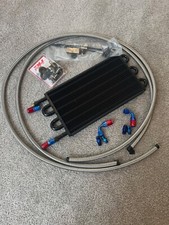
Ford's guide is direct about it: if the vehicle does not have the factory Trailer Tow Group, a dealer-installed auxiliary transmission oil cooler is recommended when you plan to travel farther than 50 miles, tow in hilly terrain, or tow frequently [1]. That covers almost everyone who owns a trailer.
Plumbing it right
- Run it in series after the radiator tank cooler. Fluid leaves the transmission, goes through the radiator tank cooler, then the auxiliary cooler, then back to the case. The tank cooler brings the fluid near coolant temperature and the auxiliary cooler takes it lower. Plumbing the auxiliary cooler first lets the hot radiator tank heat the fluid back up.
- Mount it where it sees air. In front of the A/C condenser with clear airflow, not buried behind a bumper or grille insert.
- Plate-type or stacked-plate, sized to the job. Ford's own factory choice was a 14- or 22-plate unit depending on payload group [1]. For regular heavy towing, the bigger core is the better choice. Our transmission cooler types and sizing guide covers the tube-fin versus plate differences.
- Use transmission-rated hose or braided lines with correct adapters, not barbed fittings and fuel hose.
Check the radiator side too
The radiator tank cooler only works as well as the engine cooling system. Gears Magazine notes that if the cooler is in the radiator tank and the engine is running hot, the transmission can't be cooled either [3]. On a truck that will tow, confirm the fan clutch engages, the radiator isn't half plugged, and coolant temperature stays at normal under load before blaming the transmission for running hot.
Confirm flow
A new cooler on a restricted circuit does nothing. The Gears article gives a minimum cooler line flow of at least a gallon per minute [3]. After any internal failure, flush or replace the cooler and lines and measure flow before the truck goes back in service. Ford's workshop manual for the AODE, which shares this case and cooler circuit with the 4R70W, gives the in-car test: disconnect the cooler return line at the rear case fitting, route it into the filler tube, and idle in Neutral. You want about 0.5 liter (16 oz) in 30 seconds. If the return is weak but the converter-out line at the front fitting flows well, the restriction is in the cooler or lines; if neither flows, look at the pump and converter [7]. Debris from a burned band will sit in a cooler and come back into a fresh unit, which is why Ford calls contamination "a major cause of recurring transmission troubles" and specifies backflushing the cooler and lines, pressure into the return line, for at least 5 minutes [7]. See our cooler flush guide for the procedure.
Watch the temperature
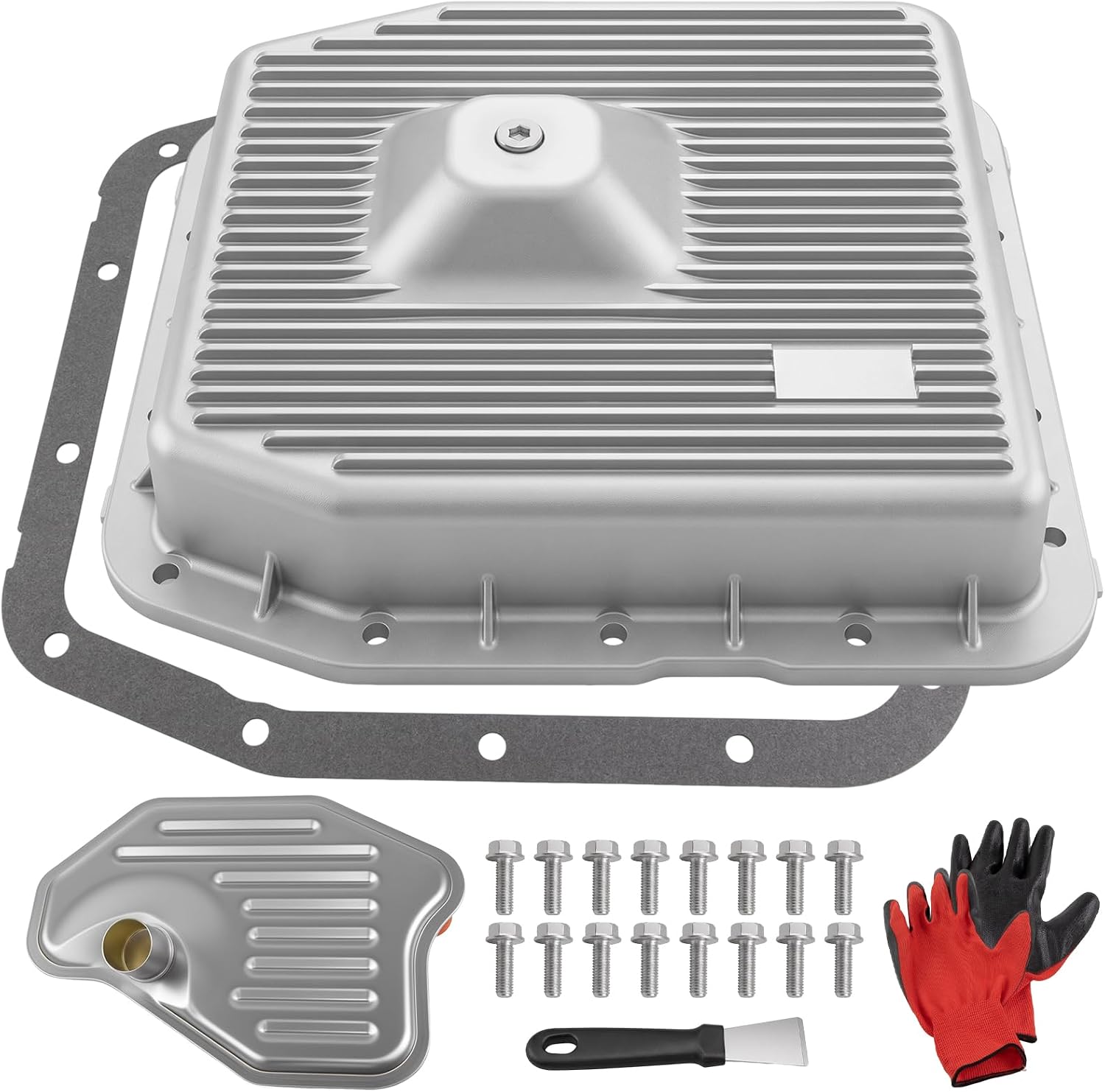
The 4R70W has a transmission fluid temperature sensor on the solenoid body, and most scan tools and plug-in gauges read it as the TFT PID. If you tow regularly, watch it. Readings that settle in the 180-200°F range on the highway are healthy. If it climbs past 220°F on grades, you have a quarter to half of normal service life left at that temperature [3], and it's time to slow down, lock out overdrive, or add cooling. A deep aluminum pan adds fluid volume, but it supplements a cooler rather than replacing one.
Step 3: Fluid and Service Interval
The 4R70W runs MERCON V. Ford's Motorcraft ATF quick reference chart lists MERCON V for the 4R70W/4R70E and 4R75W/E, and the same chart says not to use supplemental transmission fluid additives, treatments or cleaning agents [2]. That applies to towing trucks as much as anything. A bottle of "heavy duty" additive doesn't raise the heat limit of the fluid or the friction material.
Towing is severe service. The friction modifiers and oxidation inhibitors in the fluid wear out faster at high temperature, and the Gears numbers apply to the fluid as well as the hard parts [3]. On a truck that tows regularly, I change fluid and filter far more often than the normal schedule, and I do a full exchange rather than a pan drop, because a pan drop leaves most of the old fluid in the converter and cooler. The fill and level check are in our 4R70W fluid type and capacity guide, and the pan and filter job is in the filter and pan service guide.
Step 4: Hard-Part Upgrades in the Overdrive Circuit
When a towing 4R70W fails, the overdrive band and forward clutches are the usual victims. The parts that decide their fate are small and cheap next to a rebuild. If the unit is apart, or going into a truck that will tow, these are worth doing.
Overdrive servo regulator valve
Sonnax lists a burned overdrive band, loss of 4th gear and a 4-3-Neutral shift pattern as common 4R70E, 4R70W, 4R75E and 4R75W problems. The cause is wear at the inside diameter of the overdrive servo regulator boost valve sleeve from constant oscillation. The worn sleeve leaks overdrive oil, and the servo can't be regulated properly [4]. The fix is the Sonnax 76948-29K valve and sleeve kit, a drop-in for 2001-and-later units, with a hardcoat anodized valve and a closely toleranced sleeve [4]. Sonnax says to install it when vacuum testing at the listed ports fails to hold the recommended minimum or wear is visible [4].
Overdrive servo pin and case bore
The second weak spot is the servo pin itself. Sonnax traces overdrive band and forward clutch failures to the O.D. servo pin wearing the case bore. Once the bore wears, oil leaks through the case, which can make the overdrive band drag and the forward clutches overheat [5]. The 76833E pin kit has two O-rings that seal against both the piston I.D. and the case bore, plus a replacement retaining clip, and an optional washer that preloads the servo spring for a firmer 3-4 shift [5]. On a towing truck, that firmer 3-4 is exactly what you want: less time with the band half applied.
The servo sleeve on AODE-to-4R70W builds
One rebuild trap is worth knowing. Transmission Digest documented a 4R70W that came back with a 3-Neutral upshift and burned forward clutches because the rubber-coated sleeve in the overdrive servo assembly was left out during overhaul. The 4R70W needs that sleeve and the AODE doesn't, so it gets missed when parts get mixed. Per Transmission Digest the sleeve is only available as part of the complete servo assembly, OEM F3LY-7H188-A [6]. If you are building a 4R70W from AODE parts or a mixed core, check it. Our AODE vs 4R70W differences post covers the other interchange traps.
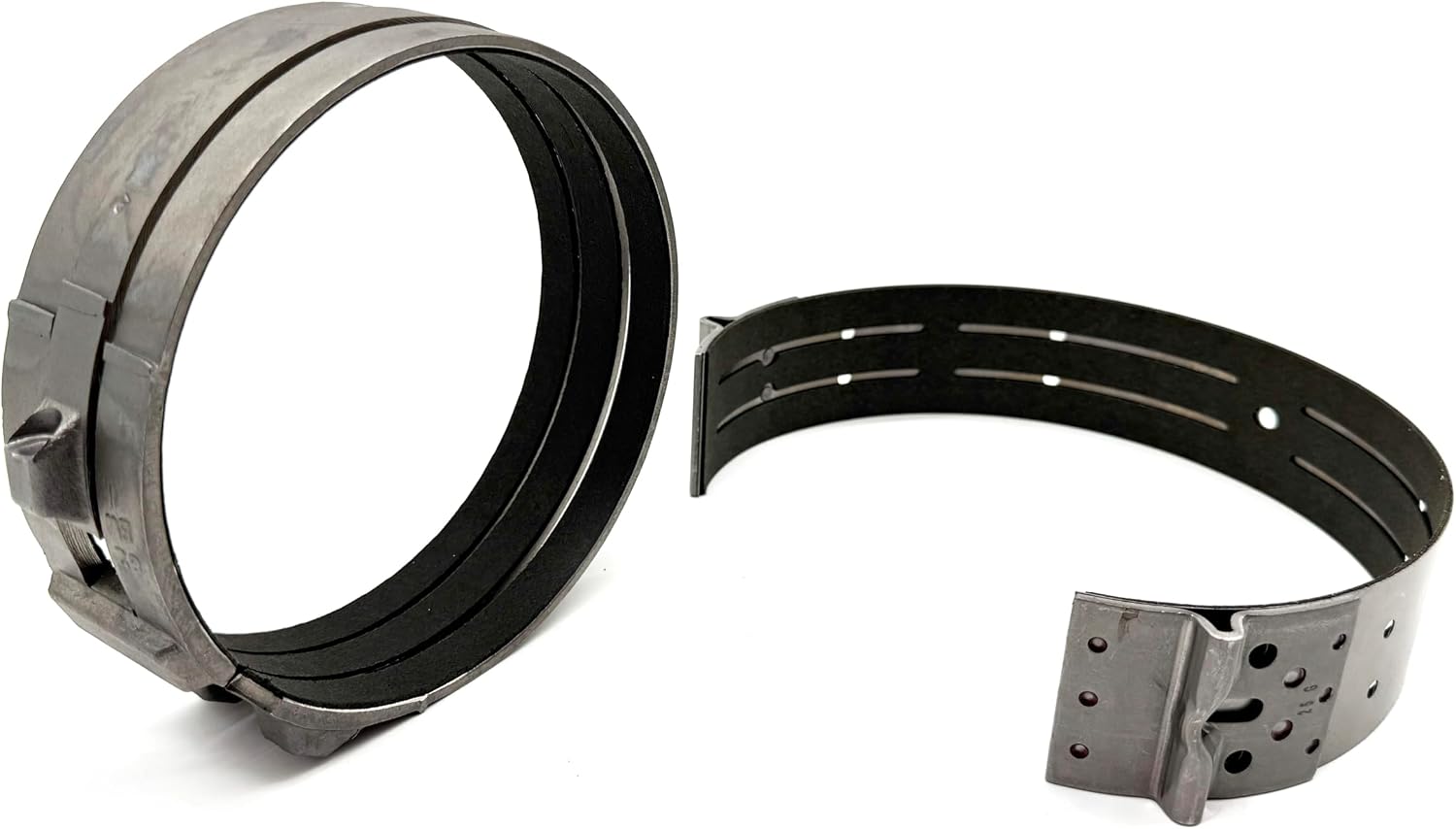
Overdrive band
If the band is coming out anyway, replace it with a quality band rather than reusing one that has been hot. A new band in a unit with a leaking servo circuit will burn just like the old one did, so do the regulator valve and servo pin first. The band is the victim, not the cause.
Shift kits: last, not first
A shift kit firms up shifts and shortens the time clutches and bands spend slipping during apply, which does help a towing unit. But it doesn't fix a worn regulator sleeve or a leaking servo bore. Install one only after the overdrive circuit is sealed, and choose a calibration meant for towing or daily driving, not a race kit that makes the truck unpleasant to drive with a trailer.
Sonnax Overdrive Servo Regulator Kit 76948-29K for the 4R70W
The drop-in valve and sleeve fix for the worn overdrive servo regulator that burns bands and drops 4th gear on 2001-and-later units.
View the servo regulator kit →Need something else? Browse all 4R70W parts at Core Transmission Parts.
How to Drive It With a Trailer
- Lock out overdrive when it hunts. If it keeps shifting between 3rd and 4th on grades, press O/D Off. Ford recommends it, and it also gives engine braking on downgrades [1]. On flat ground where it holds 4th without hunting, use overdrive for fuel economy [1].
- Watch TFT, not just engine temperature. Transmission temperature can climb well before the engine gauge moves.
- Check fluid after the first trip. Ford's guide says to stop after about 50 miles to recheck the hitch, lights and lug nuts [1]. Check transmission fluid level and smell while you're there.
Cooler kits, deep aluminum pans, bands, servo kits and master rebuild kits for the 4R70W, with checkout on our site.
Shop 4R70W parts →FAQ
Can a 4R70W handle towing?
Yes, within the rating Ford published for the specific truck, engine, axle ratio and equipment. Ford's 2003 towing guide only rated the F-150 for its highest trailer weights with payload groups that added a 14-plate or 22-plate auxiliary transmission cooler and an upgraded radiator. Stay inside the rating, add cooling, and lock out overdrive when it hunts on grades.
Should I tow in overdrive with a 4R70W?
Use overdrive on flat ground if the transmission holds 4th without hunting, since that gives the best fuel economy. If it keeps shifting between 3rd and 4th on hills, press O/D Off. Ford's towing guide recommends locking out overdrive in that situation, and it also gives you engine braking on downgrades.
Do I need an auxiliary transmission cooler for a 4R70W?
If the truck does not have the factory tow package, almost certainly. Ford's towing guide recommends a dealer-installed auxiliary transmission cooler for trips over 50 miles, towing in hilly terrain, or towing frequently. Plumb it in series after the radiator tank cooler and mount it where it gets clean airflow.
What temperature is too hot for a 4R70W?
Aim to keep fluid at or below about 200 degrees F. Gears Magazine notes that every 20 degrees above 200 cuts expected transmission life in half, so 220 degrees gives half the life and 240 degrees a quarter. If the TFT reading climbs past 220 on grades, slow down, lock out overdrive, or add cooling.
What upgrades stop a 4R70W from burning the overdrive band?
Fix the overdrive servo circuit. Sonnax traces burned overdrive bands and loss of 4th to wear in the overdrive servo regulator boost valve sleeve, repaired with kit 76948-29K, and to the servo pin wearing the case bore, repaired with the dual O-ring 76833E pin kit. Replace the band too, but the band is the victim, not the cause.
Sources
- Ford Motor Company — 2003 RV & Trailer Towing Guide, on the F-150 7700 Payload Group A (14-plate) and Group B (22-plate) auxiliary transmission oil coolers and 1.42 in. radiator, the dealer-installed auxiliary cooler recommendation for trips over 50 miles, hilly terrain or frequent towing, the Crown Victoria Class I 1,500 lb rating and 45 mph guidance, and locking out overdrive to stop excessive shifting. Ford 2003 RV & Trailer Towing Guide (PDF) (Internet Archive copy; the original host now blocks access)
- Ford / Motorcraft — Automatic Transmission Fluid Quick Reference Chart (US), listing MERCON V for the 4R70W/4R70E and 4R75W/E, and its caution against supplemental transmission fluid additives, treatments and cleaning agents. fcsdchemicalsandlubricants.com (ATF quick reference PDF)
- Gears Magazine (ATRA) — "48RE/68RFE/AS68RC Transmission Overheating" (Mike Brown), on the 200°F ideal maximum and life halving every 20°F above it, overloading as a common cause, radiator tank cooler dependence on engine cooling, and minimum cooler flow of about a gallon per minute. gearsmagazine.com
- Sonnax — Overdrive Servo Regulator Kit 76948-29K, on burned overdrive bands, loss of 4th and 4-3-Neutral shifts in 4R70E/4R70W/4R75E/4R75W units caused by overdrive servo regulator boost valve sleeve wear, and the vacuum test criteria. sonnax.com/parts/2402
- Sonnax — Overdrive Servo Pin Kit 76833E, on the O.D. servo pin wearing the case bore, resulting band drag and forward clutch overheating, the dual O-ring pin, and the optional preload washer for a firmer 3-4 shift. sonnax.com/parts/2379
- Transmission Digest — "Ford 4R70W: 3-Neutral Shift and Forward Clutches Burned" (October 2000 issue), on the missing rubber-coated overdrive servo sleeve and the complete servo assembly F3LY-7H188-A. transmissiondigest.com
- Ford Motor Company — 1994 Mustang Workshop Manual, Section 07-01 (AODE, the 4R70W's direct predecessor on the same case and cooler circuit) and Section 07-02 (Cooling), on the cooler flow check (0.5 L / 16 oz in 30 seconds at idle in Neutral, rear return vs front converter-out fittings), reverse backflushing of the cooler and lines for at least 5 minutes, and the warning that failure debris in the converter and cooler is a major cause of recurring transmission troubles. SRB71031, SRB71062, SRB72005