A 4R70W that won't go into overdrive usually comes in one of two flavors. Either it runs up to 3rd and stays there, engine turning an extra 800 or so rpm on the highway, or it tries to make the 3-4 shift and drops into neutral or flares until the driver lifts. Those sound like the same complaint on the repair order, but they live in completely different halves of the transmission. The first is usually an electrical or command problem. The second is almost always the overdrive band apply circuit.
This guide covers what the 4R70W needs to make 4th, how to tell a command problem from an apply problem in a few minutes with a scan tool, and the known hardware failures behind no-overdrive complaints: the overdrive servo snap ring, the servo regulator sleeve, the servo pin wearing its case bore, the missing servo sleeve after a rebuild, and worn solenoid regulator bores. The technical claims are tied to Sonnax, Raybestos Powertrain and Transmission Digest material listed at the bottom.
What the 4R70W needs to make 4th gear
The 4R70W is an electronically shifted descendant of the AOD. The PCM picks the gear with two on/off shift solenoids, SS1 (also called SSA) and SS2 (SSB), packaged together on the valve body and switched to ground by the PCM. Ratios are 2.84, 1.55, 1.00 and 0.70, so 4th is a true overdrive, and losing it costs you roughly 30 percent more engine rpm at cruise.
| Gear (OD range) | SS1 / SSA | SS2 / SSB | Holding members |
|---|---|---|---|
| 1st | On | Off | Forward clutch, planetary one-way clutch |
| 2nd | Off | Off | Forward clutch, intermediate clutch |
| 3rd | Off | On | Forward clutch, direct clutch |
| 4th | On | On | Direct clutch, overdrive band |
Two things have to happen on the 3-4 shift. Hydraulically, SS1 has to come back on while SS2 stays on, which strokes the 3-4 shift valve. Mechanically, the forward clutch releases and the overdrive band applies through the overdrive servo. If the command never happens, the unit stays in 3rd. If the command happens but the band doesn't hold, the forward clutch lets go with nothing taking its place, and you get neutral. That split is the whole diagnosis.
Step one: rule out the overdrive cancel switch
Start with the dash, not the pan. The overdrive cancel button on the shifter (Ford calls it the transmission control switch, TCS) is a momentary switch that asks the PCM to lock out 4th. When the PCM accepts that request, it lights the O/D OFF lamp (the transmission control indicator lamp, TCIL). An O/D OFF light that's on steady means 4th is being cancelled on purpose. A lamp that flashes means the PCM has logged a transmission fault, and on many calibrations it will limit shifting until the fault is repaired.
If the light is on steady and pressing the button doesn't clear it, check the switch and its circuit before anything else. A shorted switch or a chafed wire in the column can hold the request on permanently. Most scan tools show the TCS state as a PID; if it reads "on" without anyone touching the button, you've found your no-overdrive.
Step two: codes and PIDs tell you command vs. apply
Pull codes and then do a road test with the scan tool recording. The question you're answering is simple: is the PCM commanding 4th?
- Commanded gear / shift solenoid states: watch SS1 and SS2 on the 3-4. If the PCM never turns both on, the transmission isn't being asked for 4th, and the problem is an input or an electrical fault.
- Transmission fluid temperature (TFT): PCMs commonly hold off overdrive and converter lockup while the fluid is cold. A TFT sensor stuck reading cold, or an open circuit read as very cold, can keep the unit out of 4th indefinitely. Compare TFT to engine coolant temp after a drive; they should both be up to operating temperature.
- Vehicle speed / output shaft speed: the shift schedule is built on output speed. An erratic or missing speed signal throws off shift timing and can set codes that restrict shifting.
- Transmission range (TR) sensor: the PCM has to see the selector in overdrive. A misadjusted or failing TR sensor reading "3" or "D" instead of "OD" gives you exactly three gears.
Shift solenoid circuit codes point at wiring as often as at the solenoid. Transmission Digest documented a 4R70W that set multiple solenoid codes and started in a higher gear after its case connector and internal harness were replaced. The aftermarket connector had two terminals pushed back so they didn't make contact, one of them the 12-volt solenoid supply. Going back to Ford's hard wire frame (F8AZ-7G276-BA) and case connector (F8AZ-7G276-A) fixed it. If the unit has had recent electrical work, look there first, and do voltage-drop tests on the solenoid feed and the PCM ground side rather than trusting an ohmmeter alone.
If 4th is commanded but it stays in 3rd
When the PCM is clearly commanding both solenoids on and the ratio stays at 1.00, the 3-4 shift valve isn't moving. Three things cause that.
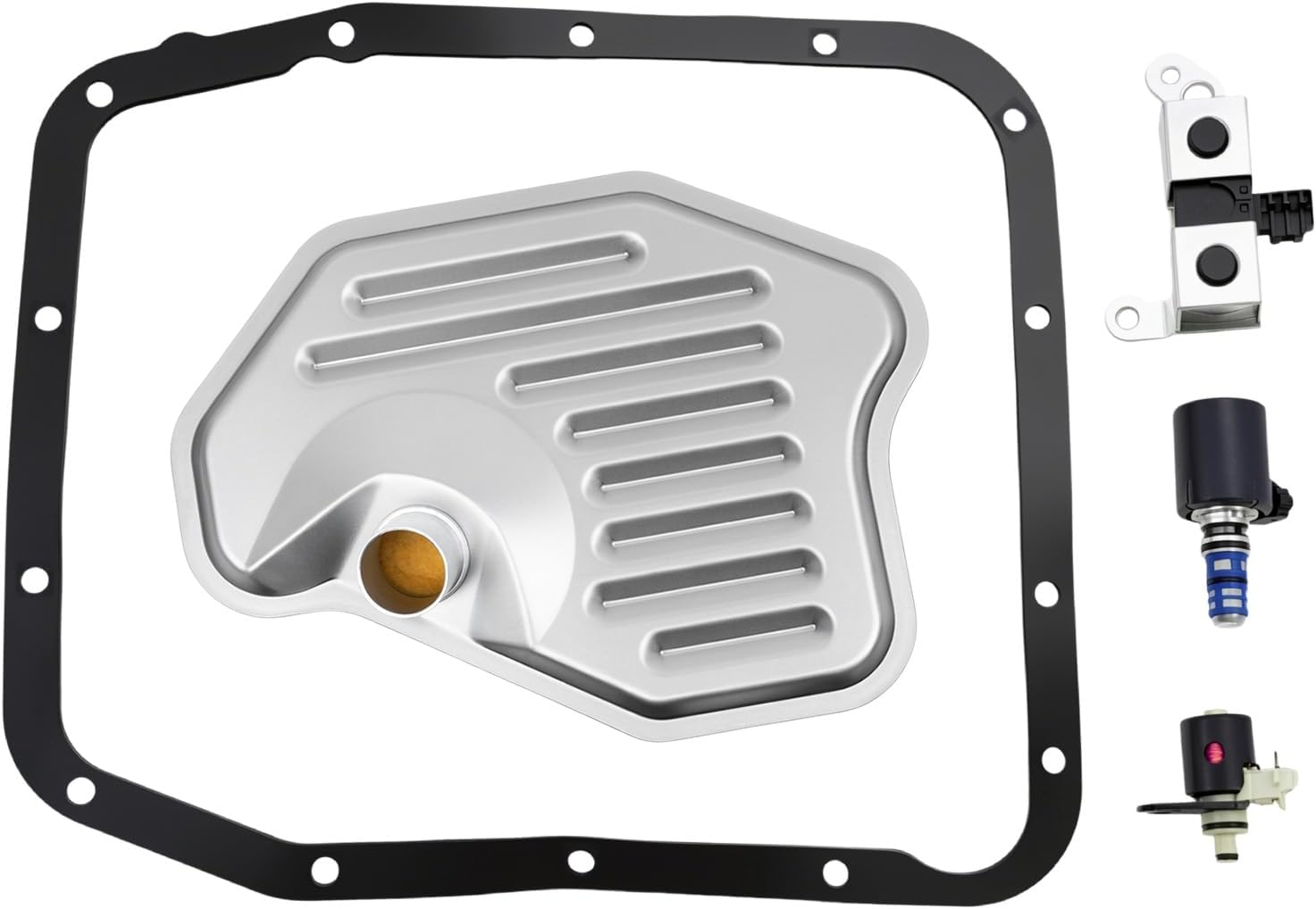
A shift solenoid that's electrically fine but mechanically not. A solenoid can pass a resistance check and still not exhaust or hold oil properly because of debris or internal wear. On a unit with a no-3-4 complaint and clean codes, a new shift solenoid pack is inexpensive insurance while the valve body is out.
Low solenoid feed pressure. The shift solenoids are fed by the solenoid regulator valve, and its bore wears. Sonnax lists the result as the valve sticking or reducing solenoid pressure, and the symptoms include erratic shifts, 2-3 neutral, neutral after 4th, no 2nd, and 3rd and reverse only. Weak solenoid pressure can't stroke the shift valves reliably, so you get missing or intermittent shifts that look electrical but aren't. Their 76948-14K kit uses a bore-sizing tool (76948-BST2) to ream the worn bore for a new valve, spring and O-ringed end plug.
A sticking 3-4 shift valve. Varnish and debris from a burned band or clutch pack can hang the 3-4 valve in its bore. Pull it, check it for free travel dry and wet, and look for scoring. A valve that's sticking because the unit has already burned something inside is a symptom, not the root cause, so find where the debris came from.
If it neutrals or flares on the 3-4 shift
This is the more common 4R70W no-overdrive complaint, and it tells you the command side is working. The forward clutch released on schedule and the overdrive band didn't pick up the load. A useful quick check: press the overdrive cancel button while it's in neutral. If the PCM drops back to 3rd and the forward clutch reapplies, you get drive back, which confirms the band side of the 3-4.
Broken overdrive servo snap ring
Raybestos Powertrain describes this one exactly: the unit neutrals on the 3-4 shift, the band doesn't apply, the forward clutch releases, and pushing the overdrive cancel button brings the gear back. The cause is a broken snap ring on the overdrive servo. Pieces of the ring break off and jam the servo regulator valve in the valve body, and in bad cases the servo cover can come out of its bore. Pull the pan and valve body and look for ring fragments. Raybestos warns that clearing the pieces isn't enough, because the rest of the ring can keep breaking. Replace the ring, and check the servo bore and cover for damage while you're there.
Worn overdrive servo regulator sleeve (2001 and later)
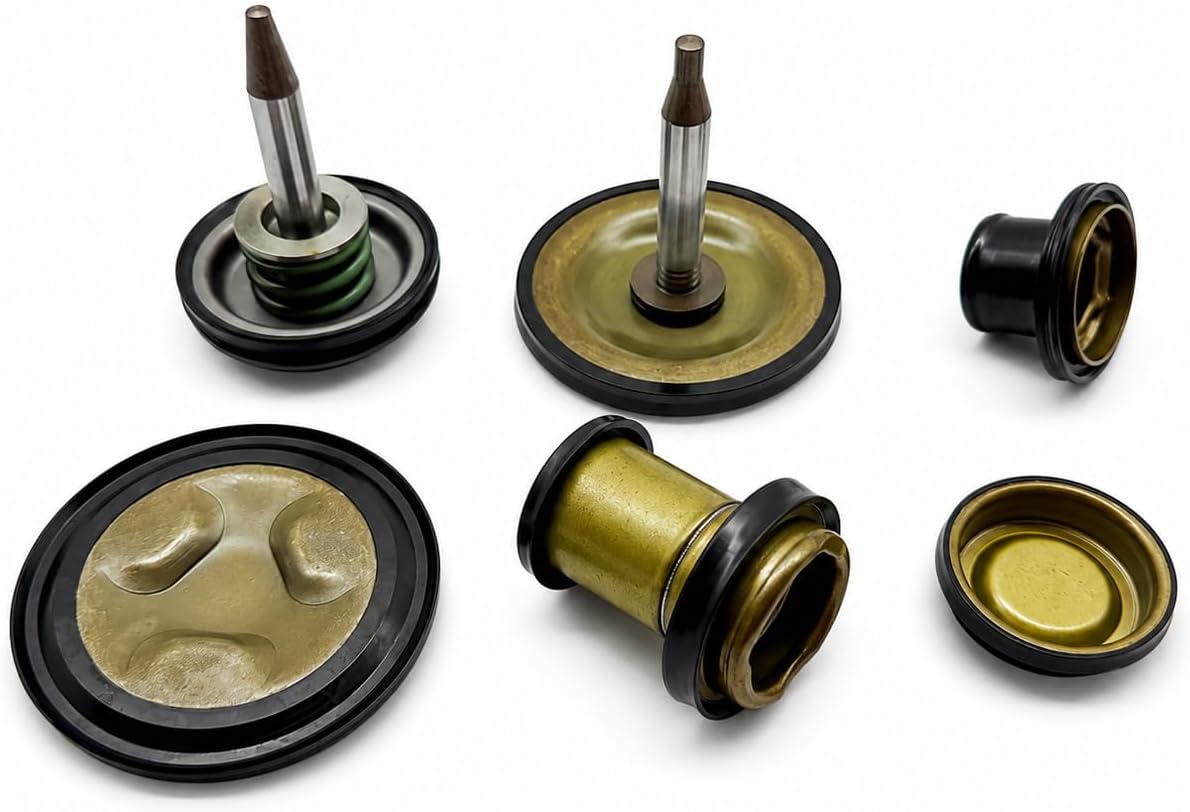
On 2001-and-later 4R70W, 4R70E, 4R75W and 4R75E units, Sonnax ties loss of 4th, a burned overdrive band and a 4-3-neutral pattern to wear at the inside diameter of the overdrive servo regulator boost valve sleeve. The valve oscillates constantly, wears the sleeve, and the worn sleeve leaks overdrive oil so the servo can't be regulated. The band slips, burns, and eventually won't hold at all. The fix is their 76948-29K kit, a hardcoat anodized valve with a new tight-tolerance sleeve; an oversized version (76948-59K) exists for bores worn past the standard kit. Vacuum test the port before you decide it's fine.
Overdrive servo pin wearing the case bore
The overdrive servo pin rides in a bore in the case, and over time it wears that bore. Sonnax explains why that matters: the oil that releases the servo, holding the band off, is forward clutch oil in 1st, 2nd and 3rd. When it leaks past a worn pin bore, the overdrive band can drag in the lower gears and the forward clutch runs hot. A band that has been dragging for thousands of miles gets burned enough that it won't hold in 4th, and you end up with the neutral condition. Their 76833E pin carries two O-rings that seal against the piston and the case bore, includes a washer to preload the spring for a firmer 3-4, and comes with a new retaining clip because the original is frequently lost.
Missing rubber-coated sleeve after an overhaul
If the no-overdrive showed up right after a rebuild, check this before anything else. Transmission Digest noted that the 4R70W is calibrated with a smaller-diameter overdrive servo piston than the AODE, and to keep a common case Ford added a rubber-coated sleeve to the 4R70W servo assembly. Leave it out, or install the AODE servo, and the result after overhaul is a 3-neutral upshift with burned forward clutches on teardown. The sleeve isn't sold separately; the correct complete 4R70W assembly is F3LY-7H188-A, not the AODE F2VY-7H188-A.
A burned band is a result
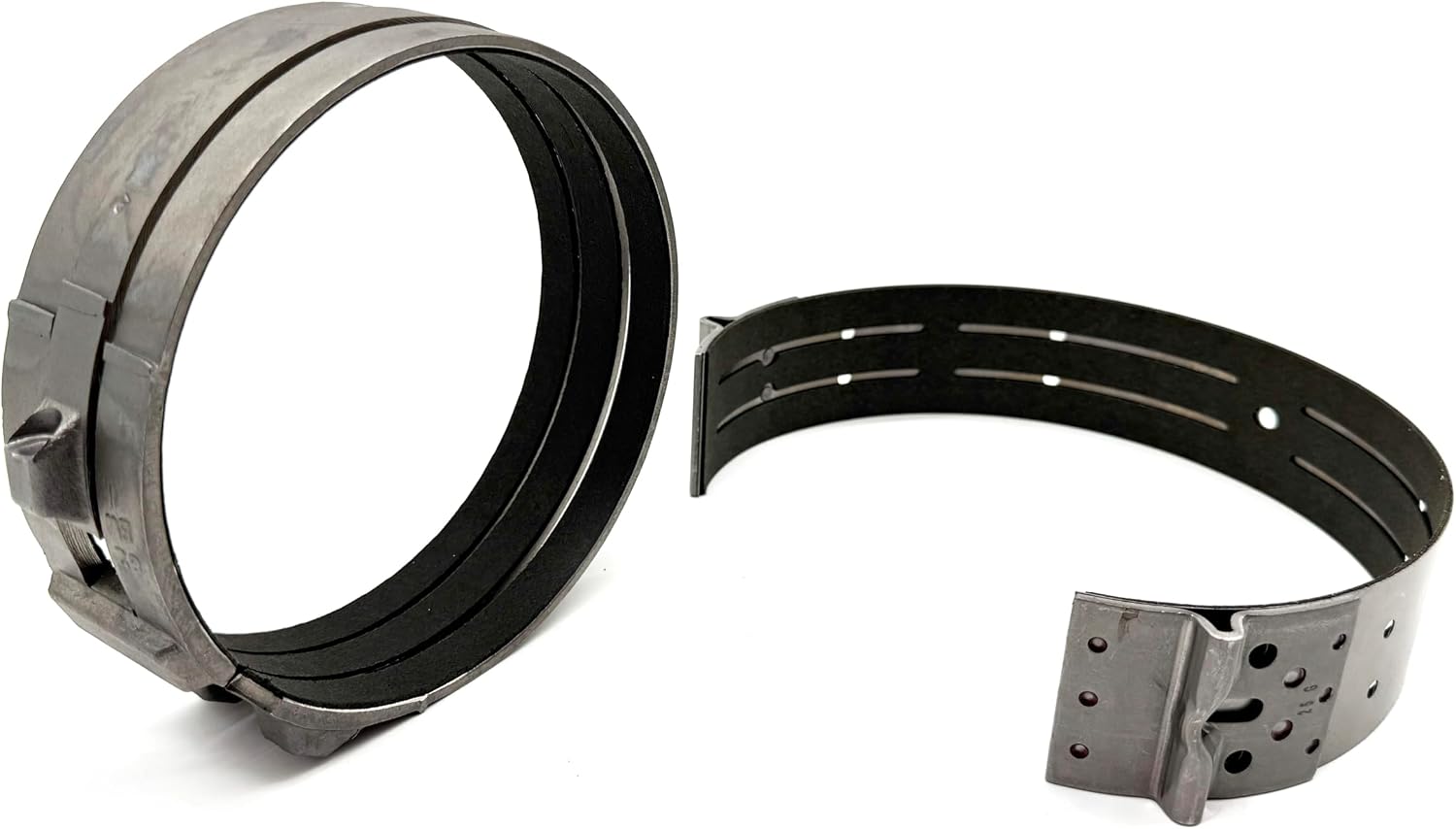
Every one of the band-side failures above ends with a burned overdrive band, and it's tempting to stop there. Don't. A new band on a unit with a worn servo regulator sleeve or a leaking servo pin bore will burn the same way, usually faster, because the new lining has less margin. The same goes for forward clutches burned by a leaking release circuit. When you find a burned band, write down which of these caused it and fix that too:
- Replace the overdrive servo snap ring and inspect the servo piston, cover and bore.
- Vacuum test the overdrive servo regulator and solenoid regulator bores; ream and oversize if they fail.
- Check the servo pin fit in the case bore and install the O-ringed pin if it's loose.
- Confirm the 4R70W servo assembly with the rubber-coated sleeve is in the case.
- Flush the cooler and lines. Band debris in the cooler goes straight back into a new valve body.
Fluid matters here too. The 4R70W runs MERCON V, and the level has to be checked hot. Low fluid can cause flares and slips in any gear, and the wrong fluid changes the band's friction behavior. Our 4R70W fluid type and capacity guide has the numbers and the hot-check procedure.
Quick diagnosis summary
| What you see | Most likely cause | Where to look |
|---|---|---|
| O/D OFF lamp on steady, won't clear | TCS switch or circuit | Shifter switch, TCS PID, column wiring |
| Stays in 3rd, 4th never commanded | Input fault: TFT, speed signal, TR sensor, stored code | Scan data and codes |
| 4th commanded, ratio stays 1.00 | Solenoid, low solenoid pressure, stuck 3-4 valve | Valve body, solenoid regulator bore |
| Neutral on 3-4, O/D cancel brings drive back | Overdrive band not applying | Servo snap ring, servo regulator sleeve, band |
| 3-neutral right after a rebuild | Wrong or incomplete servo assembly | Rubber-coated servo sleeve, F3LY-7H188-A |
Sonnax overdrive servo regulator kit (76948-29K) for the 4R70W
If your 2001-or-later 4R70W loses 4th, neutrals 4-3 or burns the overdrive band, the worn servo regulator sleeve is a prime suspect. This is the drop-in valve and sleeve that restores the circuit. Sold by our sister store, CoreTransmissionParts.
Shop the part for this fix →Need something else? The 4R70W parts collection has servo pins, servo pistons, overdrive bands, solenoid kits and full rebuild kits.
Need parts for this job?
Our 4R70W parts page carries shift solenoid kits, servo and accumulator piston kits, overdrive and reverse bands, valve bodies and master rebuild kits for F-150, Expedition, Crown Victoria, Mustang and Explorer units. Checkout is on site.
FAQ
Why won't my 4R70W shift into 4th gear?
Either the PCM is not commanding 4th or the overdrive band is not applying when it does. Check the O/D OFF light and the transmission control switch first, then watch commanded gear, TFT and the shift solenoid states on a scan tool. If 4th is commanded and the unit neutrals or flares, the problem is on the overdrive servo and band side.
Why does my 4R70W go into neutral when it shifts to overdrive?
On the 3-4 shift the forward clutch releases and the overdrive band has to apply. Raybestos Powertrain describes broken overdrive servo snap ring pieces jamming the servo regulator valve so the band never applies, and pressing the overdrive cancel button brings drive back. A worn overdrive servo regulator sleeve, which Sonnax documents on 2001 and later units, causes the same loss of 4th.
Can a bad sensor keep a 4R70W out of overdrive?
Yes. PCMs commonly hold off overdrive and converter lockup while the fluid is cold, so a TFT sensor or circuit reading cold can keep the unit in 3rd. A transmission range sensor that does not see the selector in overdrive, or a missing speed signal, can do the same. Check these on a scan tool before pulling the pan.
My 4R70W has no overdrive right after a rebuild. What went wrong?
Check the overdrive servo assembly. Transmission Digest noted that the 4R70W uses a smaller servo piston than the AODE with a rubber-coated sleeve to fit the common case, and leaving it out causes a 3-neutral upshift and burned forward clutches. The correct complete 4R70W assembly is Ford F3LY-7H188-A.
Related guides
- Ford 4R70W and 4R75W Transmission Problems
- 4R70W Shift Solenoid Symptoms
- 4R70W Slipping: Causes and Fix
- 4R70W P0730 Fix
- 4R70W Valve Body Problems and Testing
Sources
- Raybestos Powertrain, "4R70W Neutrals On 3-4 Shift (Overdrive Band Not Applying)." Backs the 3-4 neutral with forward clutch released and band not applied, recovery with the overdrive cancel button, the broken overdrive servo snap ring jamming the servo regulator valve, and the warning that the remaining ring can keep breaking. raybestospowertrain.com
- Sonnax, Overdrive Servo Regulator Kit 76948-29K. Backs loss of 4th, burned overdrive band and 4-3-neutral caused by servo regulator boost valve sleeve wear on 2001-and-later 4R70E/W and 4R75E/W units, the vacuum test recommendation, and the oversized 76948-59K option. sonnax.com
- Sonnax, Overdrive Servo Pin Kit 76833E. Backs the overdrive servo pin wearing the case bore, the release (forward clutch) oil leak causing band drag and forward clutch overheating, and the dual O-ring pin, preload washer and replacement clip. sonnax.com
- Sonnax, Solenoid Regulator Valve Kit 76948-14K. Backs solenoid regulator bore wear reducing shift solenoid pressure, the neutral-after-4th, 2-3 neutral, no 2nd and erratic shift symptoms, and the 76948-BST2 bore sizing tool. sonnax.com
- Transmission Digest, October 2000 issue (4R70W overdrive servo). Backs the smaller 4R70W servo piston, the rubber-coated sleeve required in the servo assembly, the 3-neutral upshift with burned forward clutches when it is missing, and assemblies F3LY-7H188-A (4R70W) vs F2VY-7H188-A (AODE). transmissiondigest.com
- Transmission Digest, "Ford 4R70W solenoid codes set." Backs the aftermarket case connector with pushed-back terminals (including the 12-volt solenoid supply) causing solenoid codes and wrong-gear starts, and the Ford F8AZ-7G276-BA frame and F8AZ-7G276-A connector fix. transmissiondigest.com