P0730 is not a part number. It is arithmetic. The PCM takes input speed, divides it by output speed, and compares the answer to the ratio it expects for the gear it just commanded. When the answer is wrong by more than the calibration allows, it stores "incorrect gear ratio" and, on most Ford applications, drops the transmission into a failure mode.
That distinction matters because P0730 does not name a component. It names a symptom the computer noticed. Every part in the apply path between the converter and the output shaft is a suspect, and so are the two sensors doing the measuring. On a 4R70W there are five or six specific places that cause it far more often than the rest, and most of them are cheaper than the rebuild people assume they need.
What the PCM is actually measuring
The ratio monitor needs two honest numbers. Output speed comes from the output shaft speed sensor on the case. Input speed comes from a turbine or input shaft speed sensor on applications that have one. Not every 4R70W does. Sonnax notes this directly in its forward drum coverage, listing the drum as compatible with both ISS-equipped and non ISS-equipped applications, which is a reminder that the input side of this calculation is not identical across the model run. On a unit without an input speed sensor, the PCM leans on engine speed and converter behavior to infer input shaft speed, which makes the ratio math looser and makes converter clutch condition part of the diagnosis.
The target numbers are what make this code diagnosable. The 4R70W, 4R70E, 4R75W and 4R75E all run a 2.84 first and a 1.55 second, third is direct at 1:1, and fourth is overdrive at roughly 0.70. Sonnax publishes the 2.84/1.55 pairing explicitly, because it sells its Smart-Tech direct clutch drum and shaft kit in two versions split along exactly that line: part 76656-01K for 2.84/1.55 units and 76656-02K for the older AODE 2.40/1.46 gearset.
So before you condemn anything, drive it with live data up and watch the calculated ratio in each gear. A ratio that sits at 2.84 and then sags toward 2.4 under throttle is a slipping holding member. A ratio that jumps to a wild number or goes to zero for an instant is a signal problem. Those are two completely different repairs, and the code is identical for both.
Read which gear failed, not just the code
P0730 is the generic bucket. Many Ford calibrations will also store gear-specific ratio codes, and if you have one, take it. It tells you which apply device to inspect. Failed ratio in first, second and third with fourth clean points hard at the forward clutch, because that member is applied in those three ranges. Failed ratio only in fourth points at the overdrive band and its servo. Failed ratio in third only points at the direct clutch. That single narrowing step saves more bench time on this unit than any tool you can buy.
Cause 1: fluid level and condition
Boring, and still the first thing to check. The 4R70W has no dipstick on some later applications and a hot-check procedure on the rest, and a unit that is a quart low will aerate and slip under load without ever leaving a puddle you can find. Check level at operating temperature on level ground with the engine running, exactly as the application specifies.
Ford spells the check out in its owner guides. The 2001 Explorer guide, for a 5.0L 4R70W truck, says to drive about 20 miles until the fluid reaches 150-170°F, park level, run the shifter through every range, then read the stick in Park with the engine running. It also warns that fluid above the safe range can cause shift and engagement concerns, and that a high reading can be caused by overheating. Overfill aerates the oil just like a low level does, and aerated oil slips clutches and sets ratio codes.
Use the right fluid. Ford's own automatic transmission fluid chart lists the 4R70W, 4R70E and 4R75W/E as MERCON V applications, sold as Motorcraft part number XT-5-QMC in quarts and XT-5-DMC in drums. MERCON V is a 7.5 cSt at 100°C fluid with a viscosity index of 205 and a pour point below -48°C per the Motorcraft product data sheet. MERCON LV is a different fluid for different transmissions and is not a substitute here.
One more line from that same Ford chart deserves quoting to every customer who shows up with a bottle in hand: it cautions against supplemental transmission fluid additives, treatments and cleaning agents, warning that they may affect transmission operation and damage internal components. A friction modifier does not seal a cross leak and it does not weld a cracked drum.
Cause 2: the 2001-and-later separator plate cross leak
This is the one that turns a good rebuild into a comeback, and it is the most under-diagnosed cause of ratio codes on late 4R70W and 4R75W units.
Sonnax technical author Gregg Nader documented the mechanism in detail. Through 2000, these valve bodies had a two-bolt stiffener plate located underneath the 2-3 accumulator whose job was to clamp the separator plate and lower gasket against the valve body casting. Beginning with 2001 models, Ford eliminated that stiffener plate, and the 2-3 accumulator retainer now sits directly on the separator plate. At the same time the capacity modulator valve and plug were deleted and the bore was cast closed, leaving an unused casting pocket in the same area.
The cracked separator plates everybody finds at teardown are not the real problem. They are the symptom. In these units the forward clutch is fed through the pump at the front and the direct clutch is fed through the output shaft at the rear, and the two circuits stay isolated except in one spot: the casting under the separator plate, below the 2-3 accumulator. With no mechanical clamping there, pressurized oil seeps into the unused passages and pushes the plate upward like a servo. Sonnax measured that plate bowing upward as much as .011 inch under normal forward pressure. Once it bows, forward clutch oil cross leaks into the direct clutch circuit.
Think about what that does to the ratio math. Forward is applied, direct starts to pick up, and now two members are fighting. The transmission is not in first, it is not in third, and the calculated ratio lands somewhere the PCM has no name for. The clutches drag and cook, and if you only replace the burned frictions and the cracked plate, the new set burns too.
The fix is mechanical, not cosmetic: clamp the plate and gasket to the valve body with a two-bolt plate the way the earlier units did. The bolt holes have to be drilled and tapped and the separator plate drilled, using the lower gasket to locate them. Sonnax retainer plate kit 76507F-01K contains the parts. If you have pre-2001 valve body cores on the shelf, the original two-bolt plate can be modified to fit.
Cause 3: the cracked forward clutch drum
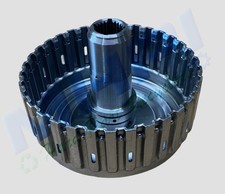
Sonnax lists ratio codes by name as one of the symptoms its Smart-Tech forward clutch drum addresses, alongside no forward, slipping gears and broken clutch drum. The failure is a crack in the drum at the snap ring groove, a high-stress area created during manufacturing. The drum is applied in first, second and third, and it takes the worst abuse on a forced 4-3 kickdown when it reapplies at higher pressure.
That gear pattern is your fingerprint. A drum cracking at the snap ring groove will slip in first, second and third while fourth stays clean, and depending on how far the crack has gone you get anything from a soft ratio error to no forward engagement at all. Sonnax's answer is a forged one-piece drum, part 76654-01K, with a higher capacity version 76655-01K offering 20 percent more clutch capacity.
4R70W Friction Clutch Kit, 1993-Up
If the ratio error traces back to burned forward or direct frictions, this is the clutch set to put back in. Fix the cross leak or the cracked drum first, or you will burn this one too.
View the 4R70W friction clutch kit →Need the whole unit covered instead? Browse the full 4R70W parts collection.
Cause 4: the direct clutch drum and stub shaft
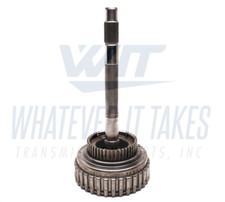
The direct clutch is the weak point of this unit, and its failure mode is progressive rather than sudden. The cast iron clutch hub wears and cracks, and the splines where the drum meets the stub shaft strip. As that wear accumulates, the direct input shaft migrates rearward until it contacts the front of the output shaft and blocks the lubrication feed orifice, which starves the planetary bushings and takes the gear set with it.
You will see this as a ratio error in third that gets worse, sometimes paired with bearing noise from the starved planetaries. Sonnax's replacement is a one-piece steel drum with an integrated stub shaft, kit 76656-01K, which eliminates the splines entirely, uses a shaft it describes as 50 percent thicker and twice as strong as the best 300M shafts, and holds 17 percent more clutch capacity by adding one extra OE-thickness friction. Sonnax also sells the heavy duty intermediate stub shaft alone as 76670A-01.
Cause 5: valve body bore wear, specifically the 2-3 shift valve
If the clutches and drums check out, the oil is not getting where it belongs. Sonnax's vacuum test guide for the AODE, 4R70E, 4R70W, 4R75E and 4R75W valve body lists the failure symptoms for each critical bore, and the 2-3 shift valve entry names gear ratio codes outright, along with wrong gear starts, erratic shift timing and oil leaks. That is a direct hit on this diagnosis. The 1-2 shift valve bore is listed for no second gear, and the 3-4 capacity modulator area is listed for 3-4 flare, slipping in manual low, delayed engagement and burnt bands and clutches.
One bore wear problem sets ratio codes without ever touching the shift valves. Wayne Colonna documented in Transmission Digest that AODE/4R70W pressure regulator bore wear can bleed EPC oil into the boost circuit, which returns to the pump inlet. When the unit is hot, EPC pressure stays near zero at any throttle opening, line pressure never rises, and the transmission slips at medium to full throttle. That slip is exactly what the PCM reads as an incorrect ratio. His quick test: pull the pan and filter, blow compressed air into the TV pressure port, and if air and fluid come out of the filter instead of only around the EPC solenoid, the bore is worn.
Vacuum testing is how you prove it without guessing. Cap the port, pull vacuum on the bore with the valve in its rest position, and a low reading tells you the bore is worn past sealing. It takes a few minutes per bore and it is the difference between replacing the right valve and replacing the whole valve body on faith.
And in fourth gear, look at the overdrive servo regulator
If the ratio error is confined to fourth, the overdrive band circuit is the place to start. Sonnax attributes burnt overdrive band, loss of fourth gear and a 4-3 neutral condition to wear at the inside diameter of the overdrive servo regulator boost valve sleeve, caused by constant oscillation. That wear lets overdrive oil leak away so the servo never regulates properly. The drop-in fix for 2001-and-later units is Sonnax kit 76948-29K.
Before you replace parts for a fourth-gear ratio code, also drop the valve body and look at the overdrive servo snap ring. Raybestos documented a 4R70W that went to neutral on the 3-4 shift and came back with overdrive cancel. The servo snap ring had broken, and a fragment had passed through an opening below the servo piston and jammed the servo regulator valve. Removing the fragment fixed it, with a warning that the rest of the ring could break up later.
The gearset mismatch that makes P0730 permanent
Save yourself a second teardown by checking this before you close the case. The 4R70W family runs 2.84/1.55. The AODE that came before it runs 2.40/1.46. Sonnax splits its direct drum and shaft kits along that line, 76656-01K versus 76656-02K, and it does the same with the forward sun gear: 76612A-01 is a 31-tooth gear for 2.84/1.55 sets, and 76612A-12 is a 30-tooth gear for 2.40/1.46 sets.
If an AODE carrier or the wrong sun gear ends up in a 4R70W under a PCM calibrated for 2.84/1.55, the unit will shift crisply and hold every clutch perfectly, and the calculated ratio will still be wrong in every gear. The code comes back the day you deliver it. Count the teeth and verify the carrier before assembly, especially on any unit built from mixed cores.
The order I work it
- Pull all codes, not just P0730. A gear-specific ratio code or a companion speed sensor code changes everything that follows.
- Check fluid level hot and look at the fluid. Brown and burnt means you already know clutch material is in it.
- Drive it on live data. Log input speed, output speed, calculated ratio and commanded gear. Decide whether the ratio sags under load or spikes and drops out.
- If it spikes or drops out, inspect the output shaft speed sensor, its connector and its tone ring before touching the pan.
- If it sags under load, note which gears fail and match that to the apply chart: first, second and third means forward clutch; third alone means direct; fourth alone means the overdrive band and servo.
- Drop the pan and pull the valve body. On a 2001-and-later unit, look at the separator plate under the 2-3 accumulator and at the gasket imprint in that area. Cross leak evidence there explains dragging clutches on its own.
- Vacuum test the bores per the Sonnax layout before deciding the valve body is good.
- On teardown, verify the gearset ratio matches the calibration.
Need parts for this job?
Frictions, steels, servo kits, valve body components, filters and full rebuild kits for the 4R70W and 4R75W, in stock and shipped from the USA.
Shop 4R70W transmission parts →Shop the part for this fix
Clutch kits, drums, servo components and valve body parts for the 4R70W, matched by year and application.
Browse 4R70W parts at CoreTransmissionParts →FAQ
What does P0730 mean on a Ford 4R70W?
P0730 means the PCM compared input speed to output speed, divided one by the other, and got a number that does not match any gear it believes the transmission should be in. It is a math result, not a component fault. On a 4R70W that number is normally 2.84 in first and 1.55 in second, so a reading that lands between the steps tells you a clutch or band is slipping rather than holding.
Can a bad speed sensor cause P0730 on a 4R70W?
Yes, and it is worth ruling out before you pull the pan. The ratio calculation only works if both speed signals are honest, so a dropout in the output shaft speed sensor or the input speed sensor skews the math and sets a ratio code on a transmission that is holding fine. The tell is that a sensor fault usually produces a signal that flickers or goes to zero, while a slipping clutch produces a ratio that drifts smoothly away from the target under load. Not every 4R70W application even has an input speed sensor, which changes how the PCM derives the ratio.
Why does a 2001 or later 4R70W set P0730 after a rebuild?
Look at the separator plate first. Sonnax documents that Ford deleted the two-bolt valve body stiffener plate starting with 2001 models, which leaves the gasket and separator plate unclamped in the area under the 2-3 accumulator. Sonnax measured the plate bowing upward as much as .011 inch under normal forward pressure, which lets forward clutch oil cross leak into the direct clutch circuit. Two clutches applied at once means dragging clutches and a ratio the PCM never expects.
What fluid does a 4R70W take for a P0730 repair?
MERCON V. Ford's own automatic transmission fluid chart lists the 4R70W, 4R70E and 4R75W/E as MERCON V applications, sold as part number XT-5-QMC in quarts. The same chart carries an explicit caution against supplemental transmission fluid additives, treatments and cleaning agents, because they can affect transmission operation and damage internal components. No bottle of slip stop fixes a cross leak or a cracked drum.
Can the wrong gearset cause a permanent P0730?
It can, and this catches people who mix cores. The 4R70W, 4R70E, 4R75W and 4R75E use a 2.84/1.55 gearset, while the earlier AODE uses 2.40/1.46. Sonnax sells its direct clutch drum and shaft kit in two versions specifically to cover those two ratio families. If an AODE carrier or sun gear ends up in a 4R70W case, the transmission will shift and hold correctly but the calculated ratio will never match what the PCM expects, so the code returns no matter how many clutches you replace.
Related guides
- Gear Ratio Codes: How to Diagnose P0730 Across Transmissions
- 4R70W P0715: Input Shaft Speed Sensor Causes and Fix
- 4R70W P0720: Output Shaft Speed Sensor Causes and Fix
- 4R70W Valve Body Problems and How to Test Them
- Ford 4R70W and 4R75W Transmission Problems
Sources
- Sonnax — "4R70W, 4R75W 2001-Later Forward & Direct Clutch Problems: The Easy Valve Body Fix" by Gregg Nader. Backs the deleted two-bolt stiffener plate on 2001-later units, the unclamped separator plate under the 2-3 accumulator, the measured .011 inch plate bow under normal forward pressure, the forward-to-direct cross leak, and retainer plate kit 76507F-01K. sonnax.com
- Sonnax — "Stop 4R70W Forward Drum Failure with a Sonnax Smart-Tech Drum." Backs the forward drum cracking at the snap ring groove, the drum being applied in first, second and third, the forced 4-3 kickdown stress, ratio codes as a listed symptom, ISS and non-ISS compatibility, and parts 76654-01K and 76655-01K. sonnax.com
- Sonnax — "Stop Chasing AODE, 4R70W Direct Clutch Drum Problems." Backs the stripped drum splines and broken stub shaft, the 50 percent thicker shaft, the 17 percent clutch capacity increase, the 2.84/1.55 versus 2.40/1.46 gearset split (kits 76656-01K and 76656-02K), stub shaft 76670A-01, and sun gears 76612A-01 and 76612A-12. sonnax.com
- Sonnax — "Ford 4R70E, 4R70W, 4R75E, 4R75W, AODE Vacuum Test Guide." Backs the valve body critical wear areas and their symptoms, including gear ratio codes at the 2-3 shift valve, no second at the 1-2 shift valve, and the 3-4 capacity modulator symptom list. sonnax.com
- Sonnax — Overdrive Servo Regulator Kit 76948-29K product and tech page. Backs the overdrive servo regulator boost valve sleeve inside-diameter wear from constant oscillation, and its link to burnt overdrive band, no fourth gear and 4-3 neutral on 2001-later units. sonnax.com
- Ford Motor Company / Motorcraft — Automatic Transmission Fluid Chart (FCSD Chemicals and Lubricants, Version 20, published 10/2025) and the Motorcraft MERCON V Product Data Sheet. Back MERCON V as the 4R70W / 4R70E / 4R75W/E service fluid, part numbers XT-5-QMC and XT-5-DMC, the caution against supplemental additives, treatments and cleaning agents, and the fluid specifications (7.5 cSt at 100°C, 33.2 cSt at 40°C, viscosity index 205, pour point below -48°C). ATF chart (PDF) • MERCON V data sheet (PDF)
- Transmission Digest — Wayne Colonna, "I Lost My EPC!" (Technically Speaking, April 1, 2004). Backs pressure regulator bore wear bleeding EPC oil into the boost circuit that returns to the pump inlet, EPC near zero when hot, no line rise, medium- to full-throttle slip, and the compressed-air test at the TV port. transmissiondigest.com
- Raybestos Powertrain — "4R70W Neutrals On 3-4 Shift (Overdrive Band Not Applying)." Backs the 3-4 neutral that recovers with overdrive cancel, the broken overdrive servo snap ring, and the fragment jamming the servo regulator valve. raybestospowertrain.com
- Ford Motor Company — 2001 Explorer Owner Guide (5.0L 4R70W). Backs the hot fluid check procedure (about 20 miles, 150-170°F, through all ranges, read in Park running) and the warning that overfill can cause shift and engagement concerns. Internet Archive copy, since Ford's host blocks direct access. web.archive.org (PDF)