From 1997 through the 2004 Heritage trucks, the 4R70W was the automatic behind the F-150's 4.2L V6 and the 4.6L and 5.4L V8s. That covers a lot of trucks that are now 20 to 29 years old. Most are on their second or third owner, and plenty have been rebuilt at least once, sometimes badly. Our 4R70W and 4R75W problems guide covers the transmission in every vehicle it went into. This one sticks to the F-150 and runs in the order the truck usually arrives at the shop: wiring and driveline faults that look like transmission failures come first, then the hydraulic and hard-parts problems that really are inside the case.
Before you diagnose anything, get the model year and the build date off the door tag. On this transmission the big dividing line is the 2001 model year. That is when Ford changed the valve body in a way that still shapes how these units fail. Every bulletin and technical article cited below is linked in the Sources section at the bottom.
Quick map: F-150 4R70W problems by symptom
| Symptom | Most likely cause | Years most affected |
|---|---|---|
| Barely moves, several solenoid codes at once | No power feed to the transmission (harness, connector, power circuit) | All |
| Rear seal leak, vibration at highway speed | Extension housing bushing or seal spinning or walking out | 1997-2000 4x2, 139-in. wheelbase |
| Bind-up, burned direct clutch, cracked separator plate | Forward-to-direct cross leak under the 2-3 accumulator | 2001 and later |
| 4-3-neutral, no 4th, burned overdrive band | Worn overdrive servo regulator sleeve | 2001 and later valve bodies |
| Soft shifts and slipping under load, low line rise | Worn pressure regulator valve and bore | High mileage, all years |
| Grinding, metal in the pan, sudden total failure | Rear planetary carrier bushing and captured needle bearing | Worst on 2004-2008 units |
Rule out the "not the transmission" failures first
The most expensive F-150 4R70W mistake is installing a good transmission into a truck that has a wiring fault. Transmission Digest ran a case on exactly this: a 1998 F-150 4x4 with the 4.6L. The fluid in the original unit was black, burned and full of metal, so the shop replaced the transmission. The replacement did the same thing. Nobody had pulled codes before tearing it out.
When the diagnostician scanned it, every stored code was a solenoid code. On this transmission, a full set of solenoid codes at the same time almost always means the transmission has lost its power feed, not that four solenoids failed together. In that case there was no voltage on pin 4 (the red wire) at the transmission connector. PCM power at pins 71 and 37 was good, and so was the transmission power supply at pin 87. The cause turned out to be a broken plastic retaining clip. It let the harness drop onto the exhaust, which melted a silver-dollar-size section of several wires into one glob.
Two lessons from that one carry over to every F-150 that comes in with a no-move or a "same problem after replacement" complaint:
- Codes before wrenches. Pull codes and freeze frame before the old unit comes out, even when the fluid looks terminal. A burned transmission can be a victim of an electrical fault, not the cause.
- Inspect the harness while the transmission is out. Look for broken routing clips and heat damage where the harness runs near the exhaust. The repair is far easier with the transmission on the floor than with the truck trying to eat your hands from above.
1997-2000 4x2 trucks: rear seal leak and driveline vibration
The second classic F-150 fault that gets blamed on the transmission is a leak at the rear seal combined with a vibration at highway speed. Per the Ford service information summarized in Transmission Digest (October 2001), this affects some 1997-2000 F-150 and F-250 light-duty 4x2 trucks with the 139-inch wheelbase. The cause is the extension housing bushing or seal spinning or walking out of the housing because the long one-piece driveshaft flexes during extended high-speed driving.
The fix is to inspect the extension housing bushing and seal. If either has spun, repair or replace the extension housing (F3LY-7A039-A) and gasket (F6AZ-7086-A). Some trucks also need the revised 127 mm (5-inch) diameter driveshaft. The bulletin lists 1L3Z-4602-BB for the 5.4L with the 9.75-inch axle, 1L3Z-4602-CA for the 5.4L/4.6L with the 10.25-inch axle, and F85Z-4602-BB for the 4.6L/4.2L with the 8.8-inch axle. On trucks built after 4/1/1998, the index paint marks on the output shaft yoke, the driveshaft tube and the rear axle flange must line up when you reassemble. If you replace only the seal on one of these trucks, expect it to come back.
The 2001-and-later cross leak (the big one)
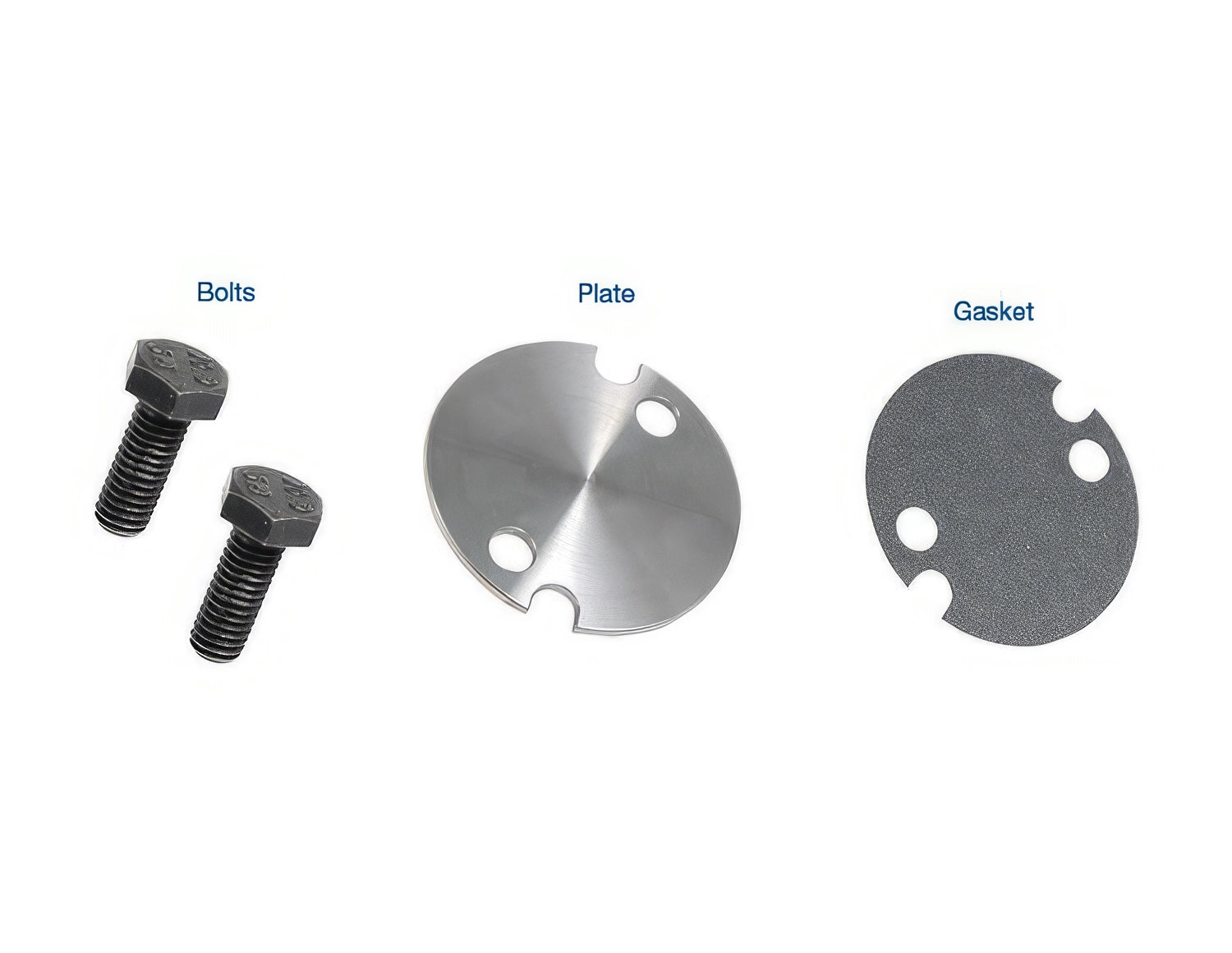
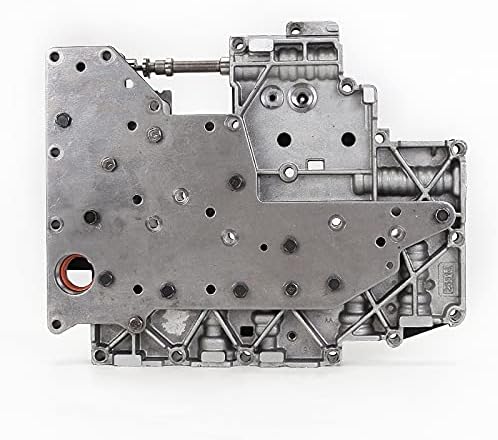
If your F-150 is a 2001 or newer and it has burned clutches, read this section before you order a rebuild kit. Sonnax technical specialist Gregg Nader documented the change. Through the 2000 model year, the valve body had a two-bolt stiffener plate under the 2-3 accumulator. That plate clamped the separator plate and lower gasket tight against the valve body casting. Starting with the 2001 models, Ford deleted the stiffener plate and the capacity modulator valve, and cast that valve bore closed. The 2-3 accumulator retainer now sits directly on the separator plate.
The forward clutch is fed from the pump at the front of the unit, and the direct clutch is fed through the output shaft at the rear. The two circuits stay separate except in one spot: the casting under the separator plate, right below the 2-3 accumulator. Without the clamping plate, forward clutch oil pushes up on the separator plate the way oil pushes on a servo. Nader measured the plate bowing upward as much as .011 in. under normal forward pressure. Forward oil then cross-leaks into the direct circuit, and the direct clutch drags.
What you see on the bench is a cracked separator plate near the 2-3 accumulator. Most people blame the cracks on the accumulator retainer hammering the plate. Sonnax's point is that the cracks are only a symptom. The damage that matters is a direct clutch that has been partially applied in 1st and 2nd for thousands of miles. In the truck, that shows up as a bind-up feel, a burned direct clutch pack, and a rebuild that fails again at the same spot if the valve body goes back together stock.
The fix: mechanically clamp the separator plate again. You can drill and tap the valve body and install a two-bolt plate from an early core, using the lower gasket to locate the holes. Or you can install the Sonnax valve body retainer plate kit, 76507F-01K, which includes everything. On any 2001 and later F-150 4R70W that is open for clutch work, this is not optional.
Overdrive problems: 4-3-neutral, no 4th, burned band
F-150s tow and haul, and that hits the overdrive band and its apply circuit hard. Sonnax lists the symptoms for its overdrive servo regulator kit, 76948-29K (fits 2001 and later units): a 4-3-neutral shift pattern, loss of 4th gear, and a burned overdrive band. The cause is wear on the inside diameter of the overdrive servo regulator boost valve sleeve. The valve oscillates constantly, wears the sleeve, and the leak lets overdrive servo oil escape so the servo is not properly regulated.
Here is the trap. A new overdrive band in a rebuild kit fixes the symptom for a while. If the regulator sleeve is still leaking, the new band burns the same way. When a truck comes in with no 4th or a band that is glazed and black, the valve body work needs to be part of the job. Also check the overdrive servo pin and its bore in the case for side-to-side play while the unit is apart.
Pressure regulator wear: soft, slipping shifts under load
A high-mileage F-150 that slips on hard throttle or with a trailer, shifts soft, and has no codes often has low line pressure from a worn pressure regulator valve. Sonnax's Brian Wing notes that the PR valve in the AODE, 4R70W, 4R75W and the E versions commonly wears badly. Scoring shows up on the EPC end of the valve, and the result is reduced line pressure or poor line rise when EPC commands more pressure.
Replacing just the valve usually does not fix it, because a valve worn that badly has usually worn the bore too. Vacuum test the bore. Sonnax describes a simple tool made from an old reverse boost sleeve with a hole drilled through the end. A bore that will not hold vacuum gets reamed and fitted with an oversize valve.
Confirm it in the truck before you pull the pan. Put a pressure gauge on the line pressure tap, then watch the scan tool's EPC desired pressure alongside actual line pressure as you load the engine. If EPC commands a rise and the gauge does not follow, the regulator circuit is the problem, not the clutches.
Hard-parts failure: the rear planetary carrier
The last common problem is the one that ends with a pan full of metal. In Transmission Digest, Beau Hansen of ETE Reman explains that the 4R70W's Ravigneaux carrier is heavy and supported by a bushing at each end. The smaller bushing, in the snout that splines into the direct clutch hub, wears under that weight. That puts extra load on the carrier's captured needle bearing. Eventually the bearing's outer collar retainer splits or the top race cracks. The pieces then get into the pinion gears and destroy the gear set.
Hansen says the failures cluster in 2004-2008 vehicles. In 2009, Ford deepened the bearing pocket and used a thicker .215 in. bearing. For 1993-2008 carriers caught before the gears are damaged, the bearing is very close to the .199 in. bearing in the 1999-and-later 4L60E front planetary, which Sonnax sells as 77747-01. You knock out two short pinions to reach it, then tack-weld the pinion pins at reassembly. Inspect every carrier you reuse: look for a split collar, check every long and short pinion for drag, and check the bearing pocket.
How I triage an F-150 4R70W
- Codes and freeze frame first. Several solenoid codes at once means check power at the transmission connector before anything else.
- Fluid check, hot and level. Note the color, smell and whether there is metal on the pan magnet. Mercon V only. Ford's own fluid information says Motorcraft MERCON V is the fluid for vehicles that call for MERCON V or MERCON.
- Look underneath. On 1997-2000 4x2 long-wheelbase trucks, check the rear seal, the extension housing bushing and the driveshaft index marks.
- Road test with data. Log TSS, OSS, commanded gear, EPC and TFT. A ratio that does not match the gear commanded tells you which clutch or band is slipping. Watch for 4-3-neutral behavior and a missing 4th.
- Line pressure gauge. Confirm line rise follows EPC before condemning clutches.
- If it comes apart: on 2001 and later units, the retainer plate fix goes in no matter what. Install the overdrive servo regulator sleeve, vacuum test the PR bore, and inspect the rear carrier bearing.
Preventing a repeat failure
Most F-150 4R70W failures we see are heat failures that started as one of the problems above. Keep the fluid fresh and at the right level, and do not mix in fluids that are not approved for Mercon V. Motorcraft's own data says not to use MERCON V where MERCON LV, ULV, SP or Type F is specified, and the reverse is just as true. Run a large auxiliary cooler if the truck tows. Lock out overdrive when towing heavy in hills, so the overdrive band and servo are not cycling all day. And when the unit is open, fix the valve body issues that wear out new clutches.
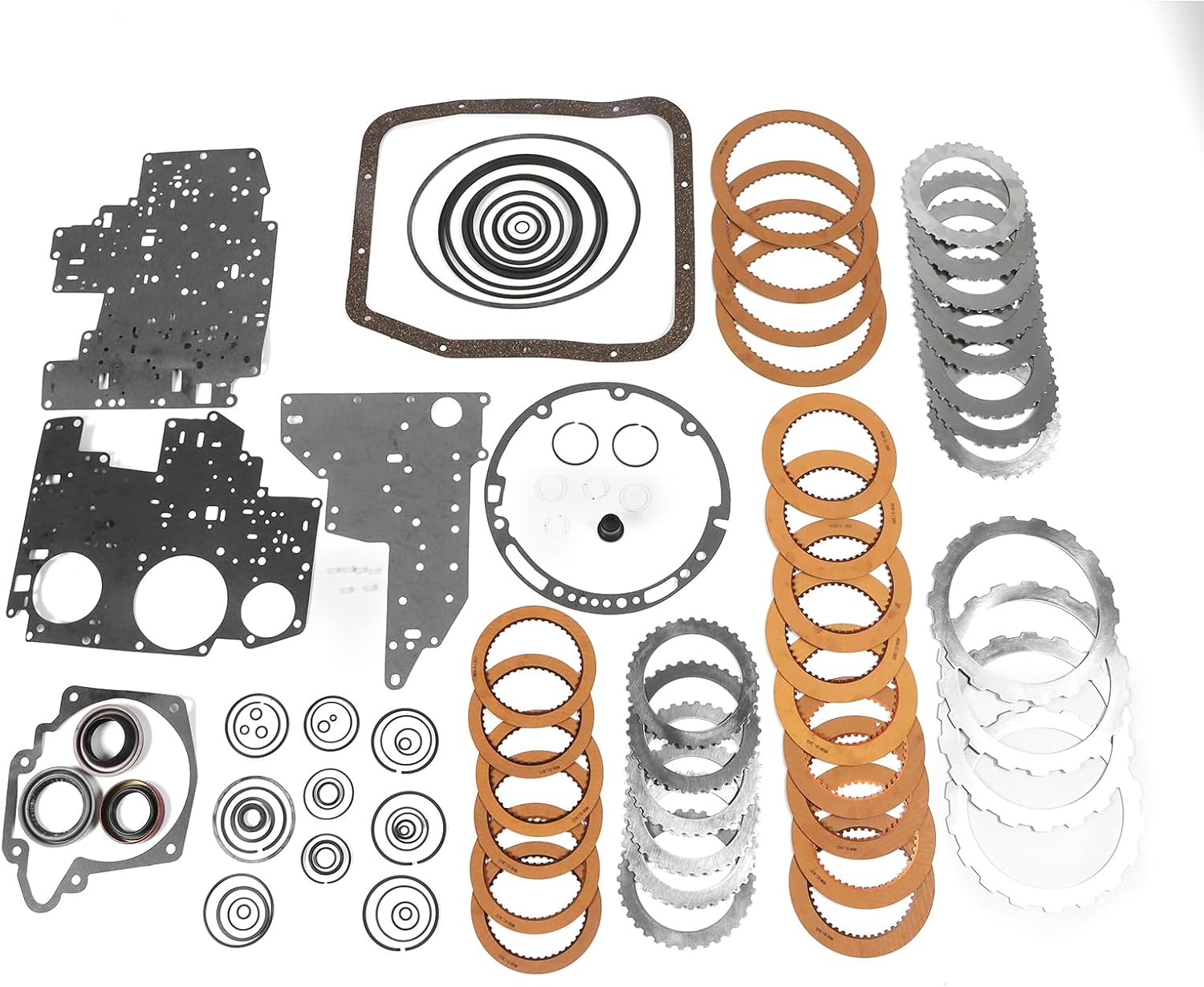
4R70W master rebuild kit for the F-150
When the direct clutch or overdrive band is already burned, this kit covers the frictions, seals and gaskets for the rebuild. Pair it with the valve body fixes above so the new clutches last. Sold by our sister store, CoreTransmissionParts.
Shop the part for this fix →Need servos, solenoids or a different year kit? The 4R70W parts collection has the full range.
Need parts for this job?
F-150 4R70W master rebuild kits, valve bodies, the Sonnax retainer plate kit, servo kits, solenoid kits and filter kits are all on our 4R70W parts page, with checkout on site.
FAQ
What are the most common 4R70W problems in an F-150?
On 2001 and later trucks the biggest one is a forward-to-direct clutch cross leak under the 2-3 accumulator, which burns the direct clutch and cracks the separator plate. Close behind are overdrive servo regulator wear (4-3-neutral, no 4th, burned overdrive band), pressure regulator valve wear that causes soft, slipping shifts, and rear planetary carrier bearing failures. A lot of trucks also come in with wiring or rear seal problems that get blamed on the transmission.
Why does my F-150 4R70W barely move and show several solenoid codes?
When every solenoid sets a code at the same time, the transmission has usually lost its power feed, not four solenoids at once. Check for voltage at the transmission connector, then trace the harness back toward the PCM. Transmission Digest documented a 1998 F-150 where a broken harness clip let the wiring melt on the exhaust, and a replacement transmission did the same thing as the old one.
What fluid does a 4R70W F-150 take?
Mercon V. Ford's Motorcraft data recommends MERCON V for vehicles that call for MERCON V or MERCON, and says not to use it where MERCON LV, ULV, SP or Type F is specified. Use a fluid that is actually approved for Mercon V, not a generic multi-vehicle fluid with no Ford approval.
Should I install the Sonnax retainer plate kit when rebuilding a 2001 or later F-150 4R70W?
Yes. Starting in 2001, Ford removed the two-bolt stiffener plate that clamped the separator plate under the 2-3 accumulator, and Sonnax measured the plate bowing up to .011 in. under forward pressure. The retainer plate kit, 76507F-01K, clamps it again so forward oil cannot leak into the direct clutch circuit. Without it, a new direct clutch pack can burn up the same way.
Related guides
- Ford 4R70W and 4R75W Problems: Cross-Leaks, Servo Bore Wear and Fixes
- 4R70W Slipping: Causes and Fix
- 4R70W Won't Shift Into Overdrive
- 4R70W Fluid Type and Capacity
- 4R70W vs 4R75W Differences
Sources
- Transmission Digest — Carman Klaber, "It's Not Just the Transmission," R&R Tech, February 2010. Backs the 1998 F-150 4x4 4.6L 4R70W case: a replacement unit with the same symptom, all solenoid codes, no power at pin 4 (red wire) at the transmission connector, PCM pins 71, 37 and 87, and the broken harness clip that let the harness melt on the exhaust. transmissiondigest.com
- Transmission Digest — October 2001 issue summary of Ford service information for 1997-2000 F-150/F-250 trucks. Backs the 4x2 139-inch wheelbase rear seal leak and vibration, the spun extension housing bushing cause, the revised 127 mm driveshaft, the 4/1/1998 index mark alignment, and part numbers 1L3Z-4602-BB, 1L3Z-4602-CA, F85Z-4602-BB, F3LY-7A039-A and F6AZ-7086-A. transmissiondigest.com
- Sonnax — Gregg Nader, "4R70W, 4R75W 2001-Later Forward & Direct Clutch Problems: The Easy Valve Body Fix." Backs the deleted two-bolt stiffener plate and capacity modulator valve, the forward and direct feed paths, the .011 in. separator plate bow, the cross leak and dragging direct clutch, and retainer plate kit 76507F-01K. sonnax.com
- Sonnax — Overdrive Servo Regulator Kit 76948-29K product technical page, and Brian Wing, "Watch Out for 4R70W Pressure Regulator Valve & Casting Wear." Back the 4-3-neutral, no 4th and burned overdrive band symptoms, the boost valve sleeve wear cause, the 2001-later fitment, the EPC-end PR valve scoring, low line rise, and the vacuum test and oversize valve repair. 76948-29K · PR valve wear
- Transmission Digest — Beau Hansen (ETE Reman), "An Inexpensive Fix for the 4R70W," December 2019. Backs the Ravigneaux carrier bushing wear, the split captured needle bearing failure, the 2004-2008 failure cluster, the 2009 .215 in. bearing update, and Sonnax 77747-01 (.199 in.) for 1993-2008 carriers. transmissiondigest.com
- Ford Customer Service Division (Motorcraft) — MERCON V Automatic Transmission and Power Steering Fluid product details. Backs Ford's recommendation of MERCON V for vehicles that require MERCON V or MERCON, and the warning not to use it where MERCON SP, LV, ULV or Type F is specified. fcsdchemicalsandlubricants.com