P0742 reads as Torque Converter Clutch Stuck On, and on most GM transmissions that means the PCM sees low converter slip speed while the TCC is commanded off. The 4T65E is one of a short list of units, alongside the 4T40-E, that sets this code a different way: through a dedicated TCC release pressure switch mounted right on the valve body. That distinction matters, because it changes where you start looking, and it's the reason this code gets misdiagnosed as a stuck solenoid or a sticking valve when the actual fault is often a switch or a wire.
Why This Code Reads Different on a 4T65E
Sonnax's own technical writeup on GM converter codes draws the line clearly: on 4T40-E and 4T65-E units built with a TCC release pressure switch, P0742 sets when the PCM commands the converter clutch to release and the switch keeps reporting that release pressure never showed up. On every other GM unit without that switch, P0742 instead sets off a slip-speed calculation — the PCM sees converter slip too low while the TCC is supposedly off, and infers the clutch must still be applied. The 4T65E's version is the more direct of the two tests, which is also why it is more exposed to a false trigger from a bad switch or a chafed wire instead of an actual stuck clutch.
The release switch itself is normally closed and sits in the TCC release oil circuit, wired into the transmission fluid pressure (TFP) switch assembly that bolts to the valve body. Per Sonnax, it is closed with the engine off or with the TCC locked up, and it opens at roughly 20 psi in the release circuit once the converter actually unlocks. If that switch never opens — whether because the contact is stuck, the signal wire is shorted to ground, or the release oil pressure itself never develops — the PCM reads the same "still applied" signal it would get from a converter that genuinely never let go, and P0742 sets.
The Causes Sonnax Documents, in the Order Worth Checking
For the 4T65E specifically, Sonnax lists four causes behind a release-switch P0742: a defective TFP switch assembly, a defective TCC PWM solenoid, an intermittent short to ground in the release-switch signal circuit, and rapid line pressure fluctuation. That last one is easy to miss — very low line pressure restricts the converter charge oil feeding the release circuit, and a circuit that never fully charges can read the same as a switch that's stuck closed, even with every component mechanically fine. Sonnax also lists two causes that apply across GM units generally rather than specifically to the 4T65E's switch-based test: a sticking TCC apply valve, and a defective TCC PWM or TCC apply solenoid.
That ordering matters because the first three causes are electrical or hydraulic and don't require splitting the transmission open to check. The TFP switch assembly mounts externally to the valve body and can be pulled and bench-tested or swapped without a teardown. The signal wire between the switch and the PCM can be back-probed at the connector. Line pressure can be checked with a gauge at the test port. Only after those come back clean does the PWM solenoid itself, and the valve body behind it, become the next suspect.
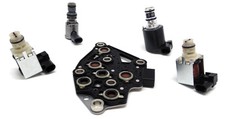
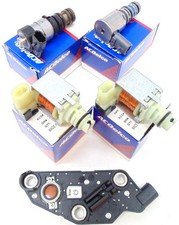
4T65E TCC Solenoid
If the TCC PWM solenoid tests as restricted or electrically dead after the release switch and wiring check out clean, replacing it directly addresses the solenoid-side cause Sonnax lists for this code. Sold in separate 1997-2002 and 2003-up part numbers — confirm which one matches your valve body before ordering.
View the 4T65E TCC solenoid →What the Valve Body Side Actually Tells You
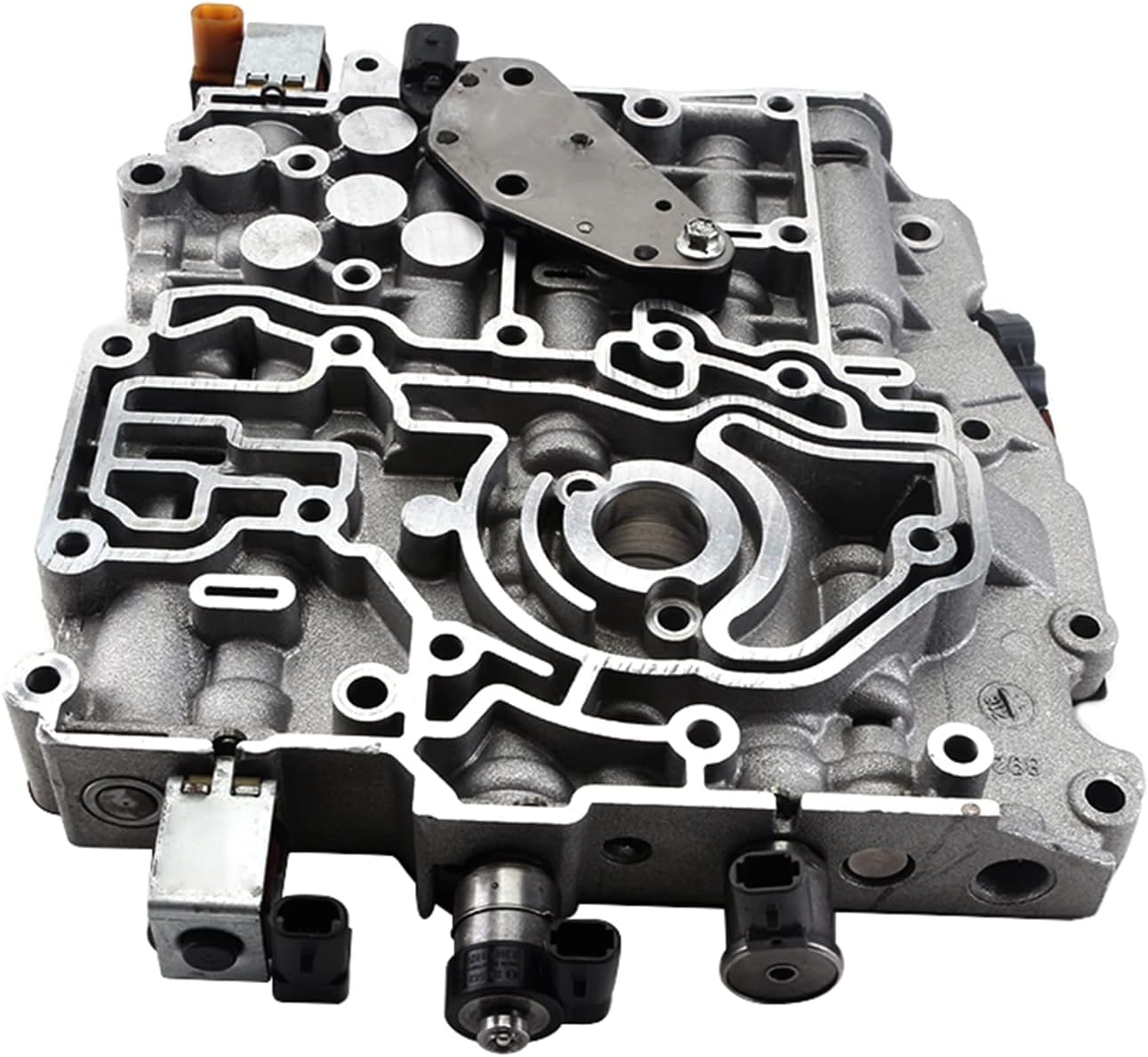
It's tempting to jump straight to the valve body once the switch and wiring check out, but the documented wear points on the 4T65E's TCC apply circuit don't line up neatly with a stuck-on code. Sonnax sells two separate kits for this circuit: a TCC regulated apply valve kit (84754-34K) and a TCC apply valve kit (84754-43K). Both are built around the same underlying failure — continuous oscillation of the apply valve in its cast-aluminum bore wears the bore, most severely at the TCC signal valve spool closest to the solenoid, and the valve body's casting design side-loads the valve in a way that accelerates that wear. But both kits are documented against TCC slip, cycling TCC RPM, failure to lock up or dropping out of lockup when hot, converter shudder, and code P0741 — the opposite complaint from P0742. A worn apply bore lets regulated apply oil escape, which weakens apply pressure and makes the clutch slip or never fully engage. It doesn't typically hold the clutch applied when it should release.
That's a useful distinction to carry into the diagnosis: if you're chasing P0742 and you also see slip, flare, or shudder on the same vehicle, the valve body's apply-valve bore is worth inspecting, since wear there can coexist with an unrelated switch or wiring fault setting the stuck-on code. But if P0742 is the only symptom and the clutch locks up normally otherwise, the apply valve bore is a less likely primary cause than the switch, the wiring, or a clogged PWM solenoid. Sonnax's own fitment notes list both kits as designed for the 4T65E's apply circuit, and either one requires pulling and inspecting the valve for visible wear or a failed vacuum test at the port before replacement is worth doing.
Working Order for a P0742 Diagnosis
- Read the TCC release pressure parameter on a scan tool with the engine running and the TCC commanded off. It should read released; if it reads applied, the switch, its wiring, or the release circuit is the first suspect, not the valve body.
- Back-probe the release-switch signal wire for a short to ground before replacing the switch or the solenoid. An intermittent short reads identically to a stuck switch on a scan tool.
- Check line pressure at the test port. Low or fluctuating line pressure can starve the release circuit of charge oil and falsely hold the switch closed, with every mechanical part otherwise good.
- Bench-test or swap the TFP switch assembly once the wiring and line pressure test clean — it mounts externally and doesn't require a full valve body teardown to access.
- Check the TCC PWM solenoid for restriction if the switch and wiring are confirmed good. A clogged or electrically dead PWM solenoid is one of Sonnax's four listed causes for this transaxle.
- Only pull the valve body for apply-valve bore wear if slip, shudder, or flare accompanies the stuck-on symptom — the documented wear point on this circuit is tied to P0741 and slip, not a clutch that won't release.
Shop 4T65E TCC solenoids, valve bodies, and full rebuild kits — shipped fast from the USA.
Shop 4T65E parts →FAQ
What does code P0742 mean on a 4T65E?
P0742 is TCC Stuck On. On a 4T65E, which uses a dedicated TCC release pressure switch mounted on the pressure-switch manifold, the PCM commands the torque converter clutch to release and the switch keeps reporting release pressure is not present. The PCM reads that as the clutch staying applied when it should not be, sets P0742, and typically commands the TCC on at full capacity while freezing shift adapts until the fault clears.
Is P0742 always a transmission problem?
No. Sonnax's own diagnostic writeup on this code for the 4T40-E and 4T65-E lists an intermittent short to ground in the release-switch signal circuit and rapid line-pressure fluctuation as common causes alongside a defective TFP switch assembly or a clogged TCC PWM solenoid. A wiring short or a connector fault can set the exact same code as a sticking switch, so the electrical side needs to be cleared before the valve body gets blamed.
What is the TFP switch and why does it matter for P0742?
TFP stands for transmission fluid pressure switch assembly, the switch pack that bolts to the 4T65E valve body and includes the TCC release pressure switch among its circuits. Sonnax identifies a defective TFP as one of the primary causes of P0742 on this transaxle. Because the switch assembly mounts externally, it can usually be checked and replaced without pulling the whole valve body.
Can a worn TCC apply valve cause P0742?
Sonnax's code-level writeup lists a sticking TCC apply valve as a cause of P0742 across GM units generally, but the valve-specific kits Sonnax sells for the 4T65E's TCC apply circuit, the TCC regulated apply valve kit and the TCC apply valve kit, are both documented against TCC slip and P0741 rather than a stuck-on condition. On this transaxle the apply-valve bore wearing is the better-documented cause of the clutch not locking up at all, while a stuck-on code more often traces back to the release switch, its wiring, or a restricted PWM solenoid.
How do you diagnose P0742 without guessing at parts?
Start with a scan tool and read the TCC release pressure parameter as the engine runs with the TCC commanded off; it should read as pressure released. If it reads applied, back-probe the release-switch signal wire for a short to ground before touching the valve body. Then check line pressure, since Sonnax notes that very low line pressure can restrict converter charge oil enough to falsely close the release switch. Only after the switch and wiring test clean does the TCC PWM solenoid and the apply-valve bore in the valve body become the next suspects.
Shop the 4T65E solenoid kit at CoreTransmissionParts →
Related 4T65E guides
Sources
- Sonnax — "Beyond 1870: GM Converter Codes P0741, P0742 and 1887," tech resource. Backs the 4T40-E/4T65-E release-switch basis for P0742 versus the slip-speed basis on other GM units, the normally-closed switch opening at roughly 20 psi in the release circuit, the four 4T65E-specific causes (defective TFP, defective TCC PWM solenoid, intermittent short to ground on the signal circuit, rapid line pressure fluctuation), and the two all-GM causes (sticking TCC apply valve, defective TCC PWM or apply solenoid). sonnax.com
- Sonnax — TCC Regulated Apply Valve Kit, part 84754-34K, product page. Backs the apply-bore wear mechanism, the TCC signal and regulated apply oil leakage it causes, and the fact that this kit is documented against TCC slip and code P0741 rather than a stuck-on condition. sonnax.com
- Sonnax — TCC Apply Valve Kit, part 84754-43K, product page. Backs the apply-valve bore wear at the TCC signal valve spool nearest the solenoid, the side-loading from the valve body casting design, and the symptom set of failure to lock up, shudder, and P0741. sonnax.com
- SAE International — "General Motors 4T65-E Electronic Four-Speed Automatic Transaxle," Paper 980821. Backs the 4T65E's PCM-controlled shift solenoid and TCC/pressure-control solenoid architecture as the engineering basis for how this transaxle commands and monitors converter clutch state. saemobilus.sae.org
- SAE International — "General Motors DEXRON-VI Global Service-Fill Specification," Paper 2006-01-3242. Backs DEXRON-VI as the GM global service-fill fluid specification that superseded the original DEXRON-III service fill GM transmissions including the 4T65E were designed around. saemobilus.sae.org