A 5R110W that sits there for a second or two after you pull it into Drive, then clunks in, is one of the most common TorqShift complaints we see. Sometimes it is Drive only, sometimes Reverse only, sometimes both, and on a lot of Super Duty and Excursion trucks it comes with a shudder on takeoff. The good news is that the TorqShift's hydraulic layout makes this complaint easier to narrow down than on most units, because the parts that control engagement are few and well documented.
This post walks through how the 5R110W actually engages Drive and Reverse, what the line pressure should be, the three failures that cause most delayed engagements, and the order to check them in. The specs come from the ATSG TorqShift manual, Sonnax, Gears Magazine (ATRA), Transmission Digest, an ATSG case study and Ford, all listed under Sources at the bottom.
How the TorqShift engages Drive and Reverse
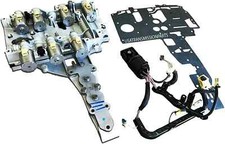
The 5R110W is a clutch-to-clutch unit with five shift solenoids, a line pressure solenoid and a TCC solenoid on the solenoid body in the pan. As Sonnax's pump bulletin points out, there is only one valve in that solenoid body: the manual valve, which directs oil to the Park, Reverse, Forward and manual ranges. Transmission Digest and ATSG both note that every clutch pack has its own solenoid and pressure switch except the forward clutch, which is controlled by the manual valve.
That matters for this complaint. ATSG's component application chart shows:
| Range | Applied | Note (ATSG) |
|---|---|---|
| Park / Neutral | Low/reverse clutch | PCM controlled, 30 psi until 5 km/h (3 mph) |
| Reverse | Direct clutch, coast clutch, low/reverse clutch | Direct clutch applied through the manual valve; 2.88 ratio |
| Drive, 1st | Forward clutch, low/reverse clutch, both one-way clutches holding | Forward clutch applied through the manual valve; 3.09 ratio |
So a delayed Drive engagement is a forward clutch apply problem, and a delayed Reverse engagement is mostly a direct clutch apply problem. Both clutches are fed straight from the manual valve with line pressure, not through a shift solenoid. If the solenoid body electrics are fine, the delay is almost always hydraulic: not enough line pressure, a leak between the manual valve and the clutch, or a leak at the clutch itself.
Quick checks before you pull anything
Fluid level and type
Low fluid is still the cheapest delayed engagement you will ever fix, especially after a cooler line or pan leak. Check the level hot with the engine running per the vehicle procedure. The 5R110W launched on MERCON SP, and ATSG and Transmission Digest both warned it is not interchangeable with MERCON or MERCON V. Ford's current Motorcraft ATF quick reference chart lists the 5R110 TorqShift under MERCON LV with back-service authorization, so MERCON LV is the fluid to use today. Ford's original service interval was 30,000 miles for fluid and the bottom pan filter.
Codes and the adaptive reset
Scan for codes before you condemn hardware. A PCM that just lost its adaptive tables after a battery disconnect or reflash will engage poorly until it relearns. Transmission Digest and ATSG give the procedure: get the fluid to 130°F on the TFT, then do five each of Park-to-Reverse, Drive-to-Reverse, Reverse-to-Drive and Neutral-to-Drive engagements, holding each for about five seconds. If the delay goes away after the relearn and stays gone, you were chasing adapts, not parts.
The line pressure solenoid reads backwards
ATSG describes the line pressure solenoid (PC-A) as inversely proportional: the PCM varies current between 0 and 1 amp, and 0 amps gives maximum pressure. That means an open circuit or unplugged PC-A drives line pressure up, not down, and usually shows up as harsh engagements rather than slow ones. A genuinely delayed engagement with the electrical side testing good points you toward the hydraulics below. Our 5R110W pressure control solenoid post covers the EPC side in detail.
Put a gauge on it: line pressure specs
ATSG's first diagnostic step for this complaint, per Wayne Colonna's case study on 5R110W delayed engagements, is to verify line pressure before anything else. ATSG's line pressure chart (all pressures approximate):
| Range | Idle | Stall |
|---|---|---|
| Park / Neutral | 50 psi | — |
| Reverse | 100 psi | 320 psi |
| Drive | 70 psi | 320 psi |
| 3 | 80 psi | 260 psi |
| 2 | 80 psi | 215 psi |
| 1 | 80 psi | 270 psi |
ATSG's precautions are worth repeating: fix sensor and electrical faults first because they can force high line pressure through failure mode strategy; set the parking brake and block the wheels; and if line pressure is low at idle, do not run the stall test. Never hold wide open throttle for more than 5 seconds in any range.
How to read the result:
- Low in every range. The problem is upstream of the manual valve: pump, main pressure regulator valve, a plugged or collapsed filter, or a line pressure control fault.
- Normal in Park but low or slow to build in Drive, Reverse, or both. Oil is escaping after the manual valve: the manual valve bore, or sealing rings feeding the forward or direct clutch.
- Normal pressure everywhere but the engagement is still late. The pressure is getting there but the clutch is not holding it: a sealing ring, piston, or drum leak that only shows up under apply, which is where an air check earns its keep.
Cause 1: a worn manual valve
This is the one that catches people, because the valve body looks fine at a glance. Mike Brown's Gears Magazine column on the TorqShift lists manual valve wear as a known cause of delayed engagement in both Drive and Reverse. Sonnax explains why: the OE manual valve is anodized aluminum and is prone to anodization flaking and degradation, which wears the valve and its bore. Sonnax also calls out linkage side-loads and long service life as causes of bore wear. Once clearance opens up, line pressure meant for the forward or direct clutch bleeds to the sump and adjacent circuits, and you get low pressure and slow applies.
Because the forward clutch has no solenoid of its own, a leaking manual valve hits Drive engagement directly. There is no other valve in the solenoid body to compensate.
The fix depends on how far the wear has gone. Sonnax offers two parts for all 5R110W units, both of which replace OE valves with or without holes in the long spool:
- 36940-22, a slightly oversized drop-in manual valve. No reaming or special tools. For a valve with a flaked surface and a bore that is still serviceable.
- 36940-11, an oversized manual valve that goes with reaming tool kit F-36940-TL11 (the VB-FIX fixture is recommended). Sonnax says to use this one when inspection shows wear at the low/reverse clutch circuits or the line pressure/direct clutch circuits of the casting.
If the bore is badly worn or you do not have the tooling, a replacement solenoid body/valve body is the faster route.
Cause 2: pump and main pressure regulator valve
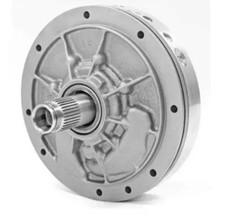
The 5R110W's pressure regulator lives in the pump, not the valve body. Sonnax lists five valves in the 5R110W pump: the main pressure regulator valve, converter pressure limit valve, converter clutch control valve, thermal cooler bypass valve and converter anti-drainback valve. When the main regulator bore wears, line pressure drops everywhere, and engagements go soft and late before clutches start to burn.
Sonnax's bulletin on 5R110W pump problems says the Gen. 1 pump in 2003 and 2004 units was redesigned for 2005 and later, and low pressure with the main pressure regulator valve was one of the reasons. Know which pump you have before you order parts:
| Pump | Years | ID (per Sonnax) |
|---|---|---|
| Gen. 1 | 2003-2004 | RF3C3P-7B324-AA or -AB on pump body front and cover rear |
| Gen. 2 | 2005-2007 | 5C3P 7A105-AA and RF5C3P-7B324-AA/-AB/-AC, plus Al11Si3Cu cast above the cover number |
| Gen. 3 | 2008-later | Same as Gen. 2, plus 9C3P-7A103-AC near the pump body bolt circle; no external cooler filter/bypass |
Gen. 2 and 3 covers use a harder, higher-silicon alloy (the Al11Si3Cu marking is 11% silicon, 3% copper). For all three generations Sonnax offers oversized pressure regulator valve kit 36940-03K with tool kit F-36940-TL3, and recommends the carbide reamer F-36940-RM3C on Gen. 2 and 3 pumps because the harder castings wear out a standard reamer quickly. If you are replacing the pump rather than repairing it, match the generation.
Filter restriction feeds the same symptom from the other end. A collapsed or debris-loaded pan filter starves the pump, and pressure will look fine at idle in Park but fall off when demand goes up. If the old filter is full of friction material, the delay is a symptom and the unit is already coming apart.
Cause 3: forward clutch sealing rings, piston and drum
Wayne Colonna of ATSG documented the classic TorqShift version of this: a delayed engagement into Drive, often with a shudder on takeoff. ATSG's recommended order is to verify line pressure first, then inspect the forward clutch housing, the molded piston and the seal ring area on the center support, then air check the forward clutch drum on the center support to find excessive leakage. ATSG issued a technical bulletin on this problem in 2008.
The fix from that bulletin is to replace the factory step-cut sealing rings on the forward clutch drum with solid, endless-style Teflon rings, the same style used on the 4L60-E stator support. ATSG's rebuild instructions note that both the two forward clutch sealing rings and the direct clutch sealing rings on the center support use a unique lap joint that has to be engaged properly on assembly. A ring that is not locked together at the joint leaks from the first day.
Colonna's case study also turned up a less common failure worth knowing: a crack in the forward drum below the direct clutch hub area that only opened under load. It passed a casual look, leaked apply pressure when torque went through it, and caused slip on takeoff that got worse with throttle. If the rings are new and the air check is marginal, inspect the drum under good light before it goes back in.
Delayed Reverse only
Since Reverse uses the direct clutch through the manual valve, a Reverse-only delay with normal Drive points at the direct clutch circuit: the direct clutch sealing rings on the center support, the direct piston, or the reverse-side lands of the manual valve. Also check the low/reverse clutch. Gears Magazine notes the low/reverse retaining ring can pop out of its case groove and severely damage the case lugs, which shows up as slipping in Reverse; the repair is a wider, thicker snap ring with more outward tension. See our 5R110W no reverse guide for the full Reverse diagnosis.
Shop the part for this fix: 5R110W rebuild kit 2005-2016
When the air check says the forward or direct circuit is leaking, this kit covers the sealing rings, seals and gaskets for 2005-2016 TorqShift units.
See the 5R110W rebuild kit at CoreTransmissionPartsThe order we check them in
- Fluid level and condition. Top off with MERCON LV. Look at what is in the pan.
- Scan for codes and repair any sensor or solenoid faults first.
- Run the adaptive relearn at 130°F if the battery was disconnected or the PCM was reflashed.
- Line pressure test in all ranges, idle first. Low everywhere means pump, regulator or filter. Low only in the engaged range means manual valve or sealing rings.
- Drop the pan and pull the solenoid body. Inspect the manual valve for flaking and the bore for wear.
- If it is still delayed, it is coming out: air check the forward and direct circuits, replace the sealing rings with solid rings, and inspect the pump regulator bore and the forward drum.
Need parts for this job?
Our 5R110 parts page has valve bodies, pumps, overhaul and master rebuild kits, and solenoid kits for the TorqShift, all on our own checkout.
FAQ
Why does my 5R110W take a few seconds to go into Drive?
On the TorqShift the forward clutch is applied straight from the manual valve with line pressure, so anything that lowers that pressure or leaks it off delays the apply. The usual causes are low fluid, a worn manual valve, a worn main pressure regulator valve in the pump, or leaking forward clutch sealing rings on the center support. A line pressure test tells you which side of the manual valve the leak is on.
What should 5R110W line pressure be?
ATSG lists approximately 50 psi in Park/Neutral at idle, 100 psi in Reverse and 70 psi in Drive at idle, and about 320 psi in both Reverse and Drive at stall. If pressure is low at idle, do not run the stall test, and never hold wide open throttle for more than 5 seconds.
Can a bad manual valve cause delayed engagement on a 5R110W?
Yes. Gears Magazine lists manual valve wear as a known cause of delayed Drive and Reverse on the TorqShift, and Sonnax notes the OE anodized valve is prone to flaking and bore wear. Sonnax makes a drop-in oversized valve (36940-22) and a ream-to-fit oversized valve (36940-11) for worn bores.
Why is my 5R110W delayed in Reverse but fine in Drive?
Reverse on the 5R110W uses the direct clutch, applied through the manual valve, along with the coast and low/reverse clutches. A Reverse-only delay points at the direct clutch sealing rings on the center support, the direct piston, the reverse side of the manual valve, or a low/reverse clutch problem such as a dislodged retaining ring.
Will a relearn fix a 5R110W delayed engagement?
Only if the delay came from lost adaptive tables after a battery disconnect or PCM reflash. The procedure is to bring the fluid to 130 degrees F, then do five each of Park-to-Reverse, Drive-to-Reverse, Reverse-to-Drive and Neutral-to-Drive engagements about five seconds apart. If the delay returns, the cause is mechanical or hydraulic.
Related guides
- 5R110W No Reverse: Diagnosis and Fix
- 5R110W Slipping: Causes and Fix
- 5R110W Valve Body Symptoms and Testing
- 5R110W Pressure Control (EPC) Solenoid Symptoms
- 5R110W Common Problems and Fixes: What Fails and Why
Sources
- ATSG, Ford 5R110W (TorqShift) technical manual (2004). Backs the component application chart (forward and direct clutches applied through the manual valve, low/reverse at 30 psi in Park/Neutral), the line pressure chart and test precautions, the inversely proportional line pressure solenoid, MERCON SP and the 30,000-mile service, and the lap-joint forward and direct clutch sealing rings. ATSG manual (PDF)
- Sonnax, Transmission Report Vol. 6 No. 2, "5R110W Pump Problems & Variations" (June 2015). Backs the single manual valve in the solenoid body, the valves in the pump, the Gen. 1/2/3 pump IDs and years, the Gen. 1 low-pressure redesign, and pressure regulator valve kit 36940-03K with its tooling. Sonnax bulletin (PDF)
- Sonnax, Manual Valve 36940-22. Backs delayed Drive, delayed Reverse and low line pressure from flaking OE anodized manual valves, and the drop-in no-ream fix. sonnax.com
- Sonnax, Oversized Manual Valve 36940-11. Backs bore wear from linkage side-loads and service life, tool kit F-36940-TL11, and using it when low/reverse or line pressure/direct circuits show wear. sonnax.com
- Gears Magazine (ATRA), Mike Brown, "Ford Torqshift/5R110: A Shot in the Dark" (Sept. 2016). Backs manual valve wear causing delayed Drive and Reverse, and the low/reverse retaining ring popping out and damaging the case lugs. gearsmagazine.com
- Wayne Colonna (ATSG), "5R110W delayed engagements," Fender Bender (Sept. 2015). Backs delayed Drive with takeoff shudder, verifying line pressure first, the forward clutch inspection and air check, solid endless Teflon rings replacing step-cut rings, the cracked forward drum case, and ATSG's 2008 bulletin. fenderbender.com
- Transmission Digest, "Ford 5R110W ('TorqShift')." Backs the forward clutch being controlled by the manual valve, MERCON SP only, and the 130°F engagement relearn. transmissiondigest.com
- Ford Customer Service Division, Motorcraft ATF quick reference chart. Backs MERCON LV for the 5R110 TorqShift and back-service authorization. Ford ATF chart (PDF)