When a 5R110W starts shifting badly, the valve body gets blamed early, and it is usually expensive. A reman unit costs several hundred dollars. The TorqShift makes that call harder than most units because what Ford calls the "valve body" is really a solenoid body. There are seven solenoids, a manual valve, the TFT sensor and a handful of regulator valves in one casting, and a fault in any of them can look like a worn bore.
This guide covers what that assembly actually contains, the symptoms each part of it causes, and the tests that tell a bad solenoid, a bad harness, a worn bore and a real mechanical failure apart before you order parts. Specs come from the ATSG 5R110W manual and Transmission Digest. The bore wear list comes from Sonnax, and the solenoid bench check from GEARS magazine. All of them are listed under Sources at the bottom.
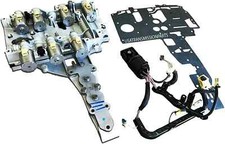
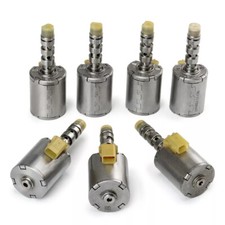
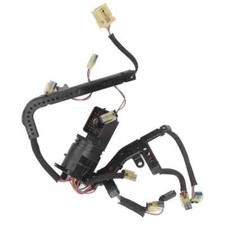
What is actually in the 5R110W solenoid body
Transmission Digest's original TorqShift write-up describes the assembly as the part bolted to the case inside the pan that "looks similar to what we have previously referred to as a valve body." It contains:
- Seven variable-force solenoids: PC-A (line pressure), TCC, and one shift solenoid pressure control (SSPC) solenoid for each clutch except forward: SSPC-A coast, SSPC-B overdrive, SSPC-C intermediate, SSPC-D direct, SSPC-E low/reverse.
- Five normally closed pressure switches (PS-A through PS-E), one per SSPC circuit. According to TD they open above 40 psi of solenoid control pressure and are all interchangeable.
- The TFT sensor, which twist-locks into the body.
- The manual valve, which applies the forward clutch directly. That is why forward has no solenoid.
- An overpressure relief ball and spring.
Because each clutch has its own solenoid, the 5R110W does not have the stack of shift valves and shuttle valves found in an older Ford valve body. That makes diagnosis easier in one way: a problem with a single clutch usually traces to a single solenoid circuit. The pressure regulator, converter pressure limit and TCC control plunger valves are in the pump body, and that is where most of the bore wear shows up.
Direct vs. inverse solenoids, and why it matters
The solenoids are not all the same type. Transmission Digest and GEARS agree on the split:
| Solenoid | Controls | Type | 0 amp means |
|---|---|---|---|
| PC-A | Line pressure | Inversely proportional | Maximum pressure |
| SSPC-A | Coast clutch | Inversely proportional | Maximum pressure |
| SSPC-D | Direct clutch | Inversely proportional | Maximum pressure |
| SSPC-B | Overdrive clutch | Directly proportional | No pressure |
| SSPC-C | Intermediate clutch | Directly proportional | No pressure |
| SSPC-E | Low/reverse clutch | Directly proportional | No pressure |
| TCC | Converter clutch | Directly proportional | No pressure |
The PCM varies each one between 0 and 1 amp. This is the most useful fact in the whole diagnosis, because it predicts what happens when a circuit opens. If PC-A loses its circuit, line pressure goes to maximum and every engagement and shift turns harsh. If SSPC-D opens, the direct clutch gets full pressure when it should not. If SSPC-B, C, E or TCC opens, that clutch gets nothing and slips or never applies. So you can often tell which circuit failed from how the truck drives before you open the pan.
GEARS adds a physical identification method, which helps when solenoids have been moved around by the last person in there. On the snout, PC-A has centered ID marks and a stepped back. SSPC-A and SSPC-D have low marks and a stepped back. TCC, SSPC-B, SSPC-C and SSPC-E have high marks and a flat back. Solenoids of the same type interchange, and that is the basis for the swap test below.
Symptoms that point at the solenoid body
These are the complaints that should put the valve body on your list, grouped by where they usually come from:
- Harsh engagements and harsh shifts in every gear. Too much line pressure. Suspect PC-A (open circuit, stuck valve or wrong resistance), then the sensors that raise line pressure as a failsafe. TD notes a failed APP sensor puts the unit into higher-than-normal line pressure on purpose.
- One shift is bad and the others are fine. Look at the SSPC solenoid for the clutch that shift applies or releases. The clutch application chart in the manual shows which clutches change on each shift, so you know which one or two circuits to check.
- Delayed Drive or delayed Reverse. Sonnax lists the manual valve (36940-22) and the oversized manual valve (36940-11) for delayed Drive, delayed Reverse and low line pressure. A damaged casting at the manual valve bore is a known 5R110W wear point.
- Shift complaints with no solenoid code. Sonnax lists a less obvious cause: damaged pressure switch plugs leaking off solenoid control pressure (covered below).
- TCC slip, cycling, P0741 or P1744. TCC control plunger valve, converter limit valve or pressure regulator bore. The shudder guide covers these in detail.
- Codes that change every time you look. Harness or connector. Do not buy a valve body for this.
Step 1: Codes and the electrical check
The ATSG manual's code chart separates electrical faults from performance faults for each solenoid. For SSPC-A (coast clutch), for example, P0750 is an open circuit, P0753 is a circuit failure, P0973 is shorted to ground, P0974 is shorted to power, P0751 is failed OFF and P0752 is failed ON. The other SSPC solenoids follow the same pattern with their own codes. P2700 through P2704 are "friction element apply time" errors for the coast, overdrive, intermediate, direct and low/reverse clutches in that order. A circuit code sends you to the wiring. A P27xx code with no circuit code points to hydraulics or the clutch itself.
Check resistance at the 24-pin case connector before you drop the pan. From the ATSG chart:
| Component | Case connector pins | Resistance at 72°F |
|---|---|---|
| SSPC-A (coast) | 12 and 20 | 4.1-4.7 ohms |
| SSPC-B (overdrive) | 3 and 20 | 4.1-4.7 ohms |
| SSPC-C (intermediate) | 5 and 24 | 4.1-4.7 ohms |
| SSPC-D (direct) | 4 and 24 | 4.1-4.7 ohms |
| SSPC-E (low/reverse) | 1 and 24 | 4.1-4.7 ohms |
| PC-A, early | 7 and 10 | 4.1-4.7 ohms |
| PC-A, late | 7 and 10 | 5.1-5.8 ohms |
| TCC | 7 and 8 | 4.1-4.7 ohms |
An open or shorted reading at the case connector means the internal harness or the solenoid. A good reading at the case but a circuit code in the PCM means the fault is between the case and the PCM. Transmission Digest published a good example: a 2005 F-350 6.0L set P0753 and P2700, then later P0752 and P0973. The PCM connector C138E was soaked in diesel from a leaking water-in-fuel sensor on the fuel/water separator, and fuel had wicked up the harness into the PCM. The fix was a PCM and the sensor, not transmission parts. On any 6.0L with multiple strange solenoid codes, check that connector.
Step 2: Line pressure test
If the electrical side is clean, put a gauge on the line pressure tap. The ATSG manual gives these approximate specs:
| Range | Idle | Stall |
|---|---|---|
| P/N | 50 psi | — |
| R | 100 psi | 320 psi |
| (D) | 70 psi | 320 psi |
| 3 | 80 psi | 260 psi |
| 2 | 80 psi | 215 psi |
| 1 | 80 psi | 270 psi |
ATSG's precautions matter here. Fix any sensor faults first, because some of them command high line pressure as a failsafe and the reading will be wrong. If idle pressure is low, do not run a stall test. Never hold WOT longer than five seconds.
How to read it:
- High in every range: PC-A command (check the scan tool), a stuck PC-A valve, or a failsafe. With a clean electrical check, a stuck PC-A solenoid valve is common.
- Low in every range: Pump, pressure regulator valve bore (Sonnax 36940-03K covers low line pressure and codes 1744/1783), or a leak.
- Low in only Drive or only Reverse: Manual valve and its bore, or a leak in that clutch circuit.
- Good line pressure but one clutch slips: That SSPC solenoid, its pressure switch plug, or the clutch.
Step 3: Bench check the solenoids
With the pan down, the GEARS article describes the most common mechanical solenoid fault on this unit: the valve sticks in the snout. The check is simple. Confirm resistance, which GEARS says should be about 4.5 ohms. Remove the plastic end cap and bend back the four tabs. Slide off the snout, which holds the valve, and shake it. You should hear and feel the valve move freely. If it does not move, you have found a solenoid problem. Cleaning the valve in solvent and blowing it back and forth often frees it.
GEARS gives one warning to take seriously: do not touch the adjuster at the tip of the snout. That is the calibration, and it cannot be reset without a solenoid test machine. Do one solenoid at a time so plungers and snouts do not get mixed. A solenoid that was stuck is still a solenoid that stuck once, so on a customer truck with high mileage or burnt fluid, a new solenoid set is often the better call than a cleaning.
A swap test also works in the truck. Swap a suspect solenoid with another of the same type, for example SSPC-C with SSPC-B, since both are directly proportional with high marks and a flat back. If the problem moves to the other clutch, it was the solenoid.
Step 4: The pressure switch plugs
This one catches experienced techs. TD's 2004 description lists five pressure switches. Sonnax, working from years of cores since then, says the switches were never actually enabled by Ford or monitored by the computer. Early solenoid bodies had all five installed as dummy plugs to seal the circuits. Later bodies left four of the locations unbored and kept only the direct clutch switch, which is also not monitored.
The problem is that these units often run excessive line pressure, and Sonnax reports it is common to find the OE switches or plugs damaged. Once a plug leaks, that circuit loses shift solenoid control pressure and you get shift complaints with good solenoids and no electrical codes. Inspect every switch and plug location. Sonnax's 36940-17K kit replaces them with an O-ringed end plug and a stronger clip. It fits any of the five locations.
Step 5: Bore wear in the pump body and manual valve
If the solenoids and plugs check out and pressure is still wrong, the bores are next. Sonnax's 5R110W valve body layout is the reference:
| Valve | Sonnax part | Symptoms listed |
|---|---|---|
| Converter pressure limit valve ('05-later) | 36940-06K | Harsh or soft TCC apply, TCC codes, TCC slip, lining failure |
| TCC control plunger valve | 36940-01K | Overheating, TCC slip or cycling, 1783, P0741 |
| Pressure regulator valve (oversized) | 36940-03K | Codes 1744 and 1783, low line pressure and TCC concerns |
| Manual valve | 36940-22 | Delayed Drive, delayed Reverse, low line pressure |
| Oversized manual valve | 36940-11 | Damaged casting, low line pressure, delayed engagements |
| Pressure switch end plugs | 36940-17K | Loss of shift solenoid control pressure, shift concerns |
| Pump bushing | 36002-01 | Front seal leak, pump noise, low pump volume |
Source: Sonnax, "Ford 5R110W Valve Body Layout."
Vacuum test the regulator, converter limit and TCC plunger bores if you have the equipment. Otherwise pull the valve, check the spool lands and look for polished wear in the bore. For the manual valve, Sonnax says to look at the lands between the outer low/reverse circuits and between the inner line/direct circuits, since visible wear on the spool there means the bore is worn too.
Step 6: After the repair
Transmission Digest gives the relearn Ford specifies after the battery is disconnected, the PCM is replaced or it is reflashed. Warm the fluid to 130°F (54°C) on the TFT PID. Then do five engagements each of Park to Reverse, Drive to Reverse, Reverse to Drive and Neutral to Drive, five seconds apart. Skip it and the customer comes back with firm engagements even though the repair was right.
Fill with the fluid on the dipstick. The unit was released on MERCON SP, which TD says is not interchangeable with MERCON or MERCON V, and later Ford service moved to MERCON LV. Replace the external remote filter in the cooler return line as well as the pan filter. TD notes Ford calls for replacing the oil-to-air cooler with any overhaul rather than back-flushing it. That matters here because debris that took out the last solenoid body will take out the next one.
Valve body or solenoid set: making the call
| What you found | Fix |
|---|---|
| Code changes, reading good at case connector | Harness or PCM connector; check C138E on a 6.0L |
| Open/short at the case connector | Internal harness or the solenoid it reads |
| Stuck valve in snout, one or two solenoids | Clean or replace those solenoids |
| Several solenoids sticking, dirty fluid | Solenoid set, fluid, filters and cooler |
| Damaged pressure switch plugs | 36940-17K end plugs |
| Low line pressure, good pump | Pressure regulator bore (36940-03K) |
| Delayed D or R, worn manual valve bore | 36940-22 or oversized 36940-11 |
| Multiple worn bores on a high-mile casting | Remanufactured valve body |
Shop the part for this fix: Sonnax 5R110W pressure switch O-ringed end plug kit (36940-17K)
If the solenoids test good but you are losing shift control pressure, damaged pressure switch plugs are a common reason. This kit seals all five locations with O-ringed plugs and stronger clips. For manual valves, pressure regulator kits and solenoids, browse the 5R110W range at CoreTransmissionParts.
See the end plug kit at CoreTransmissionPartsNeed parts for this job?
Our 5R110 parts page has 5R110W valve bodies, solenoid kits, internal harnesses, filters and rebuild kits, so you can buy the part your testing points to. Checkout is on site.
FAQ
What are the symptoms of a bad 5R110W valve body?
Harsh engagements and shifts in every gear, one bad shift while the others are fine, delayed Drive or Reverse, TCC slip or cycling, and solenoid or friction element codes such as P0751 or P2700. Harsh everything usually means high line pressure from the PC-A solenoid. A single bad shift usually traces to the SSPC solenoid for that clutch.
What should 5R110W solenoid resistance be?
Per the ATSG manual, the five SSPC solenoids, the TCC solenoid and the early PC-A solenoid read 4.1 to 4.7 ohms at 72 degrees F. The late PC-A solenoid reads 5.1 to 5.8 ohms. Measure at the 24-pin case connector, for example pins 12 and 20 for SSPC-A and 7 and 10 for PC-A.
What is normal 5R110W line pressure?
ATSG lists approximate idle pressures of 50 psi in Park/Neutral, 100 psi in Reverse, 70 psi in Drive and 80 psi in 3, 2 and 1. Stall pressures are about 320 psi in Reverse and Drive. Fix sensor faults first, and do not run a stall test if idle pressure is low.
Can 5R110W solenoids be cleaned instead of replaced?
Often, yes. GEARS magazine describes the common failure as the valve sticking in the solenoid snout, which can be freed by removing the snout and cleaning the valve in solvent. Never touch the calibration adjuster at the tip. On high-mileage units with burnt fluid, a new solenoid set is usually the safer repair.
Do the 5R110W pressure switches set codes?
Sonnax says the pressure switches were never enabled or monitored by the PCM, and later solenoid bodies keep only the direct clutch switch. The problem is physical: high line pressure damages the switches or plugs, they leak off solenoid control pressure, and the truck gets shift complaints without a code. Sonnax 36940-17K end plugs seal those locations.
Related guides
- 5R110W Shift Solenoid Symptoms
- 5R110W Harsh Shift Causes and Fix
- 5R110W Limp Mode Causes
- 5R110W No Reverse Fix
- 5R110W Torque Converter Lockup Shudder Fix
Sources
- Transmission Digest, Dale England, "5R110W ('TorqShift')." Backs the solenoid body contents (seven solenoids, five pressure switches opening above 40 psi, TFT, manual valve, relief ball), the directly vs. inversely proportional solenoids and the 0-1 amp control range, the APP sensor failsafe raising line pressure, the engagement relearn procedure at 130°F, MERCON SP, the remote filter, and replacing the cooler at overhaul. transmissiondigest.com
- ATSG, "Ford 5R110W (TorqShift)" technical manual (2004). Backs the internal component resistance chart and case connector pins, the line pressure chart and test precautions, and the DTC descriptions (TCC, PC-A and SSPC circuit codes, and P2700-P2704). ATSG manual (PDF)
- Sonnax, "Ford 5R110W Valve Body Layout." Backs the bore wear list: 36940-06K, 36940-01K, 36940-03K, 36940-22, 36940-11, 36940-17K and 36002-01 and the symptoms for each. sonnax.com
- Sonnax, "5R110W Pressure Switch O-Ringed End Plug Kit 36940-17K." Backs the pressure switches never being enabled or monitored, early vs. late solenoid body switch locations, and damaged plugs from high line pressure causing loss of shift solenoid control pressure. sonnax.com
- GEARS magazine (ATRA), Jarad Warren, "Ford 5R110: Money in Your Pocket." Backs solenoid identification by snout marks and back shape, the approximately 4.5 ohm resistance check, the stuck valve in the snout, and the cleaning procedure and warning not to touch the calibration adjuster. gearsmagazine.com
- Transmission Digest, Wayne Colonna, "Dealing with PCM fault codes on the Ford 5R110W." Backs the 2005 F-350 6.0L case where P0753, P2700, P0752 and P0973 came from diesel fuel wicking into the C138E PCM connector from a leaking water-in-fuel sensor. transmissiondigest.com