A TorqShift that pulls forward fine but will not back up is a common complaint on Super Duty and E-Series trucks with the 5R110W. Sometimes Reverse is gone completely. More often the problem builds over a few weeks: a delay when you drop it into R, then a slip when backing a trailer up a driveway, then a flare with no movement at all. The owner asks whether the transmission is finished. Sometimes it is, but a good share of these trucks back up again after a valve body, solenoid or linkage repair, and the test drive can usually tell you which case you have before the pan comes off.
The key to this unit is that Reverse shares every one of its clutches with a forward gear. So forward gears you can drive and feel tell you which Reverse clutch is failing. This guide covers the Reverse powerflow, the road test that splits the problem by clutch, pressure testing, and the hard-part failures I find once the unit is apart.

What the 5R110W applies in Reverse
Per the ATSG component application chart, Reverse on the 5R110W applies three clutches and gives a 2.88:1 ratio:
| Clutch in Reverse | How it is applied | Solenoid | Other ranges that use it |
|---|---|---|---|
| Direct clutch | Through the manual valve position | SSPC-D (inversely proportional) | Drive 5th and 6th |
| Coast clutch | Solenoid controlled | SSPC-A (inversely proportional) | Manual 3rd and manual 1st (engine braking) |
| Low/reverse clutch | PCM calibration controlled | SSPC-E (directly proportional) | Manual 2nd and manual 1st; also Park/Neutral and Drive 1st by calibration |
The two solenoid types matter here. ATSG and Sonnax both describe SSPC-A and SSPC-D as inversely proportional: 0 amp gives maximum pressure. SSPC-E is directly proportional: the PCM has to send current, up to 1 amp, to build low/reverse clutch pressure. That makes the low/reverse circuit the one most exposed to an electrical fault. If SSPC-E gets no current, or its valve sticks, the low/reverse clutch gets no oil.
The low/reverse clutch is also the one that sees the most load in Reverse. It holds the rear planetary against a 2.88 ratio with full engine torque, often with a trailer behind the truck, and it is in the back of the case where debris from the rest of the unit collects. That is why most of the hard-part failures below are in the low/reverse area.
Step 1: Fluid level and condition first
Low fluid shows up in Reverse before it shows up anywhere else, because Reverse runs the highest line pressure and asks the pump for the most volume. Check the level hot, on level ground, with the engine running, and go by the fluid the dipstick calls for. Transmission Digest notes the unit was designed around MERCON SP and that it is not interchangeable with MERCON or MERCON V. Later trucks call for MERCON LV.
Smell and look at what comes out. Burnt fluid with friction material means a clutch has already slipped. Clean fluid with a Reverse complaint points more toward hydraulics or controls. Pull the pan if you have any doubt. Sections of lining, steel flakes or pieces of a snap ring tell you right away that the job is a teardown.
Step 2: Codes, TR-P and the linkage
The PCM has to know the lever is in R before it will command the Reverse solenoids. The TR-P sensor reports each lever position as a different duty cycle, and ATSG's DTC chart lists P0706, P0707 and P0708 for TR-P range and circuit faults. With a scan tool, watch the TR PID while you move the lever slowly from P to R to N. It should step cleanly into R and hold steady. If it shows R late, drops out, or shows a range between positions, fix that before anything else.
Also check the shift cable and the outside manual lever. A stretched cable or worn bushing that leaves the manual valve short of its Reverse detent can partially open the circuits, causing a delay or slip that looks like a clutch problem. Put the lever in R and confirm at the transmission that the outside lever is fully in its detent.
Solenoid circuit codes matter here as well. An SSPC-E or SSPC-A circuit code (in the P0750-P0757 and P0960-P0974 groups on the ATSG chart) with a Reverse complaint sends you to the case connector, the internal harness and the coil. ATSG lists the solenoids at 4.1-4.7 ohms at 72°F through the case connector. GEARS magazine gives a working figure of about 4.5 ohms for all of them. For wiring and ground testing, the steps in our 5R110W limp mode guide apply here too.
Step 3: Road test to find the failed clutch
This is the step that saves you from rebuilding a unit that only needed a valve body. Since each Reverse clutch also works in a forward gear, you can test each one on the road. Use the ATSG application chart:
- Direct clutch: drive it into 5th. Drive 5th is forward plus direct. If the 4-5 shift flares, slips or never completes, and Reverse also slips, the direct clutch or its feed is the common factor. Worn direct clutch sealing rings on the center support hurt both.
- Low/reverse clutch: manual 2nd, then coast. Manual 2nd applies the overdrive clutch plus the low/reverse clutch for engine braking. Select manual 2nd at low speed and lift off the throttle. Good engine braking means the low/reverse clutch is holding. Freewheeling means it is not.
- Coast clutch: manual 3rd, then coast. Manual 3rd applies the intermediate and coast clutches with engine braking. Freewheeling on a coast in manual 3rd, with normal braking in manual 2nd, points at the coast clutch or SSPC-A.
Keep one limit in mind. Coasting in a manual range puts much less load on the clutch than backing a loaded truck up a grade. A clutch that is worn but still holds can pass the coast test and still slip in Reverse. Freewheeling on the coast test is conclusive. Good engine braking is only strong evidence.
Step 4: Line pressure in Reverse
Put a gauge on the line pressure tap. ATSG's line pressure chart gives these approximate values:
| Range | Idle | Stall |
|---|---|---|
| P/N | 50 psi | — |
| R | 100 psi | 320 psi |
| D | 70 psi | 320 psi |
| 3 | 80 psi | 260 psi |
| 2 | 80 psi | 215 psi |
| 1 | 80 psi | 270 psi |
ATSG's precautions: clear the electrical codes first, because some sensor faults cause high line pressure and failure-mode actions that make the readings meaningless. If idle pressure is low, do not run the stall test, or you will do more damage. Never hold wide open throttle for more than 5 seconds in any range, and block the wheels.
How to read it: low pressure in every range is a supply problem, meaning the pump, the filter, line pressure control (PC-A) or a big leak. Low pressure only in R, or pressure that is good at idle and falls off as you bring the rpm up, points at a leak in a Reverse-only path: the low/reverse piston, the manual valve land that feeds it, or the direct clutch sealing rings. Good pressure with no Reverse means the oil is there and the clutch is not holding, which is a mechanical failure.
Step 5: Valve body and solenoid causes
Worn manual valve
Sonnax describes the OE 5R110W manual valve as prone to anodize flaking, which lets the valve and bore wear. The symptoms they list are delayed Drive, delayed Reverse and low line pressure. They say to look at two places: the land between the two outboard circuits, which are the low/reverse clutch circuits, and the land between the two inboard circuits, which are line pressure and the direct clutch. Two of the three Reverse clutches are fed across those lands. Obvious wear on the valve spool means the bore is worn too. Sonnax sells a drop-in replacement valve (36940-22), and an oversized valve (36940-11) with reaming tooling for bores that are already worn.
Stuck SSPC-E or SSPC-A valve
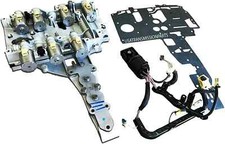
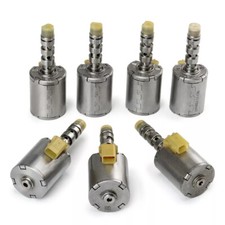
GEARS magazine notes that the 5R110 solenoids have problems with the valves sticking in the solenoid snout, and that they can often be cleaned instead of replaced. A stuck SSPC-E gives you a low/reverse clutch that will not apply, or applies weakly, even though the coil reads correctly. If you have clean fluid, no ratio codes, and weak engine braking in manual 2nd plus a Reverse complaint, SSPC-E is a strong suspect. Per ATSG, every solenoid except PC-A can be replaced without removing the solenoid body.
Step 6: The hard-part failures
Low/reverse retaining ring walks out of the case
This is the classic 5R110W no-Reverse failure. Sonnax explains it: when the unit moves in Reverse, the low/reverse pressure plate has some radial movement in the case, and that movement walks the retaining ring out of its groove. The result is Reverse slip, then no Reverse, and often damaged case lugs. Transmission Digest reports that Ford changed the ring to one with the ends rolled outward to stop it popping out. Sonnax makes a wider, stiffer ring (36885) that replaces both the waved (gas) and flat (diesel) OE designs. When a 5R110W comes in with no Reverse and metal in the pan, look at this ring first. Check the case lugs as well, because a case with chewed lugs has to be repaired or replaced before a new clutch pack will last.
Low/reverse clutch pack
Transmission Digest says the 5.4L gas unit uses a five-plate low/reverse pack, and the 6.8L gas and diesel units use a six-plate pack. They give the Ford numbers 9C3Z-7D006B (five-clutch) and 9C3Z-7D006AB (six-clutch). They also note that in late 2008 Ford attached the one-way clutch to the rear planet and integrated the low/reverse plates into that assembly, so order clutches by build date. ATSG specifies low/reverse clearance of 1.81-3.01 mm (.070"-.120"), set with a selective snap ring, and says to soak the frictions in MERCON SP before assembly.
Rear planetary carrier
ATSG notes that the rear planetary carrier was changed because pinion shafts were walking out of the carrier, and says the new staked-pin design retrofits all years and is required on any rebuild that has the earlier parts. ATSG ties the change to 2005 production, and Transmission Digest dates the first update to 2004. On an early unit with no Reverse and planet debris in the pan, replace the carrier.
Direct and coast clutches
If the 5th-gear test showed a direct clutch problem, look at the two Teflon direct clutch sealing rings on the center support (ATSG) and the direct piston. Set direct clutch clearance to 1.14-2.06 mm (.045"-.081"). If manual 3rd freewheels, check the coast clutch, which ATSG specifies at 0.76-1.27 mm (.030"-.050"). Transmission Digest notes the coast clutch assembly was revised repeatedly from 2007 on, so match the parts to the unit.
After the repair
After a solenoid, valve body or unit repair, run the adaptive relearn from Transmission Digest: warm the fluid to 130°F (54°C), then do five Park-to-Reverse, five Drive-to-Reverse, five Reverse-to-Drive and five Neutral-to-Drive engagements, about five seconds apart. Skip it and the first Reverse engagements can be harsh or late even when the repair is right. Recheck the fluid level hot afterward.
What to tell the customer
No Reverse on a 5R110W does not automatically mean a rebuild. Clean fluid, correct TR-P readings, good engine braking in manual 2nd and 3rd, and a clean 4-5 shift point toward the valve body: the manual valve bore or a stuck SSPC-E or SSPC-A. That repair is done in the truck. Burnt fluid, metal in the pan, freewheeling in manual 2nd, or pressure that falls off in R under load means the low/reverse area has failed mechanically. The retaining ring and case lugs, the clutch pack and on early units the rear carrier all have to be inspected, and the transmission has to come out. For forward-gear slipping on the same unit, see our 5R110W slipping guide.
Shop the part for this fix: 5R110W parts at CoreTransmissionParts
Harnesses, speed sensors, pump seals, pans and filter kits for the TorqShift, for the in-truck side of a Reverse repair.
Browse 5R110W parts at CoreTransmissionPartsNeed parts for this job?
Our 5R110 parts page carries 5R110W master rebuild kits with the low/reverse and direct clutch frictions, valve bodies, solenoid kits and rear planetary carriers, so you can buy the part for the clutch you traced. Checkout is on site.
FAQ
Why does my 5R110W drive forward but have no reverse?
Reverse uses three clutches: direct, coast and low/reverse. Forward gears can work normally while one of them fails. The most common hard failure is the low/reverse retaining ring walking out of its case groove. Other causes include a worn manual valve, a stuck SSPC-E solenoid valve, a TR-P sensor fault, and low fluid, which shows up in Reverse first.
What clutches are applied in reverse on a 5R110W?
Per the ATSG application chart, Reverse applies the direct clutch through the manual valve, the coast clutch, and the low/reverse clutch under PCM control, for a 2.88:1 ratio. The direct clutch also works in 5th and 6th, the coast clutch in manual 3rd and 1st, and the low/reverse clutch in manual 2nd and 1st. That lets you road-test each one.
Can a bad solenoid cause no reverse on a 5R110W?
Yes. The low/reverse clutch solenoid, SSPC-E, is directly proportional, so the PCM must send current to build pressure. A valve stuck in the solenoid snout or an open circuit leaves the clutch without oil. GEARS magazine notes sticking 5R110 solenoid valves can often be cleaned. The coils should read about 4.5 ohms.
What should 5R110W line pressure be in reverse?
ATSG's chart lists about 100 psi at idle and about 320 psi at stall in Reverse, against 50 psi in Park/Neutral. Clear electrical codes first, skip the stall test if idle pressure is low, and never hold wide open throttle more than 5 seconds.
Related guides
- 5R110W Slipping: Causes and Fix
- 5R110W Limp Mode Causes and Fix
- 5R110W Shift Solenoid Symptoms
- 5R110 Rebuild Wear Points
- 5R110W Common Problems and Fixes
Sources
- Automatic Transmission Service Group (ATSG), "Ford 5R110W (TorqShift)" technical manual, 2004. Backs the Reverse clutch application and 2.88 ratio; the directly and inversely proportional solenoid logic; the TR-P and solenoid DTC groups; the 4.1-4.7 ohm solenoid resistance; the line pressure chart (R: 100 psi idle, 320 psi stall) and test precautions; the direct clutch sealing rings; the low/reverse (.070"-.120"), direct (.045"-.081") and coast (.030"-.050") clearances; and the rear planetary carrier pinion change. ATSG manual (PDF)
- Sonnax, "Low/Reverse Retaining Ring 36885." Backs the retaining ring walking out of its case groove from radial pressure plate movement in Reverse, the Reverse slip and case damage, and the replacement for waved (gas) and flat (diesel) OE rings. sonnax.com
- Sonnax, "Oversized Manual Valve 36940-11" and "Manual Valve 36940-22." Back the anodize flaking and valve/bore wear, the delayed Drive and delayed Reverse symptoms, and the wear inspection points at the low/reverse and line pressure/direct clutch lands. 36940-11 and 36940-22
- Transmission Digest, "5R110W Upgrades." Backs the updated low/reverse retaining ring with ends rolled outward, the five-plate and six-plate low/reverse packs and part numbers 9C3Z-7D006B / 9C3Z-7D006AB, the late-2008 one-way clutch and rear planet change, the 2004 rear planet update, and the coast clutch revisions from 2007. transmissiondigest.com
- Transmission Digest, "Ford 5R110W (TorqShift)." Backs the MERCON SP requirement and non-interchangeability, and the 130°F engagement relearn. transmissiondigest.com
- GEARS magazine (ATRA), "Ford 5R110: Money in Your Pocket." Backs the solenoid valves sticking in the snout, cleaning instead of replacing, and the roughly 4.5 ohm solenoid resistance. gearsmagazine.com