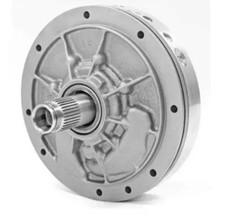
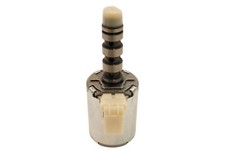
A 2005-2010 Super Duty with the 5R110W TorqShift that is slow to pick up Drive or Reverse on a cold morning, slips in every gear once it is hot, or whines in step with engine speed is usually telling you the front pump can no longer hold line pressure. This remanufactured 5R110W pump is listed for the 2005-2010 years, which is the window where Ford ran its second- and third-generation pump designs behind the 6.0L and 6.4L Power Stroke and the gas V8 and V10.
What the pump does in a 2005-2010 5R110W
The pump is driven by the converter hub and produces every bit of pressure the transmission uses, but on this unit it is more than a pump. Sonnax lists five valves housed in the 5R110W pump: the main pressure regulator, the converter pressure limit valve, the converter clutch control valve, the thermal cooler bypass valve and the converter anti-drainback valve. That means a worn pump body affects line pressure, lockup, cooler flow and lube at the same time. Ford redesigned the pump for 2005 partly because of low pressure on the first design, updating the pressure regulator valve and casting the cover from a harder aluminum-silicon-copper alloy. From 2008, as trucks dropped the external bypass cooler filter, a third generation added a notch in one worm track of the cover to keep lube flowing at very low temperatures.
Symptoms of a worn 5R110W pump
- Delayed engagement into Drive and Reverse, worst when the fluid is hot
- Slipping or soft shifts in all gears, not just one clutch
- Whine that rises and falls with engine RPM
- Low line pressure on a gauge, often with torque converter clutch complaints and codes P1744 or P1783
- Front seal leaks and pump noise from excess converter hub to bushing clearance
- On cold-climate 2008-later trucks, low one-way clutch damage tied to poor lube flow
How to confirm it before you order
Put a pressure gauge on the line port and compare idle and stall readings to spec before you condemn the pump. The 5R110W shifts every clutch with its own variable force solenoid, so a weak pressure control solenoid can mimic a tired pump; our 5R110 shift solenoid guide covers how to rule that out. If pressure is low in every range and the solenoids test good, the pump's pressure regulator bore is the prime suspect. The 5R110 rebuild wear points guide explains that bore wear and the bushing checks.
Fitment: 2005-2007 versus 2008-2010
This pump is listed for 2005-2010 5R110W units in the F-250 through F-550 Super Duty, plus the 2005 Excursion and E-Series applications built with this transmission. The important split inside this range is the cooler filtration. Ford's two service pumps are 9C3Z-7A103A for trucks that still have the external filter-bypass system and 9C3Z-7A103B for trucks without it, and Transmission Digest warns that the non-bypass pump is not to be used on bypass models. The changeover started in 2008, so a 2008-2010 truck can be either. Look under the truck: if the remote spin-on cooler filter and bypass plumbing are still there, you need the bypass version. A Gen. 3 non-bypass pump carries the number 9C3P-7A103-AC near the bolt circle. Compare that against your old pump, or send us your year and VIN and we will confirm the match. Every part for this unit is on our 5R110 TorqShift parts page.
Install notes
- Fit a new front seal and check the converter hub for scoring before it goes back in; a grooved hub will chew the new bushing.
- Install the converter anti-drainback valve the right way round; both lands are the same diameter, so it will go in backward.
- Prime the pump with fluid and torque the bolts evenly to keep it aligned.
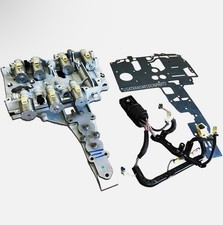
- Low line pressure often cooks the clutches before anyone notices. If the pan is full of friction material, pair the pump with a recalibrated 5R110W valve body or a new pressure control solenoid.
- Refill with Mercon SP, or Mercon LV, which Ford's fluid chart authorizes for complete refill and top-off on this transmission. Never use Mercon or Mercon V.