Every few months a customer asks whether their 5R55S should get a power-flush at the quick-lube or a straight pan drop and filter change, and the honest answer is that on this specific transmission the two services are not equally safe. The 5R55S has a documented pattern of valve body bore wear that a flush machine can turn from a hidden problem into an active failure, and at least one major manufacturer has already put in writing that external flush equipment is not something they want used on their transmissions at all. This isn't a brand-loyalty argument or a shop trying to upsell a more expensive service. It comes down to what's actually happening inside the valve body before you ever hook anything up.


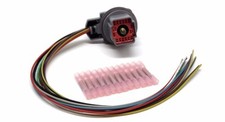
What Each Service Actually Does
A drain-and-fill is mechanically simple: drop the pan, replace the filter and gasket, drain whatever comes out of the sump, and refill through the fill/check plug with fresh MERCON V. A power-flush, run through an external exchange machine connected at the cooler lines, pumps new fluid in at one line while old fluid is pushed out the other, cycling through the torque converter, valve body, and cooler in the process while the engine runs. The selling point is obvious: a basic pan drop only empties the sump, so a meaningful amount of old fluid stays trapped in the converter, the valve body passages, and the cooler loop. Most quick-lube pan services stop there, but Ford's own 5R55W/S draining procedure goes further: remove the converter housing access plug, pull the torque converter drain plug, let it drain, and install a new converter drain plug at 89 lb-in (10 Nm) [6]. Draining the converter that way gets out much of the old fluid a flush machine is sold to remove. A flush machine is built to chase that remaining fluid down. The tradeoff is that it does so by running higher flow and more pressure cycling through every bore in the valve body than a simple refill ever will, and that is exactly where this transmission gets exposed.
Why the 5R55S Specifically Is the Wrong Candidate for a Blind Flush
Sonnax's own technical reference on the 5R55 family lays out which valve body bores wear first and why, and it is not a short list. The TCC modulator bore and the main regulator bore wear first because they see the most activity, and TCC modulator bore wear specifically is tied to converter slip and the P0741 code, often showing up at relatively low mileage. As city-driving cycle rate climbs, the VFS1, VFS2, and VFS3 modulator bores wear next, bleeding off clutch and servo pressure that the PCM's adaptive strategy compensates for right up until it can't anymore. On the direct clutch circuit specifically — applied in Reverse, 4th, and 5th gear through the VFS3 solenoid — wear at the reverse pressure modulator valve bore and end plug lets solenoid feed and direct clutch apply pressure leak away, producing slipping or lost 4th/5th gear, burned direct clutches, and delayed reverse engagement. Reverse engagement valve bore wear causes a related but separate failure: the solenoid feed pressure can no longer correctly position the valve, dropping reverse pressure and producing the same burned-clutch, delayed-engagement symptoms through a different path.
The fluid-side mechanism is documented too. In GEARS magazine (the ATRA publication), Pat Burrow explains that fresh fluid in an older, neglected transmission can be a shock to the system: its detergents loosen deposits, and those deposits can end up in solenoids and valves, sometimes shortly after the service. His recommendation for high-mileage units is a pan drop and filter, which replaces about half the fluid, dislodges less material, and gives the control module an easier time adapting.
None of that wear gets fixed by moving more fluid through the unit. What varnish buildup and partial fluid breakdown sometimes do, inadvertently, is bridge a worn bore just enough to keep it from leaking as badly as it otherwise would. A flush machine's higher flow and the cleaning action of fresh fluid is specifically what can knock that bridging deposit loose. That is the mechanism behind the shop-floor warning you'll hear from experienced rebuilders: flushing a transmission that's already borderline is what turns a quiet problem into a comeback a week later. Sonnax's recommended way to check a 5R55S valve body's actual condition before deciding anything is a wet air test, run in the vehicle or on the bench, confirming the valves stroke freely with no excessive leakage past them or bubbling from the exhaust slots, backed up by vacuum testing at the specific ports tied to each circuit. If a 5R55S hasn't had that check and the vehicle has real mileage on it, you don't actually know whether it's a safe flush candidate, and guessing wrong costs more than the service itself.
What a Manufacturer Already Put in Writing About Flush Machines
Ford hasn't published a current, publicly posted bulletin that addresses external flush machines by name for this family. General Motors has, and the logic in it applies to any clutch-and-valve-body automatic, not just GM's own. GM's technical service bulletin on unscheduled supplemental services states it plainly under "Subsystem Flushing": the use of external transmission fluid exchange or flush machines is not recommended for the automatic or manual transmission, because use of external machines to replace the fluid may affect the operation or durability of the transmission. The approved method, per that same bulletin, is to replace transmission fluid only by draining and refilling following the procedures in Service Information. The bulletin also states that GM's own analysis of parts returned after exposure to aftermarket flushes showed indications of potential damage and shortened durability. That's a manufacturer looking at real warranty returns and drawing a conclusion, not a theoretical caution.
The flush-related warning that does exist in Ford's own service history points at a related but distinct problem: fluid cooler contamination, not the main transmission fluid itself. Ford's older service tips for other transmission families instruct techs to flush the external cooler and lines, separately from the transmission, before installing an overhauled or replacement unit, because metal particles and debris from a prior failure can sit in the cooler and destroy a freshly rebuilt transmission. Transmission Digest's own technical piece on this exact issue explains the accepted method: aerosol line flush pushed through the cooler and lines, with the discharge caught in a clear container so you can actually see how much contamination comes out, followed by an inline filter on the return line if there's any doubt. That's a different service than running fluid-exchange equipment through a healthy, in-service transmission, and it's worth not conflating the two. Cooler flushing after a failure is standard practice. Whole-unit power-flushing a 5R55S that's still in service, with unknown valve body wear, is the part that deserves hesitation.
The Fluid Itself Matters As Much As the Method
Whichever service you choose, it only helps if the fluid going back in is correct. Ford's Motorcraft fluid specification calls out MERCON V specifically for electronically controlled automatic transmissions like the 5R55S, sold under part numbers XT-5-QMC (1-quart, case of 12), XT-5-5Q3M (5-quart), and XT-5-DMC (55-gallon drum), and it explicitly warns against substituting MERCON SP, MERCON LV, MERCON ULV, or Type F fluid where MERCON V is specified. Because the 5R55S is a sealed-fill design with no dipstick, verifying the fill is correct means checking the level at the fill/check plug in the pan sump, not eyeballing a stick. ATRA Technical Bulletin 746 spells out Ford's method: engine idling in Park, vehicle level on a hoist, the small center plug removed from the drain plug with a 3/16-inch Allen key, fluid added through the 307-437 adapter until it runs back out, and fluid temperature between 80 and 120°F on the scan tool's TFT PID when the plug goes back in [7]. Get that step wrong on either a flush or a drain-and-fill and you can produce the exact shudder and delayed-engagement symptoms that a fluid service was supposed to prevent.
The Practical Recommendation
Before any fluid service on an unknown-history 5R55S, drive it and confirm Reverse engages; GEARS cites shops that serviced a transmission without checking Reverse and then could not back the vehicle out of the bay. For a 5R55S with no symptoms, reasonable mileage, and no history of slip, shudder, or codes, a drain-and-fill with a filter and gasket change is the lower-risk service, full stop. If you want to displace more of the old fluid than a single drain-and-fill removes, do two or three of them spaced a short drive apart rather than reaching for a flush machine; each pass dilutes the remaining old fluid further without ever exposing the valve body to exchange-machine flow rates. If the transmission already shows slip, a TCC shudder, delayed reverse, or a P0741, skip the flush question entirely — that's a valve body wear diagnosis, not a fluid-service decision, and pushing more volume through it first is more likely to finish the failure than fix it.
FAQ
Is a power-flush machine ever safe to use on a 5R55S?
It depends entirely on the condition of the unit before you hook up the machine. On a 5R55S with no slip, no shudder, and no codes, a flush machine simply pushes more volume through the same bores the fluid already travels, so the risk is low. The problem is that Sonnax's own documentation on this family shows the TCC modulator and reverse pressure modulator bores wear first, and once those bores are worn, the extra flow and pressure cycling from a machine exchange can knock loose varnish or debris that was partially bridging a worn bore, converting a marginal unit into one that slips, delays reverse, or throws P0741 right after the service.
Why do some shops refuse to do a transmission flush at all?
Because the manufacturer position on external flush equipment, where it exists in writing, says not to use it. GM's own technical service bulletin on unscheduled supplemental services states flatly that external transmission fluid exchange or flush machines are not recommended for automatic or manual transmissions, and that using them may affect operation or durability. The bulletin also notes that GM's own analysis of returned parts exposed to aftermarket flushes showed potential damage and shortened durability. That is a GM document, not a Ford one, but it reflects the same engineering logic that applies to any clutch-and-valve-body transmission, the 5R55S included: approved service is drain and refill, not a flush cycle.
How much fluid does a drain-and-fill actually replace on a 5R55S?
Less than you'd think. Dropping the pan only empties the sump; the torque converter, the valve body passages, and the cooler and lines all hold fluid that a pan drop never touches. Ford's service procedure for the 5R55W/S also drains the torque converter through its own drain plug (replaced with a new plug, 89 lb-in), which removes far more old fluid than a pan drop alone. A single drain-and-fill typically replaces well under half the total fluid in the system. That is exactly why technicians who want a fuller exchange without a machine do two or three drain-and-fills spaced a short drive apart, which dilutes the old fluid down in stages instead of trying to force a complete exchange in one pass.
What fluid does the 5R55S actually need?
MERCON V only, per Ford's own Motorcraft fluid specification. The spec sheet explicitly lists MERCON V as the correct fluid for electronically controlled Ford, Lincoln, and Mercury automatic transmissions, and it separately warns against using it in applications that call for MERCON SP, MERCON LV, MERCON ULV, or Type F. Motorcraft sells it under part numbers XT-5-QMC (quart), XT-5-5Q3M (5-quart), and XT-5-DMC (55-gallon drum). Using a generic multi-vehicle synthetic ATF instead of a true MERCON V product is a separate risk from the flush-versus-drain question, but it shows up with the same symptoms: shudder and delayed engagement.
Can a flush cause a P0741 code on a 5R55S that didn't have one before?
It can expose one that was already brewing. Sonnax documents that TCC modulator valve bore wear on the 5R55N/W/S family is the common cause behind converter slip and P0741, and that it often shows up at relatively low mileage because that bore cycles constantly. A flush doesn't create that wear, but pushing fresh, cleaner fluid at exchange-machine flow rates through a bore that was already marginal, with varnish partially sealing the leak path, can be the thing that finally lets the code trip. A drain-and-fill moves far less volume per cycle and is far less likely to be the straw that breaks it.
Shop the part for this fix — the 5R55S Transmission Filter (2002-2010) at CoreTransmissionParts is the correct filter to pair with a drain-and-fill service on this unit. If you need the broader catalog of 5R55S parts instead, the full 5R55S transmission parts collection on CoreTransmissionParts covers solenoid packs, gaskets, and rebuild kits for this family.
Sources
- Sonnax — “Figuring Out the 5R55 Alphabet.” Backs the TCC modulator and main regulator bore wear pattern, the VFS1/VFS2/VFS3 modulator bore wear tied to city-driving cycle rate, the reverse pressure modulator and reverse engagement valve bore wear on the direct clutch/reverse circuit, the P0741-at-low-mileage link to TCC modulator wear, and the wet air test / vacuum test diagnostic method. sonnax.com/tech_resources/195-figuring-out-the-5r55-alphabet
- General Motors — Technical Service Bulletin on Unscheduled Supplemental Services (Including Flushing Services and Additives), “Subsystem Flushing” section. Backs the manufacturer statement that external transmission fluid exchange or flush machines are not recommended, that drain-and-refill per Service Information is the approved method, and that GM's analysis of returned parts exposed to aftermarket flushes showed potential damage and shortened durability. Hosted via NHTSA's public TSB database. static.nhtsa.gov/odi/tsbs/2016/MC-10116888-9999.pdf
- Transmission Digest — “To Flush or Not to Flush,” by Pat Barrow (Lubegard). Backs the separate issue of transmission cooler and line contamination after a prior failure, the aerosol line-flush method, catching discharge in a clear container to assess contamination level, and the option of an inline return-line filter. transmissiondigest.com/to-flush-or-not-to-flush
- Ford Customer Service Division / Motorcraft — MERCON V Automatic Transmission and Power Steering Fluid product page. Backs the fluid specification call and the XT-5-QMC/XT-5-5Q3M/XT-5-DMC part numbers, plus the warning against substituting MERCON SP, MERCON LV, or MERCON ULV. fcsdchemicalsandlubricants.com — MERCON V
- GEARS Magazine (ATRA) — “Is It Safe to Change Transmission Fluid in High-Mileage Vehicles?” by Pat Burrow, December 2024. Backs fresh-fluid detergency loosening deposits into solenoids and valves on neglected units, the pan drop replacing about half the fluid and easing control module adaptation, and the check-Reverse-before-service advice. gearsmagazine.com — high-mileage fluid changes
- Ford Motor Co. service information (Mitchell reprint) — "Servicing - Explorer & Mountaineer," 5R55W/S Draining & Refilling procedure and Torque Specifications. Backs the converter housing access plug and torque converter drain plug step, the new-drain-plug requirement, the 89 lb-in (10 Nm) converter drain plug torque, the 12.6 qt (12.0 L) approximate capacity, and MERCON V (XT-5-QM). 5R55W/S Servicing (PDF)
- ATRA — Technical Bulletin 746 (February 2003), "5R55N, 5R55S & 5R55W: New Rotunda Tool for Checking Fluid Level and Filling Transmissions." Backs the no-dipstick fill plug, the 3/16-inch level plug, the 307-437 adapter, and the 80-120°F TFT window for setting the level. ATRA TB 746 (PDF)