The complaint usually goes like this: an Explorer or Mountaineer cruising at 40 to 50 mph on a light throttle, and the whole truck starts to buzz like it's rolling over rumble strips. Step into it a little and the buzz goes away. Let off and it comes back. Owners call it a shake, a vibration or "the transmission slipping." On a 5R55S or 5R55W, most of the time it's the torque converter clutch trying to lock and not getting a clean apply.
Converter shudder is one of those complaints where parts get thrown at it fast. People replace converters that didn't need it, and people drop in new converters when the real problem was a worn valve in the valve body that will chew up the new one too. This guide walks through what Ford's service information says, what Sonnax found in the valve body, and the order I test in. It covers the 5R55S and 5R55W together, since they share the solenoid body, the TCC control circuit and the valve body layout. Specs trace to the sources at the bottom. Where something is my shop habit and not a published procedure, I say so.
How the 5R55S converter clutch is controlled
The 5R55W/S uses a four-element torque converter with a lockup clutch. Ford's diagnosis manual describes the TCC solenoid as a pulse-width modulated (PWM) solenoid that controls "application, modulation and release" of the converter clutch. The PCM doesn't just snap the clutch on. It ramps it, lets it slip a controlled amount, and holds it. That controlled slip is where shudder lives.
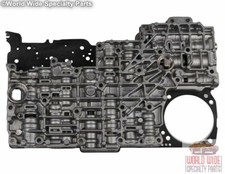
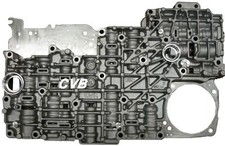
The solenoid's output goes to the TCC modulator valve and the TCC control valve in the valve body, which set how much pressure actually reaches the converter clutch. So there are three places the apply can go wrong:
- The command. The PCM decides when to lock based on throttle position, vehicle speed, engine and fluid temperature, and brake switch status. Ford's DTC table shows that bad inputs change TCC behavior: a TP sensor fault (P0121-P0123) is listed with "TCC does not engage, TCC cycling," and a MAF fault with "incorrect torque converter clutch engagement."
- The hydraulics. The solenoid, the modulator and control valves, and the fluid feeding them.
- The converter itself. The friction lining, the piston, and how the fluid behaves on that lining.
Step 1: make sure it's actually the converter
Before anything else, prove the shake is the TCC. Aaron Golas made this point in Gears magazine: shudder often gets blamed on the converter when the real cause is a misfire, a driveline vibration or a bad mount. His method is simple. Record a scan tool movie at the speed where it shudders. Look at TCC commanded slip against actual slip, and add vehicle speed, throttle position and engine load so you know conditions were steady. Then check Mode 6 misfire counts. If a cylinder's count climbs while it shudders, you have an engine problem, not a converter problem. He also points at worn engine and transmission mounts and dry driveshaft splines as shake sources that mimic TCC shudder.
On the Explorer, Ford's DTC table backs that up from the other direction: ignition system faults (P0300-P0308) are listed with "no TCC engagement." A misfiring engine confuses the whole TCC strategy.
The quickest field check is Ford's own TCC engagement test. With a tach connected and everything at operating temperature, hold a steady 50 mph in D with overdrive on and tap the brake lightly. Engine rpm should rise when you tap (the TCC releases) and drop again in about 5 seconds (it re-applies). If the shudder disappears the moment rpm rises and comes back as rpm drops, you've tied it to the converter clutch. Ford's road test also notes that with overdrive off, the TCC should apply above 29 mph, which gives you a second, lower-speed place to feel for it.
If your scan tool supports Ford's output state control, TCC mode lets you command the clutch on and off directly. Ford's conditions for it to work: shifter in OD, over 2 mph, 2nd gear or higher, TFT between 60 and 275°F, brakes released, and a steady speed. Commanding the clutch off at the shudder speed and feeling the shake stop is about as clean a confirmation as you get.
Step 2: codes and the TCC circuit
Run the quick test and record every code, engine codes included. The TCC-related ones on this unit, per Ford:
| Code | Ford definition | Symptom Ford lists |
|---|---|---|
| P0740 / P0743 | TCC solenoid circuit failure | Shorted: engine stalls at low idle. Open: TCC does not engage |
| P0741 | TCC engagement error | No TCC operation or TCC slips |
| P1740 | Mechanical failure of TCC solenoid | Stuck on: stalls at low idle. Stuck off: no TCC engagement |
| P0715 / P0717 | Insufficient input from TSS sensor | Harsh shifts, harsh TCC activation and engagement |
One detail matters here. Ford notes that the fault has to occur 5 times in a row during its drive cycle before P0741 or P1740 will set. So a truck with a real shudder and a clean code list is normal. Ford's drive cycle: warm up, accelerate to 50 mph so it gets 5th, hold at least 15 seconds, tap the brake, hold 5 more seconds, stop for 20 seconds in D, and repeat at least 5 times. Run it before you decide the TCC is fine because there's no code. If you do have P0741, our 5R55W P0741 guide goes deeper on that code.
Ford's Test A covers the TCC solenoid electrically. The TCC circuit is terminal 14 on the 16-pin case connector. Ford's pass/fail: measure from chassis ground to terminals 3, 5, 6, 14, 15 and 16, and if any reads under 5 ohms, the solenoid body gets replaced. Ford also has you watch the TCC PID in bench mode while wiggling the harness. A PID that drops out when you flex the connector is a wiring repair, not a solenoid.
A partly stuck solenoid is worth taking seriously. Ford states that if the TCC solenoid fails in the on position, "vehicle engine will run rough (shudder)" and may stall in Drive at low idle. That is a solenoid causing shudder with no converter fault at all.
Step 3: the fluid
Ford's hydraulic cause list for "TCC cycling, chattering or shuddering" starts with fluid contamination. That's no accident. A slipping converter clutch depends on the fluid's friction behavior. When the friction modifiers wear out or the fluid gets cooked, the lining grabs and lets go instead of slipping smoothly, and you feel that as shudder.
Ford's servicing data for the 5R55W/S:
- Fluid: MERCON V (XT-5-QM or XT-5-DM). Ford warns that any other fluid "could result in transmission damage."
- Capacity: about 12.6 quarts (12.0 L) total. Ford says to set the level with the check procedure, not by the amount added.
- Converter drain: the converter has its own drain plug behind an access plug in the bellhousing. Ford calls for a new converter drain plug every time, tightened to 89 in-lb. Pan bolts are 97 in-lb in a crisscross pattern.
- No additives: Ford's caution says to use only the specified fluid and not to use "supplemental fluid additives, treatments or cleaning agent."
Sonnax adds some history. In their 5R55 overview they note the factory fill before May 2005 was an early version of MERCON V, and that it contributed to fluid-related problems on these units. A high-mileage early truck still on original-style fluid is a prime shudder candidate.
My take: on a mild shudder with dark, tired fluid and no codes, a pan-and-converter drain with fresh MERCON V and a new filter is a fair first move, and it's cheap. A pan-only service barely touches the problem, since so much of the fluid sits in the converter. But if the fluid smells burned, has friction material in it, or the shudder comes back within a few hundred miles, stop treating it as a fluid problem. Something is pulling the apply pressure down.
Ford is also firm about the cooler. When friction or band material has been through the fluid, Ford says those contaminants "are a major cause of recurring transmission concerns" and the cooler has to be backflushed before the unit goes back in service. If the converter is getting replaced, flush the cooler and lines. Don't feed a new converter through a dirty cooler.
Step 4: the TCC modulator valve and plunger sleeve
This is the part a lot of people miss. Ford's shudder list includes "valve body (sticking valves)" and "incorrectly tightened valve body bolts (cross-leaks)." Sonnax pinned down the specific wear.
The TCC solenoid is PWM, so it's constantly oscillating. Sonnax found that this oscillation wears the inside diameter of the TCC modulator plunger valve sleeve, and that the valve body bore just inboard of the sleeve wears fast too. Once it leaks, converter apply pressure drops and the clutch can't hold full lockup. Sonnax lists the complaints as slip codes, high TCC slip rpm under increasing load, overheated fluid, and converter apply or release problems. Their plunger valve kit, 56947J-01K, is a hardcoat anodized plunger and a new sleeve at the stock ratio.
Separately, Sonnax documents wear at the TCC modulator valve bore itself. Their note on kit 56947J-15K is that bore wear there reduces TCC apply pressure and the low apply causes more TCC slip. The complaints they tie to it: P0741, excess TCC slip, code 1783 (overtemp), high line pressure and an overheated transmission. The kit uses a fully supported, anodized valve and ships with two springs. The white, shorter one is for the 5R55W and 5R55S; the plain, longer one is for the 5R55N. It needs Sonnax reamer tooling F-56947J-TL15, and oversized versions exist for badly worn castings.
Why this matters for shudder: a clutch that gets low, unstable apply pressure is exactly the clutch that stick-slips. Put a new converter behind a valve body with a worn modulator bore, and the new lining gets the same weak, wandering pressure. You'll see it again. Sonnax publishes a 5R55W/S vacuum test guide that shows where to test these bores with the valve body on the bench. If they fail, repair them or replace the valve body.
While the valve body is off, check the bolts. Ford keeps calling out incorrect valve body bolt torque as a cause of cross-leaks. The solenoid body bolts go to 71 in-lb in sequence, and over-tightening cracks the solenoid body.
Step 5: the converter
If the TCC circuit tests good, the fluid is fresh and correct, the valve body bores pass, and the TCC engagement test still shudders, the converter clutch itself is the problem. Ford lists "torque converter for damage" last on its shudder list for a reason. A glazed or worn lining, a distorted piston or a damaged damper won't come back with fluid. The converter gets rebuilt or replaced, and the cooler gets flushed.
My diagnostic order
This is my sequence, not a Ford procedure:
- Road test and confirm the shake goes away with a light brake tap at 50 mph. If it doesn't change when the TCC releases, look at mounts, the driveshaft and misfire.
- Scan for codes, engine codes included. Fix TP, MAF, misfire and TSS faults first.
- Run Ford's drive cycle at least 5 times. P0741 or P1740 may only set then.
- Check the TCC circuit at terminal 14 and all solenoid terminals for shorts to ground.
- Look at and smell the fluid. Tired but clean: pan and converter drain, fresh MERCON V, new filter, new converter drain plug at 89 in-lb.
- If it comes back, pull the valve body and inspect the TCC modulator valve, plunger sleeve and bores. Repair or replace.
- If everything tests good and it still shudders, the converter is done. Replace it and backflush the cooler.
Sonnax TCC modulator valve kit 56947J-15K for the 5R55S
If the valve body shows wear at the TCC modulator bore, this is the Sonnax kit that restores converter apply pressure. It includes the correct spring for the 5R55S/W. Sold by our sister store, CoreTransmissionParts.
Shop the part for this fix →Need the plunger sleeve kit, a TCC control valve, a converter or a solenoid pack instead? The 5R55S parts collection has them.
Need parts for this job?
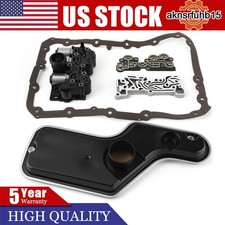
Our 5R55 parts page carries 5R55S and 5R55W TCC solenoids, valve bodies, solenoid kits, filter kits and rebuild kits for the Explorer, Mountaineer and Mustang units. Checkout is on site.
FAQ
What causes torque converter shudder on a 5R55S?
Ford's symptom chart for TCC cycling, chattering or shuddering lists four hydraulic causes: contaminated fluid, sticking valves in the valve body, incorrectly tightened valve body bolts that cause cross-leaks, and a damaged torque converter. Sonnax adds bore wear at the TCC modulator valve and its plunger sleeve, which lowers apply pressure and lets the clutch slip under load.
Will a fluid change fix 5R55S converter shudder?
Sometimes, if the shudder is mild and the fluid is worn out. Ford specifies MERCON V and about 12.6 quarts total, and the converter has its own drain plug, so pulling it replaces far more of the old fluid. Ford warns against supplemental additives. If shudder returns within a few hundred miles, the cause is mechanical.
How do I test the lockup clutch on a 5R55S?
Ford's TCC engagement test: at operating temperature, hold a steady 50 mph in D with overdrive on and tap the brake lightly. Engine rpm should rise as the TCC releases, then drop again in about 5 seconds as it re-applies. With a capable scan tool you can also command TCC on and off in output state control and watch slip rpm.
Can a bad TCC solenoid cause shudder on a 5R55S?
Yes. Ford says that if the PWM TCC solenoid fails in the on position, the engine runs rough, which feels like shudder, and it can stall at low idle in Drive. Check the TCC circuit at terminal 14 of the 16-pin case connector and make sure no solenoid terminal reads under 5 ohms to ground.
Related guides
- 5R55W P0741: TCC Slip Code Fix
- 5R55W P1744 Fix
- 5R55S Fluid Type and Capacity
- 5R55S Shift Solenoid Symptoms and Replacement
- Torque Converter Clutch Shudder Diagnosis
Sources
- Ford service information via Mitchell1, "2002 Automatic Transmissions 5R55W/S Diagnosis" (Explorer). Backs the PWM TCC solenoid description and its fail-on shudder and stall behavior, the TCC cycling/chattering/shuddering symptom tests and hydraulic cause list, the road test and 29 mph TCC apply with overdrive off, the TCC engagement test at 50 mph, the output state control TCC mode conditions, the DTC table (P0740/P0743, P0741, P1740, P0715, TP, MAF and misfire effects on TCC), the 5-consecutive-failure rule and drive cycle, terminal 14 for TCC, and the 5-ohm short-to-ground check. Ford/Mitchell diagnosis (PDF)
- Ford service information via Mitchell1, "2002 Automatic Transmissions Servicing - Explorer & Mountaineer" (5R55W/S). Backs MERCON V (XT-5-QM/XT-5-DM), the 12.6 qt capacity, the converter drain procedure with a new plug at 89 in-lb, 97 in-lb pan bolts, 71 in-lb solenoid body bolts, the no-additives caution and the cooler backflush warning. Ford/Mitchell servicing (PDF)
- Sonnax, TCC Modulator Plunger Valve Kit 56947J-01K (5R55W/S). Backs plunger sleeve wear from PWM solenoid oscillation, rapid bore wear inboard of the sleeve, reduced converter apply pressure and the listed complaints. sonnax.com
- Sonnax, TCC Modulator Valve Kit 56947J-15K (5R55N/S/W). Backs TCC modulator bore wear reducing apply pressure, the P0741/excess slip/1783/high line pressure complaints, spring selection by model and tool F-56947J-TL15. sonnax.com
- Aaron Golas, "Shudder Diagnosis," Gears magazine (ATRA). Backs the scan-tool method (TCC commanded vs actual slip with speed, TPS and load), Mode 6 misfire counts, and mounts and driveshaft splines as shudder mimics. gearsmagazine.com
- Sonnax, "Figuring Out the 5R55 Alphabet." Backs the early MERCON V factory fill before May 2005 contributing to fluid-related problems. sonnax.com