A 5R55S that drives fine forward but won't back up is one of the more common Explorer and Mountaineer calls we get. Sometimes it's a total no-reverse: select R, the engine loads a little or not at all, and the truck just sits. Sometimes it's a reverse that only works if you don't touch the gas, or one that takes three or four seconds to bite. Owners usually show up convinced the unit needs a rebuild. Some do. A fair number don't.
The good news is that reverse on this transmission uses a short, specific list of parts, and Ford's own service information tells you exactly which tests narrow it down. This guide covers the 5R55S and 5R55W together, since they share the reverse hardware, the solenoid body and the valve body layout. Specs trace to the sources at the bottom. Where something is my shop habit and not a published procedure, I say so.
What the 5R55S uses to make reverse
Ford's clutch and band application chart for the 5R55W/S lists four elements in use in R: the reverse band, the coast clutch, the direct clutch and the direct one-way clutch. Forward gears don't use the reverse band in OD range and don't need the direct clutch until 4th. That's why a unit can drive perfectly in D and still have no reverse: the two parts that carry reverse torque, the reverse band and the direct clutch, aren't doing much when you're driving forward in the lower gears.
The reverse band (you'll also see it called the rear or low/reverse band) is applied by the low-reverse servo, which bolts to the bottom of the case. The direct clutch is the one that's controlled electronically. Jesse Zacarias laid out the reverse engagement sequence in Transmission Digest: in R the PCM holds shift solenoid A on, modulates PC-B (VFS2) at about 0.5 amp to hold the reverse engagement control valve down, then ramps PC-C. As PC-C pressure rises it overcomes PC-B pressure on the reverse engagement control valve, the valve strokes, and full line pressure goes to the direct clutch drum. He puts the whole engagement at about two seconds.
ATRA's 2013 seminar notes back that up: PC-C "controls reverse engagement pressure" through the reverse pressure modulator and reverse engagement control valves, and it also applies the direct clutch in 4th and 5th. PC-B controls the forward and reverse engagement valves and the VFS2 modulator. The valve body also has a reverse boost passage in the main regulator, fed by the manual valve, which is why reverse line pressure runs higher than drive.
So a no-reverse on a 5R55S comes down to one of four things: the unit never gets told it's in reverse, the PC-C/PC-B side doesn't deliver oil to the direct clutch, the direct clutch doesn't hold, or the reverse band and servo don't hold.
Step 1: codes, fluid and the shifter
Ford's symptom chart for "No Reverse Engagement" starts with a quick test for codes, then Test A (shift and TCC solenoids) and Test D (PC-A, PC-B and PC-C solenoids). Do that first. A PC solenoid code, a transmission range sensor code (P0705 or P0708), or a shift solenoid A fault changes everything that follows.
Then check the basics Ford lists for any no-engagement complaint: fluid level and condition, shift cable adjustment and the digital TR sensor.
- Fluid. There's no dipstick. Ford checks level at the case plug with the engine running in Park and TFT at 81-120°F. Ford's servicing data lists MERCON V and a total capacity of about 12.6 quarts (12.0 L), but the level check, not the quantity, is what counts. A low unit may still pull forward and lose reverse first, since reverse needs the most pressure. Our fluid guide has the full procedure.
- Shift cable. Ford's shift cable procedure ends with a simple check: the engine should start only in Park and Neutral, and the backup lights should come on in Reverse. If the backup lights don't come on in R, fix the cable or TR sensor before you go further.
- Digital TR sensor. Ford describes it as four switches on the manual lever that the PCM reads for gear position. Zacarias notes a bad range sensor can keep the 5R55S/W from engaging forward or reverse, because the PCM won't run the reverse engagement strategy if it doesn't know it's in R. Watch the TR PID on the scan tool as you move the lever. It should read R solidly, not flicker.
Step 2: line pressure in reverse
Tee a gauge into the line pressure tap and read it in each range. Ford's 2002 Explorer specs:
| Engine | Range | Idle psi | WOT stall psi |
|---|---|---|---|
| 4.0L | P and N | 20-40 | N/A |
| 4.0L | R | 40-50 | 112-134 |
| 4.0L | D, 3, 2, 1 | 25-35 | 112-134 |
| 4.6L | P and N | 20-40 | N/A |
| 4.6L | R | 55-65 | 112-134 |
| 4.6L | D, 3, 2, 1 | 40-50 | 112-134 |
If pressure is good in drive and low in R only, Ford points at the separator plate, rear servo cover or piston leakage, the overdrive and intermediate servos, the valve body or the forward clutch. The rear servo cover is on that list for a reason: the low-reverse servo is the only big apply piston that sees reverse oil alone, and a torn seal or a leaking cover bleeds it off. Worn overdrive and intermediate servo pin bores in the case also leak in reverse. Our servo pin bore guide covers that failure.
If pressure is good in every range including R and it still won't back up, the oil is there and something isn't holding. Move on to the stall test.
Step 3: stall test in reverse
Ford's stall procedure: engine and fluid at operating temperature, parking and service brakes set, floor it in the range being tested and record rpm. Hold it no more than 5 seconds, and run the engine at 1000 rpm in Neutral for 15 seconds between ranges to cool the fluid. Ford notes a long stall test can set P0712 or P1783, so clear codes afterward.
Ford's stall spec is 2557-3036 rpm for the 4.0L and 2687-3150 rpm for the 4.6L. If rpm is high in R only, Ford lists the reverse clutch or the reverse band or servo. In practice on this unit that means the direct clutch pack (the one applied in reverse) or the reverse band and its servo. If rpm is high in manual 1 as well, Ford points at the reverse band or servo, since manual 1st also uses the reverse band. That's a useful split: slipping in both R and manual 1 points at the band; slipping in R but fine in manual 1 points at the direct clutch side.
If the engine won't rev up at all in R and the truck doesn't move, stop. Something is broken, not slipping.
Step 4: the low-reverse servo (in the car)
The low-reverse servo comes out from underneath with the unit in the vehicle. Ford's procedure: drain the pan and converter, remove the shift cable bracket, the 16 pan bolts and the filter, then the 4 bolts holding the low-reverse servo cover. The cover, piston, spring and plate come out together. On reinstall, Ford calls for tightening the 4 cover bolts in a set sequence, and the pan bolts go back at 97 in-lb.
Look for a cut or rolled piston seal, a scored bore, a cracked cover and a chipped or broken servo pin tip. While you're in there, check the servo's own control valve. Sonnax traced delayed reverse on the 5R55N/S/W to a stuck low/reverse servo control valve that sits inside the servo under a threaded end cap. When it sticks, it fills the servo very slowly and reverse comes in late or not at all. Sonnax specifically warns that pressure-washing the servo housing packs water, soap and debris into that bore. Pull the valve and spring, clean them, and confirm the valve moves freely in its bore when clean and dry.
With the servo out, you can often see the band through the opening. A band with the lining gone, or a broken strut, means the unit is coming out.
Step 5: the solenoid body and valve body
If pressure, stall and the servo all check out and reverse engagement is still missing or very late, the problem is often in the PC-C/PC-B control of the direct clutch. Ford's hydraulic list for no reverse starts with sticking valves in the valve body and incorrectly tightened valve body bolts, which cause cross-leaks. Sonnax notes the 5R55 solenoid is "often accused" of causing a loss of reverse, and that degraded fluid and loss of prime are common root causes. Sonnax also says the factory fill used an early MERCON V before May 2005, which contributed to fluid-related problems in these units.
Test the solenoid body at the 16-pin connector before condemning it. Ford's figures from Test D: the PC solenoids should read 3.3-7.5 ohms and the shift solenoids 16-45 ohms, with nothing shorted to ground. If they check out, command R and watch PC-C current climb on a scan tool that shows it. A PC-C that reads correctly electrically but won't apply the direct clutch points back toward the reverse engagement control valve, the reverse pressure modulator valve or the separator plate.
The reverse engagement valve is the one I see worn most often on high-mileage S and W valve bodies. Sonnax describes the circuit: reverse pressure from the manual valve is routed through the reverse engagement valve before it applies the direct clutch, and when the valve bore wears, solenoid feed oil can no longer position the valve correctly, so reverse pressure drops. Sonnax lists the results as delayed reverse, no reverse, slipping gears and a burned direct clutch, and recommends its 56947J-29K sleeve-and-valve kit when the bore fails a vacuum test or shows visible wear (installed with the F-27741-TL13 tooling). A burned direct clutch on teardown with a worn engagement valve bore means fixing the clutch alone will bring the car back.
If you replace the solenoid body, Ford's two traps apply: install two new O-rings on the case connector, and tighten the solenoid body bolts in sequence to 71 in-lb. Over-torquing cracks the body.
Step 6: air check on the bench
When the unit is out, or the valve body is off, Ford's air test finds a clutch or band that won't apply. Install test plate 307-433-01 with gasket 307-433-03, then apply air at no more than 40 psi to each test point. A dull thud or felt movement means the element applied. A hiss means leaking seals or check balls. Ford's chart lists the direct clutch assembly, the reverse band and servo, and the reverse drum assembly as the mechanical causes of no reverse, so air those circuits first. If the direct clutch applies on air but the frictions are burned, the direct clutch pack is the failure. If the servo strokes but the band slips, the band or drum is.
My diagnostic order
This is my sequence, not a Ford procedure:
- Scan for codes. Fix PC solenoid, shift solenoid A and TR sensor faults first.
- Set the fluid level at 81-120°F TFT and look at the fluid. Burned fluid with friction material in it changes the plan.
- Confirm the backup lights come on in R and the TR PID reads R.
- Line pressure in every range. Low in R only means look for a leak on the reverse side.
- Stall test in R and manual 1 to split the band from the direct clutch.
- Drop the pan, pull the low-reverse servo and check its control valve.
- Test the solenoid body at the 16-pin connector. If it passes, the valve body is next.
- Air-check with the valve body off. Burned direct clutch or a failed band means a rebuild.
5R55S low/reverse high-energy band, 2000-2010
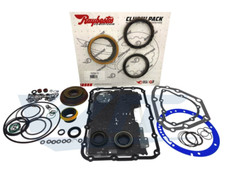
If the stall test and servo inspection point at a slipping reverse band, this is the replacement low/reverse band for the 5R55S and 5R55W. Replace it together with the servo seals. Sold by our sister store, CoreTransmissionParts.
Shop the part for this fix →Need a solenoid pack, servo sleeves, a direct drum or a full rebuild kit instead? The 5R55S parts collection has them.
Need parts for this job?
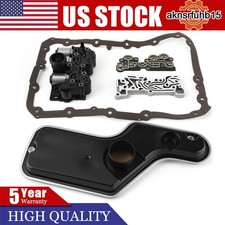
Our 5R55 parts page carries 5R55S and 5R55W valve bodies, solenoid kits, rebuild kits and filter kits for the Explorer, Mountaineer and Mustang units. Checkout is on site.
FAQ
Why does my 5R55S go forward but not reverse?
Reverse on the 5R55S uses the reverse band and the direct clutch, and neither one carries much load in the lower forward gears. So the unit can drive normally in D while the reverse band, its servo, the direct clutch or the PC-C circuit that applies it has failed. A line pressure check and a stall test in R split those causes quickly.
Can a solenoid cause no reverse on a 5R55S?
Yes. In reverse the PCM uses PC-B and PC-C to control how the direct clutch applies, and shift solenoid A is on. A failed PC solenoid or a solenoid body that has lost prime can cause delayed or no reverse. Test the pack at the 16-pin connector first: 3.3-7.5 ohms on the PC solenoids and 16-45 ohms on the shift solenoids.
What should line pressure be in reverse on a 5R55S?
Ford's 2002 Explorer specs are 40-50 psi at idle in R for the 4.0L and 55-65 psi for the 4.6L, with 112-134 psi at wide-open-throttle stall on both. If pressure is low in R only, Ford points at the rear servo cover or piston, the separator plate, the overdrive and intermediate servos, and the valve body.
Can the reverse servo be replaced without removing the transmission?
Yes. Ford's procedure removes the low-reverse servo from underneath after draining the fluid and pulling the pan and filter. Four bolts hold the cover, and the piston, spring and plate come out with it. A failed band or direct clutch, though, means the unit has to come out.
Related guides
- 5R55S Slipping: Causes and Fix
- 5R55S Limp Mode Causes and Fix
- 5R55S Shift Solenoid Symptoms and Replacement
- 5R55W and 5R55S Servo Pin Bore Wear
- 5R55S vs 5R55W Differences
Sources
- Ford service information via Mitchell1, "2002 Automatic Transmissions 5R55W/S Diagnosis" (Explorer). Backs the clutch and band application chart for R, the No Reverse Engagement symptom tests (Test A and Test D), the mechanical no-reverse list (valve body, valve body bolt cross-leaks, direct clutch, reverse band and servo, reverse drum), the line pressure table and "low in R only" causes, the stall procedure, stall specs and "high in R only" and "high in 1 only" results, the DTR sensor description, the 16-pin solenoid resistance values, and the air test with plate 307-433-01 at 40 psi. Ford/Mitchell diagnosis (PDF)
- Ford service information via Mitchell1, "2002 Automatic Transmissions Servicing - Explorer & Mountaineer" (5R55W/S). Backs the MERCON V spec and 12.6 qt capacity, the fluid level check, the low-reverse servo removal and install procedure with the 4-bolt cover and tightening sequence, the backup-light check after shift cable adjustment, and the 97 in-lb pan bolt and 71 in-lb solenoid body bolt torques. Ford/Mitchell servicing (PDF)
- ATRA, 2013 Technical Seminar manual, "Ford 5R55W/S Erratic Transmission Operation" (pp. 112-120). Backs the reverse boost passage fed by the manual valve, PC-C controlling reverse engagement pressure through the reverse pressure modulator and reverse engagement control valves, and PC-B controlling the forward and reverse engagement valves. atracom (PDF)
- Jesse Zacarias, "Understanding the 5R55S/W Initial Engagements," Transmission Digest. Backs the reverse engagement sequence (SSA on, PC-B at about 0.5 amp, PC-C ramping the direct clutch apply), the roughly two-second engagement, and a bad range sensor preventing forward or reverse engagement. transmissiondigest.com
- Sonnax, "Ford 5R55N/S/W Delayed Reverse." Backs the stuck low/reverse servo control valve under the threaded end cap, slow servo fill causing delayed reverse, and the pressure-washing warning. sonnax.com
- Sonnax, "Figuring Out the 5R55 Alphabet." Backs the solenoid being blamed for loss of reverse, degraded fluid and loss of prime as causes, and the early MERCON V factory fill before May 2005. sonnax.com
- Sonnax, Reverse Engagement Valve Kit 56947J-29K (5R55S/5R55W). Backs the routing of reverse pressure through the reverse engagement valve to the direct clutch, the effect of bore wear (delayed or no reverse, slipping, burned direct clutch), the vacuum test criterion and the F-27741-TL13 tooling. sonnax.com: Reverse Engagement Valve Kit