A 5R55S that slips is telling you exactly which part is failing, if you know how to read it. This is a five-speed built from a handful of holding elements, and each gear uses a different combination of them. Note which gear slips, and whether it's hot or cold, and you've usually narrowed it to one band, one clutch or one hydraulic circuit before the pan comes off.
This guide covers the Explorer, Mountaineer, Mustang, Aviator, LS and Thunderbird 5R55S, and the 5R55W, which shares the same geartrain and control system. The specs trace to the sources at the bottom. Where something is my own shop habit, I say so.
Start with the apply chart
Every slip diagnosis on this unit starts here. RatioTek's 5R55W/S rebuild manual lays out what's applied in each gear:
| Gear | Applied | 5R55S ratio | 5R55W ratio |
|---|---|---|---|
| 1st | Forward clutch + low one-way clutch (low sprag) | 3.22 | 3.22 |
| 2nd | Forward clutch + overdrive band | 2.29 | 2.41 |
| 3rd | Forward clutch + intermediate band | 1.55 | 1.55 |
| 4th | Forward clutch + direct clutch | 1.00 | 1.00 |
| 5th | Forward clutch + direct clutch + overdrive band | 0.71 | 0.75 |
| Reverse | Reverse (low/reverse) band + direct clutch + coast clutch | 3.07 | 3.07 |
ATRA's 2013 seminar material confirms the part of this that matters most: the forward clutch is on in every forward gear, 2nd is forward clutch plus overdrive band, and the 2-3 shift releases the overdrive band while applying the intermediate band. ATRA also notes that pressure control solenoid PCC is directly responsible for direct clutch apply in 4th and 5th.
Now read the chart backwards:
- Slips in 2nd and 5th: the overdrive band, its servo, or the overdrive servo pin bore. Those are the only two gears that use it.
- Slips in 3rd only: the intermediate band, its servo or its pin bore.
- Slips in 2nd, 3rd and 5th: both band circuits at once. That's the classic servo pin bore case, covered below.
- Slips in 4th and 5th: the direct clutch or its feed, including PCC and the valves it controls.
- Slips in every forward gear, Reverse OK: the forward clutch or its circuit.
- Slips everywhere including Reverse: low fluid or low line pressure (pump, pressure regulator, solenoid pack). Not a single friction element.
- Slips only in Reverse: low/reverse band and servo, direct clutch, coast clutch, or the reverse boost and engagement valves.
The scan tool gives you the same answer in numbers. Divide input speed by output speed and compare with the ratio column. A 5R55S that's in commanded 3rd should hold 1.55. If the calculated ratio wanders above it under load, that element is slipping. That's also what the PCM is doing when it sets an incorrect ratio code: P0732 for 2nd, P0733 for 3rd, P0734 for 4th and P0735 for 5th. TCC slip is a separate code, P0741.
Cause 1: servo pin bore wear (the big one)
If your 5R55S slips or flares in 2nd, 3rd and 5th and it's worse hot, look here first. Ford acknowledged it in TSB 09-12-12, which covers 5R55N, 5R55W and 5R55S units in the 2002-2009 Explorer and Mountaineer, 2007-2009 Explorer Sport Trac, 2005-2009 Mustang, 2002-2005 Thunderbird, 2002-2006 Lincoln LS and 2003-2005 Aviator. The bulletin's description: loss of 2nd, 3rd and 5th, incorrect ratio codes, and overdrive or intermediate band failure caused by servo pin case bore wear reducing apply pressure, generally on higher-mileage units and worse when hot. The repair is to measure both pin bores and sleeve the case if they're oversize.
Why the bore wears and what it does
Each band servo pushes on its band through an apply pin that rides in a bore machined into the aluminum case. Sonnax describes the failure as severe case wear at the servo apply pin bore from continuous pin oscillation. As the bore opens up:
- Servo apply oil leaks past the pin into the barrel area of the case, so apply pressure and shift timing both suffer.
- As wear increases, release oil cross-leaks into the apply circuits and exhausts at the shift valves.
- In Reverse both servos are charged from the release side, so a worn bore also shows up as delayed Reverse.
Sonnax's symptom list for the condition: 1-2, 2-3 and 4-5 flares, gear loss, codes 732, 733 and 735, band lining failure, and loss of overdrive and intermediate servo control. Look at those gears against the apply chart: every one involves the overdrive or intermediate band. RatioTek's manual puts it bluntly, saying the case usually needs this repair by 70,000 miles.
Here's the trap. A band burned by a leaking pin bore looks like a band that just wore out. Put new bands and frictions in, reuse the worn case, and the new bands are running on the same low apply pressure. The Gears Magazine write-up on a 5R55W delayed engagement notes that most of these units come in with servo pin wear and burnt bands, and sometimes destroyed overdrive planets. If the bands are burned, check the bores. Every time.
The fix
The case gets reamed on a fixture and sleeved. Sonnax's kit 56361J-01K includes an overdrive sleeve and an intermediate sleeve (the overdrive one is the longer of the two), made from wear-resistant aluminum, and uses tool kit S-56361J-TL with their SERVO-FIX fixture. The reamer is aligned from the pin bore centerline, not the servo piston bore. After the sleeve is pressed in, the apply hole is drilled through the sleeve wall using the case apply hole as the guide. Our servo pin bore wear guide goes through the procedure in detail.
Also check the servo pistons themselves. Gears Magazine covered 5R55N units where the release side of a servo piston leaked because the piston was hard, torn or delaminated; the servo air-checked fine because the damage was on the release side. Replace hardened servo pistons and seals as part of the job.
Cause 2: low fluid or the wrong fluid
The 5R55S has no dipstick. The level is set at a plug with the engine running, in Park, at 80-120°F transmission fluid temperature. So the owner can't check it, and a slow leak at a cooler line or pan gasket runs these units low without anyone noticing. Low fluid shows up as slipping that's worst on hard turns, on hills and under hard acceleration, when the pump pickup uncovers.
Before you diagnose anything else, set the level correctly. RatioTek lists total capacity at 12.7 quarts of MERCON V and warns that other fluids can cause chatter. Our 5R55S fluid type and capacity guide and filter and pan service guide cover the procedure. If the fluid is black and smells burned, the band or clutch damage is already done and a fluid change is not the fix.
Cause 3: low line pressure and valve body wear
If the unit slips in several gears and Reverse, suspect pressure before friction material. Put a gauge on the line pressure tap. RatioTek publishes these 5R55W/S line pressures:
| Range | Minimum (idle) | Maximum |
|---|---|---|
| Drive | 80-110 psi | 228-263 psi |
| Reverse | 90-140 psi | 282-350 psi |
| Pressure control tap | 0-15 psi | 112-134 psi |
Low at idle and low at the top end points at supply: pump, pump flow control valve, pressure regulator. Normal at idle but won't rise with throttle points at the boost side: PCA/PCB solenoid output, boost valves and VFS modulator valves. Sonnax's 5R55S/W valve body layout ties specific wear points to these complaints:
- Pump flow control valve: delayed engagement, no movement, low line pressure.
- Pressure regulator sleeve and valve: soft shifts, low line rise, and uncontrolled or high line pressure in Reverse.
- Oversized VFS modulator control valve kit (56947J-19K): flare shifts, pressure control out-of-range codes, low line pressure.
- Boost valve: no Reverse, Reverse slip, low Reverse boost, erratic line pressure.
- Reverse modulator valve: delayed Reverse, no 4th, no 5th, burned direct clutch.
- Reverse engagement valve: delayed or no Reverse, slipping gears, burned direct clutch.
That reverse modulator entry is worth underlining. A 5R55S that slips in 4th and 5th with a burned direct clutch may have a worn valve in the valve body, not just bad frictions. Replace the clutches without addressing the bore and the new direct clutch burns too.
The solenoid pack is part of this picture. ATRA found that the wrong design pack for the model year can shift mainline pressure by about 30 psi, enough to cause flares. Our 5R55S shift solenoid guide has the Ford part number break.
Cause 4: loose bands
The overdrive and intermediate bands on the 5R55S have external adjusting screws, so a band that's worn thin can sometimes be brought back into range. RatioTek's procedure for each band: tighten the adjusting screw to 120 in-lb, back it off the specified number of turns, and tighten the locknut to 40 ft-lb. ATRA's band adjustment chart (Technical Bulletin 1151) gives the back-off:
| Unit | Overdrive (front) band | Intermediate (rear) band |
|---|---|---|
| 5R55N and 5R55W | 2 turns | 2 turns |
| 5R55S 1999-2002 | 2 turns | 2 turns |
| 5R55S 2003-up | 1-1/2 turns | 1-1/2 turns |
Be realistic about what an adjustment does. It takes up clearance on a band that's still healthy. It won't restore burned lining, and it can't make up for apply pressure leaking out of a worn pin bore. If an adjustment makes a slip go away for a few hundred miles and then it comes back, the bore is your problem.
A related check from Gears Magazine: with the vehicle raised and the selector in Drive, both band adjusting screws should turn freely. If one is tight in a gear where that band shouldn't be applied, a leaking servo is applying it when it shouldn't, which causes bind-ups and burns the band.
Cause 5: the forward clutch circuit
The forward clutch is applied in all five forward gears, so a slip or delayed engagement in every forward gear with a good Reverse points here. The Gears Magazine 5R55W case is a good lesson: the forward clutches were burned, but the drum, center support, case, separator plate and gaskets all checked out. A vacuum test found a leak between an end plug and the valve body on the forward engagement control valve. O-ringed replacement end plugs fixed it. If you just replace the forward clutch pack on a unit like that, it fails again. Test the circuit, not just the parts.
My diagnostic order
This is my sequence, not a Ford procedure:
- Set the fluid level the Ford way with the TFT PID in range. Note color and smell.
- Pull codes. P0732/P0733/P0735 together points at the bands. P0734 and P0735 together points at the direct clutch. Pressure control codes send you to the solenoid pack and its connector first.
- Road test with data. Log commanded gear, input and output speed, calculated ratio, TFT and TCC slip. Identify exactly which gear or shift slips, and whether it's only hot.
- Gauge line pressure at idle and at the top end in Drive and Reverse against the table above.
- Drop the pan. Heavy band lining material in the pan with a 2nd/3rd/5th complaint means a teardown with a pin bore measurement, not a band adjustment.
- On teardown, measure both servo pin bores, inspect servo pistons for hardening and release-side seal damage, and inspect the valve body bores Sonnax lists before reusing it.
Preventing a repeat slip
- Sleeve both servo pin bores on every rebuild of a high-mileage case, whether or not the bands looked bad.
- Match the solenoid pack to the model year by Ford part number.
- Address worn valve body bores instead of reusing the valve body because it "looked clean."
- Check for leaks at the cooler lines and pan, and set the level correctly after any service. No dipstick means nobody is watching it.
5R55S servo piston kit (1999-up)
Replacement overdrive and intermediate servo pistons for the 5R55S. If your bands are burned from low apply pressure, replace hardened or damaged pistons along with the bore repair. Sold by our sister store, CoreTransmissionParts.
Shop the part for this fix →Need bands, frictions or Sonnax valve kits instead? The 5R55S parts collection has them.
Need parts for this job?
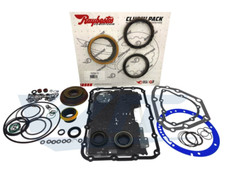
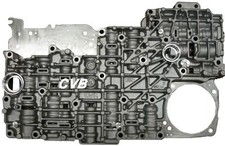
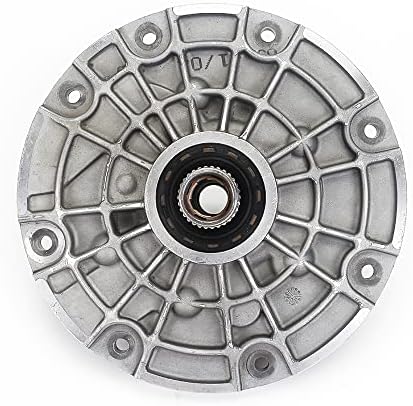
Our 5R55 parts page carries 5R55S and 5R55W rebuild kits, valve bodies, pumps, solenoid packs, filter kits and MERCON V for the Explorer, Mountaineer and Mustang units. Checkout is on site.
FAQ
Why is my 5R55S slipping in 2nd, 3rd and 5th gear?
Those three gears are the band gears. The overdrive band holds in 2nd and 5th and the intermediate band holds in 3rd, so a slip in that pattern points at the bands and their servos, not the clutches. Ford TSB 09-12-12 ties it to servo pin case bore wear that bleeds off apply pressure, usually on higher-mileage units and worse when hot.
What codes does a slipping 5R55S set?
Slips show up as incorrect gear ratio codes: P0732 for 2nd, P0733 for 3rd, P0734 for 4th and P0735 for 5th, with P0741 for torque converter clutch slip. Sonnax lists 732, 733 and 735 as the typical codes when the overdrive and intermediate servo pin bores are worn.
Can you adjust the bands on a 5R55S to stop slipping?
Yes, both the overdrive and intermediate bands have external adjusting screws. ATRA's band chart lists 2 turns back for the 5R55N and 5R55W and 1-1/2 turns for 2003-up 5R55S after seating the screw. Adjustment only helps when the band is simply loose; it will not fix burned lining or a worn servo pin bore.
Will a fluid change fix a slipping 5R55S?
Only if the problem is low or badly degraded fluid. The 5R55S has no dipstick, so a unit that is a quart or two low is common and will slip. Set the level correctly with MERCON V at 80-120 degrees F first; if it still slips in a specific gear, the cause is mechanical or hydraulic and fresh fluid will not cure it.
Is a slipping 5R55S worth rebuilding?
Usually, as long as the case is saved. RatioTek notes the servo pin bores usually need repair by about 70,000 miles, and a bushing-type sleeve kit restores the bore. A rebuild that replaces bands and frictions without sleeving the worn bores will slip again.
Related guides
- 5R55W and 5R55S Servo Pin Bore Wear
- 5R55S Shift Solenoid Symptoms and Replacement
- 5R55W P0730 Fix
- Ford 5R55S and 5R55W Transmission Problems
- 5R55S vs 5R55W Differences
Sources
- ATRA, 2013 Technical Seminar manual, "Ford 5R55W/S Erratic Transmission Operation" (pp. 112-120). Backs the forward clutch applied in all forward gears, forward clutch plus overdrive band in 2nd, the 2-3 overdrive band release and intermediate band apply, PCC applying the direct clutch in 4th and 5th, and the wrong solenoid pack shifting mainline about 30 psi. atracom (PDF)
- ATRA Technical Bulletin 1151, "Band Adjustment Chart" (January 2008). Backs the back-off turns: 2 and 2 for the 5R55N and W, 2 and 2 for 1999-2002 5R55S, and 1-1/2 and 1-1/2 for 2003-up 5R55S. atracom (PDF)
- Sonnax, "Overdrive & Intermediate Servo Pin Bore Sleeve Kit" 56361J-01K. Backs the pin oscillation wear mechanism, apply oil leaking into the case barrel, release oil cross-leak, delayed Reverse, the 1-2/2-3/4-5 flares, gear loss, codes 732/733/735 and band lining failure, the aluminum sleeves and tool kit S-56361J-TL; its installation instructions back the sleeve and reaming steps. sonnax.com
- Sonnax, "Ford 5R55S, 5R55W Valve Body Layout." Backs the valve-by-valve symptom list for the pump flow control valve, pressure regulator sleeve and valve, VFS modulator control valve kit 56947J-19K, boost valve, reverse modulator valve and reverse engagement valve. sonnax.com
- Rob Faucett, "Going Nowhere Fast... 5R55W Delayed Forward Engagement," GEARS Magazine (ATRA), September 2017. Backs the typical findings of servo pin wear, burnt bands and destroyed overdrive planets, and the forward engagement valve end plug leak found by vacuum testing. The companion GEARS article by Mike Brown on 5R55N servos backs the release-side piston leak and the band screw check in Drive. gearsmagazine.com
- RatioTek, "Ford 5R55W&S" rebuild reference manual. Backs the band and clutch application chart, the 5R55S and 5R55W gear ratios, the line and pressure control pressures, the 12.7-quart MERCON V capacity, the 120 in-lb / 40 ft-lb band adjustment procedure, and the note that the case usually needs servo pin bore repair by 70,000 miles. RatioTek manual (PDF)