A 5R55S that won't move in any range — engine runs fine, shifter moves freely through the gate, but nothing happens at the wheels — is a different animal from a unit that's missing one specific gear. If you've landed here chasing a reverse-only complaint, read 5R55S No Reverse: Diagnosis and Fix instead; that's a narrower problem with narrower causes. Total loss of movement in every range means you're looking for something that affects the whole hydraulic circuit at once: the pump's output, the manual valve's connection to the shifter, or (less often, but it happens) something mechanical that disconnects the input from the output entirely.
This post covers the three places that actually cause this complaint on the 5R55S, in the order I check them, plus the fluid-check procedure you need because this unit has no dipstick.
Step 1: Check the Fluid Level — and Do It the Right Way
The 5R55S is a sealed-fill design. There's no dipstick, and that single fact causes more missed no-movement diagnoses than anything mechanical in the unit. Low fluid starves the pump of supply volume before it ever gets a chance to build pressure, and a starved pump produces exactly this complaint: engine fine, shifter fine, nothing at the wheels.
You cannot check this with a stick. Raise the vehicle, run the engine until the transmission reaches normal operating temperature with the shifter in Park, then remove the fluid level check plug in the center of the pan sump. Fluid should trickle out in a steady stream at the correct level. If nothing comes out, or it only dribbles after a long wait, the unit is low and you've likely found your answer, or at least a contributing factor. Top off with Motorcraft MERCON V (Ford part XT-5-QMC, quart; XT-5-5Q3M, 5-quart; or XT-5-DMC, 55-gallon drum) through the fill procedure for your specific application. Don't substitute MERCON LV, SP, or ULV — those are not interchangeable with MERCON V in this unit.
Ford's own 5R55W/S diagnostic manual puts the same thing first. For "no forward and no reverse gears," its mechanical checklist starts with fluid level and condition, then the shift linkage (misadjusted cable), the digital TR sensor, sticking valves and valve body bolt torque (cross-leaks), before it gets to the input shaft, oil pump, overdrive planetary, center shaft, forward clutch and forward planetary (Ford 5R55W/S Diagnosis, source 6). Ford's electronic path for the same complaint is the quick test followed by Test D on the PC-A, PC-B and PC-C pressure control solenoids.
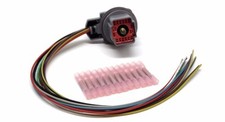
The 2005 Mustang workshop manual, which covers the 5R55S directly, lays out the same "No Forward and No Reverse" routine in the same order and names one solenoid specifically: pressure control solenoid B, checked through the on-board diagnostic tests and Pinpoint Test D (Ford 2005 Mustang Diagnosis By Symptom, source 7). The same manual's Test D puts each pressure control solenoid at 3.3 to 7.5 ohms from pin 3 to pins 1, 4 and 11, so a meter at the case connector tells you quickly whether PC-B is even in the running. And if the main control comes apart, Ford's routine says it plainly: do not stone, file or sand the valves, because it removes the anodized finish and can cause further damage (source 7).
If fluid is present and at the correct level but dark or smells burnt, that points toward internal clutch or band damage rather than a hydraulic-supply problem, and changes the diagnostic path — see the section on mechanical causes below.
Step 2: Rule Out the Pump Flow Control Valve
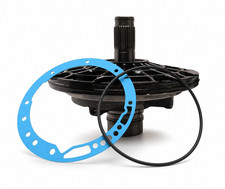
This is the single most common root cause ATSG has documented for delayed-or-no engagement on the 5R55N/W/S family, and it produces a very specific pattern worth recognizing: the complaint shows up almost exclusively on the first start of a cold morning, and sometimes clears if you snap the throttle open. ATSG's write-up on this (published in Transmission Digest as "Morning Sickness — Well, Sort Of") traces the cause to a flow-control valve that sticks inside the line-pressure relief-valve assembly in the pump. The sticking happens one of two ways: a groove wears into the assembly sleeve and the valve hangs up in it, or the thin O-ring between the sleeve and the pump plate fails and leaks oil flow that the relief circuit needs to hold pressure. Rebuilders who've torn these down report finding the valve fully stuck wide open, which routes line pressure away instead of building it.
Before you blame this valve specifically, ATSG's own first step is to rule out converter drain-back, since a converter that's draining overnight mimics the same cold-morning symptom. Because there's no dipstick, that check also means lifting the vehicle and pulling the level plug, same as Step 1, just done cold rather than hot.
Sonnax sells a direct fix for the worn valve itself: pump flow control valve kit part 2198 (listed as 56200-03K), which replaces the OE canister and plunger with a harder canister, a case-hardened plunger, and a larger O-ring. Sonnax's own listing names the exact symptom set this kit addresses: delayed engagement, no movement, pump noise, and low line pressure — which lines up precisely with what you're diagnosing here. If your no-movement complaint follows the cold-morning pattern, or if you've already confirmed fluid level is correct and the pump is still not building pressure consistently, this valve is the next thing to pull and inspect, not the whole pump.
There is a quick bench check for it once it is out. Bob Warnke of Sonnax, in "Figuring Out the 5R55 Alphabet," describes air testing the pump line control valve at 100 psi: a "pop" when the air hits it tells you the plunger is sticking. He lists a stuck-open pump line control valve as a cause of delayed engagement on this family.
Step 3: Confirm the Manual Valve Is Actually Moving
If line pressure comes up fine and the fluid is in good shape, stop thinking hydraulics and start thinking mechanical connection. Before you drop the pan, watch the manual lever at the transmission case while a helper runs the shifter through every position. If that lever doesn't move, or moves only partway, the problem is outside the transmission: a disconnected or misadjusted shift cable, a worn cable bushing, or a binding linkage. This is a five-minute check that rules out or confirms an entire category of causes before you touch a bolt on the pan.
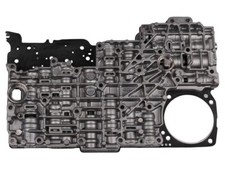
If the lever at the case does move correctly with the shifter, the next step is to drop the pan and confirm the manual valve inside the valve body is actually linked to that lever and seated correctly. On some transmission families the manual valve can be installed backwards during a prior rebuild — it physically fits either orientation, which is exactly why it's a documented cause of no-movement complaints on units that have been apart before. If this 5R55S has ever been rebuilt, don't skip this check even if the external linkage looks fine.
Step 4: Hydraulic Leaks Inside the Valve Body Itself
Line pressure can test normal at the mainline tap and the transmission can still refuse to move, because the valve that actually strokes to engage a clutch needs its own control pressure, separate from mainline. A documented case on the closely related 5R55W makes this exact point: a 2006 Explorer came in with delayed forward engagement when warm that progressed to binding in reverse. Every sensor and solenoid tested fine on the scan tool, the forward drum, sealing rings, center support, and separator plate all checked out, and mainline pressure was normal. The actual fault was a leak between the forward engagement control valve's end plug and the valve body bore — invisible to a pressure gauge at the test port because it only bleeds off the control-pressure side.
The way that leak gets found is a vacuum test, not a pressure gauge: seal the orifice area with tape, hold the end plug in place with a clip, and pull a vacuum on the circuit to see where it won't hold. On that case, the fix was swapping in an o-ringed version of the end plug, which is available for this valve body, followed by repeating the vacuum test to confirm the seal before reassembly. The forward engagement circuit on the 5R55S/W family is controlled by pressure control solenoid B stroking the engagement valve against spring pressure (roughly 0.5 amps during initial engagement), with solenoid A operating VFS1 to meter mainline flow to the forward clutch — so a code-free, pressure-normal, no-movement complaint that survives Steps 1 through 3 belongs here next.
Two more 5R55-family traps belong in this step, both from Sonnax's Warnke. First, a lot of engagement complaints get blamed on the solenoid body when the real problem is degraded fluid or a VFS solenoid that has lost its prime. That includes brand-new replacement solenoids. His advice is to fill the solenoid circuits with fluid and pull it through with vacuum before installation. Second, the solenoid assembly looks the same across the N, W and S, but only a few parts interchange. The base plate and filter are critical, and the filter is part of the gasket. Mixing an N base plate or filter into a W/S unit can cost you reverse, TCC apply and solenoid pressure. On a unit that has been apart before, confirm what is actually bolted to the valve body.
What If It's Purely Mechanical?
Burnt or dark fluid at the correct level, combined with a manual valve confirmed to be moving and seated correctly, shifts the suspect list to something broken inside the case: a sheared input shaft, a failed pump drive gear or ring gear, or a stripped torque converter hub. Any of these physically disconnects the engine's rotation from the gearset, and no amount of valve body work fixes it. You'll usually get a secondary clue here — a bang or grinding noise at the moment of failure, or metal in the pan that isn't friction material. If you find that, you're planning a teardown and rebuild, not a valve body repair.
Before the unit comes out, Ford's manual offers one more check worth doing: an air pressure test. Ford notes that a "no drive" condition can exist even with correct fluid pressure, due to inoperative clutches or bands. With the pan and valve body off and test plate 307-433-01 installed, apply no more than 40 psi of air to each circuit; a dull thud or felt movement means the clutch or band applied, and hissing points at leaking clutch seals or check balls (Ford 5R55W/S Diagnosis, source 6).
FAQ
Is no movement in any gear on a 5R55S always the pump?
No. A dead pump is one cause, but ATSG's field reports on the 5R55N/W/S family trace most no-movement and delayed-engagement complaints to a stuck flow control valve inside the pump's line-pressure relief assembly, not a worn-out pump itself. A separate, equally common cause is the manual valve or shift linkage not actually moving the valve body when you move the shifter. Pull the pan and watch the manual lever at the case before you condemn the pump.
Why does the 5R55S only fail to move on the first start of a cold morning?
ATSG documents this exact pattern on the 5R55N/W/S family: delayed or no engagement that shows up almost exclusively on the first startup in extreme cold, and that sometimes clears if you snap the throttle open. The cause is a flow control valve sticking in the line-pressure relief assembly, often from a groove worn into the valve's sleeve, or a leak at the thin O-ring between the sleeve and the pump plate. Once the fluid warms and thins out, the leak path matters less and the symptom disappears, which is exactly why it gets ignored until it fails completely.
How do I check transmission fluid level on a 5R55S if there's no dipstick?
The 5R55S is a sealed-fill design with no dipstick. You have to raise the vehicle, run it up to normal operating temperature in Park, and remove the fluid level check plug in the center of the pan sump with the engine running. Fluid should trickle out at the correct level; if nothing comes out, the unit is low and that alone can produce a no-movement complaint by starving the pump.
What does it mean if line pressure is normal but the transmission still won't move?
Normal line pressure with no movement points away from the pump and toward the valve body or the clutch/linkage path. On the related 5R55W, a documented case found a leaking forward engagement control valve end plug that bled off the pressure needed to stroke the valve, even though mainline pressure at the test port was fine. A vacuum test at the valve body, not a line-pressure gauge, is what isolates that kind of leak.
Shop the part for this fix — the Sonnax 5R55S/5R55W Line Pressure Booster Kit (5R55WS-LB1) at CoreTransmissionParts addresses the same pump pressure-supply circuit covered in Step 2, for shops that want the elevated-pressure correction done in one kit rather than chasing individual valve wear. If you need the broader catalog of 5R55S parts instead, the full 5R55S transmission parts collection on CoreTransmissionParts covers solenoid packs, filters, and rebuild kits for this family.
Sources
- ATSG (Automatic Transmission Service Group), via Transmission Digest — “Morning Sickness — Well, Sort Of.” Backs the cold-morning delayed/no-engagement pattern on the 5R55N/W/S family, the flow-control valve sticking in the line-pressure relief assembly from sleeve groove wear or O-ring leakage, the converter drain-back check procedure using the pan level plug, and rebuilders finding the valve stuck fully open on teardown. transmissiondigest.com/morning-sickness-well-sort-of
- Sonnax — Pump Flow Control Valve Kit, part 2198 (56200-03K), for Ford 5R55N/5R55S/5R55W. Backs the part number, the harder canister/case-hardened plunger/larger O-ring design change, and the documented symptom list: delayed engagement, no movement, pump noise, and low line pressure. sonnax.com/parts/2198-pump-flow-control-valve-kit
- Gears Magazine (ATRA) — “Going Nowhere Fast: 5R55W Delayed Forward Engagement.” Backs the forward engagement control valve end-plug leak case, the diagnostic steps (code scan, drum/seal/separator-plate inspection, VFS1/VFS2 vacuum test, taped-orifice end-plug vacuum test), the o-ringed end-plug fix, and the PCS B/VFS1 engagement circuit description. gearsmagazine.com/magazine/going-nowhere-fast-5r55w-delayed-forward-engagement
- Ford Customer Service Division / Motorcraft — MERCON V Automatic Transmission and Power Steering Fluid product page. Backs the fluid specification call and the XT-5-QMC/XT-5-5Q3M/XT-5-DMC part numbers, plus the warning against substituting MERCON LV, SP, or ULV. fcsdchemicalsandlubricants.com — MERCON V
- Sonnax — Bob Warnke, “Figuring Out the 5R55 Alphabet.” Backs the 5R55N/W/S application split, the limited parts interchange and the base plate/filter (filter is part of the gasket) mix-up causing loss of reverse, TCC apply and solenoid pressure, degraded fluid and lost VFS solenoid prime as root causes of engagement complaints with the vacuum priming procedure, and the 100 psi air test for a stuck pump line control valve plunger. sonnax.com/tech_resources/195-figuring-out-the-5r55-alphabet
- Ford Motor Co. service information (Mitchell reprint) — 2002 Explorer/Mountaineer, “5R55W/S Diagnosis.” Backs the “no forward and no reverse gears” mechanical checklist (fluid, shift cable, digital TR sensor, valve body, input shaft, pump, planetary and forward clutch), the Test D pressure control solenoid path, and the air pressure test with test plate 307-433-01 at 40 psi maximum. 5R55W/S Diagnosis (PDF)
- Ford Motor Company, 2005 Mustang Workshop Manual, section 307-01, Diagnosis By Symptom and Pinpoint Tests (PDFs). Backs the 5R55S "No Forward and No Reverse" routine (PCM, harness and PC-B via on-board tests and Pinpoint Test D; fluid level and condition; shift cable and digital TR sensor; main control screws, separator plate and stuck valves; do not stone, file or sand valves; pump, overdrive planetary, center shaft and forward clutch) and the 3.3-7.5 ohm PC solenoid spec. themustangsource.com (Ford service PDF) · Pinpoint Tests PDF