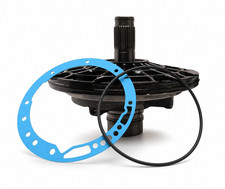
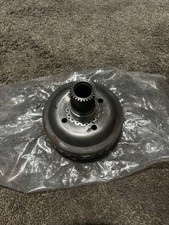
A Mustang V6, Lincoln LS or 2004-2005 Explorer with a 5R55S that will not pull into gear on a cold morning, then drives normally once it warms up, is describing one of the best documented pump problems on this transmission. This is a remanufactured 5R55S front pump, bench-ready to bolt in, so you are installing a pump with fresh wear surfaces instead of rebuilding a tired one yourself. It carries a 1-year warranty.
What the pump does in a 5R55S
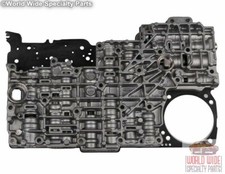
The 5R55S pump is turned by the converter hub and supplies line pressure to the valve body, which the three variable force solenoids then trim for each clutch and band apply. Inside the pump body is a flow control valve that routes excess output back to the suction side. When that valve sticks open or its thin O-ring at the pump plate leaks, oil takes the path of least resistance back to suction and line pressure collapses. The pump cover also holds the converter hub bushing, so a worn pump can show up as a leak as easily as a shift problem.
Symptoms on the 5R55S
- No engagement or a long delay into Drive and Reverse on the first start of a cold day
- Engagement that returns when the throttle is snapped open, then behaves once warm
- Soft, slipping shifts in every gear and eventual ratio codes as pressure drops
- Pump whine that tracks engine speed
- A front seal that keeps leaking because the hub bushing has worn
How to confirm it
ATSG's write-up on this exact 5R55S complaint says a gauge on either line pressure tap reads 40 psi or lower while the valve is stuck, so a cold-start pressure test separates a pump problem from a valve body or servo problem quickly. Before you get that far, check the fluid level properly - there is no dipstick, and a low level gives the same no-engage complaint. Our 5R55S pump failure symptoms guide walks through the flow control valve, regulator and bushing failures one by one, and if the car will not move at all the Mustang won't-move guide covers the other causes to rule out.
Fitment
This pump is for the 5R55S. Sonnax places the S in the 2004-2005 Explorer and Mountaineer, and in the Lincoln LS and Thunderbird from 2003 when it replaced the 5R55N; the 2005-2010 Mustang V6 also uses it. Do not assume by model year alone - the 2002-2003 Explorer runs the 5R55W, and the LS ran the N before 2003. Sonnax identifies the S by its 38-tooth overdrive sun gear (the W uses 24 teeth), and the transmission code on the door label tells you which one you have. Match the old pump to this one or send us your year and VIN. Our 5R55S vs 5R55W differences guide explains the split, and everything else for this unit is in the 5R55 parts collection.
Install notes
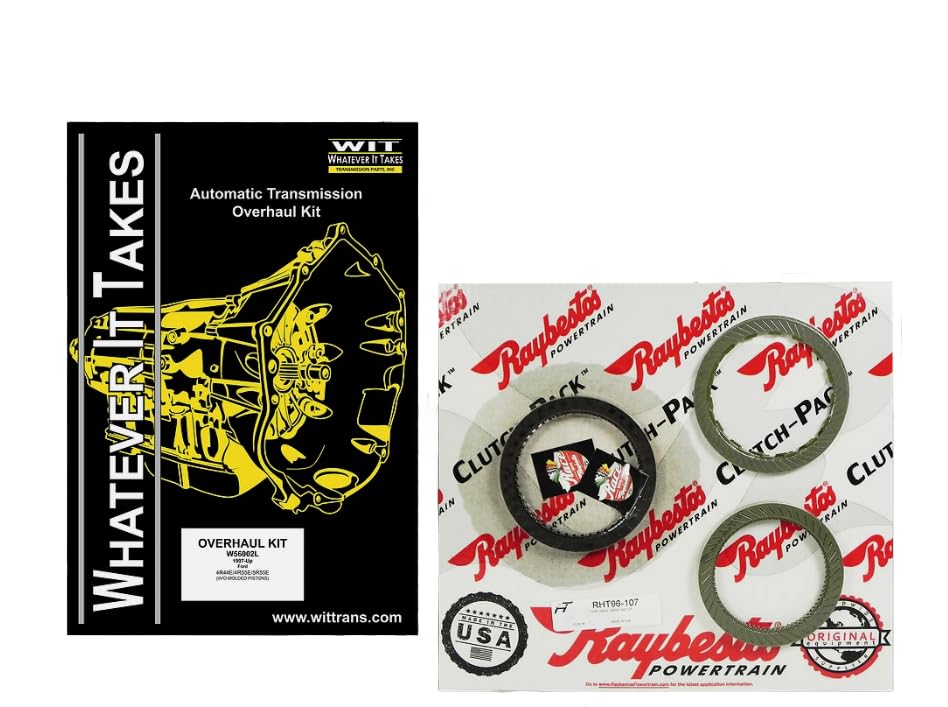
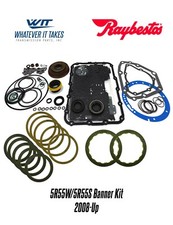
Pull the transmission and converter, inspect the converter hub for grooving before reusing it, and fit a new front seal and pump O-ring. Torque the pump bolts in a cross pattern and set input shaft end play before the bell housing goes on. If the old pump failed because clutch material or band lining went through it, the rest of the unit needs attention too; the 5R55S overhaul kit covers the seals and frictions. Flush the cooler and lines, fill with Mercon V, and set the level at the pan check plug with the engine running hot. The installation guide we cite lists roughly 11.2 quarts dry behind the 3.0 and 3.9 liter engines and 12.4 to 12.7 quarts behind the 4.0 and 4.6 liter, so have enough on hand. Afterward, clear codes and let the PCM relearn shift adapts over a few drive cycles.