A 2005-2010 Mustang with the automatic that fires up, idles fine, and then just sits there when you pull it into Drive or Reverse is one of the more common calls we get on the S197 cars. Every one of those automatics is a Ford 5R55S, V6 or GT, and the S197 adds a few traps of its own: no dipstick, a cable shifter with an adjuster that can slip, and a brake-shift interlock that can make a good transmission look dead. Ford's own 5R55W/S diagnostic manual lists more than a dozen possible causes for "no forward and no reverse." Ford's 2005 Mustang workshop manual has its own version of that chart, Diagnosis by Symptom routine 207, and it starts the same way: on-board diagnostics, fluid level and condition, then the shift cable and digital TR sensor (Ford 2005 Mustang WSM 307-01). On a Mustang, most of the list comes down to four or five checks you can make in the driveway or on a lift, in order, before the unit comes out.
This post is the Mustang-specific version. If you have a 5R55S in an Explorer, Mountaineer, Lincoln LS or Thunderbird, the hydraulic story is the same, and the general walkthrough is in 5R55S No Movement in Any Gear. If the car moves in Drive but not Reverse, go to 5R55S No Reverse instead, because that is a narrower problem with different causes.
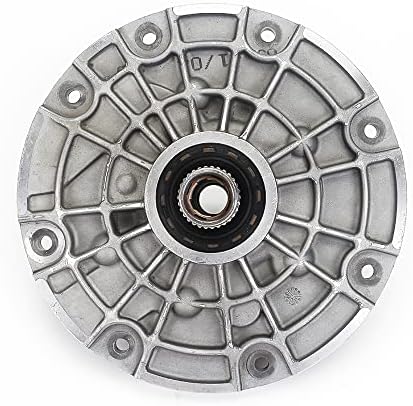
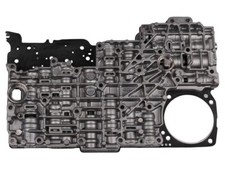
First, Make Sure It Is Really the Transmission
"Won't move" covers three different failures, and you have to know which one you have before you put a gauge on anything.
- The shifter won't come out of Park. This is not a transmission failure. The S197 has a brake-shift interlock that keeps the lever locked in Park with the key on until the brake pedal is pressed. Ford's 2007 Mustang owner guide gives the override: set the parking brake, key to LOCK, pry off the small plastic cover, and push the key straight down into the slot to release the interlock. Ford adds that if you need the override, a blown fuse or dead brake lamps are the likely cause. Check the brake lights before you condemn anything.
- The lever moves, but the gear indicator and the car disagree. This points at the shift cable or the digital transmission range (DTR) sensor. More on that in Step 2.
- Everything indicates correctly and the engine loads up a little, but the car doesn't move. Have a helper hold the brake in Drive while you watch the driveshaft. If the driveshaft turns but the rear wheels don't, the transmission is fine and the problem is in the rear axle. The 2007 owner guide lists a 7.5-inch axle behind the 4.0L V6 and an 8.8-inch behind the 4.6L GT. If the driveshaft doesn't turn, keep reading.
Before you tow it in, note Ford's limit: the owner guide allows neutral towing with the rear wheels down at no more than 35 mph for no more than 50 miles. Past that, the driveshaft has to come out. A 5R55S that isn't turning its pump isn't lubricating anything, so a long flat tow on a car that already won't move just adds damage.
Step 1: Check the Fluid Level the Way Ford Intended
The 2007 owner guide says it plainly: "The 5R55S transmission does not have a transmission fluid dipstick." Ford's position was that a dealer should check and top it off. So a lot of these cars have never had the level checked since they left the plant, and a slow leak at the pan, the cooler lines or the rear seal can go unnoticed until the pump starts pulling air. Low fluid is the first item on Ford's mechanical checklist for no forward and no reverse, and it is the cheapest one to rule out.
The procedure comes from ATRA Technical Bulletin 746, which covers the fill-plug pans on the 5R55N, S and W:
- Monitor TFT (transmission fluid temperature) on the scan tool. The check is valid at 80-120°F (27-49°C).
- Engine running at curb idle (about 650 rpm), selector in Park, car on a hoist as close to level as you can get it.
- Hold the large drain plug with a wrench and remove the small center level plug with a 3/16-inch Allen.
- Fluid should dribble out of the standpipe. If nothing comes out, it's low. Fill through the center using adapter 307-437, one pint at a time, until fluid drains back.
- Reinstall the level plug to 10 N·m (89 lb-in) and run the selector slowly through each range, pausing in each one.
Use MERCON V and nothing else. The owner guide calls for Motorcraft MERCON V (XT-5-QM). It lists the transmission at 11.9 quarts (11.2 L) and warns against using non-approved fluids or additives. If the car took four or five quarts to show a level, you found the "why." You still need to find the leak and check whether the low-fluid period burned anything. Dark fluid with a burnt smell at the correct level means clutch or band damage. That changes this from a diagnosis into a rebuild, and you can skip to the last section.
Step 2: Shift Cable and DTR Sensor
On the S197, the console shifter talks to the transmission through a single cable with a lock-tab adjuster at the manual control lever on the left side of the case. If that adjuster slips, or the cable end bushing wears out and pops off the lever, the shifter will move through the gate with the transmission still in Park or Neutral. You'll see a car that starts in what the indicator calls "D" and won't move, because the transmission is really in Neutral.
Get under the car and watch the manual lever while someone runs the shifter through the gate. It should click through every detent with no lost motion. If it doesn't move, or moves late, you have a cable problem, not a transmission problem. Ford's 5R55W/S service procedure sets the cable this way: put the shifter in OD and hang a 3 lb weight on it. Then pry the cable off the lever and unlock the adjuster tab. Put the manual lever in OD (rotate it clockwise to the stop, then counterclockwise three detents), reconnect the cable, and push the lock tab in. Then verify that Park engages, the engine starts only in Park and Neutral, and the backup lights work.
If the cable is right but the car still won't start in Park, or the PCM has range codes, look at the DTR sensor. Ford's diagnostic manual says it opens and closes four internal switches that the PCM reads as gear position. It also says a DTR fault can cause harsh engagements and firm shifts, and it lists the DTR in the no-forward/no-reverse chart. Ford aligns it with gauge 307-351 and torques the bolts to 89 lb-in. The manual control lever nut gets 35 lb-ft.
Step 3: Put a Gauge on It
Once you know the fluid level is right and the lever is moving, stop guessing and measure line pressure. Ford's procedure: scan tool on to watch rpm, gauge on the line pressure tap on the case, service and parking brakes applied, then read pressure at idle in every range. Ford's 5R55W/S manual publishes the spec table for the Explorer and Mountaineer. The 4.6L figures are the closest published reference for a GT:
- P and N at idle: 75-120 psi
- D, 3, 2, 1 at idle: 100-135 psi (4.6L) / 80-110 psi (4.0L)
- R at idle: 175-215 psi (4.6L) / 145-190 psi (4.0L)
- WOT stall: 228-263 psi forward, 282-350 psi reverse
Treat those as a ballpark on a Mustang, not a pass/fail line. The pattern matters more than the exact number, and Ford's results chart reads the pattern for you:
- Low at idle in all ranges: low fluid, a faulty filter or filter seal, loose valve body bolts, pump or pump gasket leakage, case leakage, or a faulty valve body or separator plate.
- Low in all forward ranges only: forward clutch, valve body, overdrive servo or intermediate servo.
- High at idle in all ranges: wiring, the boost valve, a PC solenoid or the main regulator valve.
If line pressure is out of spec, Ford's next step is the pressure control tap and TEST D, where you command the PC-A, PC-B and PC-C solenoids from 0 to 90 psi in 15 psi steps in bench mode and watch the gauge follow. A solenoid that doesn't follow the command is a solenoid or wiring problem. A gauge that follows the command while line pressure stays low points back at the pump. On the Mustang, Ford's routine 207 names one electrical suspect for no forward and no reverse: pressure control solenoid B, with the PCM and harness, tested in Pinpoint Test D.
Ford is blunt about the order: run the line pressure test before any stall test. If pressure is low at stall you'll do more damage, and you should never hold WOT for more than 5 seconds. On a car that won't move at all, skip the stall test entirely. You already know the answer.
Step 4: The Cold-Morning No-Move and the Pump Flow Control Valve
If the Mustang won't move on a cold start but creeps into gear after a few minutes, or engages if you blip the throttle, line pressure will usually test low at idle and come up with rpm. That's the classic 5R55-family pump flow control valve. It sits in the pump's line-pressure relief circuit. When the canister bore wears or the O-ring at the pump face leaks, regulated line oil bleeds off before it reaches the valve body.
Sonnax makes a drop-in fix, Pump Flow Control Valve Kit 56200-03K (catalog page 2198, superseding 56200-02K), for the 5R55N, S and W. Sonnax lists the symptoms it addresses as delayed engagement, no movement, pump noise and low line pressure. The kit uses a harder canister, a case-hardened plunger, a new spring and a larger O-ring to reduce pressure loss at the pump face. If your pressure readings match "low at idle in all ranges" and the fluid and filter check out, this valve is the first thing to pull, before you condemn the whole pump.
Sonnax Pump Flow Control Valve Kit 56200-03K for 5R55S
The drop-in fix for a worn or sticking pump flow control valve, the usual cause of a cold no-move or delayed engagement with low line pressure on the 5R55S.
View the kit at CoreTransmissionParts →Step 5: Good Pressure, Still No Forward
If line pressure is healthy in Drive but the car won't pull forward, or engages so late it feels like no engagement when warm, the leak is downstream of the line pressure tap. The best-documented case is in Gears Magazine (ATRA), "Going Nowhere Fast," on the 5R55W. It's the same valve body design the 5R55S shares. At engagement, the PCM holds pressure control solenoid B at about 0.5 amp to stroke the forward engagement valve. Solenoid A then meters mainline pressure through VFS1 to the forward engagement control valve, which finally opens full mainline pressure to the forward clutch.
In that case, codes were clean, the solenoids responded, and the drum, sealing rings, center support and separator plate all checked good. The fault was a leak between the forward engagement control valve's end plug and the valve body bore. It showed up only on a vacuum test, done with tape over the valve's orifice area, and never on a pressure gauge. The fix was an O-ringed replacement end plug. The article also lists the other valve body suspects for this symptom: a sticking VFS1 control valve, a leaking VFS1 end plug, a leaking forward engagement control valve or plug, and a damaged control valve spring. If you'd rather not chase individual bores, a remanufactured 5R55S valve body that has already been vacuum tested is the time-saver.
When It's Internal
Burnt fluid, metal in the pan, or a manual lever that moves correctly while pressure is low in every range means it's time to pull the unit. Ford's chart for no forward and no reverse lists the internal suspects: input shaft, oil pump, overdrive planetary, center shaft, forward clutch, forward and reverse planetaries, output shaft, torque converter and direct one-way clutch. On a Mustang that ran low on fluid for a while, the forward clutch pack and the pump are where we find most of the damage. A converter whose splines let go will also give you a perfect no-move with a healthy-sounding pump. Pull the converter and check the turbine spline and input shaft engagement before you order hard parts. Ford's Mustang routine 207 also lists a damaged flexplate or adapter plate and damaged impeller or turbine hubs under the converter, and its main control entries carry a warning worth repeating: do not stone, file or sand the valves, because that removes the anodized finish and can cause more valve body damage.
When you rebuild, flush the cooler and lines (Ford requires a cooler backflush after an overhaul), replace the pump flow control valve while the pump is apart, and set the fluid level hot through the plug, the same way you checked it. Pan bolts are 97 lb-in and the drain plug is 19 lb-ft per Ford.
FAQ
Why won't my 2005-2010 Mustang move in Drive or Reverse?
The most common causes, in order, are low fluid (the 5R55S has no dipstick, so leaks go unnoticed), a shift cable that has slipped or come off the manual lever, and low line pressure from a worn pump flow control valve. Ford also lists the DTR sensor, valve body leaks and internal damage to the pump, forward clutch or converter. Check fluid level and cable movement before anything else.
How do I check the transmission fluid on a Mustang with no dipstick?
Raise the car level with the engine running in Park at about 650 rpm and the fluid at 80-120°F on the scan tool's TFT reading. Remove the small center plug in the pan's drain plug with a 3/16-inch Allen. Fluid should dribble out. If nothing comes out, add MERCON V through the 307-437 adapter a pint at a time until it does, then reinstall the plug to 89 lb-in.
Why does my Mustang automatic not move when cold but work once it warms up?
That pattern usually means line pressure is bleeding off at the pump flow control valve, whose canister wears and leaks past its O-ring. Pressure is low at cold idle and recovers as the fluid thins and rpm rises. Sonnax's 56200-03K kit is the common fix, and it lists delayed engagement, no movement and low line pressure among its symptoms.
Can I tow a Mustang automatic that won't move?
Ford's owner guide allows towing with the rear wheels on the ground in Neutral at no more than 35 mph for no more than 50 miles. Beyond that, the driveshaft has to be removed, or use a flatbed. A transmission that isn't turning its pump isn't lubricating itself, so towing it too far can damage it further.
Sources
- Ford Motor Company, 2007 Mustang Owner Guide (05+ Mustang, S197). Backs the brake-shift interlock override procedure and the fuse/brakelamp note, the 35 mph / 50 mile neutral-tow limit and driveshaft-removal requirement, "The 5R55S transmission does not have a transmission fluid dipstick," MERCON V (XT-5-QM) at 11.9 qt (11.2 L), the no-additives warning, and the 7.5-inch (4.0L) and 8.8-inch (4.6L) rear axles. Internet Archive copy of the Ford PDF. web.archive.org: 2007 Mustang owner guide (PDF)
- ATRA Technical Bulletin 746, "5R55N, 5R55S & 5R55W: New Rotunda Tool for Checking Fluid Level and Filling Transmissions" (February 2003). Backs the TFT PID and 80-120°F window, the 650 rpm idle in Park, the 3/16-inch Allen level plug, adapter 307-437, the pint-at-a-time fill, and the 10 N·m (89 lb-in) plug torque. atracom: ATB 746 (PDF)
- Ford Motor Co. service information (Mitchell reprint), "5R55W/S Diagnosis." Backs the no-forward/no-reverse mechanical checklist, the DTR sensor description, the line pressure test procedure and Explorer/Mountaineer 4.0L and 4.6L pressure tables, the line pressure results chart, the PC solenoid bench-mode test (0-90 psi in 15 psi steps), and the line-pressure-before-stall and 5-second WOT cautions. 5R55W/S Diagnosis (PDF)
- Ford Motor Co. service information (Mitchell reprint), "Automatic Transmissions Servicing" for the 5R55W/S. Backs the shift cable adjustment (3 lb weight, OD = full clockwise then 3 detents back, lock tab), the DTR alignment with gauge 307-351, the cooler backflush requirement, and torques: DTR sensor 89 lb-in, manual control lever nut 35 lb-ft, oil pan bolts 97 lb-in, drain plug 19 lb-ft. 5R55W/S Servicing (PDF)
- Sonnax, Pump Flow Control Valve Kit 56200-03K (catalog 2198) for Ford 5R55N/5R55S/5R55W. Backs the part number and supersession, the symptom list (delayed engagement, no movement, pump noise, low line pressure), and the harder canister, case-hardened plunger, spring and larger O-ring design. sonnax.com/parts/2198-pump-flow-control-valve-kit
- Gears Magazine (ATRA), Rob Faucett, "Going Nowhere Fast: 5R55W Delayed Forward Engagement." Backs the forward engagement circuit description (PCS B at about 0.5 amp, VFS1 metering, forward engagement control valve), the list of valve body suspects, the tape-and-vacuum test, and the O-ringed end plug fix. gearsmagazine.com: Going Nowhere Fast
- Ford Motor Company, 2005 Mustang Workshop Manual, section 307-01, Diagnosis by Symptom (PDF). Backs routine 207 for no forward and no reverse on the Mustang 5R55S: on-board diagnostics and pressure control solenoid B via Pinpoint Test D, fluid level and condition, shift cable and digital TR sensor, main control items (with the do-not-stone-file-or-sand warning), pump flow control valves, forward clutch, the converter's flexplate, adapter plate and hub damage, and the direct one-way clutch. themustangsource.com (Ford service PDF)