"It shifts weird" covers a lot of ground on a 2005-2010 Mustang with the 5R55S automatic. The V6 that bangs into 2nd. The GT that flares on the 2-3 and then lands hard. A car that hunts between 4th and 5th on the highway, or clunks on the 3-2 coming to a light. Parts stores answer all of it the same way: a solenoid pack. Sometimes that is right. Often it is not.
This post covers shift quality and shift timing problems: harsh, flared, early, late, erratic and bound-up shifts. If the car simply loses a gear or the engine flares and stays flared, that is a slip, and the gear-by-gear apply chart approach in our 5R55S Mustang slipping guide is the better starting point. Where something is my own shop habit rather than a published spec, I say so.
The short version: The 5R55S shifts with four on/off shift solenoids and three variable-force pressure control solenoids, and the PCM leans on throttle position, speed sensors, the range sensor and fluid temperature to time and pressure every shift [2]. Rule those inputs out first. ATRA says most 5R55W/S shift complaints are soft, flared shifts (usually 2-3) or harsh downshifts, and a large share trace to the wrong solenoid pack [3]. On 2009-2010 Mustangs, a mixed-year valve body and spacer plate causes a harsh 1-2 and a 2-3 flare [5]. After that, it is valve body bore wear [6].
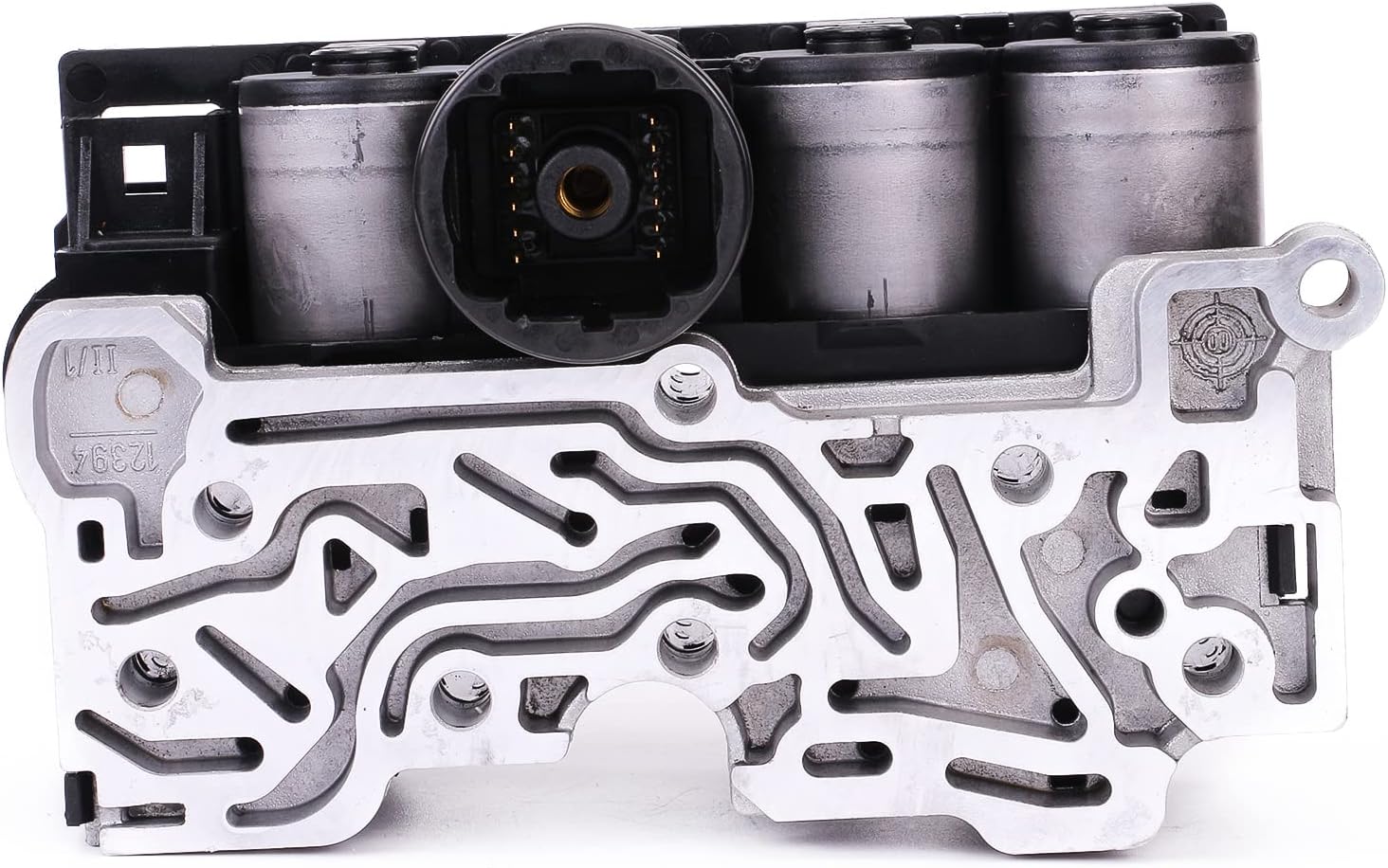
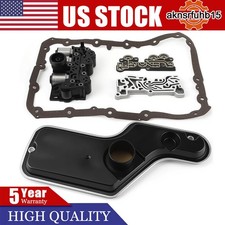
How the 5R55S Makes a Shift
The 5R55S went into the 2005-2010 Mustang behind both the 4.0L V6 and the 4.6L 3V GT. Ford's service information describes it as an electronically controlled 5-speed with a four-element converter with TCC, three planetary sets, three bands, three multi-plate clutches and two one-way clutches. The "S" in the name stands for synchronous shift [2]. You can confirm the unit from the door-post certification label: the transmission code under TR is "V" for the 5R55S [2].
The PCM runs it through eight solenoids in one solenoid body: four on/off shift solenoids (SSA, SSB, SSC, SSD), one pulse-width modulated TCC solenoid, and three variable-force pressure control solenoids (PC-A, PC-B, PC-C) [2]. The split of jobs matters for diagnosis. Jesse Zacarias explains it well in Transmission Digest: the shift solenoids only line up valves in the valve body, and the three variable-force solenoids control the rate at which the clutches and the intermediate and overdrive bands apply and release [4].
That means a shift that happens at the wrong time, or not at all, points toward the shift solenoids, their wiring or the inputs that schedule shifts. A shift that happens on time but feels wrong, harsh, soft, flared or bound up, points toward the pressure control solenoids, the valves they feed, and the servos and clutches at the end of those circuits.
Step 1: Clear the Inputs Before You Touch the Transmission
The PCM decides shift timing and line pressure from engine and vehicle sensors, and a bad signal looks exactly like a transmission problem from the driver's seat. Ford's diagnosis lists what each input does when it fails [2]:
| Input | What Ford says a failure causes |
|---|---|
| Throttle position (TP) | PCM goes to fail-safe and raises line pressure: harsh engagements, firm shifts, abnormal shift schedule, TCC not engaging or cycling |
| Output shaft speed (OSS) | Harsh engagements, firm shift feel, abnormal shift schedule, unexpected closed-throttle downshifts, no TCC |
| Turbine shaft speed (TSS) | Engine flare on engagements, harsh shifts, or delayed shifts with hard apply |
| Digital transmission range (DTR) sensor | Harsh engagements, firm shift feel, improper shift selection |
| Transmission fluid temperature (TFT) | Incorrect line pressure, possible lack of TCC operation |
| Mass airflow (MAF) | Affects control pressure, shift and TCC scheduling |
On the scan tool, I log TP, MAF, TFT, TSS, ISS (intermediate shaft speed), OSS, commanded gear and the TR position on one road test. A TP or OSS signal that drops out shows up on a graph long before you find it with a meter. Ford's symptom charts send almost every shift-quality complaint (harsh 1-2, harsh 2-3, harsh 4-5, harsh downshifts, erratic or hunting shifts) through the same tests: shift and TCC solenoids, TFT sensor, range sensor, PC solenoids, and the ISS, OSS and TSS sensors, followed by the Transmission Drive Cycle Test after any repair [2].
Two Mustang-specific checks before you go further. First, the O/D Off button: Ford's description says pressing the transmission control switch cancels 5th and applies the coast clutch, and the O/D Off light flashes if a PC solenoid circuit is open or shorted or a monitored sensor has failed [2]. A flashing light is a fault, not a feature. Second, a car that suddenly shifts hard everywhere after a sensor failure is often just in Ford's protective fail-safe.
Step 2: Harsh or Delayed Engagements Into Drive and Reverse
Zacarias lists the 5R55S/W's common complaints as harsh forward engagement, harsh reverse engagement, delayed and harsh initial engagements, flares on the 3-4 shift and bind-up on shifts [4].
When Drive is selected, the range sensor tells the PCM, the PCM commands PC-B to about 0.5 amp to hold the forward-engagement control valve closed, then lowers PC-A current to build VFS1 pressure into the forward clutch drum. When VFS1 pressure overcomes VFS2 at the control valve, it strokes and lets full line pressure into the drum. Reverse works the same way through PC-B and PC-C into the direct clutch. Each engagement takes about two seconds [4]. If the PCM never sees the correct range, it never runs that soft-start sequence, which is how a bad range sensor can give a harsh engagement or none at all [4].
Ford's mechanical checklist for harsh forward and reverse engagement is fluid level and condition, high line pressure, sticking valves, incorrectly torqued valve body bolts (cross-leaks) and the forward clutch [2]. Note how often "incorrectly tightened valve body bolts" appears in Ford's charts. After any valve body or solenoid pack job, I recheck the bolt torque before anything else. Ford's spec for the solenoid body bolts is 71 lb-in, run in sequence [8].
On a Mustang, check the shift cable before you blame the range sensor for an engagement or wrong-gear complaint. Ford's adjustment hangs a 3 lb weight on the shifter in OD. You set the manual lever to OD (full clockwise, then back three detents) and lock the adjuster tab. The DTR sensor is aligned with gauge 307-351 and torqued to 89 lb-in [8]. A cable that is a detent off leaves the manual valve partly open, and the result feels like a shift problem.
Step 3: The 2-3 Flare and Harsh Downshifts, Check the Solenoid Pack Design
ATRA's 2013 seminar manual puts it plainly: on the 5R55W/S, the solenoids have a direct effect on shift timing and feel, the majority of problems are soft flare shifts or harsh downshifts, and the flare is typically on the 2-3 [3]. The trap is a replacement pack of the wrong design. Ford changed these solenoids over the years, and small pressure differences change how the unit shifts.
ATRA's application list: 2002-03 Ford 5R55W/S and 2003 Lincoln 5R55S use the early pack, Ford 1L2Z-7G391-AG. 2004-on Ford 5R55W/S use the later pack, original 4L2Z-7G391-AA and updated 9L2Z-7G391-A, and Ford recommends only the updated design for the later units [3]. Every 2005-2010 Mustang falls in the later group. Read the number on the pack in the car before you order anything.
The reason a pack can cause a 2-3 flare is in ATRA's circuit breakdown. PC-A and PC-B set mainline pressure, and the PCM drives them in opposition. PC-A also feeds the VFS1 modulator valve, and VFS1 pressure applies the intermediate servo in 3rd. PC-B feeds VFS2, which directly applies the overdrive servo and coast clutch. PC-C applies the direct clutch in 4th and 5th [3]. So the 2-3 shift is a handoff between the overdrive band releasing on VFS2 and the intermediate band applying on VFS1. If one solenoid's output curve does not match what the PCM's calibration expects, the overlap is wrong: too much release before apply is a flare, too much apply before release is a bind-up.
ATRA also says to check the pressure regulator valve and sleeve and the servo control valves and plugs, which can leak during shifts [3].
Step 4: 2009-2010 Mustangs, Match the Valve Body and Spacer Plate
Beginning with the 2009 model year, Ford fitted the 5R55S with a redesigned valve body casting and bonded spacer plate. The casting changes were in the VFS1, VFS2 and line pressure passages, and Transmission Digest's December 2018 Tech Talk is clear that none of the 2009 valve body and spacer plate parts retrofit to earlier applications [5].
The specific failure ATSG has seen is shops installing the 2009 bonded spacer plate on an earlier valve body. The 2009 plate has an extra hole that connects a line pressure passage to the VFS2 circuit, and the result is a harsh 1-2 upshift and a 2-3 upshift flare [5]. The updated bonded spacer plate is Ford 9L2Z-7Z490-B [5].
This one bites Mustangs because so many have had a used or remanufactured valve body installed by now. If a 2009-2010 car came in with a harsh 1-2 and a 2-3 flare after someone else's valve body job, identify the casting and plate before you do anything else.
Step 5: Valve Body Wear, the Slow Version of the Same Problems
On a high-mileage car with the correct pack and the correct plate, the valve body itself becomes the suspect. Sonnax's 5R55W/S inspection article says the TCC modulator bore and the main regulator bore tend to wear first because they are the most active, so check them first for a quick read on the casting [6]. The VFS 1, 2 and 3 modulator bores wear with cycle rate, which means more wear on cars that see a lot of stop-and-go driving. Wear there reduces clutch and servo pressure, and Sonnax notes the solenoid or the servo pin bore often gets blamed for it [6].
Two more Sonnax points that matter on shift complaints. Excess valve-to-bore clearance can aerate the fluid, which shows up as a high fluid level, venting or erratic pressure. And solenoid-related complaints such as a 1-2 or 2-3 flare or delayed forward engagement can come from degraded fluid or loss of prime [6]. Sonnax says a new VFS solenoid can drain its fluid during handling and lose prime, and recommends filling the circuits with new MERCON V and pulling fluid through the solenoid with vacuum. If it still misbehaves, run the car hot, let it cool and road test again [6]. I have seen good new packs condemned on the first drive because nobody primed them.
The repair for bore wear is either a valve body with reamed bores and oversized valves, or a known-good replacement that matches your model year. A shift kit alone does not fix a worn casting.
Step 6: Do Not Skip the Fluid
Ford's 2007 Mustang owner guide notes that the 5R55S has no dipstick, and tells owners to check the fluid if the transmission slips or shifts slowly [1]. The spec is Motorcraft MERCON V, XT-5-QM, about 11.9 qt (11.2 L) dry including the cooler and tubes, and Ford warns against mixing MERCON with MERCON V and against supplemental additives [1]. Overfill matters as much as underfill, because aerated fluid gives erratic pressure. Set the level at the check plug, with the fluid temperature confirmed on the TFT PID. ATRA Technical Bulletin 746 gives the procedure: 80-120°F on TFT, about 650 rpm in Park, the car level on a hoist, the 3/16-inch Allen center plug out, a fill through adapter 307-437 a pint at a time until fluid drains back, and the plug reinstalled at 10 N·m (89 lb-in) [7].
Putting It in Order
- Harsh everywhere, came on suddenly, maybe a flashing O/D Off light: codes and inputs first. TP, OSS, TSS, DTR and TFT [2].
- Harsh engagements only: range sensor signal, line pressure, valve body bolt torque, forward clutch [2] [4].
- 2-3 flare or harsh downshifts, especially after a pack or valve body replacement: confirm the pack is the 9L2Z-7G391-A design and primed [3] [6].
- 2009-2010 with harsh 1-2 and 2-3 flare: verify the valve body casting and spacer plate year [5].
- High mileage, gradual onset, ratio codes: valve body bore wear and the servo pin bores; see our slipping guide for the band side [6].
Solenoid packs, valve bodies, shift kits and overhaul kits for the 2005-2010 Mustang 5R55S, with checkout on our site.
Shop 5R55S parts →FAQ
Why does my 2005-2010 Mustang automatic shift hard?
Start with the PCM inputs. Ford says a failed throttle position sensor puts the PCM in fail-safe with raised line pressure, giving harsh engagements and firm shifts, and bad speed or range sensor signals can do the same. If the inputs check good, look at the solenoid pack design, the valve body and spacer plate for the model year, and valve body bore wear.
What causes a 2-3 flare on a 5R55S?
ATRA traced many 5R55W/S 2-3 flares to the wrong solenoid pack, because the pressure control solenoids also run the VFS1 circuit that applies the intermediate band in 3rd. Every 2005-2010 Mustang takes the later pack, with Ford recommending the updated 9L2Z-7G391-A design. Worn intermediate servo parts, worn VFS modulator bores and, on 2009-2010 cars, a mismatched spacer plate are the other common causes.
Can a 2009 valve body go in a 2005-2008 Mustang 5R55S?
No. Ford changed the valve body casting and bonded spacer plate for the 2009 model year, and Transmission Digest's December 2018 Tech Talk states that none of the 2009 parts retrofit to earlier applications. A 2009 spacer plate on an earlier valve body adds a passage that feeds line pressure into the VFS2 circuit, which can cause a harsh 1-2 upshift and a 2-3 flare.
Will a new solenoid pack fix 5R55S shift problems?
Only if the pack is the cause, and only if it is the correct design for the year. Sonnax also warns that a new VFS solenoid can drain off its fluid and lose prime during shipping and handling, so it may act up at first. Fill the circuits with fresh MERCON V, pull fluid through the solenoid with vacuum, and road test again after a heat cycle before you condemn it.
Sources
- Ford Motor Co. — 2007 Mustang Owner Guide, "Maintenance and Specifications," on the 5R55S having no dipstick, checking fluid if the transmission slips or shifts slowly, Motorcraft MERCON V XT-5-QM, 11.9 qt (11.2 L) approximate dry capacity, and the no-mixing and no-additive warnings. 2007 Mustang Owner Guide (PDF, archive.org)
- Ford Motor Co. service information (Mitchell reprint) — "5R55W/S Diagnosis," on transmission identification (code V), the solenoid body layout (SSA-SSD, PC-A/B/C, TCC), input sensor failure effects, the transmission control switch, and the harsh, erratic and early/late shift symptom and component check charts. 5R55W/S Diagnosis (PDF)
- ATRA — 2013 Technical Seminar, "Ford 5R55W/S Erratic Transmission Operation," on 2-3 flares and harsh downshifts, solenoid pack part numbers 1L2Z-7G391-AG, 4L2Z-7G391-AA and 9L2Z-7G391-A, and the PC-A/PC-B/PC-C and VFS1/VFS2 functions. ATRA 2013 seminar (PDF)
- Transmission Digest — Jesse Zacarias, "Understanding the 5R55S/W Initial Engagements" (November 2012), on common 5R55S/W complaints, the shift solenoid versus variable-force solenoid roles, and the PC-A/PC-B/PC-C forward and reverse engagement sequence. transmissiondigest.com
- Transmission Digest — Tech Talk, December 2018, "Ford 5R55S: Avoid 1-2 harsh shifts and 2-3 flared shifts," on the 2009 valve body and bonded spacer plate change, non-retrofit to earlier units, the extra line-to-VFS2 hole, and spacer plate 9L2Z-7Z490-B. transmissiondigest.com
- Sonnax — "Figuring Out the 5R55 Alphabet," on TCC modulator and main regulator bore wear, VFS modulator bore wear reducing clutch and servo pressure, fluid aeration, and VFS solenoid loss of prime with the vacuum priming procedure. sonnax.com
- ATRA Technical Bulletin 746, "5R55N, 5R55S & 5R55W: New Rotunda Tool for Checking Fluid Level and Filling Transmissions" (February 2003), on the TFT 80-120°F window, 650 rpm idle in Park, 3/16-inch Allen level plug, adapter 307-437, pint-at-a-time fill and the 10 N·m (89 lb-in) plug torque. atracom (PDF)
- Ford Motor Co. service information (Mitchell reprint), "Automatic Transmissions Servicing" for the 5R55W/S, on the shift cable adjustment procedure, DTR sensor alignment with gauge 307-351, and torques: DTR sensor 89 lb-in, solenoid body bolts 71 lb-in. 5R55W/S Servicing (PDF)