A 5R55S that won't lock the converter, locks and lets go, or shudders once it finally grabs is one of the more frustrating comebacks on this transmission, because the symptom almost never tells you which of four different things is actually wrong. The TCC circuit on this unit is a chain of hydraulic links — line pressure, a solenoid regulator valve, a converter regulator valve, and the piston itself — and a fault anywhere in that chain shows up on a scan tool as the same generic complaint: TCC not performing as commanded.
This is the real hydraulic picture of how lockup is supposed to work on the 5R55 family, what specifically goes wrong on the S and W variants, the factory fluid problem that got its own Ford bulletin, and how to tell a worn valve body bore from a tired solenoid block before you start throwing parts at it.
The Hydraulic Chain Behind "Lockup"
Lockup on the 5R55S isn't a single on/off switch. Whatever line pressure is available — and on this unit that runs 160 psi and up — gets modulated through the TCC solenoid and its sleeve to control slip RPM at the converter, meaning the solenoid doesn't just fire the clutch, it meters how hard it applies. That metered signal is itself kept in check by a solenoid regulator valve, which limits the solenoid's own working pressure to 72 psi. On the release side, the converter regulator valve supplies release oil that is separately capped at 130 psi.
Three different pressures, three different valves, one symptom when any of them drifts: the driver feels a converter that won't lock, locks and slips, or bangs into lockup instead of gliding into it. That is why "replace the solenoid and see" is such an expensive habit on this transmission — the solenoid is only one of the parts that can produce that exact complaint.
Get the shift solenoid →
Where It Actually Fails: Bore Wear, Not the Solenoid
The solenoid regulator valve's 72 psi ceiling exists for a reason: higher pressure reduces slippage, but it can also cause TCC piston deflection and converter failure. That is exactly what happens when the solenoid regulator bore wears — the valve can no longer hold its limit, solenoid pressure creeps past 72 psi, and the piston takes more load than it was designed for. The failure you see weeks or months later at the converter is the downstream result of a valve body that let the pressure run away months earlier.
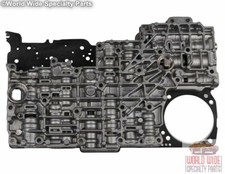
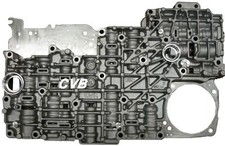
The TCC control valve bore wears for the same underlying reason — abrasive wear from fluid contamination and simple mileage — and when it goes, the symptom is the same generic high TCC slip or a stored slip code, because the valve can no longer modulate the solenoid signal cleanly. Sonnax's own product listing for its Oversized TCC Control Valve Kit, part 56947J-05K, names the exact symptom set this bore wear produces: a stored P0741, excess TCC slip, TCC lining failure, an overheated converter, low cooler flow, and in bad cases a damaged valve body casting — and confirms one replacement valve covers the 5R55N, 5R55W and 5R55S. Sonnax also sells a separate solenoid/converter feed limit valve kit for the bores that control solenoid and converter feed pressure on the W and S. Neither repair requires replacing the valve body casting; both require reaming the worn bore to an oversized spec and installing the matching valve, which is a tooling-dependent job, not a bolt-in part swap.
Sonnax's published valve body layout for the 5R55S and 5R55W maps which bore goes with which complaint, and it is worth having open on the bench. Per that layout, the TCC modulator valve (kit 56947J-15K) is tied to P0741, excess TCC slip, and high line pressure; the TCC modulator plunger (56947J-01K, or the oversized 56947J-80K and 56947J-81K when the casting is damaged) to high slip RPM as load increases and overheated fluid; and the solenoid and converter feed limit valve (56947J-61K) to no lockup, delayed engagement, codes in the 731-741 range, and front lube failure. If your slip only climbs under load, look at the modulator plunger bore first. If it never locks up at all and engagement is lazy too, the feed limit valve is the stronger suspect.
One more wrinkle that has nothing to do with wear: a TCC piston rattle in Neutral, even with a brand-new converter, is common on this design. Excess clearance between the piston and its bore combined with insufficient spring load is enough to produce a rattle that sounds alarming but doesn't by itself indicate a defective rebuild. Don't let that noise alone send you chasing a converter warranty claim before you've confirmed an actual pressure or slip problem.
The Mercon V Fill That Started It: FSA 04B22
Before you touch a valve body, rule out the fluid. The fluid problem in the 5R55E, W, S and N units was caused by a factory ATF fill using an early Mercon V formulation, and the symptom it produced — delayed or harsh reverse engagement, with knock-on effects on shift and lockup feel — is exactly the kind of thing that gets misdiagnosed as a solenoid or valve body fault. Ford's first response was an interim additive package, fluid XL-11 under part number 4L2Z-19B546-AB, released under bulletin FSA 04B22. That additive corrected the existing fill rather than replacing it outright.
The permanent fix was a reformulated fluid: a revised Mercon V, part XT-5-QM, sold in a black quart container specifically so it could be told apart from the earlier fill at the parts counter. If you're working on a 5R55S that's never had a fluid service and is showing TCC complaints alongside reverse engagement issues, check what's actually in the pan before you condemn a single hydraulic component. Whatever you put back in, Ford's current Mercon V spec (sold today as Motorcraft XT-5-QMC by the quart) is the only fluid this transmission is built around — it is not interchangeable with Mercon SP, Mercon LV, or Type F.
The history explains why there is no substitute. Pat Burrow notes in GEARS Magazine (ATRA) that converter clutch design is what drove Ford to write the MERCON V specification, with added testing for anti-shudder characteristics, and that Ford terminated all MERCON licenses in favor of MERCON V in 2007. A converter clutch that has to slip in a controlled way depends on those friction properties. A generic fluid that is "suitable for" MERCON V applications is not the same thing.
Two More Culprits That Mimic a TCC Fault
The pump's line control valve has its own failure mode that gets blamed on the TCC circuit because the symptoms overlap. This valve has been known to create a hydraulic resonance or to stick open, and a plunger stuck open exposes the output to pump inlet/suction, resulting in delayed engagements — which a driver will describe the same way they'd describe a lazy TCC apply. Go the other direction and a plunger that won't open will reduce fuel economy, increase pump body wear, and can elevate line pressure in reverse, none of which has anything to do with the solenoid you were about to replace.
The second trap is a rebuild mistake, not a wear item: if the base plate or filter are mixed between 5R55 variants, the unit will lose reverse, TCC apply and solenoid oil pressure together. Seeing all three of those symptoms at once after a rebuild or a filter swap is close to diagnostic on its own — it means pull the pan and verify the base plate and filter are the correct parts for this exact build, not test the solenoid.
Diagnosing It in Order
- Pull codes and freeze frame first. P0741 and the Ford-specific P1740/P1744 codes tell you the TCC isn't behaving as commanded, but not which of the four systems above is responsible. Ford's own 2005 Mustang code chart says P1744 and P1740 "may also be generated by some other non-electric transmission hardware system," while P0740/P0743 are output circuit checks set only by electrical faults. Treat the slip code as a starting point, not an answer.
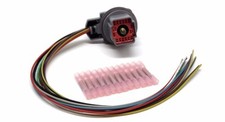
- Clear the electrical side with Ford's Pinpoint Test A. In output state control (Trans-Bench Mode), command TCC on and off and listen for the click while wiggling the harness. With the 16-pin case connector unplugged, pin 3 should show more than 10 volts key-on, and the TCC solenoid should measure 9-16 ohms from pin 3 to pin 14 (shift solenoids 16-45 ohms) per the Mustang workshop manual. Anything under 5 ohms to ground, or out of range, and Ford calls for a new solenoid body assembly.
- Check the fluid before anything else. Confirm it's a correct Mercon V fill, at the right level, and not degraded. On an older, unserviced unit, factor in the FSA 04B22 history above.
- Log commanded TCC duty against actual slip RPM with a scan tool while driving. A solenoid that's electrically fine but can't bring slip to spec points at the valve body, not the solenoid.
- Check for the two mimics. Delayed engagements plus poor fuel economy or elevated reverse pressure point at the pump's line control valve. Lost reverse plus lost TCC apply plus lost solenoid pressure, all together, points at a base plate/filter mismatch.
- Only then condemn the solenoid block. A solenoid that tests correctly, with good fluid and no mimic symptoms, but still can't hold commanded slip, is telling you the valve body bores are worn, not that the part is bad.
TCC and shift solenoids, solenoid kits, valve bodies and master rebuild kits for 5R55S and 5R55W units.
Shop 5R55S parts →FAQ
What controls TCC lockup on a 5R55S?
Line pressure, which runs 160 psi or higher, is modulated through the TCC solenoid and sleeve to control slip RPM at the converter. A separate solenoid regulator valve limits the solenoid's own working pressure to 72 psi, and converter release oil off the converter regulator valve is capped at 130 psi. When any of these pressures drift from spec, lockup quality and converter life both suffer.
What does P0741 or P1744 mean on a 5R55S?
Both point to the TCC not doing what the PCM commanded: either staying unlocked when commanded on, or locking with more slip than allowed. Neither code names the failed part by itself. On this transmission family that symptom traces to worn valve body bores (TCC control valve or solenoid/converter feed limit bores), a degraded early-fill Mercon V charge, a sticking pump line control valve, or a tired solenoid block, so the code is a starting point for pressure and slip testing, not a parts list.
Why do rebuilt 5R55S converters rattle in Neutral?
A TCC piston rattle in Neutral on this converter design, even with a new converter, usually comes from excess clearance between the piston and its bore combined with insufficient spring load holding the piston against its stop. It is a known characteristic of the design rather than proof of a bad rebuild, though a shop should still confirm clearances against spec before returning a converter as defective.
What was FSA 04B22 on the 5R55S?
It was Ford's response to a factory ATF fill using an early-formulation Mercon V across the 5R55E, 5R55W, 5R55S and 5R55N family that could cause delayed or harsh reverse engagement and related shift quality issues. Ford's interim fix was an additive package (fluid XL-11, part 4L2Z-19B546-AB); the final resolution was a revised Mercon V, part XT-5-QM, packaged in a black quart container to distinguish it from the earlier fill.
Can a bad base plate or filter cause TCC problems on a 5R55S?
Yes. If the base plate or filter is mismatched to the valve body during a rebuild, the unit loses reverse, TCC apply, and solenoid oil pressure together. That three-symptom combination is a signature of a base plate or filter mix-up, not a worn bore or a bad solenoid, and it means pulling the pan and verifying the correct part before chasing anything electrical.
Related 5R55S guides
Sources
- Sonnax — "Figuring Out the 5R55 Alphabet," technical reference article. Backs the hydraulic chain description (line pressure 160-250+ psi modulated through the TCC solenoid/sleeve; solenoid regulator valve limiting solenoid pressure to 72 psi; converter regulator valve limiting release oil to 130 psi), the piston-deflection/converter-failure mechanism from solenoid regulator bore wear, the neutral piston-rattle characteristic, the pump line control valve sticking behavior and its delayed-engagement and reverse-pressure symptoms, the base-plate/filter mismatch symptom (loss of reverse, TCC apply and solenoid pressure), and the FSA 04B22 Mercon V fluid history (interim additive 4L2Z-19B546-AB/XL-11, final revised fluid XT-5-QM). sonnax.com
- Sonnax — Remanufactured Solenoid Block product page (part 2260). Backs the solenoid block application and years for the 5R55N/5R55W/5R55S family (56954N-RRP, 56954K-RRP, 56954L-RRP) and the ribbon-cable-to-PCB redesign addressing a known fatigue failure point in the OE solenoid block wiring. sonnax.com
- Ford Motor Company, FCSD Chemicals and Lubricants — Motorcraft MERCON V Automatic Transmission and Power Steering Fluid product page. Backs the current Mercon V part numbers (XT-5-QMC quart, XT-5-5Q3M, XT-5-DMC), the fluid's intended application to Ford/Lincoln/Mercury vehicles requiring Mercon V or Mercon-type fluid, and the explicit statement that it is not for use where Mercon SP, Mercon LV, Mercon ULV or Type F fluid is specified. fcsdchemicalsandlubricants.com
- Sonnax — Oversized TCC Control Valve Kit, Part No. 56947J-05K, product page. Backs the TCC control valve casting bore as the wear point behind a stored P0741, excess TCC slip, TCC lining failure, overheated converter, low cooler flow and damaged valve body casting, and confirms the one-valve fitment across the 5R55N, 5R55W and 5R55S. sonnax.com
- Sonnax — "Ford 5R55S, 5R55W Valve Body Layout," technical reference. Backs the bore-by-bore mapping of TCC complaints: TCC modulator valve 56947J-15K (P0741, excess slip, high line pressure), TCC modulator plunger 56947J-01K/-03K and oversized 56947J-80K/-81K/-82K (high slip RPM under increasing load, overheated fluid, damaged casting), and solenoid and converter feed limit valve 56947J-61K (no lockup, delayed engagement, codes 731-741, front lube failure). sonnax.com
- Ford Motor Company, 2005 Mustang Workshop Manual, section 307-01, Diagnostic Trouble Code Charts and Pinpoint Test A (PDFs). Backs P1744 (TCC circuit error or stuck off from excessive slip), P1740 (TCC inoperative), P0740/P0743 as electrical-only circuit checks, the note that P1744/P1740 can be set by non-electric hardware, and the Pinpoint Test A steps: output state control, pin 3 over 10 V, TCC 9-16 ohms pin 3 to 14, shift solenoids 16-45 ohms, under 5 ohms to ground means a new solenoid body assembly. DTC chart (Ford service PDF) · Pinpoint Test A (Ford service PDF)
- Pat Burrow, GEARS Magazine (ATRA) — "Fluid Matters." Backs converter clutch design as the driver of the MERCON V specification, the added anti-shudder testing, the revision making MERCON V reverse-compatible with MERCON, and Ford ending all MERCON licensing in favor of MERCON V in 2007. gearsmagazine.com