The complaint is almost always the same sentence, just worded differently by whoever is driving it: the truck flares going into 4th, it doesn't want to back up right, and sometimes it feels like it's stuck. On a Ford 5R55W — the five-speed behind the 2002-and-up Explorer, Mountaineer, and the V8 Mustang — that combination of symptoms almost always traces back to one clutch pack doing three jobs at once: the direct clutch, which most techs just call the 3-4 clutch because that's the shift where the driver notices it first.
This isn't a vague "could be a lot of things" complaint. The 5R55W's direct clutch is applied in exactly three places — Reverse, 4th, and 5th — by one variable force solenoid feeding two specific valve body bores. That narrow footprint is actually good news at the bench, because it means the diagnosis has a short, specific list of places to look before you start pulling the pan apart.
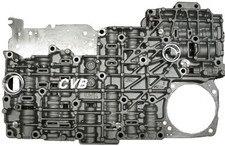
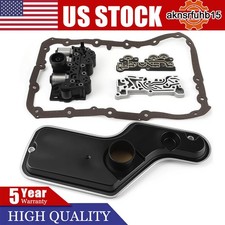
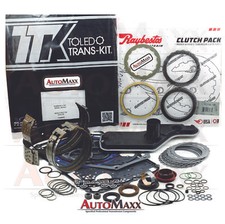
What the Direct Clutch Actually Does on a 5R55W
Sonnax lays out the circuit plainly: on the Ford 5R55S and 5R55W, the direct clutch is applied in Reverse, 4th and 5th Gear by the variable force PC-C solenoid. That solenoid is also labeled VFS3 in the control strategy, separate from VFS1 (PCA) and VFS2 (PCB), which handle other clutches, the intermediate band, and the overdrive band. Pressure from VFS3 doesn't go straight to the clutch piston. It passes through the reverse pressure modulator valve and the reverse engagement valve first, and those two valves stroke to route apply pressure to the direct clutch.
That routing is the whole reason a direct clutch complaint on this transmission always drags Reverse into the conversation. The clutch, the solenoid, and both valve bores are shared between three gear positions that otherwise have nothing to do with each other. Wear in either bore doesn't just cost you 4th gear — it costs you some combination of 4th, 5th, and Reverse, because they're all drawing on the same leaking pressure source.
The Symptom Pattern That Points Here
The pattern worth recognizing, independent of exact codes: a flare on the 3-4 shift, a delayed or bound-up Reverse engagement, and bind-up or slip in 4th. On a lot of these units the PCM eventually gives up and drops into failsafe with a code for an incorrect 4th-gear ratio once the slip is bad enough to look like a sensor fault rather than a worn clutch.
On the scan tool, that usually reads as P0734 (incorrect 4th gear ratio), frequently riding alongside P0735 (incorrect 5th gear ratio) since 5th needs the same clutch. A pressure control solenoid code for the C circuit — commonly P0795 or a related code depending on calibration — often shows up in the same freeze frame. None of that is a coincidence. It's the same oil path reporting the same leak from three different angles.
Cause 1: Reverse Pressure Modulator Bore Wear
This is the headline failure on this circuit. Sonnax's reverse modulator valve kit listing states the cause directly: wear at the reverse modulator valve bore due to constant oscillation allows leakage of variable solenoid feed and direct clutch apply pressure. The listed symptoms are delayed Reverse, no 4th, no 5th, and a burned direct clutch — which is exactly the complaint pattern above, just stated as a parts-counter diagnosis instead of a driver's description.
The fix Sonnax sells for this specific bore is the reverse modulator valve kit, part number 56947J-23K, built for the 5R55W and 5R55S. The correction, per the listing, is to refurbish the valve bore and install the kit to restore proper hydraulic function rather than replacing the whole casting.
Cause 2: Reverse Engagement Valve Bore Wear
Downstream of the modulator sits the reverse engagement valve, and it wears for a related but distinct reason. Sonnax's listing for that bore says wear there can prevent proper valve positioning, which keeps solenoid feed oil pressure from correctly stroking the valve and allows reverse pressure to drop. The listed symptoms — delayed Reverse, no Reverse, slipping gears, and a burned direct clutch — overlap heavily with the modulator bore's symptom list, which is exactly why a wet air test rather than a guess is how you tell the two apart.
Sonnax's kit for this bore is the reverse engagement valve kit, part number 56947J-29K, also built for the 5R55W and 5R55S, with the same refurbish-the-bore approach as the modulator kit.
Cause 3: VFS Modulator Bore Wear and a PCM That Hides It
The third failure point sits further upstream, at the VFS modulator bores themselves rather than the reverse-circuit valves. As cycle rate climbs — which Sonnax notes happens hardest in city traffic — the VFS1, VFS2, and VFS3 modulator bores wear, reducing clutch and servo pressure across the board. The transmission's adaptive control strategy can compensate for a while, which is the trap: the shift quality can look almost normal right up until the wear crosses a threshold, and then gear-ratio codes and slippage show up seemingly out of nowhere.
For the PCA/PCB bores specifically, Sonnax sells an oversized VFS modulator control valve kit, part number 56947J-19K, which the listing says works in either the VFS1 or VFS2 modulator control bore location. Its stated symptoms — flare shifts, pressure control out-of-range codes, and low line pressure — are broader than a direct-clutch-only complaint, which is the tell that this bore is involved: if you're also seeing a flare on an earlier shift or a general line pressure complaint on top of the 3-4/Reverse pattern, look here before you assume the whole problem is downstream in the reverse circuit.
Cause 4: When It Isn't the Valve Body
Not every 3-4 flare on this unit is a resleeve-the-bore repair. Debris in the pan from a clutch that's already failing mechanically, or a torque converter breaking apart internally, can produce the identical symptom pattern and the identical P0734/P0735 codes without a single worn valve body bore in the mix. That's anecdotal rather than a documented failure rate, but it's a real-world pattern worth knowing before you order parts: pull the pan and check the magnet and filter for metal before you commit to a valve body repair. If there's friction material or aluminum in the pan, the clutch pack and possibly the converter need attention regardless of what the valve body test shows.
Diagnosing It
Pull codes and fluid condition first
Note every stored and pending code, not just the gear-ratio ones — a pressure control solenoid code narrows which VFS circuit to suspect before you open anything. Check fluid condition and level at the same time. Burnt or aerated fluid points toward the same bore wear that's already in play, since excessive leakage past a worn valve aerates the fluid and can throw off the level reading along with the pressure.
Check the pan for debris
Before any valve body work, drop the pan and look at the magnet and the filter. Metal or heavy friction material changes the diagnosis from "refurbish a bore" to "the clutch pack or converter is already damaged," and no valve body kit fixes that.
Wet air test the valve body
This is the test that actually isolates which bore is leaking instead of guessing from symptoms alone. Reattach the solenoid base plate over the separator plate, then inject ATF along with 40 to 60 psi of air into the circuits and watch each valve stroke. A sound bore holds pressure with no excessive leakage past the valve and no bubbling from the exhaust slots; a worn one leaks visibly right where you'd expect — the reverse modulator bore, the reverse engagement valve bore, or a VFS modulator bore. A separate, unrelated repair on this same transmission family — a vacuum test that traced a delayed-forward-engagement complaint to a leaking o-ring at the forward engagement valve's end plug, documented in Gears magazine — shows the same principle at work: on this casting, one specific leaking bore can disable one specific clutch while every other clutch and band in the unit tests out fine. The direct clutch circuit is no different; the air or vacuum test is what tells you which bore, instead of a part-swapping guess.
The Fix
- Reverse modulator bore worn — Sonnax reverse modulator valve kit 56947J-23K, refurbishes the bore instead of replacing the casting.
- Reverse engagement valve bore worn — Sonnax reverse engagement valve kit 56947J-29K, same approach, different bore.
- VFS1/VFS2 modulator bore worn — Sonnax oversized VFS modulator control valve kit 56947J-19K, fits either the PCA or PCB bore location.
- Debris or mechanical clutch/converter damage found in the pan — the valve body kits above won't fix this; plan on a direct clutch pack rebuild and converter inspection instead.
- Solenoid assembly contaminated or weak — replace the shift solenoid block as a set rather than individually, since a contaminated valve body usually means contaminated solenoid screens too. Match the pack to the model year: ATRA lists 1L2Z-7G391-AG for 2002-03 Fords and the later 4L2Z-7G391-AA, superseded by 9L2Z-7G391-A, for 2004-on, and a mismatched pack alone can cause flares.
Fluid and reassembly
Fill spec on the 5R55W is MERCON V, per ATRA Technical Bulletin 746. There is no dipstick: the level is set at the small center plug in the pan drain plug with the engine idling about 650 rpm in Park, the vehicle level, and fluid at 80-120°F on the TFT PID. Whatever fluid comes out during this repair, do a full fluid exchange rather than a partial pan-and-filter service — the direct clutch's apply feel depends on a variable-force solenoid holding a precise pressure curve, and that curve is only as good as the fluid's viscosity and cleanliness. If you're servicing a unit that's never had a full fluid exchange, this is the job to do it on.
ATRA's 2013 seminar material on this unit spells out why the solenoid matters so much to this clutch: PC-C controls reverse engagement pressure and is directly responsible for direct clutch application in 4th, 5th and manual 4th. A weak PC-C circuit therefore reads exactly like a worn direct clutch.
After any solenoid or valve body work on a unit built after 2002, perform an adaptive relearn. The same adaptive strategy that let a borderline-worn bore hide its symptoms for months will just as readily relearn around a fresh repair if you don't force it to recalibrate first.
Need parts for this job?
Valve body kits, solenoid block packs, master rebuild kits, and direct clutch components for the 5R55 family — shipped fast from the USA.
Shop 5R55 parts →Why This Keeps Coming Back
The 5R55W's direct clutch circuit wears for the same structural reason the TCC circuit on this family does: a variable force solenoid cycling a valve thousands of times per drive cycle, in an aluminum casting, for two decades. Sonnax is explicit that cycle rate climbs hardest in city traffic, which describes most of the Explorers and Mountaineers still carrying this transmission. The bores wear gradually, the PCM's adaptive strategy masks the early stages, and by the time a driver notices a flare or a bind in Reverse, the wear has usually been building for a while.
Two habits keep this repair from being a repeat visit. First, wet air test the whole valve body when you're in there for a direct clutch complaint, not just the bore you suspect — the VFS1/2 bores wear on the same schedule and a second leak you didn't test for will bring the truck back. Second, don't skip the pan inspection just because the valve body air tests clean; a clean valve body with metal in the pan means the clutch pack itself needs attention regardless of what the hydraulics show.
FAQ
What codes show up with a 5R55W 3-4 clutch problem?
P0734 (incorrect 4th gear ratio) is the one that ties directly to the direct clutch, because 4th is a direct clutch gear on this unit. P0735 (incorrect 5th gear ratio) often rides along with it since 5th also needs the direct clutch applied. Some units add a pressure control solenoid code such as P0795 or P0775 for the C solenoid that feeds this circuit. Any of these can push the transmission into failsafe, which is where the flare and delayed-reverse complaint actually comes from.
Why does a direct clutch problem also mess up reverse on a 5R55W?
Because the same clutch and much of the same oil path do both jobs. Sonnax documents that on the 5R55S and 5R55W, the direct clutch is applied in Reverse, 4th and 5th gear by the variable force PC-C solenoid, with that pressure routed through the reverse pressure modulator and reverse engagement valves. Wear in either of those valve bores leaks the same apply pressure that both Reverse and the direct clutch depend on, so a worn casting shows up as delayed or slipping Reverse and a flared or lost 3-4 and 4-5 shift at the same time.
Can I fix a 5R55W 3-4 flare without replacing the whole valve body?
Often, yes. Sonnax sells oversized valve and sleeve kits that refurbish the specific worn bore instead of scrapping the casting: a reverse modulator valve kit (56947J-23K), a reverse engagement valve kit (56947J-29K), and an oversized VFS modulator control valve kit (56947J-19K) for the PCA/PCB bores. Which one applies depends on which bore a wet air test shows is leaking. A new valve body is only the right call once the casting itself is too far gone to resleeve.
Is the 5R55W direct clutch pack the same as the 3-4 clutch?
Functionally, yes, on this unit. The direct clutch is the element that comes on for 4th and 5th gear and for Reverse, so techs commonly call it the 3-4 clutch because that is the shift where its application becomes obvious to the driver. It is a multi-disc pack of steel and friction plates, and it is a different element from the overdrive clutch and the forward clutch that handle the earlier gears.
What fluid does the 5R55W use and does fluid condition affect the direct clutch?
The 5R55W is filled with MERCON V, per ATRA Technical Bulletin 746, which also covers the no-dipstick fill-plug level check. Fluid condition matters here specifically because the direct clutch runs on variable-force solenoid pressure that depends on consistent viscosity to hold a precise apply rate; degraded or contaminated fluid changes that apply feel and accelerates wear in the same modulator bores that already wear from constant solenoid oscillation, which is the root cause behind most 3-4 clutch complaints on this transmission.
5R55W Friction Clutch Kit, 99-Up → or browse all 5R55W parts
Sources
- Sonnax — Reverse Modulator Valve Kit 56947J-23K, product and cause data. Backs the primary cause section: on the 5R55S and 5R55W, the direct clutch is applied in Reverse, 4th and 5th gear by the variable force PC-C solenoid with pressure routed through the reverse pressure modulator and reverse engagement valves; the stated cause is wear at the reverse modulator valve bore due to constant oscillation, which allows leakage of variable solenoid feed and direct clutch apply pressure; listed symptoms are delayed Reverse, no 4th, no 5th, and a burned direct clutch; part number 56947J-23K fits the 5R55W and 5R55S. sonnax.com
- Sonnax — Reverse Engagement Valve Kit 56947J-29K, product and cause data. Backs the second cause section: wear at the reverse engagement valve bore can prevent proper valve positioning, allowing solenoid feed oil pressure to be reduced; listed symptoms are delayed Reverse, no Reverse, slipping gears, and a burned direct clutch; part number 56947J-29K fits the 5R55W and 5R55S. sonnax.com
- Sonnax — Oversized VFS Modulator Control Valve Kit 56947J-19K, product and cause data. Backs the third cause section: bore wear at the VFS1 (PCA) and VFS2 (PCB) modulator control locations allows modulated line pressure to exhaust improperly; listed symptoms are flare shifts, pressure control out-of-range codes, and low line pressure; the kit fits either the VFS1 or VFS2 bore location on the 5R55W and 5R55S. sonnax.com
- Sonnax — "Figuring Out the 5R55 Alphabet," Bob Warnke, September 19, 2007. Backs the wear-mechanism and diagnostic sections: the VFS1, VFS2 and VFS3 modulator bores wear as cycle rate increases, which is highest in city traffic, reducing clutch and servo pressure; the PCM's adaptive strategy compensates until excess wear produces gear ratio codes or slippage; excessive valve-to-bore leakage aerates the fluid and can cause a false high level reading and erratic pressure; and the wet air test procedure of reattaching the solenoid base plate over the separator plate and injecting ATF with 40 to 60 psi of air to check valve stroke and leakage. sonnax.com
- Gears magazine (ATRA) — "Going Nowhere Fast: 5R55W Delayed Forward Engagement," Back on the Bench, September 2017. Backs the diagnostic-methodology point in the wet air/vacuum test section: on a 2006 Ford Explorer 5R55W, a vacuum test of the valve body isolated a leak at the forward engagement valve's end plug to a single o-ring, with every other clutch, band, and hydraulic component in the unit testing sound — demonstrating that one specific leaking bore on this casting can disable one specific clutch while the rest of the transmission tests clean. gearsmagazine.com
- ATRA — Technical Bulletin 746 (February 2003), "5R55N, 5R55S & 5R55W: New Rotunda Tool for Checking Fluid Level and Filling Transmissions." Backs the fluid and reassembly section: these units have no dipstick or filler tube; the level is checked at the fill plug in the pan with TFT at 80-120°F, engine idling about 650 rpm in Park, using adapter 307-437 and MERCON V. atracom (PDF)
- ATRA — 2013 Technical Seminar, "Ford 5R55W/S Erratic Transmission Operation." Backs the solenoid points: PC-C controls reverse engagement pressure and is directly responsible for direct clutch application in 4th, 5th and manual 4th; the early solenoid pack 1L2Z-7G391-AG for 2002-03 versus the later 4L2Z-7G391-AA and updated 9L2Z-7G391-A for 2004-on, and the 2-3 flare a mismatched pack causes. atracom (PDF)