Engine revs clean, dash looks normal, and the truck just sits there in Drive or Reverse like it's in Neutral. That's the complaint that gets a 5R55W towed in more often than any shift-quality problem, and it's also the one most likely to get a valve body or a solenoid pack ordered before anyone's put a gauge on it. Total loss of movement in every range almost never comes from one worn clutch. It comes from something common to every range at once: the pump that builds the pressure, the sensor that tells the computer what range you're in, or a crack in the case feeding pressure where it doesn't belong.
This walks through how to tell those apart with a scan tool and a pressure gauge instead of a parts cannon, and includes two documented 5R55W teardowns where a "nothing moves" complaint turned out to be something nobody would have guessed from the symptom alone. Technical specs and failure descriptions below come from Sonnax's own parts documentation, a published Transmission Digest case file, and Ford/Motorcraft's current fluid chart, all listed at the bottom.
Where this transmission sits in the family
The 5R55W ran in the 2002 and 2003 Ford Explorer and Mercury Mountaineer before the 5R55S took over for the 2004-05 model years, and it shares most of its hydraulic architecture, including the pump and much of the valve body, with the 5R55S. Sonnax's own breakdown of the 5R55 family notes the two differ mainly in the overdrive sun gear hard parts (38-tooth on the S versus 24-tooth on the W) and some pan-side wiring, which is why parts counters and repair documentation usually treat them as one unit. If a no-movement complaint lands on a 5R55W, everything in this article applies the same way to a 5R55S, and vice versa.
Step one: find out what the TCM thinks is happening
Before anything gets pulled apart, hook up a scan tool and watch the commanded gear versus the actual range selector position. The manual lever position sensor (also called the digital range sensor) tells the TCM which range the shifter is physically in. If it's out of adjustment, or the shift cable has slipped at the transmission end, the TCM can be commanding a range that doesn't match the shifter, or getting no usable signal at all, and the valve body never gets told to apply anything. This costs nothing to check and it rules out the single most common non-hydraulic cause before any fluid gets touched. Confirm the cable adjustment at the manual lever on the case while you're there.
Step two: confirm fluid level, condition and type
Low fluid can starve the pump inlet and mimic a hydraulic failure on its own, and burnt fluid with friction material in it tells you clutches are already damaged, which changes the whole diagnosis. These units run MERCON V per Ford/Motorcraft's current Automatic Transmission Fluid Chart, which lists the 5R55N/W/S family together under that fluid. There's no dipstick. Ford's procedure is to idle in Park with PID TFT at 81-120°F, level the truck, pull the fluid level plug in the pan with a 3/16" Allen key, and add MERCON V through fill tool 307-437 until a thin stream or drip comes out; total capacity is 12.6 qt (12.0 L) [8].
Step three: the line pressure test, in every range
This is the step that actually separates the possible causes instead of guessing. Thread a gauge into the line pressure test port and read it with the engine at idle in Park/Neutral, then Drive, then Reverse.
- No pressure, or very low pressure, in every range including Park/Neutral: the problem is upstream of the valve body entirely, in the pump or the common supply circuit feeding it.
- Pressure present in Park/Neutral but drops out in Drive, Reverse, or both: points at a valve body circuit or a case passage specific to that range, not the pump itself.
- Pressure reads normal everywhere: the hydraulic supply is fine and the problem is more likely electrical (range sensor, solenoid command) or a mechanical failure isolated to the clutch/band pack, not a common-supply issue.
Ford's own idle specs give you the numbers to read against. On the 4.0L V6, line pressure should be 75-120 psi in Park and Neutral, 145-190 psi in Reverse and 80-110 psi in the forward ranges; on the 4.6L V8 it is 75-120, 175-215 and 100-135 psi. Ford's results chart ties low pressure at idle in all ranges to low fluid, the filter or filter seal, loose valve body bolts, pump or pump gasket leakage, case leakage, or the valve body and separator plate [7]. Ford also notes that a "No Drive" condition can exist even with correct fluid pressure, and uses an air check through test plate 307-433-01 at no more than 40 psi to find the clutch or band that is not applying [7].
One forum-documented shop habit worth repeating here: on these units, about the only reliable way to diagnose a dead pump is a pressure gauge, because a pump-side valve stuck open won't throw a code and will pass an ohmmeter check all day.
The pump-side suspect
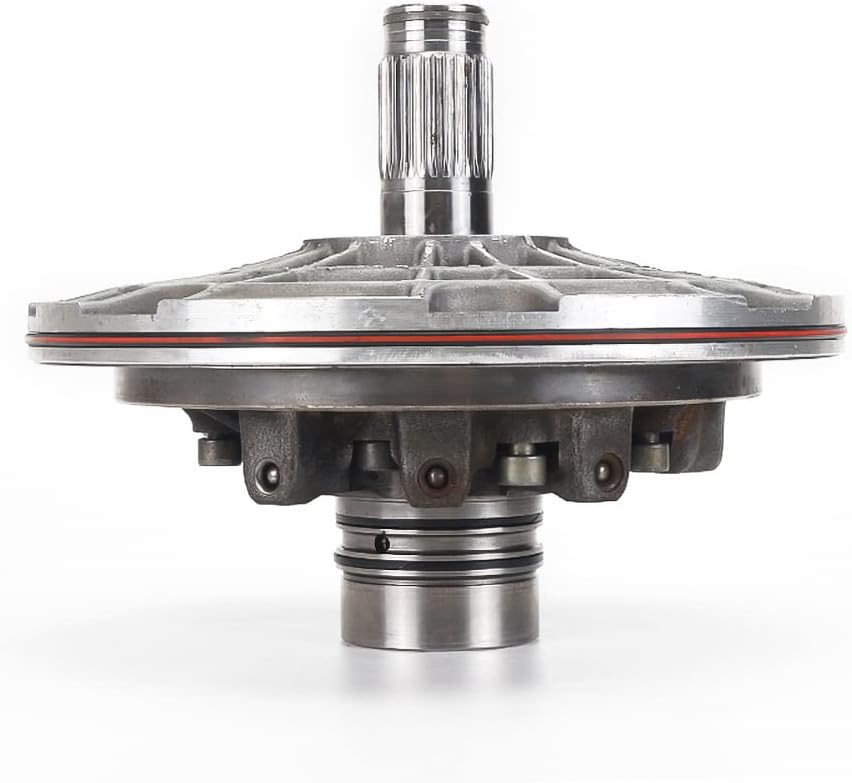
Inside the 5R55W/5R55S pump, Sonnax documents a flow control valve and pressure regulator valve that control and hold line pressure before it ever reaches the valve body. Sonnax's part listing for the replacement pressure regulator valve (56947J-77) describes the failure directly: a worn valve "allows fluid loss that results in poor line pressure control," and the resulting symptom list includes delayed engagement, soft shifts, poor line rise, erratic line pressure, pressure control out-of-range codes, and burnt clutches if it runs long enough. A stuck or worn valve in this circuit can starve every range at once, which is exactly the no-movement pattern. The catch is that confirming it means pulling the transmission, since the valve sits inside the pump assembly, not under the pan.
The valve body suspects
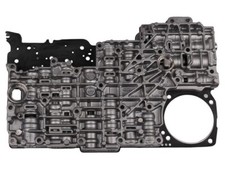
If line pressure is present in Park/Neutral but falls off in gear, or the pump checks out, the valve body is next. Sonnax documents two specific, well-worn failure points on this platform:
- Boost valve sleeve: Sonnax's listing for the Boost Valve Kit (56947J-74K) attributes "OE boost sleeve deterioration" to a symptom list that includes no Reverse, Reverse slip, low Reverse boost, delayed engagement, soft shifts, erratic line pressure and burnt clutches.
- TCC control valve bore wear: Sonnax's write-up on the 5R55 family recommends checking the TCC modulator bore first, then the main regulator bore, when a unit shows erratic pressure complaints, since bore wear in either location lets pressure bleed where it shouldn't.
Both of these are drop-in Sonnax repair kits once the valve body is out and the bores are confirmed within spec with a vacuum test at the ports Sonnax specifies.
Two real 5R55W teardowns that looked worse than a single clutch
Wayne Colonna documented two separate 5R55W case files in Transmission Digest that are worth knowing before you assume the worst. In the first, a 2005 Explorer 4.0L came in with no Reverse and every forward gear fine. The technician, Oscar at Continental Transmissions, inspected the reverse engagement control valve, the reverse servo control valve, the servo check valve, the molded apply piston and the band itself, and all passed. The actual failure was a broken low/reverse band strut, found last because it was the least likely suspect on the list.
In the second, a 2004 Explorer 4.6L had a similar no-Reverse complaint with a slight forward engagement delay. The shop checked the digital range sensor and cable, found nothing, and replaced the valve body on the assumption that would cover it. It didn't: reverse engaged afterward but slipped badly under any throttle. The actual fault was a crack in the case's hydraulic passage, which let pressure from variable force solenoid 3 (which controls the reverse engagement control valve and reverse pressure modifier valve) leak into the VFS 2 passage, compromising line pressure feed to the direct clutches.
Neither of these cases was a true "nothing moves in any gear" complaint, both were reverse-specific, but they illustrate the diagnostic principle this whole article runs on: a symptom pattern that's isolated to one range (forward works, reverse doesn't, or vice versa) points at that range's specific valve body circuit, servo or band. A symptom that takes out every range at once points at something common to all of them: the pump, the main line pressure circuit, or in the rarer case above, a cracked passage bridging two circuits that shouldn't be connected.
Symptom pattern, mapped to likely cause
| What you see | Most likely cause |
|---|---|
| No movement in Drive AND Reverse, zero line pressure everywhere including P/N | Pump flow control or pressure regulator valve, or a pump-side common-supply failure |
| No movement in Drive AND Reverse, line pressure present in P/N | Manual valve, main case passage, or a shared valve body circuit feeding both ranges |
| Reverse only missing, forward gears fine | Low/reverse servo, band or strut, boost sleeve wear, or a case crack feeding the reverse circuit |
| Delayed engagement both directions, eventually catches | Pressure regulator valve or boost sleeve wear, not yet total failure |
| TCM shows wrong or no commanded range on the scan tool | Manual lever position sensor or shift cable adjustment |
| Reverse engages but slips badly under throttle after a valve body swap didn't fix it | Cracked case passage bleeding pressure between VFS circuits |
My diagnostic order
This is shop habit built around the sources above, not a single published procedure:
- Scan for codes and confirm the TCM's commanded range matches the actual shifter position before touching anything hydraulic.
- Check fluid level with the correct warm-fill method and look at its condition. Burnt fluid changes the whole diagnosis toward damaged clutches.
- Gauge line pressure in Park/Neutral, Drive and Reverse at idle. This single test tells you whether you're chasing the pump or the valve body.
- If pressure is dead everywhere including P/N, the pump and its flow control/pressure regulator valves are the leading suspect, and that means pulling the transmission.
- If pressure is present in P/N but drops in gear, pull the pan and valve body and inspect the boost sleeve and the TCC modulator and main regulator bores before replacing parts on a guess.
- If a valve body swap doesn't resolve a reverse-only complaint, don't stop at the valve body. Check the band, struts and servo, and if those pass, pressure-test for a cracked case passage before calling it fixed.
5R55W Transmission Rebuild Kit, 2002-2010
Once a no-movement diagnosis lands on worn clutches, a cracked passage, or valve body bores beyond a drop-in kit, a full rebuild kit is the economical fix over chasing individual parts. Sold by our sister store, CoreTransmissionParts.
Shop the part for this fix →Need a specific valve, solenoid pack or pump component instead? The 5R55W parts collection has the full breakdown.
Need parts for this job?
Our 5R55 parts page carries pump assemblies, valve bodies, and solenoid kits for the 5R55W and 5R55S, built for the Explorer and Mountaineer applications. Checkout is on site.
FAQ
What causes a 5R55W to have no movement in any gear?
When both Drive and Reverse are dead but the engine revs normally, the cause is almost always something common to every range rather than a single clutch: a stuck or worn pump flow control/pressure regulator valve, a manual lever position sensor or shift cable out of adjustment so the TCM never sees a valid range command, or in rarer cases a cracked case passage bleeding line pressure between circuits. A single worn clutch or band does not usually take out every gear at once.
Is low line pressure the usual cause of no movement on a 5R55W?
It is the most common finding once the range sensor and shift linkage are ruled out. The 5R55W/5R55S pump has a documented history of a sticking flow control valve inside the pump that bleeds off the pressure everything downstream depends on, and Sonnax separately documents wear in the valve body's boost sleeve and pressure regulator valve that produces the same low-pressure symptom picture. A line pressure gauge at the test port in Park/Neutral, Drive and Reverse is what tells you which side of the problem you're on.
Can a bad range sensor cause no movement in a 5R55W?
Yes. If the manual lever position sensor (digital range sensor) is out of adjustment or the shift cable has slipped, the TCM can be commanding a range that doesn't match where the shifter actually sits, or getting no valid range signal at all, so it never tells the valve body to apply anything. This is checked with a scan tool before anything is pulled apart, since it costs nothing to rule out.
What fluid does a 5R55W take and how much?
MERCON V, per Ford/Motorcraft's current Automatic Transmission Fluid Chart, which covers the 5R55N/W/S family. These units have no dipstick; fluid is checked with a scan tool monitoring fluid temperature and filled through the fill tube until it runs out the overflow at the correct temperature, with total system capacity generally in the 11 to 13 quart range depending on engine application.
Does a 5R55W with no movement always need a full rebuild?
No. A worn pump flow control valve, boost sleeve or pressure regulator valve can often be corrected with a drop-in kit once the pump or valve body is out and the bores are confirmed good. A full rebuild becomes the right call when the fluid shows burnt friction material, when a cracked case passage is found, or when the bores themselves are worn beyond what a kit can seal.
Related guides
- 5R55S No Movement in Any Gear: Diagnosis
- 5R55S Valve Body Symptoms and Testing
- 5R55S Pump Failure Symptoms and Replacement
- 5R55W/5R55S Servo Pin Bore Wear
- Ford 5R55S/5R55W Transmission Problems
Sources
- Sonnax, Pressure Regulator Valve 56947J-77 (Ford 5R55W, 5R55S). Backs the pump/pressure regulator failure description ("worn pressure regulator valve allows fluid loss that results in poor line pressure control") and its symptom list including delayed engagement, erratic line pressure and burnt clutches. sonnax.com
- Sonnax, Boost Valve Kit 56947J-74K (Ford 5R55W, 5R55S). Backs the OE boost sleeve deterioration failure cause and its symptom list including no Reverse, Reverse slip, low Reverse boost and burnt clutches. sonnax.com
- Sonnax, Oversized TCC Control Valve Kit 56947J-05K (Ford 5R55N, 5R55W, 5R55S). Backs the TCC control valve bore wear cause and the P0741/excess TCC slip symptom list. sonnax.com
- Sonnax Tech Resources, "Figuring Out the 5R55 Alphabet." Backs the 5R55W/5R55S shared architecture, the overdrive sun gear hard-parts difference, the TCC modulator/main regulator bore-check order, and the converter apply/release pressure specs. sonnax.com
- Wayne Colonna, Transmission Digest, "What to know if you're rebuilding older Ford transmissions" (March 12, 2025). Backs both 5R55W case studies: the broken low/reverse band strut on a 2005 Explorer, and the cracked case passage bleeding VFS 3 pressure into the VFS 2 circuit on a 2004 Explorer. transmissiondigest.com
- Ford Motor Company / Motorcraft, Automatic Transmission Fluid Chart (Version 20, published October 2025). Backs the MERCON V fluid requirement for the 5R55N/W/S family and the no-dipstick fill method. fcsdchemicalsandlubricants.com
- Ford Motor Co. service information (Mitchell reprint), 2002 Explorer/Mountaineer, "5R55W/S Diagnosis." Backs the 4.0L and 4.6L line pressure specifications, the line pressure test results chart, and the air pressure test procedure for a no-drive condition with correct pressure. 5R55W/S Diagnosis (PDF)
- Ford Motor Co. service information (Mitchell reprint), "Servicing - Explorer & Mountaineer." Backs the TFT-based fluid level check at the pan plug, fill tool 307-437, MERCON V and the 12.6 qt capacity. 5R55W/S Servicing (PDF)