A 5R55W that runs hot usually doesn't show it until the overdrive planet is gone. The Explorer comes in with a whine that turned into a grind, 5th gear missing or slipping, and a pan full of bronze and steel, and the owner swears the transmission never overheated because the gauge never moved. The Explorer's dash gauge is for engine coolant. The transmission can be well past 250°F while that needle sits in the middle.
This post covers how the 5R55W actually moves heat, why its cooling and lube design lets it cook itself, how to prove a heat problem with a scan tool, and what to change on the bench so it doesn't come back. The specs come from Ford's own 5R55W/S service information, Sonnax technical articles and ATSG's write-ups, all listed at the bottom.
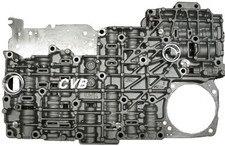
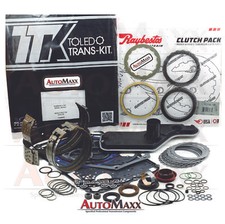

Which trucks have a 5R55W
Sonnax's "Figuring Out the 5R55 Alphabet" separates the family this way: the 5R55N went in the 1999-2002 Jaguar S-Type, Lincoln LS and Thunderbird; the 5R55W was the 2002-2003 Explorer and Mountaineer unit, with a 24-tooth overdrive sun gear; and the 5R55S replaced it in the 2004-2005 Explorer and Mountaineer (and later cars) with a 38-tooth overdrive sun gear. The W and S share the same case layout, solenoid body and most hydraulics, so nearly everything below applies to both. Ford's service manual covers them together as the "5R55W/S."
Ford's 2002 Explorer servicing data lists the W/S at 12.6 qt (12.0 L) approximate capacity of MERCON V (XT-5-QM or XT-5-DM). That's a lot of fluid for a light-duty five-speed, and it matters here, because the fluid is doing three jobs at once: hydraulic medium, lubricant, and the only thing carrying heat out of the case.
How the 5R55W moves heat, and where the design bites you
Most transmissions send converter charge fluid out to the cooler more or less full-time once the engine is running, then bring it back as lube. The 5R55W doesn't. Fluid leaving the converter passes a thermal element inside the transmission. Sonnax's Bob Warnke describes it plainly: the element starts to open when converter temperature reaches 125°F, and until it reaches full open, the fluid is circulated inside the unit for lube and there is no external cooler flow. Whatever small flow you see before then comes out of the upper return fitting on the case.
Two things follow from that:
- The cooler is out of the loop longer than you'd think. Warnke notes the element takes considerable run time to move; it doesn't snap open like a shift valve. When it does open, the converter charge purges, internal pressure drops, and cool fluid fills the void. The cool fluid retracts the element and the cycle starts over. That's why fluid level on these units can read erratically if you check it at the wrong temperature.
- Lube and cooling are tied together. Wayne Colonna of ATSG traced repeated overdrive planetary failures on the 5R55N/S/W to this same bypass circuit. His write-up says a malfunctioning cooler bypass/thermal valve cuts oil to the coast clutch drum and the center lube for the overdrive planetary, and that Ford's thermal valve runs far too long before starting cooler flow. The front planet is the first thing to starve.
So on a 5R55W, "overheating" and "overdrive planet failure" are often the same problem seen from two ends. Low flow through the bypass means less cooling and less lube to the part that is spinning fastest.
The valve body wear that feeds it
The second half of the story is hydraulic. Sonnax's oversized solenoid and converter feed limit valve kit (56947J-61K) exists because those two bores wear. Per Sonnax, excessive wear in the solenoid feed limit and converter feed limit valve bores causes TCC engagement problems, gear ratio codes and overheating. A worn converter feed limit valve also causes front lube failure and reduced converter charge.
Think about what reduced converter charge does. The converter clutch can't hold, so it slips. A slipping TCC is a heater bolted to the front of the transmission. At the same time, the same worn bore is bleeding off the fluid that should be going to lube. You get more heat and less oil to carry it away, in the same circuit.
Sonnax's same 5R55 article lists the other regulated pressures you're depending on here: converter release oil is limited to 130 psi to hold the TCC piston off the cover, and the solenoid regulator valve limits solenoid pressure to 72 psi at the modulator sleeve. When the bores that set those numbers wear, pressure and flow go where they shouldn't.
What Ford's own chart says causes overheating
Ford's 5R55W/S symptom chart for "Transmission Overheating" lists, in order: fluid level, incorrect line pressure (high or low), valve body (sticking valves), oil pump assembly, transmission case, torque converter (seized one-way clutch), and cooler line restriction. The diagnostic path for the same symptom sends you through the TCC engagement test, the quick test for codes, and three pinpoint tests: shift and TCC solenoids, the TFT sensor, and the PC-A, PC-B and PC-C pressure control solenoids.
Only one item on Ford's list is the cooler. Everything else is inside the case. That's why a bigger auxiliary cooler, by itself, so often fails to fix a 5R55W that runs hot. If the thermal element never lets fluid out, or a worn feed limit valve is dumping converter charge, the cooler never sees the heat.
The seized converter one-way clutch belongs on that list too. A stator that won't freewheel drags at cruise and heats the fluid, and Ford's stall test tells you about it: stall speed low in all ranges points to poor engine performance or a faulty stator one-way clutch. Ford's stall spec for the Explorer/Mountaineer is 2,557-3,036 rpm (4.0L) and 2,687-3,150 rpm (4.6L). Ford also warns not to hold WOT more than 5 seconds during the test, and that running it long enough can set P0712 or P1783 on its own, so clear codes afterward.
Proving it with a scan tool
The TFT sensor and the codes that go with it
The transmission fluid temperature (TFT) sensor is on the solenoid body. Per Ford, the PCM reads the voltage across the TFT thermistor and uses it to set control pressure, shift scheduling and TCC operation. A bad TFT reading causes incorrect line pressure and can stop the TCC from applying, which then makes heat for real. So check the sensor before you trust its number.
| Code | Ford description | What you'll feel |
|---|---|---|
| P1783 | Transmission overheating condition, 270°F (127°C) | Increased PC pressure (firmer shifts) |
| P0712 | TFT sensor indicates 315°F (157°C), short to ground | Firm shift feel |
| P0713 | TFT sensor indicates -40°F (-40°C), open circuit | Firm shift feel |
| P1711 | TFT not at operating temperature during self-test | Vehicle cold or overheated |
| P1713 / P1718 | No TFT change in low / high range | Increased PC pressure, wrong TCC schedule, harsh shifts |
A stored P1783 is the one that matters most. It means the PCM saw the fluid at 270°F. Once a 5R55W has been there, assume the MERCON V is oxidized and the friction material has taken a hit, even if it still drives fine.
Ford's TFT pinpoint test
Ford's Test B is simple and worth doing before any teardown:
- Monitor the TFT and TFTV PIDs. Warm the unit up (or let a hot one cool) and watch them move. If they track temperature smoothly, the sensor is fine and the overheat is real; go to the overheating diagnosis.
- If the reading drops in and out, look for an intermittent in the internal or external harness or connector.
- If it doesn't move at all, key off, unplug the 16-pin transmission connector, and check for 4.5-5.5 volts reference at terminal 2 with the key on.
- Measure resistance between terminals 2 and 12 and compare it to Ford's temperature/resistance table. Ford's table starts at 284-967 k-ohms between -40°F and -4°F, and resistance drops as temperature rises. Out of spec means replacing the solenoid body assembly, because the TFT is part of it.
Once you trust the sensor, log TFT on a real road test: highway speed, a long grade if you have one, and some stop-and-go. On a healthy unit TFT should level off. If it keeps climbing on flat highway with the TCC commanded on, you're looking at converter slip, low converter charge or no cooler flow, not the driver.
Check cooler flow, then think about the thermal element
Ford's cooler flow test is covered step by step in our 5R55S towing and cooling guide. The short version: return line off the case, clear hose into the fill plug adapter, idle, and you want about 8 oz (237 ml) in 15 seconds. If the case itself won't deliver that after the lines are cleaned and replaced, Ford points you at the pump and valve body. On a 5R55W, remember the thermal element: test with the fluid fully warm, or you're measuring a circuit that isn't supposed to be flowing yet.
The bench fix
If a 5R55W has a P1783 history, low flow from the case, or a burnt overdrive planet, fix the causes, not just the damage.
- Vacuum test the valve body. Sonnax says to vacuum test the solenoid feed limit and converter feed limit bores at the specified ports. If they won't hold the minimum vacuum spec, the bores need to be reamed and fitted with the oversized hardcoat-anodized valves in kit 56947J-61K, using tool kit F-56947J-TL61. Sonnax's 5R55W/S vacuum test guide lays out the port locations.
- Deal with the bypass and lube circuit. ATSG's Colonna points to Superior's K5R55W/N/S kit, which pairs an updated flow control valve and solenoid regulating valve with Superior's redesigned Sure-Cool bypass/flow control valve. ATSG reports that the updated system gives the overdrive planets close to three times the lube flow (a second ATSG article says four times) and eliminates the repeat failures.
- Replace the cooler, and flush the lines. Ford's caution is direct: whenever the transmission has been disassembled to install new parts, a new transmission fluid cooler must be installed and the cooler tubes cleaned and backflushed. Ford's servicing procedure uses a converter/cooler cleaner with clean ATF only, no solvents, circulated at least 5 minutes with the pump cycled on and off, then the lines blown out with compressed air. Metal and friction material left in the cooler is, in Ford's words, a major cause of recurring transmission trouble.
- Look at the converter. A converter with a seized stator clutch or a TCC that won't hold will keep making heat no matter what you do to the valve body. Check it before you reinstall.
Sonnax 56947J-61K solenoid and converter feed limit valve kit (5R55W)
The oversized feed limit valves Sonnax ties to 5R55W/S overheating, front lube failure and low converter charge. Sold by our sister store, CoreTransmissionParts, along with the TL61 reamer kit.
Shop the part for this fix →Need a planetary, rebuild kit or filter instead? The 5R55W parts collection has them.
Prevention: keeping a good 5R55W cool
Put it on the severe schedule if it earns it. Ford's 2002 Explorer servicing data calls for fluid and filter every 150,000 miles in normal service but every 30,000 miles in hot weather over 90°F, with heavy loads or hilly terrain, when towing or carrying a roof carrier, in police, taxi or delivery use, or in dusty and off-road conditions. Ford's 2005 Mercury scheduled maintenance guide repeats the 30,000-mile fluid change for towing, extensive idling, dusty roads and off-road operation (source 8). A lot of Explorers and Mountaineers fit at least one of those.
Respect the tow rating and the warning. The 2005 Mountaineer owner guide rates a 4.6L AWD truck with the 3.73 axle at up to 6,900 lb of trailer on an 11,600 lb GCWR, and warns that towing past the maximum can cause transmission damage. The same guide's message center has a TRANSMISSION OVERHEATED warning that Ford says can appear when towing heavy loads or driving in a low gear at high speed for a long time; the instruction is to stop, let it cool and check the fluid (source 7). If that message has ever come up, treat the fluid as cooked and change it.
MERCON V only, and no additives. Ford specifies MERCON V and warns against supplemental additives, treatments or cleaning agents. Sonnax also notes that solenoid degradation on these units was tied to early MERCON V (before May 2005); Ford's revised fluid is the one to use.
Set the level at temperature. There's no dipstick. Ford's procedure sets the level with TFT between 81 and 120°F (27-49°C) at about 650 rpm idle, with the fluid just at the bottom of the check plug hole. Given how the thermal element cycles, checking it hot gives you a false reading. A 5R55W that's a quart low runs hotter, aerates and starves the lube circuit even faster. Our filter and pan service guide walks through the plug-and-adapter fill.
Don't ignore a TCC complaint. A converter clutch that shudders, won't lock or cycles on and off is making heat every mile. Fix it when it starts, not after the P1783 shows up.
Use O/D off under load. If the truck hunts between 4th and 5th on hills or with a trailer, lock out overdrive with the switch on the shifter. The shifting and the slipping converter both go away, and so does a lot of the heat.
Need parts for this job?
Our 5R55 parts page has 5R55W valve bodies, solenoid packs, filter and pan gasket kits for the 30,000-mile severe service, planetaries, and master and overhaul kits by year range for units that already cooked. Checkout is on site.
FAQ
What temperature is too hot for a 5R55W?
Ford's PCM sets P1783, Transmission Overheating Condition, when the TFT sensor reads 270F (127C), and raises pressure control pressure in response. Anything near that is too hot. On a healthy unit, TFT should level off well below it on flat highway with the converter clutch applied.
Why does my 5R55W overheat even with an auxiliary cooler?
Because most causes are inside the case. Ford's overheating chart lists fluid level, line pressure, sticking valves, the pump, the case, a seized converter one-way clutch and cooler line restriction. Sonnax also ties worn solenoid and converter feed limit bores to overheating and low converter charge, and the internal thermal element does not send fluid to the cooler until it opens, starting around 125F.
Does overheating cause the 5R55W overdrive planet to fail?
Often, yes. ATSG traced repeated overdrive planetary failures on the 5R55N/S/W to a malfunctioning cooler bypass/thermal valve that cuts lube to the coast clutch drum and the overdrive planet. Less cooler flow means less lube to the fastest-spinning parts, so the heat problem and the planet failure are usually the same fault.
How do I check the 5R55W temperature sensor?
Watch the TFT and TFTV PIDs while the unit warms up; they should rise smoothly. If they don't, unplug the 16-pin connector, check for 4.5-5.5 volts at terminal 2 with the key on, and measure resistance between terminals 2 and 12 against Ford's temperature chart. The TFT is part of the solenoid body, so an out-of-spec sensor means replacing that assembly.
How often should 5R55W fluid be changed?
Ford lists 150,000 miles for normal service and 30,000 miles for severe service, which includes heat over 90F, heavy loads, hills, towing, and police, taxi or delivery use. Use MERCON V only, with no additives, and set the level with TFT at 81-120F.
Related guides
- 5R55S Towing Upgrades and Cooling
- 5R55S Torque Converter Shudder
- 5R55W P0741 Fix
- 5R55S Valve Body Symptoms
- Ford 5R55S and 5R55W Transmission Problems
Sources
- Ford service information via Mitchell1, "2002 Automatic Transmissions 5R55W/S Diagnosis" (Explorer/Mountaineer). Backs the TFT sensor location and role, P1783 at 270°F with increased PC pressure, P0712/P0713/P1711/P1713/P1718 descriptions, the Transmission Overheating symptom chart and diagnostic path, Test B (TFT/TFTV PIDs, 4.5-5.5 V at terminal 2, resistance at terminals 2 and 12, the -40 to -4°F resistance value), the stall speed specs and 5-second WOT limit, the cooler flow test, and the new-cooler caution. Ford/Mitchell diagnosis (PDF)
- Ford service information via Mitchell1, "2002 Automatic Transmissions Servicing - Explorer and Mountaineer." Backs the 12.6 qt (12.0 L) capacity, MERCON V (XT-5-QM or XT-5-DM), the 150,000/30,000-mile intervals and severe-service conditions, the 81-120°F TFT level check at 650 rpm, the no-additives warning, and the cooler backflush procedure. Ford/Mitchell servicing (PDF)
- Sonnax, Bob Warnke, "Figuring Out the 5R55 Alphabet." Backs the 5R55N/W/S applications and sun gear tooth counts, the thermal element that starts to open at 125°F with no external cooler flow before full open, the erratic fluid level cycle, the 130 psi converter release and 72 psi solenoid regulator limits, and the early MERCON V solenoid note. sonnax.com
- Sonnax, Oversized Solenoid and Converter Feed Limit Valve Kit, part no. 56947J-61K. Backs the feed limit bore wear causing TCC problems, gear ratio codes, overheating, front lube failure and reduced converter charge, the vacuum test, and tool kit F-56947J-TL61. sonnax.com
- Wayne Colonna (ATSG), "Ford 5R55N/S/W's Overdrive Planetary Failure," Vehicle Service Pros. Backs the malfunctioning cooler bypass/thermal valve cutting lube to the coast clutch drum and overdrive planetary, the slow Ford thermal valve, and the Superior K5R55W/N/S kit with the Sure-Cool valve and near-triple lube flow. vehicleservicepros.com
- Wayne Colonna (ATSG), "Ford's 4R75 and 5R55 overheating transmission," Vehicle Service Pros. Backs the 5R55N/S/W bypass valve being built into the transmission, repeated overdrive planetary failures traced to it, and the Sure-Cool fix. vehicleservicepros.com
- Ford Motor Co., 2005 Mercury Mountaineer Owner's Guide (archived copy). Backs the TRANSMISSION OVERHEATED message center warning and its causes, the 4.6L AWD 6,900 lb / 11,600 lb GCWR towing rating, and the warning that towing past the maximum can cause transmission damage. 2005 Mountaineer Owner's Guide (PDF)
- Ford Motor Co., 2005 Mercury Scheduled Maintenance Guide (archived copy). Backs the 30,000-mile automatic transmission fluid change under towing, extensive idling, dusty and off-road special operating conditions. 2005 Mercury Maintenance Guide (PDF)