The 5R55S was never sold as a tow rig transmission. Ford put it behind the 4.0L V6 in the Explorer and Mountaineer and behind the V6 and V8 in the 2005-2010 Mustang, and it does fine in that work until somebody hooks a camper to it in July. Then it comes in on a flatbed with burnt bands, a varnished valve body and a cooler full of friction material.
Towing doesn't break these units by itself. Heat does, and so does a hydraulic system that's already leaking pressure when the load goes on. Here's what Ford actually rates these vehicles to pull, how to check that the cooling circuit is doing its job, and which upgrades are worth money. The specs come from Ford's owner guides and service information and from Sonnax, all listed at the bottom.

Start with what Ford says it can pull
Before you add a cooler or a shift kit, check whether the vehicle should be pulling that trailer at all. A lot of 5R55S failures I see come from Explorers towing more than their hitch and axle package allows.
On the 2007 Explorer, the 4.0L SOHC V6 is the 5R55S engine. The 4.6L V8 got the 6R60 six-speed that year, so ignore the V8 lines in the chart when you're working on a 5R55S. Ford's 2007 Explorer owner guide gives these ratings for the 4.0L:
| Vehicle / package | Axle | Max GCWR | Max trailer |
|---|---|---|---|
| 2007 Explorer 4.0L, Class II (4x2 or 4x4) | 3.55 | 8,500 lb | 3,500 lb |
| 2007 Explorer 4.0L 4x2, Class III/IV | 3.73 | 10,000 lb | 5,370 lb |
| 2007 Explorer 4.0L 4x4, Class III/IV | 3.73 | 10,000 lb | 5,200 lb |
| 2007 Mustang (5R55S automatic) | - | - | 1,000 lb, 100 lb tongue |
A few details from the same guide matter for the transmission. Ford says to reduce GCW by 2% for every 1,000 ft of elevation. The Class II receiver is limited to a 350 lb tongue load, and the Class III/IV receiver to 500 lb weight-carrying or 740 lb with a weight-distributing hitch. It also says in plain words that going over the GCWR can cause transmission damage. The Mustang guide rates the car at 1,000 lb gross trailer weight, so a Mustang with a 5R55S pulling a car hauler is already far past its rating.
How towing kills a 5R55S
Ford's 5R55W/S diagnosis manual describes the unit as a five-speed with three planetary sets, three bands, three clutches and two one-way clutches, with line pressure and apply pressure set by three pressure control solenoids (PC-A, PC-B and PC-C). The bands are what make towing hard on it. A band that slips under load makes heat quickly, the fluid oxidizes, varnish forms in the valve body, and pressure regulation gets worse. From there it feeds on itself.
The PCM tries to protect it. Ford's manual says the transmission fluid temperature (TFT) sensor sits on the solenoid body, and the PCM uses it to set control pressure, shift scheduling and TCC operation. When TFT reaches 270°F (127°C), the PCM sets P1783, Transmission Overheating Condition, and responds with an increase in PC pressure. A P1783 in memory on a tow vehicle tells you the fluid has been cooked at least once. Don't clear it and hand the keys back.
Ford's symptom chart for transmission overheating lists fluid level, incorrect line pressure (high or low), sticking valves in the valve body, the oil pump, the case, a torque converter with a seized one-way clutch, and cooler line restriction. Only one of those is actually the cooler. Most of the causes are hydraulic, which is why bolting on a big cooler alone often doesn't fix a hot-running 5R55S.
Diagnose before you upgrade
1. Watch TFT on a loaded road test
Put a scan tool on it and log the TFT PID (and TFTV, the sensor voltage) with the trailer attached if you can. If TFT is climbing toward 270°F, you have a real heat problem. If the reading drops in and out or doesn't move as the unit warms up, Ford's test points you to the sensor and harness first. P0712 means the TFT circuit is reading shorted to ground (it shows 315°F), and P0713 means an open (it shows -40°F). A bad TFT reading also throws off line pressure and TCC control, and can make a healthy unit shift like a sick one.
While you're logging, watch TCC slip. A converter clutch that won't stay locked on the highway with a trailer turns the converter into a heater. Our 5R55S converter shudder guide covers the TCC side.
2. Run Ford's cooler flow test
This is the test most shops skip, and it takes ten minutes. Per Ford's procedure:
- Park, raise the vehicle, and if there is an in-line cooler filter, remove it before testing.
- Hold the large drain plug and use a 3/16 in Allen key to remove the small fluid level plug, then install the fill plug adapter (307-437).
- Take the cooler return line (the upper line) off the case and route a clear hose from it to the adapter in the pan.
- Start the engine at idle. Once the flow is steady with no bubbles, put the hose in a measuring container for exactly 15 seconds.
- Adequate flow is about 8 oz (237 ml) in 15 seconds.
If the flow is short, move the hose to the cooler inlet fitting on the case and test again. If you get 8 oz straight from the case, the restriction is in the lines or cooler, and Ford says to clean and backflush them. If it's still short after backflushing, replace the cooler lines and/or add an auxiliary cooler. If flow from the case is still short after that, Ford points at the pump and valve body. Ford also notes that idle, linkage, fluid level and line pressure must be in spec before you run the test.
3. Check line pressure
From Ford's specs, a 4.0L 5R55S in Drive should see about 80-110 psi at idle and 228-263 psi at WOT stall, with stall speed of 2,557-3,036 rpm. Low line pressure under load is a slip, and a slip under trailer load produces heat faster than any cooler can remove it.
The upgrades that are worth it
Cooling: clean first, then add capacity
Ford's service information is firm on this. Whenever the transmission is taken apart to install new parts, or a new or reman unit goes in, you install a new fluid cooler, whether it's in-tank, auxiliary or oil-to-air, and clean and backflush the cooler tubes. The reason, in Ford's words, is that metal, clutch plate and band material carried into the cooler is a major cause of recurring transmission concerns. Ford's backflush uses clean ATF only, no solvents, for at least 5 minutes with the pump cycled, then blows the lines dry with compressed air.
For a tow vehicle, that's the time to add an auxiliary cooler if it doesn't already have one. Plumb it on the return side, after the radiator tank, so fluid goes back to the transmission as cool as possible. Then run the flow test again with the new cooler in place. An auxiliary cooler with a kinked hose or a stuck bypass can flow less than the stock system did.
Valve body: fix the pressure leaks the heat created
This is where most of the durability comes from. Sonnax documents two wear points in the 5R55W/S valve body that turn up again and again on towed units:
- Pressure regulator valve. Sonnax says a worn pressure regulator valve lets critical pressure escape from the line pressure circuit, causing delayed engagement, harsh or soft shifts, erratic line pressure, sometimes an erratic buzz or pressure control codes, and burnt clutches. Their fix is the hardcoat-anodized 56947J-77 valve.
- Boost valve and sleeve. Sonnax lists wear in the OE boost sleeve as a cause of poor line rise and erratic line pressure, and recommends the 56947J-74K boost valve kit alongside the regulator valve.
On a unit that tows, I vacuum test both before reusing them.
Line pressure booster: firmer apply without low-speed harshness
If the valve body is sound, the Sonnax 5R55WS-LB1 line pressure booster kit is the upgrade I use on a 5R55S that tows. It combines a pressure regulator spring that Sonnax says is about 10% stronger than OE with large-ratio boost valves. The result is a modest pressure increase at the low end and a bigger one as throttle and load increase. Sonnax lists better band and clutch holding capacity and shorter shifts, without overloading the pump at idle. That's the right profile for towing: more clamping force on the bands when the trailer is pulling, without every stoplight engagement banging into gear.
Don't use a booster to cover a worn regulator valve or a leaking servo. Fix the leak first, then add pressure. On a case with worn servo pin bores, extra pressure just leaks out faster. Our servo pin bore wear guide explains how to check that.
Driving and maintenance habits that save it
Turn overdrive off when it starts hunting. Ford's Explorer guide says to press the transmission control switch on the shifter to lock out 5th when city traffic, hills, heavy loads or trailer towing cause excessive shifting, and that using a lower gear to stop the hunting also helps transmission cooling. The O/D OFF light comes on, and overdrive comes back every time the key is cycled, so the driver has to press it again each trip.
Park it in P when stopped in traffic. In hot weather, Ford recommends putting the shifter in P to help engine and transmission cooling when you're stopped in traffic with a trailer.
Change the fluid on the severe schedule. Ford's W/S service information calls for fluid and filter every 150,000 miles in normal use, but every 30,000 miles when towing a trailer, in heat above 90°F, with heavy loads or hilly terrain. A tow vehicle is always on the 30,000-mile schedule.
Use MERCON V only, with no additives. The 2007 Explorer guide lists the 5R55S at 12.4 qt (11.7 L) of Motorcraft MERCON V, as an approximate dry fill that varies with cooler size. So a bigger auxiliary cooler means more fluid, and the level has to be set by the check procedure, not by counting quarts. Ford specifically warns against supplemental additives, treatments or cleaning agents.
Set the level Ford's way. There's no dipstick. Ford's procedure uses the TFT PID: bring TFT to 81-120°F (27-49°C) with the engine at about 650 rpm idle, run the shifter through the gears, level the vehicle, and pull the check plug with a 3/16 in Allen key. When it drips or runs in a thin stream, the level is correct. Our 5R55S fluid guide and filter and pan service guide go through the steps.
Sonnax 5R55WS-LB1 line pressure booster kit
The progressive pressure regulator spring and large-ratio boost valve kit described above, for 5R55S and 5R55W valve bodies. Sold by our sister store, CoreTransmissionParts.
Shop the part for this fix →Need the regulator valve, boost valve kit or a filter instead? The 5R55S parts collection has them.
Need parts for this job?
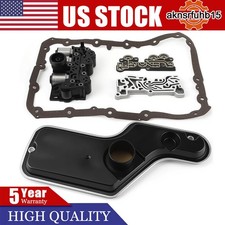
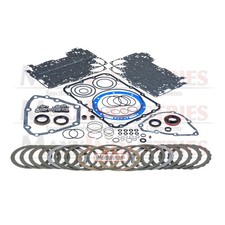
Our 5R55 parts page has 5R55S shift kits, filter and pan gasket kits for the severe-service change, valve bodies, solenoid packs, and master and overhaul kits by year range for units that already overheated. Checkout is on site.
FAQ
How much can a 5R55S tow?
It depends on the vehicle, not the transmission alone. Ford's 2007 Explorer guide rates the 4.0L V6 (the 5R55S engine) at 3,500 lb with the standard Class II hitch, and up to 5,370 lb (4x2) or 5,200 lb (4x4) with the Class III/IV package and 3.73 axle. The 2007 Mustang with the 5R55S is rated at only 1,000 lb with a 100 lb tongue load.
Should I tow in overdrive with a 5R55S?
Ford says to press the transmission control switch to turn overdrive off when towing, hills or heavy loads cause the transmission to hunt between 4th and 5th. That keeps it in 1-4, gives engine braking, and Ford notes a lower gear also helps transmission cooling. On flat highway with the converter clutch staying locked, overdrive is fine.
Does a 5R55S need an auxiliary transmission cooler for towing?
An auxiliary cooler helps, but only if fluid is actually getting through the circuit. Ford's cooler flow test calls for about 8 oz (237 ml) at the return line in 15 seconds at idle. If flow is short after backflushing, Ford says to replace the lines or add an auxiliary cooler, and if it is still short, look at the pump and valve body.
How often should I change 5R55S fluid if I tow?
Ford's service information lists 30,000-mile fluid and filter changes for towing a trailer, hot weather over 90F, heavy loads or hilly terrain, versus 150,000 miles for normal service. Use MERCON V only, with no additives, and set the level at the check plug with TFT between 81 and 120F.
Related guides
- 5R55S Torque Converter Shudder
- 5R55S Slipping: Causes and Fix
- 5R55W/5R55S Servo Pin Bore Wear
- 5R55S Fluid Type and Capacity
- 5R55S Valve Body Symptoms
Sources
- Ford Motor Company, 2007 Explorer Owner's Guide, Trailer Towing, Driving and Maintenance and Specifications. Backs the 4.0L GCWR and trailer ratings by hitch class and axle, the 2%-per-1,000 ft altitude reduction, the receiver tongue limits, the GCWR transmission damage warning, O/D OFF use for towing and transmission cooling, P in stopped traffic, the 12.4 qt (11.7 L) MERCON V capacity note and the no-additives warning. Ford owner guide PDF (archived)
- Ford Motor Company, 2007 Mustang Owner's Guide, Trailer Towing. Backs the 1,000 lb (454 kg) trailer and 100 lb tongue load rating. Ford owner guide PDF (archived)
- Ford service information via Mitchell1, "2002 Automatic Transmissions 5R55W/S Diagnosis." Backs the unit description (3 bands, PC-A/B/C solenoids), the TFT sensor's role, P1783 at 270°F with increased PC pressure, P0712/P0713, the transmission overheating checklist, the cooler flow test (8 oz / 237 ml in 15 seconds), the new-cooler and backflush requirement, and the line pressure and stall specs. Ford/Mitchell diagnosis (PDF)
- Ford service information via Mitchell1, "2002 Automatic Transmissions Servicing - Explorer and Mountaineer." Backs the 150,000-mile normal and 30,000-mile severe (towing, heat over 90°F, heavy loads, hills) fluid and filter intervals, the TFT-based level check at 81-120°F, and the cooler backflush procedure. Ford/Mitchell servicing (PDF)
- Sonnax, 5R55W/5R55S Line Pressure Booster Kit, part no. 5R55WS-LB1. Backs the regulator spring about 10% stronger than OE, the large-ratio boost valves, progressive pressure increase, and better band and clutch holding without overloading the pump at idle. sonnax.com
- Sonnax, 5R55W/5R55S Pressure Regulator Valve, part no. 56947J-77. Backs the worn pressure regulator valve symptoms (delayed engagement, erratic line pressure, buzz, pressure control codes, burnt clutches) and the related 56947J-74K boost valve kit recommendation. sonnax.com