The call usually goes like this: the Explorer was fine yesterday, this morning it starts, the shifter goes into Drive, the engine revs, and nothing happens. Reverse is the same. On a 2002 or 2003 Explorer or Mountaineer that almost always means a 5R55W, and a dead-in-every-range complaint on that unit has a short list of causes that Ford spells out in its own diagnostic manual. The trick is checking them in the right order so you don't buy a valve body for a truck with a popped shift cable, or put a cable on a truck with a chewed-up overdrive planetary.
This is the order I check them in, with Ford's published specs for both the 4.0L SOHC V6 and the 4.6L V8, and the hard-part failure that ends a lot of these units. Specs come from Ford's 2002 Explorer 5R55W/S diagnosis and servicing manuals and from Sonnax and ATSG technical articles, all listed at the bottom.
Confirm it's a 5R55W and what Ford says to check
Sonnax's 5R55 breakdown puts the W in the 2002-2003 Explorer and Mountaineer, giving way to the 5R55S for 2004-2005. The two share most of their hydraulics; the main hard-part difference is the overdrive sun gear (24-tooth on the W, 38-tooth on the S). Everything below applies to both, but if you get as far as ordering a planetary, that tooth count matters.
Ford's mechanical symptom chart for No Forward & No Reverse Gears lists, in this order: fluid level and condition, shift linkage (misadjusted cable), digital TR sensor, valve body (sticking valves), incorrectly tightened valve body bolts (cross-leaks), input shaft, oil pump, overdrive planetary, center shaft, forward clutch, forward planetary, reverse planetary, output shaft, torque converter, and the direct one-way clutch. Notice what is not on that list: individual bands and servos. One worn band takes out one or two ranges, not everything. When both directions are dead, you are looking for something that every range shares.
Step 1: Make sure the driveline is actually the problem
Before you blame the transmission, get the truck on a lift, set the brake off, and have someone put it in Drive at idle. Watch the rear driveshaft. If the driveshaft turns but the wheels don't move, the transmission is doing its job and the failure is downstream: rear axle, a broken axle shaft, or on 4WD and AWD trucks, the transfer case or front driveshaft. If the driveshaft does not turn at all, it's the transmission. This takes two minutes and saves a lot of embarrassment.
Step 2: Fluid level, the Ford way
There is no dipstick on this unit, and that's why a lot of these get misdiagnosed. Somebody tops it off through a cooler line or guesses, and the level is nowhere near right. Ford's procedure in the 5R55W/S servicing manual:
- Scan tool on, monitor PID TFT. Run the engine (about 650 rpm idle) until TFT reads 81-120 F.
- Move the shifter slowly through every position, stopping in each, then back to Park. Get the vehicle as level as you can on the lift.
- Engine running, in Park, remove the fluid level plug in the pan with a 3/16 inch Allen key. Wait about a minute.
- A thin stream or drip means the level is correct. Nothing coming out means it's low; add MERCON V through the pan fill port with Ford's fill tool (307-437) in half-pint increments until it drips.
Ford lists the total capacity at about 12.6 quarts (12.0 liters) and specifies MERCON V (XT-5-QM or XT-5-DM), which Motorcraft's current ATF chart still lists for the 5R55N/W/S family. A unit that won't move and takes four quarts before it drips has a leak to find, usually a cooler line, the pan gasket, or the front pump seal, and low fluid alone can starve the pump inlet badly enough to lose all movement.
While you have fluid coming out, look at it. Clear and red, you probably have an external or hydraulic problem. Black, burnt, or full of glitter, something inside has already come apart and the rest of this diagnosis is just confirming which part.
Step 3: Shift cable and DTR sensor
Ford's service procedure for the 2002-2003 Explorer covers a column shifter with a cable running down to the manual control lever on the side of the transmission case. If the cable end comes off the lever, or the adjuster slips, the shifter moves and the transmission stays in Park or Neutral. Put your hand on the lever on the case and have someone run the shifter through the gate. If the lever doesn't move with it, you found it.
The digital transmission range (DTR) sensor sits on the case at that same manual lever. Ford's description is that it opens and closes a set of four switches the PCM reads to know the selected range, and it also completes the neutral/start and back-up lamp circuits. Two quick tells: if the engine will crank in a position other than Park or Neutral, or the back-up lamps don't come on in Reverse, the cable or sensor alignment is off. Ford's symptom list for "engine will not crank" and "will not go into Park" points at the same two items.
Cable adjustment (Ford procedure): put the column shifter in OD and hang a 3 lb weight from the lever. Under the truck, pry the cable off the manual lever and pull the adjustment lock tab out so the adjuster body moves freely. Set the manual lever to OD by rotating it clockwise until it stops, then counterclockwise three detents. Reconnect the cable, push the lock tab in, remove the weight, and verify Park engages, the engine only starts in Park and Neutral, and the backup lights work. If it still doesn't line up, the TR sensor gets realigned with Ford's alignment gauge (307-351) and its bolts torqued to 89 in-lb; the manual control lever nut is 35 ft-lb.
Pull codes while you're on the scan tool. DTR circuit codes (Ford lists P0705, P0708, and P1702/P1704/P1705 for the digital TR sensor) need to be fixed first. Ford's manual is explicit that DTR and vehicle speed sensor codes have to be repaired before you can even run the output state control tests on the solenoids.
Step 4: Line pressure in every range
If the fluid is full and the cable and DTR check out, put a gauge on the line pressure tap. Service and parking brakes on, engine idling, read it in each range. These are Ford's numbers:
| Range (idle) | 4.0L line pressure | 4.6L line pressure |
|---|---|---|
| P and N | 75-120 psi | 75-120 psi |
| R | 145-190 psi | 175-215 psi |
| D, 3, 2, 1 | 80-110 psi | 100-135 psi |
| WOT stall, R | 282-350 psi | 282-350 psi |
| WOT stall, forward | 228-263 psi | 228-263 psi |
How to read the result, using Ford's line pressure results chart:
- Low at idle in all ranges: low fluid, a plugged filter or bad filter seal, loose valve body bolts, pump or pump gasket leakage, case leakage, or a bad valve body/separator plate. This is the classic pump-side no-move.
- Low in all forward ranges only: forward clutch, valve body, overdrive servo or intermediate servo.
- Low in R only: separator plate, rear servo cover or piston leakage, reverse clutch, overdrive or intermediate servo, valve body or forward clutch.
- Pressure normal everywhere and it still won't move: stop looking at hydraulics. That's a hard part.
If line pressure is off, Ford has you read the pressure control tap next (idle spec in D is 25-35 psi on the 4.0L and 40-50 psi on the 4.6L) and then run the PC-A, PC-B and PC-C solenoid test. Those solenoids should measure 3.3-7.5 ohms at the 16-pin transmission connector, and in output state control you can command 15 to 90 psi and see whether the gauge follows. If the gauge doesn't follow the command, it's solenoid or wiring. If the solenoids follow but line pressure is low anyway, it's the supply side.
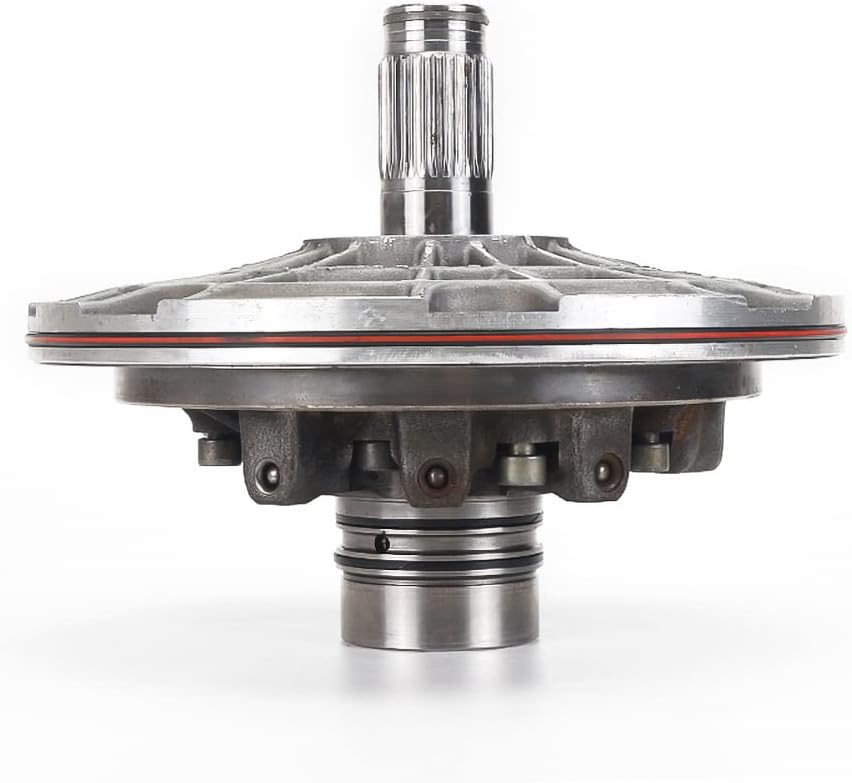
On the supply side, there are two things I find most. Sonnax's 5R55 article says the main regulator bore and the TCC modulator bore wear first on these valve bodies, followed by the VFS modulator bores, which drops clutch and servo pressure until the computer can't adapt around it. And Wayne Colonna's ATSG write-up notes that the flow control valve in the pump is what feeds solenoid supply oil to PC solenoids A, B and C; when it sticks or wears, especially after an overheat, everything downstream gets inconsistent feed.
Do the line pressure test before any stall test. Ford's caution is that stall testing with low line pressure does more damage, and never hold wide open throttle more than 5 seconds. For reference, Ford's stall spec is 2557-3036 rpm on the 4.0L and 2687-3150 rpm on the 4.6L, and "high in all ranges" points at the forward clutch or direct one-way clutch.
Step 5: Good pressure, no movement means a hard part
Ford's manual says it plainly: a no-drive condition can exist even with correct fluid pressure, because of inoperative clutches or bands. On a 5R55W that has a full pan, a correctly adjusted cable, and good line pressure but still won't move, the overdrive planetary is the first thing I suspect, and there are two documented reasons.
The front planet bearing. Sonnax's tech article on the W specifically calls out its front planet bearing as especially prone to failure: the center of the bearing cage on the sun gear side gets stamped out, which eventually leads to catastrophic failure. The W's planet and sun gear were not carried into the 5R55S. Once it lets go, the repair is a replacement planet (Ford p/n 2L2Z-7A398-AA per Sonnax). If you catch it before it comes apart, Sonnax describes substituting a different bearing with a shim, but on a vehicle that already won't move, you are past that point.
Overdrive planetary lubrication. Colonna's ATSG article says it's common to see 5R55N, S and W units come in with the overdrive planetary destroyed from lack of lubrication. One cause is the cooler bypass/thermal valve in the valve body, which affects lube oil to the coast clutch drum and the center lube for the OD planetary. Rear lube for the main gearbox comes off the pressure regulator, so the back half can look fine while the front planetary cooks.
Either way, the pan tells the story: heavy steel debris on the magnet and bronze or steel glitter in the fluid. Confirming which component failed means pulling the valve body. Ford's air test uses test plate 307-433-01 with no more than 40 psi shop air to each clutch and servo passage. A dull thud means it's applying; a hiss means a leaking seal or check ball. If every apply circuit holds air and the vehicle still won't move, the failure is in the gear train or shafts, and the unit comes out.
What the repair usually ends up being
- Cable off the lever or out of adjustment: reattach or replace the cable and readjust per the procedure above.
- DTR sensor misaligned or failed: realign with the gauge, replace if the switch tests fail.
- Low fluid from a leak: fix the leak, set the level by the plug procedure, retest. If the fluid is clean, many of these drive away.
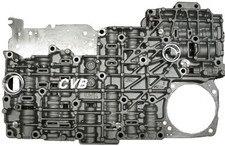
- Low line pressure in all ranges, clean fluid: pump flow control valve, main regulator bore, filter seal, or valve body bolts. Valve body bolt torque matters here; Ford lists loose valve body bolts as a cross-leak cause in nearly every symptom on the chart.
- Good pressure, metal in the pan: rebuild. On a W, use an updated overdrive planetary, and replace the pump flow control valve and thermal bypass components while it's apart, or the new planetary will be starved like the old one.
After any repair, Ford's drive cycle is: warm it up, accelerate from a stop to 50 mph so it gets 5th, hold 15 seconds, tap the brake, hold another 5 seconds, stop for 20 seconds in Drive, and repeat at least five times before pulling codes again.
5R55W Transmission Range Sensor / Neutral Safety Switch, OEM 5L2Z7F293AA
If the cable is attached but the engine cranks in gear, the backup lights are dead, or you have DTR codes, this is the OEM-numbered range sensor for the 2002-up 5R55W. Sold by our sister store, CoreTransmissionParts.
Shop the part for this fix →Need a pump flow control valve kit, planetary or full rebuild kit instead? The 5R55W parts collection has the full breakdown.
Need parts for this job?
Our 5R55 parts page carries pumps, valve bodies, solenoid kits and rebuild kits for the 5R55W and 5R55S in the Explorer and Mountaineer. Checkout is on site.
FAQ
Why won't my Explorer move in Drive or Reverse but the engine runs fine?
On a 5R55W Explorer, losing both Drive and Reverse at once points at something common to every range. Ford's own diagnostic list for no forward and no reverse starts with fluid level, a misadjusted shift cable and the digital TR sensor, then moves to the pump, valve body and hard parts such as the overdrive planetary, input shaft, output shaft and direct one-way clutch. Check the cheap external items first, then put a pressure gauge on it.
Can a bad shift cable cause an Explorer to not move?
Yes. The 2002-2003 Explorer uses a shift cable to the manual lever on the side of the transmission. If the cable end pops off the lever or the adjustment slips, the shifter moves but the manual valve stays in Park or Neutral. A tell is an engine that cranks in a position other than Park or Neutral, or a gear indicator that does not match what the transmission is doing.
What line pressure should a 5R55W have?
Ford's spec at idle is 75-120 psi in Park and Neutral for both engines. In Drive it is 80-110 psi on the 4.0L and 100-135 psi on the 4.6L, and in Reverse it is 145-190 psi on the 4.0L and 175-215 psi on the 4.6L. Low pressure in every range points at fluid level, the filter or its seal, loose valve body bolts, the pump or case leakage.
How much fluid does a 5R55W Explorer take and how do you check it?
Ford lists MERCON V and an approximate 12.6 quart total capacity, but the level is set by procedure, not by quantity. There is no dipstick: with the engine idling in Park and fluid temperature at 81-120 F on the scan tool, remove the 3/16 inch Allen level plug in the pan. A thin stream or drip means it is full; if nothing comes out, add fluid through the pan fill port in half-pint steps.
Is a 5R55W that won't move worth fixing?
It depends on what you find. A popped shift cable, a misaligned TR sensor or a low fluid level are cheap fixes. If line pressure is good but the vehicle still will not move and the fluid shows metal, the overdrive planetary or another hard part has usually failed, and at that point a rebuild with the updated planetary or a replacement unit is the realistic repair.
Related guides
- 5R55W No Movement in Any Gear: Diagnosis
- 5R55W Explorer Common Problems and Fixes
- 5R55W Explorer Slipping: Causes and Fix
- 5R55W Explorer Shift Problems: Diagnosis and Fix
- 5R55W Explorer Fluid Change: Type, Capacity and Cost
- 5R55W Pump Failure Symptoms and Replacement
Sources
- Ford Motor Co. / Mitchell, 2002 Ford Explorer 5R55W/S Diagnosis. Backs the mechanical symptom list for No Forward & No Reverse, the DTR sensor description, the line pressure and pressure control specs for the 4.0L and 4.6L, the line pressure result chart, the stall speed spec and 5-second limit, the 3.3-7.5 ohm PC solenoid resistance, and the 40 psi air pressure test. txnj.net (Ford service PDF)
- Ford Motor Co. / Mitchell, 2002 Explorer & Mountaineer 5R55W/S Servicing. Backs the shift cable adjustment procedure, the TR sensor alignment gauge, the no-dipstick fluid level check, MERCON V and 12.6 qt capacity, and the torque specs (manual lever nut 35 ft-lb, TR sensor 89 in-lb, pan bolts 97 in-lb). txnj.net (Ford service PDF)
- Sonnax Tech Resources, Bob Warnke, "Figuring Out the 5R55 Alphabet." Backs the 5R55W application in 2002-2003 Explorer and Mountaineer (5R55S in 2004-2005), the 24-tooth vs 38-tooth overdrive sun gear difference, and main regulator and VFS modulator bore wear. sonnax.com
- Sonnax Tech Resources, Ed Lee, "A Fix for 5R55W Front Planet Bearing Failure." Backs the W-specific front planet bearing cage failure, the catastrophic failure that follows, and Ford replacement planet p/n 2L2Z-7A398-AA. sonnax.com
- Wayne Colonna (ATSG), "Ford 5R55N/S/W's Overdrive Planetary Failure," Vehicle Service Pros / PTEN. Backs the overdrive planetary lubrication failure, the cooler bypass/thermal valve and pump flow control valve roles, and the flow control valve feeding PC solenoids A, B and C. vehicleservicepros.com
- Ford Motor Company / Motorcraft, Automatic Transmission Fluid Chart. Backs the MERCON V requirement for the 5R55N/W/S family. fcsdchemicalsandlubricants.com