"It's making a noise" is the least useful complaint a 5R55W can give you, because the unit has at least five documented noise-makers that get blamed on each other constantly. A whine from a dying pump sounds a lot like a whine from a starved sensor bearing that has nothing to do with the transmission's internals. A clunk from a wrong-ratio planetary set sounds a lot like a clunk from rusted output shaft splines in a transfer case that was never the transmission's fault at all. Chasing the wrong one means pulling the pan, the valve body, or the whole unit for nothing. This guide separates whine from clunk, then walks each category down to its real documented cause, so you know what you're actually listening to before you start pulling parts.
Step One: Decide If You're Chasing a Whine or a Clunk
These two noise families point at almost entirely different parts, so get this classification right before you touch anything. A whine is continuous, tonal, and tracks engine RPM or output shaft speed -- it's there at idle, it rises as you accelerate, and it's present whether the vehicle is moving or sitting in Park with the brake on. A clunk is a single, discrete impact noise tied to an event -- a shift, a throttle change, a Drive-to-Reverse engagement, or a load reversal going over a bump. If you can't decide which one you have, idle the vehicle in Park with your foot off the brake and listen: a whine will still be there, a clunk by definition will not.
Once you know which family you're in, the next move is the same for both: isolate the noise to a location (bellhousing, mid-case, rear extension, or driveline) and to a condition (cold vs. hot, specific gear vs. all gears, under load vs. coasting). Every cause below has a specific signature along those lines -- that's what actually separates a $25 part from a full rebuild.
Whine Diagnosis
Hot-idle whistle in all gears (2009-and-later valve bodies)
If the whine only shows up once the transmission is hot, happens at idle, and is present in every gear selector position, this one has an actual Ford bulletin behind it. Per Sonnax, TSB #09-21-4 (dated 11-02-09) covers a "whistle noise when hot at an idle in all gears" on 2009-and-later 5R55S/W valve bodies. The documented fix is an updated separator plate, identifiable by two small ID holes near the servo bore -- not a pump, not a converter, not an internal rebuild. If your symptom matches that description exactly (hot, idle, all gears, whistle rather than a deep whine), check the separator plate before you look anywhere else.
Bellhousing whine or buzz that rises with RPM
This is the one that gets blamed on the pump more than any other 5R55W noise, and it's often not the transmission at all. Transmission Digest documents a buzzing or whining noise on 2002-and-later Explorer and Mountaineer models equipped with the 5R55S/W that comes from the bellhousing area and sounds almost identical to a torque-converter or pump whine, getting louder as engine speed increases. The actual cause is a failing bearing in the camshaft-position-sensor/synchronizer assembly, starved of lubrication because its lube hole clogs. That assembly sits right next to the pump at the front of the case, which is exactly why techs who haven't seen this before condemn the pump. Before you pull the transmission apart for a pump whine, pull the CPS/synchronizer assembly and inspect that bearing and its lube path -- it's a cheap part compared to a pump teardown, and it fully explains an RPM-tracking whine from that location.
True pump or converter whine (present in every gear, including Park and Neutral)
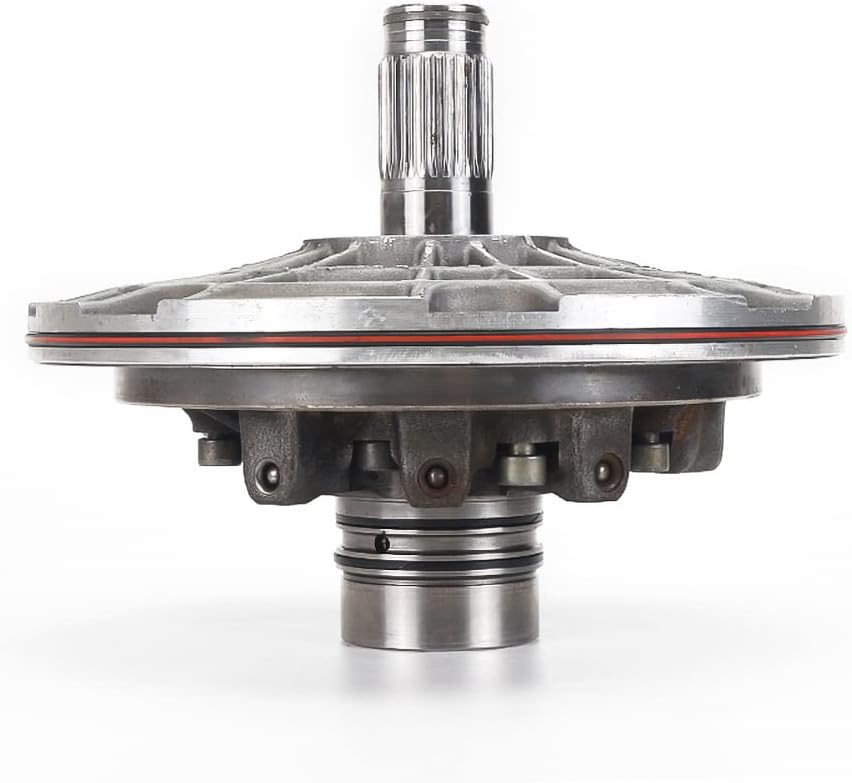
If the whine is present in Park and Neutral, not just in gear, and tracks engine RPM directly, you're looking at the actual oil pump or converter rather than the sensor bearing above -- the synchronizer-bearing noise and the pump both live near the bellhousing and both rise with RPM, so confirming it in Park/Neutral (where the synchronizer bearing is still spinning with the engine, but load conditions differ) combined with a fluid check is what actually separates them in the field. Check fluid level and condition first: low fluid, an aerated pump inlet, or a clogged filter will all produce a whine that sounds exactly like worn pump bushings or a scored rotor, and costs nothing to rule out. If the fluid is correct and full, and the whine persists at a steady pitch regardless of gear, the pump itself (bushings, rotor-to-body clearance, or the stator support bushing) is the remaining suspect, and a line pressure test in two or three ranges will confirm whether the pump is actually making adequate pressure or just making noise while it fails.
Front planetary bearing whine or growl heading toward catastrophic failure
The 5R55W has a specific, well-documented weak point here. Sonnax's write-up on the 5R55W front-planet bearing failure describes the bearing cage on the sun-gear side as "especially prone to failure" -- the center of the cage gets stamped out as it wears, which eventually leads to catastrophic failure of the planetary assembly. The article does not describe a clean early-warning noise stage, which is the uncomfortable part: this failure is often only discovered during teardown after the unit has already let go, rather than caught early from a growing whine. If you do catch unusual whine or growl from mid-case under load and the unit hasn't failed yet, Sonnax's documented options are: replace the planet outright with Ford's part number 2L2Z-7A398-AA (the bearing is not sold separately and can't be serviced without disassembling the planet), or, if the sun gear's race side is still serviceable, substitute the bearing used between the stator support and direct drum in the RE4F02A transmission, which fits the sun gear's outer diameter and clears the inner diameter, shimmed .020 inch thinner with a Sonnax shim (.010 inch, p/n 77406-10, or .015 inch, p/n 77409-15) to make up the difference.
Shop the 5R55W planetary set →
Converter clatter on TCC apply/release
A different noise family on the same converter: Transmission Digest covers a clattering noise reported on 2002-and-later 5R55N/S/W converters, caused by metal-to-metal contact inside the unit. The key diagnostic detail is that the clatter disappears entirely when the torque converter clutch (TCC) applies -- if your noise goes away the instant the TCC locks up (typically in overdrive cruise, confirmable on a scan tool by watching TCC slip or commanded state) and comes back when it releases, that's converter-internal clatter, not a pump or planetary issue, and the fix is a converter replacement or rebuild, not a transmission teardown.
Clunk Diagnosis
Harsh or bumpy upshift clunk that gets worse as the transmission warms
This is a specific, documented ratio problem, not a worn band or a tired servo, even though it gets blamed on those parts constantly. Ford used two different overdrive planetary gear sets in this family: one with a 94-tooth ring gear and 38-tooth sun gear (0.71:1 ratio), and one with a 72-tooth ring gear and 24-tooth sun gear (0.75:1 ratio). Per a Vehicle Service Pros technical article, incorrectly interchanging these two assemblies causes a harsh or bumpy 1-2 upshift (sometimes extending to 2-3) along with coast-down clunks and bumps, and the symptom characteristically worsens as the transmission warms up -- often with no gear-ratio fault code at all, though P0732 or P0735 show up in some cases. The Lincoln LS is especially sensitive to this because of a tight ratio tolerance; Mountaineers and Explorers are less sensitive, and the article notes vehicles built before 2004 seem unaffected. If servos and the valve body have already been serviced for this complaint and the clunk persists and specifically worsens hot, stop chasing hydraulics and confirm the OD planetary. The article's confirmation method: order the VIN-specific adapter (base part number 7660) from the dealer -- it only fits the correct-ratio sun gear, so if it does not seat, you have the wrong assembly installed.
Clunk or metallic clank on engagement into Drive or Reverse (4x4 only)
If the clunk happens specifically when the shifter goes into gear, and only on a 4x4, don't start inside the transmission. Transmission Digest describes this exact complaint on 5R55W/S-equipped 4x4 trucks -- a clank or metallic noise during engagement into any forward or reverse range that's commonly mistaken for a differential or transfer-case problem. The actual, documented cause is condensation collecting between the transmission's output-shaft splines and the transfer case's input splines, which rusts the splines and creates the lash that produces the clunk. Light surface rust can sometimes be cleaned and treated with synthetic grease without further disassembly; heavier rust typically requires pulling the transfer case and may call for output shaft replacement if the splines are too far gone to clean up.
Clunk only during a Park-to-Reverse or Neutral-to-Drive shift
A clunk isolated to the initial engagement out of Park or Neutral -- rather than during a drive-away upshift -- points toward engagement-circuit hydraulics (the reverse servo, the forward clutch's apply feel, or line pressure rise rate at that moment) rather than the OD planetary ratio issue above, which specifically shows up on the 1-2/2-3 upshift and worsens hot. Separating these two by exactly when the clunk happens is what keeps you from replacing an OD planetary set that was never the problem.
A Practical Diagnostic Order
- Classify it: whine (continuous, RPM-tracking, present in Park/Neutral) or clunk (single event tied to a shift or engagement).
- For a whine: check fluid level and condition first -- it's free and rules out aeration/starvation. Then confirm whether it's present in Park/Neutral (true pump/converter) or only in gear and specifically at the bellhousing (check the CPS/synchronizer bearing before the pump).
- For a whistle that's specifically hot-idle-in-all-gears: check for the 09-21-4 separator plate before anything else.
- For a clunk: confirm whether it's 4x4-only and on initial engagement (output shaft splines), or an upshift that worsens hot (OD planetary ratio), or isolated to Park/Neutral-to-gear engagement (hydraulic apply, not the ratio issue).
- Check the bolt-on parts Ford lists before you pull the unit. In Ford's noise/vibration routine for the 5R55S (routine 254 in the 2005 Mustang workshop manual), the list includes a damaged flexplate or adapter plate, flexplate nuts not torqued to spec, and an adapter plate that is not aligned, plus a damaged torque converter hub. A cracked flexplate or loose converter nuts can clunk or tick in a way that sounds internal.
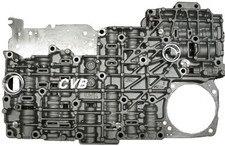
- Inside, the same Ford routine lists the pump (bolts not torqued, damaged gasket, porosity, cracked or seized gears, flow control valves sticking) and the main control (contamination, stuck valves, damaged bores, a damaged thermostatic bypass valve). Ford also warns not to stone, file or sand the valves, since that strips the anodized finish.
- Only after ruling out the cheap, documented causes above should you plan on opening the case for a planetary bearing or pump teardown.
Already past the diagnosis stage?
Pump assembly, valve body, and master rebuild kit for when the fix is a part, not just an adjustment — shipped fast from the USA.
Shop 5R55 parts →FAQ
Is a whine from a 5R55W always the pump?
No. A whine that tracks engine RPM in every gear and range usually is the pump or converter, but Transmission Digest documents a 5R55S/W bellhousing whine on 2002-and-later Explorer and Mountaineer models that sounds almost identical and is actually a failing bearing in the camshaft-position-sensor/synchronizer assembly starved of oil by a clogged lube hole. That bearing sits right behind the bellhousing next to the pump, which is exactly why it gets blamed on the transmission. Pull the sensor assembly and check the bearing and lube hole before you condemn the pump on sound alone.
What is the 5R55W whistle noise TSB and does it mean the unit is failing?
It's Ford TSB #09-21-4, dated November 2, 2009, covering a whistle noise when the transmission is hot at idle, in all gears, on 2009-and-later 5R55S/W valve bodies. Per Sonnax, the fix is an updated separator plate, identifiable by two small ID holes near the servo bore. It is not a sign of internal damage -- it's a known valve body casting/plate issue with a documented parts fix, not a rebuild-now situation.
Can a bad planetary bearing make noise before it fails completely?
Sometimes, but don't count on a clean warning. Sonnax's write-up on the 5R55W front-planet bearing failure describes the bearing cage on the sun-gear side wearing until its center gets stamped out, which leads to catastrophic failure -- the article does not describe a distinct early-warning noise stage, which is why this failure is often discovered only when the unit lets go. If you catch it early during a teardown, the fix is Ford's replacement planet (p/n 2L2Z-7A398-AA), or a Sonnax bearing substitution with a .010 inch or .015 inch shim if the sun gear's race is still serviceable.
Why does my 5R55W clunk on the 1-2 shift but only after it's warmed up?
On 2004-and-later 5R55S/W units (and Lincoln LS in particular), a documented cause is an overdrive planetary assembly with the wrong gear ratio installed -- Ford used two different OD planetary sets (a 94-tooth ring/38-tooth sun giving 0.71:1, and a 72-tooth ring/24-tooth sun giving 0.75:1) and swapping them causes harsh or bumpy upshifts and coast-down clunks that get worse as the transmission warms, often without throwing a code. Confirming it requires a VIN-specific adapter from the dealer that only fits the correct sun gear; if the servos and valve body have already been serviced and the clunk persists and worsens hot, suspect the wrong OD set before anything else.
I hear a clunk only when shifting into gear in 4WD -- is that the transmission?
Often not. Transmission Digest describes a clank or metallic noise on engagement into forward or reverse on 5R55W/S-equipped 4x4 trucks that is commonly mistaken for a differential or transfer-case problem, but is actually caused by condensation rusting the splines between the transmission's output shaft and the transfer case's input shaft. Light surface rust can sometimes be cleaned and greased; heavier rust may require replacing the output shaft once the transfer case is pulled.
Related 5R55W guides
Sources
- Sonnax — "5R55S/W '09-Later Whistle Noise" (January 1, 2013). Backs Ford TSB #09-21-4 (dated 11-02-09), the hot-idle-in-all-gears whistle symptom, and the updated separator plate fix identifiable by two ID holes near the servo bore. sonnax.com
- Sonnax — "A Fix for 5R55W Front-Planet Bearing Failure" (April 20, 2006). Backs the front-planet bearing-cage failure mechanism, Ford replacement planet part number 2L2Z-7A398-AA, and the RE4F02A bearing substitution with Sonnax shims 77406-10 (.010 in.) and 77409-15 (.015 in.). sonnax.com
- Transmission Digest — "Noise? What Noise? Oh, That One." Backs the bellhousing whine/buzz on 2002-and-later Explorer/Mountaineer 5R55S/W units, traced to a failing camshaft-position-sensor/synchronizer bearing starved by a clogged lube hole, and the separate converter clatter-on-TCC-release noise. transmissiondigest.com
- Transmission Digest — "2002-Up 5R55N/S/W Converter Noise: One Shop's Solution." Backs the metal-to-metal converter clatter on 2002-and-later 5R55N/S/W units and the diagnostic detail that the noise disappears when the TCC applies. transmissiondigest.com
- Ford Motor Company, 2005 Mustang Workshop Manual (5R55S), section 307-01, Diagnosis By Symptom (PDF). Backs routine 254, Noise/Vibration in Forward or Reverse: flexplate or adapter plate damage, flexplate nut torque and adapter plate alignment, a damaged torque converter hub, pump bolt torque, gasket, porosity, cracked or seized gears and sticking flow control valves, main control contamination, stuck valves, damaged bores and a damaged thermostatic bypass valve, and the warning not to stone, file or sand valves. themustangsource.com (Ford service PDF)
- Vehicle Service Pros — "Ironing Out Ford 5R55N/S/W Clunks and Bumps." Backs the two overdrive planetary gear sets (94T/38T at 0.71:1 vs. 72T/24T at 0.75:1), the harsh-upshift/coast-clunk symptom from interchanging them, the Lincoln LS ratio sensitivity, and the VIN-specific confirmation adapter (base p/n 7660). vehicleservicepros.com