A 68RFE with delayed engagement gives you the same complaint every time: shift from Park to Drive or Reverse, and the truck sits there for a second or two, sometimes longer, before the clutch grabs with a thump. Some trucks only do it first thing in the morning. Some only do it into Reverse. Some do it all the time and are getting worse by the week. Those three patterns point at different parts of the transmission, and sorting them out before you pull the pan is the difference between a $33 valve kit and a transmission you did not need to buy.
This guide covers what actually has to happen hydraulically for a 68RFE to engage, the difference between a Drive delay and a Reverse delay, the line pressure numbers to look for on a scan tool, and the pump valve wear that Sonnax lists as a leading cause. If you are not sure which RFE unit is in the truck, confirm it first with our 68RFE identification guide.

What Has to Happen for a 68RFE to Engage
Most delayed engagement diagnosis goes wrong because people treat Drive and Reverse as the same event. On a 68RFE they are not. Per ATSG's 68RFE technical manual, the unit reaches each gear by applying two clutch packs at a time, and in Park and Neutral only the low/reverse (L/R) clutch is applied. That matters, because it means half of the engagement is already done before you move the lever.
- Neutral to Drive (first gear): the L/R clutch is already on, so engagement is the underdrive (UD) clutch applying. ATSG notes the L/R clutch stays on in first only while output shaft speed is below 150 rpm; after that the low sprag holds.
- Neutral to Reverse: engagement is the reverse clutch applying alongside the L/R clutch.
The control side is different too. ATSG states that solenoids control the L/R, 2C, 4C, UD and OD friction elements, but the reverse clutch is controlled by the manual valve and line pressure, not by a solenoid. So a Drive-only delay lives in the UD circuit and the TCM's control of it. A Reverse-only delay lives in the manual valve, line pressure and the reverse clutch circuit. A delay into both lives in something they share: fluid supply, the pump, line pressure, or the converter circuit draining down.
Both the UD and reverse clutches sit in the input clutch housing, which ATSG describes as set up almost identically to the 41TE, only much larger. The input housing has sealing rings and piston seals that both circuits depend on, which is why a worn housing can produce delays in both directions.
Read the Pattern Before You Pick Up a Wrench
Delay into both Drive and Reverse, worse cold or after sitting
This is the classic converter drain back pattern. When the truck sits, fluid drains out of the converter and back to the pan. On start-up, the pump has to refill the converter and the circuits before there is enough pressure to stroke a clutch piston. Sonnax lists converter drain back as one of the symptoms its RFE lube regulated pressure regulator valve cures, and warns that the old shop trick of drilling a line-to-lube passage in the pump casting to fix low cooler flow causes converter drain back and delayed engagements. If the truck has been rebuilt before and the delay started after that rebuild, ask what was done to the pump.
Delay into both, present hot and cold, getting worse
This points at pressure supply: low fluid, a restricted or cracked filter, pump wear, or a worn valve in the pump body bleeding off pressure. Sonnax's RFE vacuum test guide lists the TC limit valve with delayed engagement, engine stall, loss of power and low cooler flow as its symptoms, and the TC limit valve spring with engine stall on engagement and delayed engagement.
Delay into Drive only
The UD clutch is the element being applied, so look at the UD circuit: UD solenoid and pressure switch in the solenoid/pressure switch assembly, the UD accumulator, the UD piston seals, and the input housing sealing rings. A TCM with a corrupted or reset UD fill volume can also produce a slow or harsh Drive engagement until it relearns.
Delay into Reverse only
Since Reverse is applied by the manual valve and line pressure, look at linkage and manual valve position first, then the reverse clutch piston and seals and the input housing. The Sonnax vacuum test guide also ties the low reverse switch valve in the valve body to delayed engagement and L/R clutch failure. If Reverse is not just late but missing, go to our 68RFE no reverse guide.
Step 1: Check the Fluid Level the Right Way
Low fluid is the cheapest cause and the most common one on a truck that has never been apart. The pump pickup uncovers, the pump ingests air, and aerated fluid will not build pressure quickly. But a 68RFE level check has to be done by the book or the reading is meaningless. From the Ram 2500/3500 owner's manual procedure for the six-speed:
- Bring the transmission to 158-176 F (70-80 C), which normally takes at least 15 miles of driving. Below 50 F the fluid may not register on the dipstick at all.
- Park on level ground, idle at least 60 seconds, and leave the engine running for the whole check.
- Move the selector through every position, allowing time for each to fully engage, and finish in Park.
- Read between the HOT (upper) reference holes. The level check can only be done with the 44-inch dipstick blade that has indicator holes; trucks with the 15-inch dipstick need a service dipstick.
- After adding fluid, wait at least two minutes before re-reading. Do not overfill. Use ATF+4 only.
Our 68RFE fluid type and capacity guide covers the service fill amounts. If the fluid is dark, smells burnt or carries clutch material, the delay is a symptom of wear, not a fluid level problem, and a fluid change alone will not fix it.
Step 2: Read Line Pressure on the Scan Tool
Sonnax published the scan tool numbers that separate a healthy stock truck from a tuned one, and they are the best quick screen for a pressure problem. In Drive at a stop, stock programming shows 60-70 psi in both desired and actual line pressure, with a line pressure duty cycle of 22-24%, and 160 psi at stall. Tuned programming typically shows 100-105 psi desired and actual at idle, with duty cycle at 5.1%. Sonnax adds a useful warning: the desired value will still read normally even if actual is zero, so always compare the two.
What to look for:
- Actual lags desired for a second or more after the shift into gear, then catches up: supply problem. Fluid level, filter, pump or a pump body valve bleeding off.
- Actual tracks desired fine but the clutch still applies late: the leak is downstream, in the clutch circuit itself. Seals, sealing rings, accumulator, or the solenoid side for the UD circuit.
- Pressure switch states: ATSG notes the TCM monitors five pressure switches (L/R, 2C, 4C, UD and OD) that close at 23 psi and open at 11 psi. Watching the UD switch close on a Neutral to Drive shift tells you how long the circuit took to build pressure.
If the truck is tuned, note it. Sonnax found the higher idle line pressure moves the pressure regulator valve into a position that starves cooler and converter flow. That is a stall and overheat story more than an engagement one, but it changes how you read every pressure number on the truck.
Step 3: Pump Body Valves and Vacuum Testing
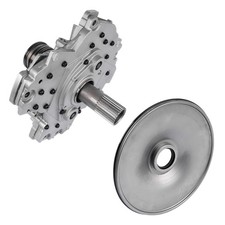
If fluid and filter are good and pressure is slow to build, the pump body is next. Sonnax describes the RFE family as plagued by stalling and low cooler flow complaints since its 1999 introduction, with early problems pointing at the TC limit valve, the valve in charge of torque converter release pressure. Bore wear was common enough that, per Sonnax, most shops make it an automatic replacement during pump overhaul by reaming the bore and installing valve kit 44912-03K.
On the bench, vacuum test the TC limit valve and pressure regulator valve bores in the pump. The Sonnax RFE vacuum test guide shows the test locations and notes the TC limit valve test is done with a retaining clip inserted into the balance port. A bore that will not hold vacuum is bleeding pressure every time the truck idles in gear. While the pump is apart, check the pump gears and center gear bushing; Sonnax lists pump gear wear or fracture as its own 68RFE symptom.
The pressure regulator valve is the other half of the story. Sonnax's lube regulated pressure regulator valve 44912-17K has a direct line-to-lube connection for cooler flow, and the passage closes when the engine is off, which is how it prevents converter drain back. If someone previously drilled the pump casting for cooler flow, this is the correct repair for the morning delay that drilling created.
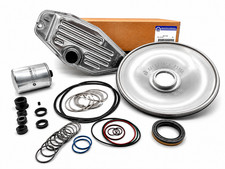
68RFE Torque Converter Limit Valve Kit, Sonnax 44912-03K (2007-2024)
The oversized TC limit valve kit Sonnax lists for delayed engagement, stall and low cooler flow. Requires reaming the pump body bore with the matching tool. The first part to order when the vacuum test fails at the TC limit valve.
View the 44912-03K kit →Step 4: Clutch Circuit Leaks
When pressure builds normally but the clutch still applies late, the fluid is leaking between the valve body and the piston. On a 68RFE that usually means input housing sealing rings, UD or reverse piston seals, or a damaged accumulator. Sonnax lists damaged accumulator plates as a 68RFE symptom and sells accumulator piston and plate repair kits for it. An air check of the UD and reverse circuits with the valve body off will find most of these: a healthy circuit applies with a firm thump and holds; a leaking one hisses and applies soft or not at all.
Remember the pattern. A leak in the UD circuit shows as a Drive delay. A leak in the reverse clutch circuit shows as a Reverse delay. Worn input housing sealing rings, which both circuits pass through, can show as both. If the fluid is burnt and the frictions are glazed, you are into a rebuild, and our 68RFE slipping guide covers what else to look at while it is apart.
After the Repair: Relearn Before You Judge It
The 68RFE is fully adaptive, and that affects how engagement feels after a repair. FCA's STAR case S2021000006 notes that a Transmission Quick Learn clears all learned adaptives and the transmission can take up to 2,500 miles to fully adapt to a customer's driving. FCA tells technicians not to run Quick Learn as a first step on shift complaints with no codes, and instead to run the specific 68RFE Drive Learn cycles that relearn clutch fill volumes. One of those cycles, for the first OD fill, starts by holding the truck in Reverse for at least a second before shifting to Drive and accelerating through fourth, repeated ten times.
In practice: after replacing parts that change clutch clearances or valve body calibration, run the Quick Learn where service information calls for it, then drive the truck through the relevant learn cycles before calling the engagement good. A slightly firm or slightly slow engagement on the first few drives is the TCM relearning, not a failed repair.
Shop 68RFE pump valve kits →
The Short Version
- In Park and Neutral only the L/R clutch is on. Drive engagement is the UD clutch; Reverse engagement is the reverse clutch, applied by the manual valve and line pressure.
- Delay into both, worse after sitting: converter drain back. Check for a drilled pump casting.
- Delay into both, all the time: fluid level, filter, pump, TC limit valve.
- Drive only: UD circuit. Reverse only: manual valve, reverse clutch, low reverse switch valve.
- Check level hot at 158-176 F with the engine running on the 44-inch dipstick. Stock line pressure in Drive at a stop is 60-70 psi.
- Vacuum test the TC limit and PR valve bores; 44912-03K is the standard TC limit repair.
Frequently Asked Questions
Why does my 68RFE take a few seconds to go into gear?
The most common causes are low fluid, converter drain back after the truck sits, and pressure loss in the pump, especially a worn TC limit valve bore. Sonnax lists the TC limit valve with delayed engagement, engine stall and low cooler flow. Check the fluid level hot first, then compare desired and actual line pressure on a scan tool.
Why does my 68RFE only have delayed engagement in the morning?
A delay that is worst after sitting overnight usually means fluid is draining out of the torque converter, so the pump has to refill it before a clutch can apply. Sonnax warns that drilling a line-to-lube passage in the pump casting causes converter drain back and delayed engagement; its 44912-17K pressure regulator valve closes that path with the engine off.
What clutch applies when a 68RFE shifts into Drive?
Per ATSG, only the low/reverse clutch is applied in Park and Neutral. Shifting to Drive applies the underdrive clutch for first gear, and shifting to Reverse applies the reverse clutch. A Drive-only delay points at the underdrive circuit; a Reverse-only delay points at the reverse clutch, manual valve and line pressure.
What should 68RFE line pressure be at idle in Drive?
Sonnax gives 60-70 psi desired and actual for stock programming at a stop in Drive, with a 22-24% duty cycle and about 160 psi at stall. Tuned trucks commonly show 100-105 psi at idle. If actual pressure lags desired after the shift, you have a supply problem.
Do I need a Quick Learn after fixing 68RFE delayed engagement?
Run it when service information calls for it after parts that change clutch clearances or valve body calibration. FCA notes a Quick Learn clears all adaptives and the 68RFE can take up to 2,500 miles to fully adapt, so run the Drive Learn cycles afterward rather than judging engagement on the first drive.
Sources
- ATSG (Automatic Transmission Service Group) — Dodge Ram Trucks 68RFE Transmission technical manual (preview). Backs the clutch application chart (L/R only in Park and Neutral, UD plus L/R in first, reverse clutch plus L/R in Reverse, L/R on in first only below 150 rpm output speed), solenoid control of L/R, 2C, 4C, UD and OD, reverse clutch control by the manual valve and line pressure, the input clutch housing layout, the five pressure switches and their 23 psi close / 11 psi open points, and the ATF+4 fluid requirement. atsg.biz (PDF)
- Sonnax — "Resolving Stalling & Overheat Issues After Performance Tuning on RFE Transmissions" (March 11, 2021). Backs the stock 60-70 psi desired/actual line pressure at a stop in Drive, 22-24% duty cycle and 160 psi at stall, the tuned 100-105 psi and 5.1% figures, the desired-reads-normal-at-zero-actual caution, TC limit valve bore wear and the 44912-03K ream-and-replace practice, and the 44912-17K valve closing its passage at engine off to prevent converter drain back. sonnax.com
- Sonnax — Critical Wear Areas & Vacuum Test Locations, Chrysler 45RFE/545RFE/65RFE/66RFE/68RFE. Backs the TC limit valve symptom list (delayed engagement, engine stall, low cooler flow), the TC limit valve spring symptoms (engine stall on engagement, delayed engagement), the low reverse switch valve symptoms (delayed engagement, L/R clutch failure), and the TC limit valve vacuum test method. sonnax.com (PDF)
- Sonnax — "Line to Lube Converter: A Balancing Act, PR Valve Position Is Key." Backs the statement that drilling a line-to-lube passage in the pump casting causes converter drain back and delayed engagements, and lists 44912-17K for converter drain back and delayed engagement. sonnax.com
- Stellantis / Mopar — 2022 Ram 2500/3500 Owner's Manual, "Fluid Level Check — 6-Speed Transmission." Backs the 158-176 F check temperature, 15-mile warm-up, 60-second idle with engine running, selector cycling ending in Park, HOT reference holes, the 44-inch dipstick requirement, the two-minute wait, the below-50 F caution and do-not-overfill. vehicleinfo.mopar.com
- FCA US LLC via NHTSA — STAR case S2021000006 Rev. A, "Transmission Slip/Flare During Shifts With No DTCs Set. Manual Drive Learn Procedure." Backs the 68RFE being fully adaptive, the up-to-2,500-mile adaptation period, Quick Learn clearing all adaptives, the instruction not to Quick Learn as a first step, and the first OD fill volume learn cycle starting in Reverse. static.nhtsa.gov (PDF)