Every low-pressure complaint on a 68RFE gets blamed on the valve body first, because the valve body is what everybody has already read about. The pump gets ignored until it fails outright, which is backwards, because the pump is what the valve body regulates in the first place. If the pump can't make volume, no amount of valve body work fixes the symptom.
This article is about the pump specifically: what wears inside it, how that wear shows up before the truck quits, when it can be salvaged instead of replaced, and how to avoid condemning a good pump for a problem that is actually the filter O-ring or a different bore entirely.
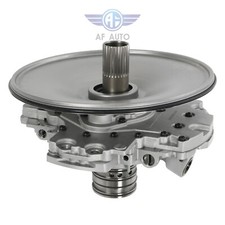
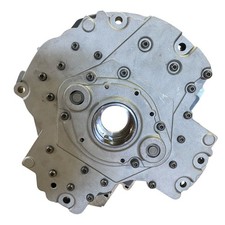
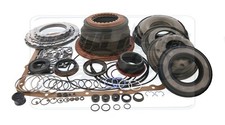
What Actually Wears Inside the Pump
The 68RFE pump is a three-gear design: a center gear driven off the converter hub, and two outer gears that do the pumping. Per Sonnax's technical documentation, the common failure is wear or fracture at the center gear, and the telltale sign is a scored bearing surface where the center gear's drive flange passes through the pump body. That bore takes the side load every time the converter hub drives the gear, and over enough miles the aluminum wears oval the same way a valve body bore does.
Sonnax is specific about where the line gets drawn: damage limited to the center gear bore can be machined out and bushed. Damage to the pocket face below the gears, where the outer gear set actually pumps fluid, cannot be repaired with the bushing kit. That distinction decides whether you are buying a $70 part or a $600-plus pump assembly, so it is worth inspecting both areas before you quote the job.
Symptoms That Point at the Pump
None of these symptoms are unique to the pump by themselves. Together, with the valve body and sensor ruled out, they are.
- A whine tied to engine RPM, not road speed. Gear-mesh noise from a worn pump changes pitch with throttle and idle, not with vehicle speed the way a wheel bearing or U-joint does.
- Low actual pressure despite a maxed-out duty cycle. Per ATRA's GEARS magazine, a healthy 68RFE idles around 60 to 70 psi commanded and actual with a line pressure duty cycle near 22 to 24 percent. If the duty cycle is pinned at 5 percent and actual pressure still reads below commanded, the controller is asking for all the pressure it can get and the pump cannot supply it. That is a volume problem, not a solenoid problem.
- Low-pressure codes after fluid and filter are confirmed good. P0868 (Low Line Pressure) is the one most people see. It is not pump-specific — see the differential diagnosis section below — but it belongs on the list once the obvious causes are eliminated.
- Metal in the pan. A magnet pulls aluminum-colored fines off a scored pump bore. Fine, even glitter in the fluid is a different story than visible chunks; either way, inspect the pump before reassembling on a reused filter and pan gasket.
- Slipping or delayed engagement that follows load, not a single gear. A pump that is marginal everywhere, rather than a single clutch circuit that is marginal in one gear, points upstream of the valve body.
Rule These Out Before You Condemn the Pump
Low apply pressure has at least three unrelated causes on this transmission, and two of them get fixed for a fraction of what a pump costs.
The Sump Filter O-Ring
A suction leak at the filter neck starves the pump inlet and produces the exact same symptoms as a worn pump: low actual pressure, a maxed duty cycle, and a P0868 code. This shows up most often right after a fluid and filter service, where the old filter O-ring was left seated in the case and a new one was stacked on top of it, or the new filter was not pushed fully home. Pull the filter and inspect the neck and the case bore before you assume the pump wore out on its own.
Fluid Level Checked Cold
Both low and overfilled levels can set P0868, and the 68RFE's level check is temperature-dependent. Checking the stick before the fluid is at operating temperature will read wrong in either direction. See the fill procedure below before you trust a cold reading.
Low/Reverse Switch Valve Bore Wear
This one is easy to miss because it feels like a pump problem from the driver's seat. Per Sonnax's 2025 technical article on the 62TE and 68RFE, the low/reverse switch valve acts as a one-way valve for the low/reverse clutch circuit in Reverse and Drive. When that bore wears — caused by the valve being heavily side-loaded because its diameter is too close to its overall length — fluid leaks past the one-way valve and exhausts through the manual valve. The result is low apply pressure that causes burnt clutches and delayed, or even absent, Reverse, 1st, and 2nd gears. Sonnax's repair is a checkball sleeve kit built specifically for that bore, not a pump. If the pressure symptom is paired with a Reverse or low-gear complaint rather than a general pressure shortfall across the board, check this bore first.
A Maxed-Out Sensor Reading, Not a Real Loss
Per Sonnax's diagnostic article on Chrysler max line pressure codes, P0933 sets when actual line pressure reads more than 172.4 kPa (25 psi) above desired pressure — the opposite direction from a pump problem. P0933 and P0869 describe pressure running too high, typically from an open circuit on the pressure control solenoid, and chasing either code toward a worn pump sends you the wrong way entirely. Confirm which direction the fault runs — actual below desired points at supply (pump, suction leak, or a leaking bore); actual above desired points at the solenoid circuit — before you order parts.
Salvage or Replace: The Actual Decision
Once the pump itself is confirmed as the problem, the center gear bore determines the repair path.
- Scored center gear bore only: Sonnax's center pump gear (72530B-02) and center pump gear bushing (72530B-03) salvage the pump. The bore is machined oversize and a precision, steel-backed aluminum bushing is installed. Sonnax specifies the bore must be machined to 2.172 in. plus or minus .0005 in. before the bushing goes in — that is not a guess-and-check fit.
- Worn outer gears from mileage and high pressure: Sonnax's heavy duty outer pump gear set (72530B-04K) replaces both outer gears with anti-wear-coated, high-pressure units, installed alongside the center gear kit to renew all three gears in the pump. Sonnax notes plainly that replacement gears for this pump are not available from Chrysler — the aftermarket bushing and gear-set route is the only repair path short of a full pump replacement.
- Damage at the pocket face: If the wear or damage extends to the pump pocket face behind the gears — not just the center gear bore — Sonnax is explicit that these parts cannot repair it. Replace the pump assembly.
On a high-mileage truck already getting a valve body or clutch pack, it is worth inspecting the pump at the same time rather than reassembling a marginal one under a fresh set of clutches. A pump that is a few thousand miles from a low-pressure complaint will make that complaint right after the rest of the unit is already buttoned up.
Fill and Level After the Job
The 68RFE level check is temperature-dependent, and getting this wrong after a pump job is a common comeback. Per FCA's own service procedure for this transmission family, fluid temperature must reach at least 160 degrees F before the level on the stick means anything, and that can take up to 20 minutes of idling in Park. Fill with Mopar ATF+4, specification MS-9602-F. Reading the stick cold leaves the truck low on a unit you just repaired for a pressure problem, which defeats the point of the job.
The Order That Actually Works
- Confirm fluid level at operating temperature (160 degrees F minimum) and inspect the filter and sump O-ring for a suction leak, especially if the truck was recently serviced.
- Graph commanded pressure, actual pressure, and duty cycle. Healthy idle sits near 60 to 70 psi at 22 to 24 percent duty cycle.
- Determine which direction the fault runs. Actual below desired with duty cycle maxed points at supply. Actual above desired points at the solenoid circuit, not the pump.
- If supply-side, check the low/reverse switch valve bore in the valve body before pulling the pump — it produces the identical symptom through a different path.
- Pull the pump. Inspect the center gear bore and the pocket face separately.
- Bush and re-gear a pump scored only at the center gear bore. Replace a pump damaged at the pocket face.
- Fill with ATF+4 MS-9602-F, bring the fluid to 160 degrees F, set level, then relearn.
The pump is the one component on this transmission that nobody inspects until it is already making noise. By the time it whines at idle, the center gear bore has usually been washing out for a while. Catching it at the bushing-and-regear stage costs a fraction of a full pump, and a fraction of what a burnt clutch pack costs when a starved pump finally lets go underneath it.
FAQ
What are the first signs of a failing 68RFE pump?
A whine that rises and falls with engine RPM rather than road speed, a line pressure duty cycle that sits pinned near 5 percent with actual pressure reading lower than commanded, and low-pressure codes such as P0868 or a P0871 rationality fault after the fluid and filter have already been ruled out. Metal in the pan on a magnet is the confirming sign once you are inside the unit.
Can a worn 68RFE pump be repaired instead of replaced?
Yes, if the wear is limited to the center pump gear bore. Sonnax sells a center pump gear (72530B-02) and a bushing (72530B-03) that salvage a pump scored where the center gear drive flange passes through the body, with the bore machined to 2.172 in. plus or minus .0005 in. before the bushing goes in. A pump worn or damaged at the pocket face behind the outer gears cannot be saved this way and must be replaced.
Does Chrysler sell replacement pump gears for the 68RFE?
No. Sonnax states plainly that replacement gears are not available from Chrysler, which is why the aftermarket bushing and gear-set route exists at all. Without it, a worn pump gear means buying a full pump assembly.
Is a P0868 code always a bad pump on a 68RFE?
No. The most common cause, especially right after a fluid service, is an incorrectly seated sump filter O-ring creating a suction leak, or fluid level checked cold instead of at operating temperature. Wear in the low/reverse switch valve bore in the valve body produces the same low-apply-pressure symptom through a completely different path. Confirm fluid level and filter seating and rule out the valve body before pulling the pump.
What fluid does the 68RFE pump circulate and how is level set after a repair?
Mopar ATF+4, specification MS-9602-F. FCA's own service procedure requires the fluid to reach at least 160 degrees F, which can take up to 20 minutes of idling in Park, before the level on the stick means anything. Checking it cold after a pump job will read low even when the fill is correct.
Sources
- Sonnax — "68RFE Center Pump Gear," Part No. 72530B-02, product and tech page. Backs the center gear wear/fracture symptom list, the scored bearing surface where the center gear drive flange passes through the pump body, the warning to inspect both the bore and the pocket face separately, and the statement that pockets damaged at the face cannot be repaired with these parts. sonnax.com
- Sonnax — "68RFE Center Pump Gear Bushing," Part No. 72530B-03, product and tech page. Backs the bushing salvage procedure, the requirement to machine the worn bore to 2.172 in. plus or minus .0005 in. before installing the steel-backed aluminum bushing, and the redesigned center gear drive flange that reduces turbine hub engagement play and noise. sonnax.com
- Sonnax — "68RFE Heavy Duty Outer Pump Gear Set," Part No. 72530B-04K, product and tech page. Backs the statement that replacement gears are not available from Chrysler, the two premium high-pressure gears with anti-wear coating, the instruction to pair it with the center gear kit to replace all three gears, and the OE-orientation install note for the stepped side of the gear. sonnax.com
- Sonnax — "Diagnosing 62TE, 68RFE Low/Reverse Switch Valve Issues," Chris Leach, July 14, 2025. Backs the low/reverse switch valve bore as a one-way valve for the low/reverse clutch circuit, the side-load wear mechanism from the valve's diameter-to-length ratio, and the resulting leakage past the one-way valve through the manual valve that mimics a pump supply problem. sonnax.com
- Sonnax — "Diagnosing Chrysler Transmission Max Line Pressure & P0933, P0869, P1745 Codes," Jim Mobley, January 12, 2023. Backs the P0933 threshold of actual pressure more than 172.4 kPa (25 psi) above desired pressure, the P0869 high line pressure description, and the direction-of-fault distinction between a supply-side problem and a solenoid-circuit problem. sonnax.com
- GEARS Magazine (ATRA) — "Fixing the Root Cause of the Problem: Solving Issues with the 68RFE Transmission," Keith Clark, Delivering the Goods. Backs the healthy idle line pressure values of 60 to 70 psi commanded and actual at a 22 to 24 percent duty cycle, and the diagnostic signature of a duty cycle pinned at 5 percent with actual pressure reading below commanded. gearsmagazine.com
- FCA US LLC / NHTSA — Dealer Service Instructions, Safety Recall W03 / NHTSA 20V-043, "Transmission Valve Body," Revision 3, June 2022. Backs the ATF+4 MS-9602-F fluid specification and the 160 degrees F minimum fluid temperature requirement before setting level on this transmission family. static.nhtsa.gov (PDF)