The 68RFE behind a 6.7L Cummins is not a weak transmission for towing. It is a transmission that has almost no margin for heat. Most of the burned-up units we see on the bench were not killed by horsepower or weight alone. They were killed by fluid that ran too hot for too long, usually because something in the cooling circuit was quietly not doing its job: a thermostatic bypass valve stuck in recirculation, a cooler packed with debris, a tune that raised line pressure and starved the cooler, or an owner who never touched Tow/Haul.
This guide is the upgrade list we give a customer who pulls a fifth-wheel or gooseneck with a 2007.5-and-later Ram 2500 or 3500. It is in priority order. The cheap items at the top prevent more failures than the expensive items at the bottom, and none of the hardware helps if the basics are ignored. If you are not sure which transmission is in the truck, check our 68RFE identification guide first, because the Aisin AS69RC behind the high-output engines plays by different rules.

Why Heat Is the 68RFE Killer When Towing
Automatic transmission fluid does not fail on a straight line. GEARS Magazine (ATRA) puts the ideal maximum transmission temperature at 200 F, and gives the rule of thumb every rebuilder knows by heart: at 220 F fluid life drops to about half, at 240 F to one quarter, and at 260 F to one eighth ("48RE/68RFE/AS68RC Transmission Overheating"). The oil oxidizes, friction modifiers break down, seals harden, and the clutches and converter clutch start to glaze. Every one of those effects makes the next load generate more heat.
The overdrive clutches are where that heat shows up first. Sonnax points out that the OE 68RFE overdrive frictions are single-sided on a steel core only .034 in. thick, among the thinnest clutches in any transmission, so they have very little mass to absorb heat and they distort once they get hot. A distorted pack loses its running clearance, drags, and burns. Sonnax also names towing above the recommended weight as added strain on the OD circuit and those already-thin clutches ("68RFE Overdrive Clutch Failure: What to Check First When Troubleshooting OD Issues"). The OD clutch is applied in the gears a tow rig spends its highway miles in, which is why heat control is the upgrade that matters most.
Ram's own owner information explains where towing heat comes from. The 2017 Ram Diesel Supplement warns that with a heavily loaded truck at low speed, such as climbing a steep grade or sitting in stop-and-go traffic in hot weather, torque converter slip can put a significant additional heat load on the cooling system. An unlocked converter is a fluid coupling doing work, and that work turns directly into heat in the ATF. Keeping the converter locked and the transmission out of the hunt between gears is most of the battle.
The truck does try to protect itself. Per the same manual, when fluid temperature exceeds normal limits the powertrain controller modifies the shift schedule and expands torque converter clutch engagement. If it keeps climbing, the Transmission Temperature Warning Light comes on and the transmission may behave differently until it cools. Treat that light as a hard stop, not a suggestion.
1. Use Tow/Haul and ERS Every Time
This costs nothing and it is the most skipped item on the list. Ram says to press the TOW/HAUL switch whenever you are in hilly areas, towing a trailer or carrying a heavy load and the transmission is shifting frequently. In Tow/Haul, upshifts are delayed and the transmission downshifts on its own for engine braking when you close the throttle or brake steadily. The mode is not latched: normal mode is the default at every engine start, so the switch has to be pushed every time the truck is started.
On long grades, go a step further and use Electronic Range Select to cap the top gear. The Diesel Supplement is direct about it: under heavy load, in hills, into a head wind or towing a heavy trailer, selecting a lower range improves performance and extends transmission life by reducing excessive shifting and heat buildup. A 68RFE hunting between fifth and sixth on a long pull is cycling the converter clutch and the shift clutches constantly. Hold it in a gear where the converter stays locked.
Two more habits from the manual: when stopped in heavy traffic with a load, shift to NEUTRAL, and when climbing, downshift to the lowest practical gear. Both cut the converter slip that is pumping heat into the fluid. One caution: Ram warns not to use Tow/Haul on ice or slippery roads, because the added engine braking can slide the rear wheels.
2. Know Your Real Temperature and Check the Level Hot
Put the transmission sump temperature on the cluster display and watch it. Ram lists normal operating temperature for the 68RFE as 170 to 180 F, normally reached after at least 15 miles of driving. That is your baseline. A truck that climbs past 200 F on a hard pull and comes back down afterward is doing its job. A truck that keeps climbing past 220 F on a grade it used to handle has a cooling problem, not a driving problem.
Low fluid makes heat on its own, because the pump aerates the oil. Check the level the way the manual describes: hot, on level ground, engine idling at least 60 seconds, parking brake set, run the selector through each gear, and read it in PARK. The level should sit between the HOT reference holes. The COLD holes are only a rough reference at 60 to 70 F fluid, and Ram warns fluid below 50 F may not register on the stick at all. Use only ATF+4; Ram states other fluids may affect the function or performance of the transmission, and FCA's recall service instructions for this unit call for Mopar ATF+4 (MS-9602) on refill (Safety Recall W03, NHTSA 20V-043). Ram also recommends against any supplemental additives in the transmission. For the fill quantities, see our 68RFE fluid type and capacity guide.
3. Service the Fluid on the Towing Schedule, Not the Normal One
The 68RFE has two schedules in the Diesel Supplement maintenance table. For normal use, fluid and filters are changed at 120,000 miles. For police, fleet or frequent trailer towing (68RFE only), the fluid and filter(s) are changed twice in that same span, at 60,000 and 120,000 miles. If you tow regularly, you are on the 60,000-mile schedule by Ram's own definition.
From the bench side, we treat 60,000 miles as the ceiling for a truck that pulls heavy, not the target. If the truck has seen repeated high-temperature warnings, a long summer of mountain towing, or fluid that smells burnt on the stick, change it now. Look at the pan when it comes down. A light gray film on the magnet is normal. Friction material, brass flakes or a thick metallic paste means the damage is already done and new fluid is only buying time. Do not use chemical flushes; Ram cautions they can damage transmission components.
4. Check the Thermostatic Bypass Valve and Cooler Flow
This is the failure that catches good owners. The 6.7L trucks route transmission fluid through a thermostatic bypass valve at the cooler. When fluid is cold, it recirculates around the cooler so the transmission warms up faster. When it warms, the valve is supposed to open the path through the cooler. If it sticks in recirculation, the fluid never reaches the cooler, and the temperature climbs until something gives.
GEARS Magazine documents the valve on a 2008 6.7L 3500 sitting on the top right-hand side of the cooler when viewed from the front, reached only by removing the grille, intercooler and A/C condenser. On that design, if the valve fails, the article's conclusion is that the only fix is replacing the cooler. On later trucks the valve is serviceable, and aftermarket bypass upgrade kits either replace the thermostatic element or remove it so fluid always goes through the cooler.
How to tell if the cooler circuit is healthy: measure it. GEARS says cooler flow should be at least one gallon per minute. Sonnax measured a stock-programmed RFE at 1.3 GPM at idle ("Resolving Stalling and Overheat Issues After Performance Tuning on RFE Transmissions"). A flow meter in the return line, or a temperature gun on the cooler inlet and outlet after a drive, tells you quickly whether oil is actually moving through it. A cooler that is barely warm on the outlet side while the pan is hot means the bypass is stuck or the cooler is plugged. GEARS lists the six overheating causes to work through: plugged cooler lines, plugged cooler, plugged filter, overloading, engine overheating, and a malfunctioning engine fan clutch.
If the transmission has ever failed and been rebuilt, the cooler and lines have to be flushed or replaced. Debris from the old unit sitting in the cooler will lodge in the bypass valve or restrict flow into the new transmission.
Sonnax Lube-Regulated Pressure Regulator Valve 44912-17K
For tuned 68RFE trucks running raised line pressure: restores lube and cooler flow that a high-pressure tune takes away, which is exactly what keeps a working truck from cooking fluid on a grade.
View the 44912-17K valve →5. If the Truck Is Tuned, Fix the Cooler Flow the Tune Took Away
Here is the part the tuning forums rarely mention. Raising line pressure on an RFE to make the clutches hold harder also reduces cooler flow. Sonnax's testing shows it plainly. Stock programming ran 60 to 70 psi desired and actual line pressure at idle in Drive, a 22 to 24% line pressure duty cycle, about 160 psi at stall, and 1.3 GPM cooler flow at idle. Tuned programming ran 100 to 105 psi at idle with a 5.1% duty cycle, and cooler flow at idle fell to 0.5 GPM. At maximum line pressure it dropped to about 0.3 GPM.
The reason is in the pressure regulator valve. It has three regulating points, and one of them feeds line pressure into the lube and torque converter circuits. At high line pressure the valve strokes to a position where that feed is choked down to a very small opening. Less oil goes to the converter and the cooler, and Sonnax ties that directly to stalling, overheating and converter drain-back complaints. Their lube-regulated PR valve, 44912-17K, is designed to give about a 60% increase in lube and cooler flow over stock at maximum line pressure.
Tuning also loads the converter. Because full lockup applies at line pressure, Sonnax notes aggressive tuning and some performance valve body kits can push RFE line pressure past 220 psi, well above the roughly 160 psi stock maximum in forward ranges, and that overpressure can balloon the converter and damage the flexplate, pump and crankshaft ("Prevent RFE, RH/RE Converter Failure: Maintain Proper TCC Apply Pressure"). The TCC apply limit switch valve (44912-36K drop-in, 44912-41K oversized) caps converter apply at 150 psi without touching line pressure. On a tuned tow rig, both the lube-regulated PR valve and the apply limit valve belong in the unit the next time the pan and valve body come off. Sonnax adds one more tuning risk worth asking the owner about: some programmers can bring the TCC on before the 3-4 shift, so the OD clutch applies without the cushion of an unlocked converter, adding strain to the same clutch pack that heat is already attacking (same Sonnax OD clutch failure article). Our 68RFE converter shudder guide covers the TCC circuit in more detail.
6. Add Capacity and Cooling Surface: Deep Pan and Auxiliary Cooler
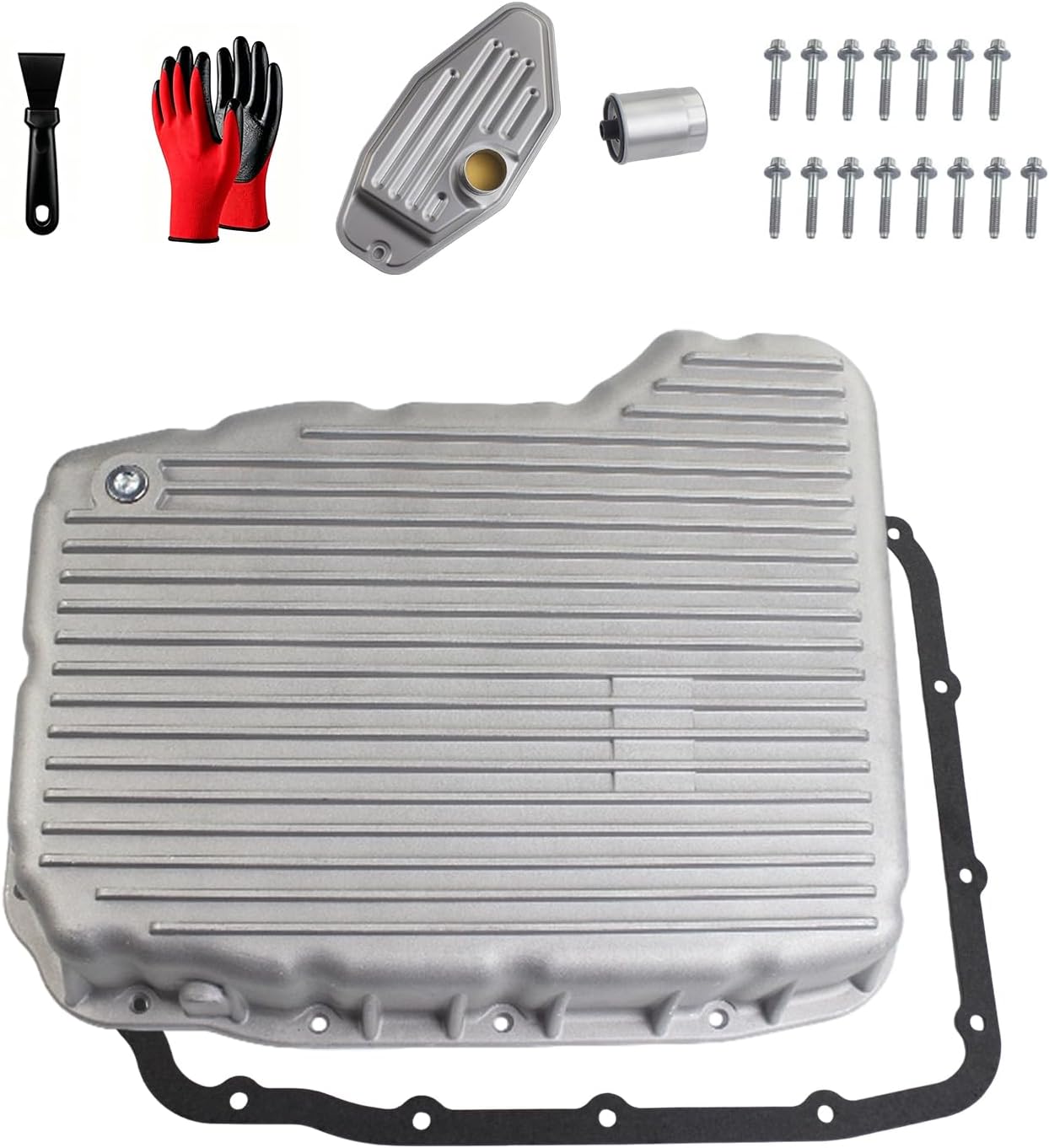
Once the basics are right and the cooler circuit is proven, hardware helps. A deep pan adds fluid volume, which means more thermal mass and a slower temperature rise on a grade, and a cast aluminum pan sheds some heat of its own. Use the deep-pan filter that matches the pan; a standard-depth filter in a deep pan can leave the pickup in the wrong place. When you fill after installing one, set the level hot on the dipstick, not by counting quarts.
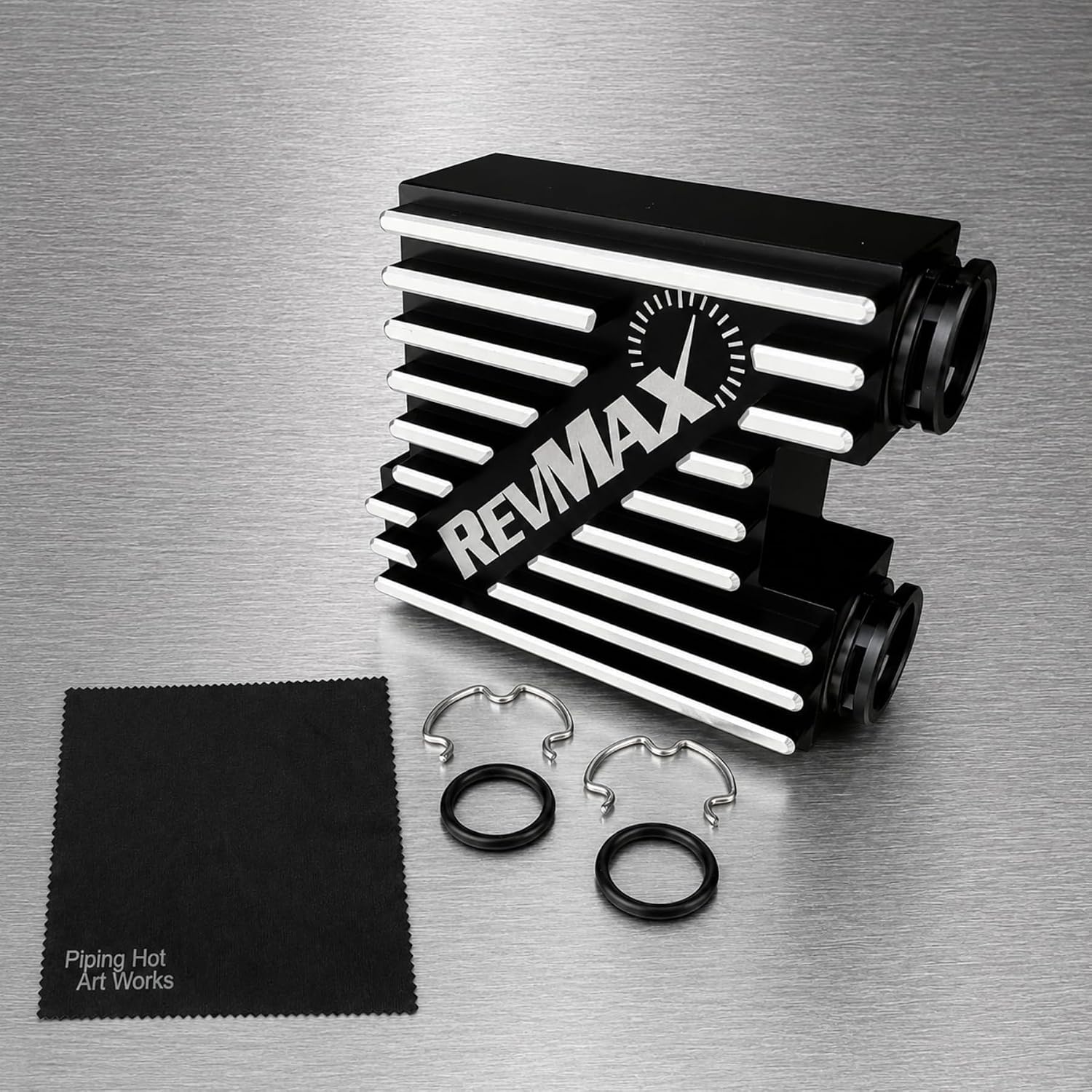
An auxiliary cooler adds surface area. Plumb it after the factory cooler so returning fluid gets a second pass, keep it in clean airflow, and use hose and clamps rated for hot ATF. Placement matters as much as size: a big cooler buried behind the intercooler in hot air does less than a modest one with a clear shot at the air stream. Also check the engine side. GEARS lists engine overheating and a weak fan clutch as transmission overheating causes, and Ram's cooling tips treat engine and transmission heat together. A fan clutch that is not locking up on a slow, hot climb will take the transmission temperature up with it.
What Not to Do
- Do not add a tune without addressing cooler flow. The Sonnax numbers show a tune can cut cooler flow by more than half at idle.
- Do not ignore the temperature warning. Pull over, shift to NEUTRAL and let it idle so the pump keeps moving fluid through the cooler.
- Do not use universal fluid or additives. ATF+4 only.
- Do not reuse a contaminated cooler after a failure.
Shop 68RFE parts →
The Priority List
- Tow/Haul on at every start when loaded; ERS on long grades; NEUTRAL when stopped in traffic.
- Temperature on the dash; baseline 170 to 180 F; fluid level checked hot with ATF+4.
- Fluid and filter on the 60,000-mile towing schedule, sooner after heat abuse.
- Verify cooler flow of at least 1 GPM and a working thermostatic bypass valve.
- On tuned trucks, Sonnax 44912-17K lube-regulated PR valve and a TCC apply limit valve.
- Deep pan with matching filter, auxiliary cooler, and a healthy engine fan clutch.
Frequently Asked Questions
What is a safe transmission temperature for a 68RFE when towing?
Ram lists normal 68RFE operating temperature as 170 to 180 F. GEARS Magazine puts the ideal maximum at 200 F and notes fluid life drops to about half at 220 F and one quarter at 240 F, so short climbs past 200 F are acceptable but sustained 220 F and up means the cooling circuit needs attention.
How often should I change 68RFE fluid if I tow?
Ram's Diesel Supplement calls for changing the 68RFE fluid and filters at 60,000 and 120,000 miles for frequent trailer towing, versus 120,000 miles for normal use. Treat 60,000 miles as the ceiling and change it sooner after heavy summer or mountain towing or any overheat warning.
Should I use Tow/Haul mode all the time when towing?
Yes, whenever the truck is loaded or towing and shifting frequently. Tow/Haul delays upshifts and adds engine braking, which reduces shifting and heat. It resets to normal at every engine start, so it has to be pressed each time, and Ram warns not to use it on ice or slippery roads.
Does tuning a 68RFE cause overheating?
It can. Sonnax measured cooler flow at idle drop from 1.3 GPM on stock programming to 0.5 GPM with raised line pressure, and about 0.3 GPM at maximum pressure, because the pressure regulator valve chokes the feed to the lube and converter circuits. A lube-regulated PR valve such as Sonnax 44912-17K restores that flow.
How do I know if the 68RFE thermostatic bypass valve is stuck?
Watch for a transmission that runs hotter than it used to under the same load while the cooler outlet stays barely warm. Measure cooler flow; GEARS Magazine says it should be at least one gallon per minute. Low flow with a clean filter points to a stuck bypass valve or a plugged cooler.
Sources
- FCA US LLC — 2017 Ram 1500/2500/3500/4500/5500 Diesel Supplement (owner information). Backs the TOW/HAUL operation and the reset to normal mode at every start, ERS use to reduce shifting and heat buildup, torque converter slip as an added heat load at low speed with heavy loads, the controller expanding TCC engagement when hot, the Transmission Temperature Warning Light, the 170 to 180 F 68RFE operating temperature and hot fluid level procedure, the 60 to 70 F cold reference, ATF+4 only, no additives or chemical flushes, and the 60,000/120,000-mile fluid and filter change for frequent trailer towing versus 120,000 miles normal. vehicleinfo.mopar.com (PDF)
- GEARS Magazine (ATRA) — "48RE/68RFE/AS68RC Transmission Overheating." Backs the 200 F ideal maximum and the fluid life curve at 220, 240 and 260 F, the 1 GPM minimum cooler flow, the six overheating causes, and the location and cooler-replacement fix for the thermostatic bypass valve on the 2008 6.7L 3500. gearsmagazine.com
- Sonnax — "Resolving Stalling and Overheat Issues After Performance Tuning on RFE Transmissions." Backs the stock versus tuned line pressure, duty cycle and stall figures, cooler flow of 1.3 GPM stock, 0.5 GPM tuned and 0.3 GPM at maximum pressure, the three regulating points of the pressure regulator valve, and the 44912-17K valve's roughly 60% lube and cooler flow increase. sonnax.com
- Sonnax — "Prevent RFE, RH/RE Converter Failure: Maintain Proper TCC Apply Pressure," Jim Dial. Backs full-lockup apply pressure equaling line pressure, the roughly 160 psi stock maximum, the 220 psi-plus pressure possible with tuning, the converter, flexplate, pump and crankshaft damage list, and the 44912-36K / 44912-41K apply limit valves capping apply at 150 psi. sonnax.com
- FCA US LLC / NHTSA — Dealer Service Instructions, Safety Recall W03 / NHTSA 20V-043, "Transmission Valve Body." Backs Mopar ATF+4 (MS-9602) as the specified refill fluid for the 68RFE. static.nhtsa.gov (PDF)
- Sonnax — "68RFE Overdrive Clutch Failure: What to Check First When Troubleshooting OD Issues," Jason Larochelle. Backs the .034 in. single-sided OE overdrive clutches and their low heat tolerance, towing above the recommended weight as added strain on the OD circuit, and programmers that can bring the TCC on before the 3-4 shift. sonnax.com